Artwork
Michiel Adriaensz de Ruyter (1607-76), vice admiral
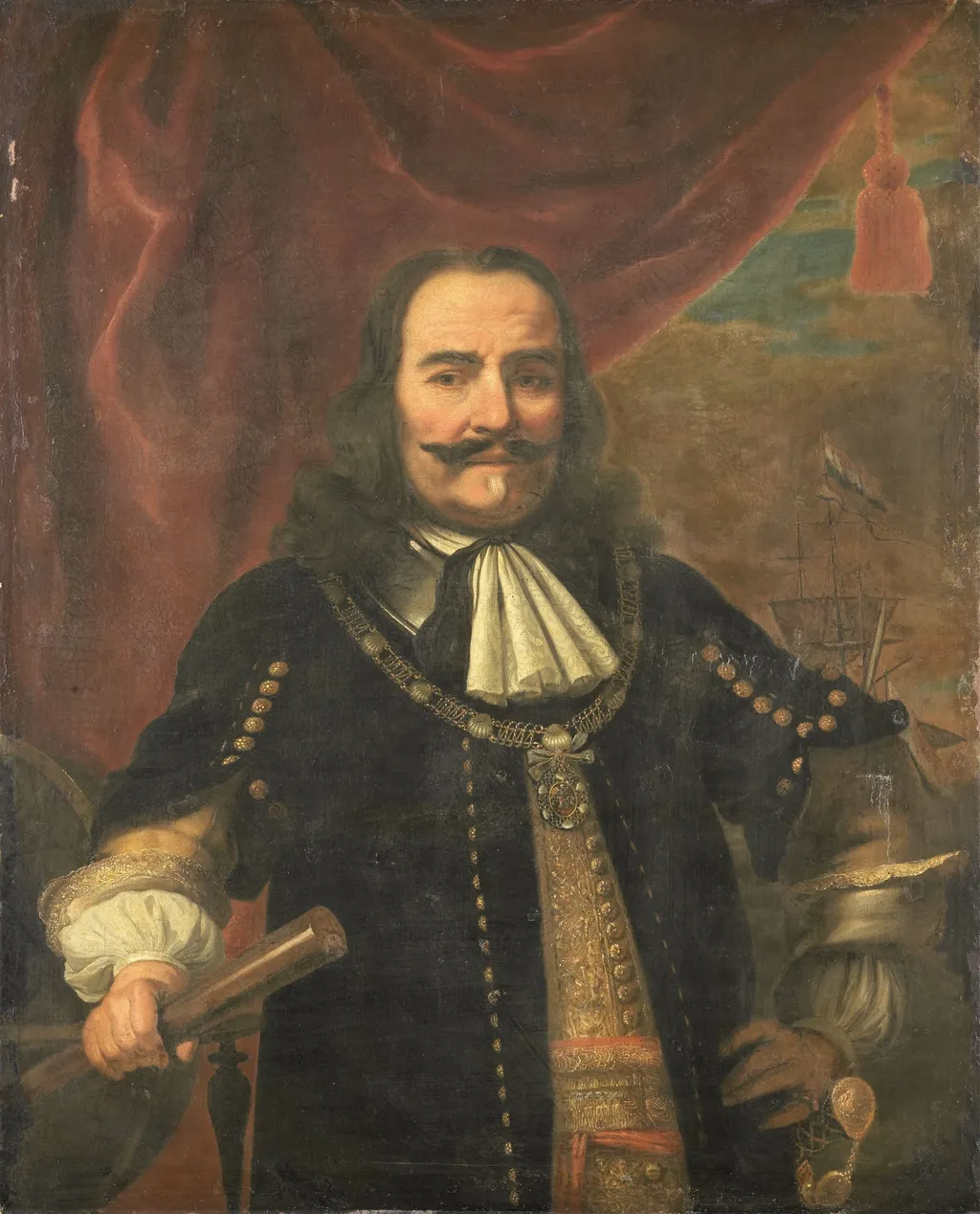
Michiel Adriaensz de Ruyter (1607-76), vice admiral is an oil painting. It dates from 1700 and is held in the collection of the Rijksmuseum. The oil painting portrays Michiel Adriaensz de Ruyter, a Dutch vice admiral who lived from 1607 to 1676.
About this work
Overview
The oil painting portrays Michiel Adriaensz de Ruyter, a Dutch vice admiral who lived from 1607 to 1676. He is shown standing before a red drapery, his posture dignified and authoritative, while a ship can be seen in the distant background, linking the portrait to his naval career.
Subject & Meaning
De Ruyter is rendered with long dark hair, a moustache, and a white collar beneath a black coat trimmed with gold buttons. In his right hand he grips a sword, a conventional symbol of military rank and command, underscoring his status as a senior officer of the Dutch fleet.
Technique & Style
Executed in oil on canvas, the work employs a restrained palette of deep blacks, golds, and reds. The brushwork emphasizes the texture of the coat and the sheen of the sword, while the background curtain provides a contrasting, flat surface that focuses attention on the figure.
History & Provenance
The portrait was likely commissioned during de Ruyter’s lifetime to commemorate his service. Details of its ownership trail are sparse, but the painting has remained within collections that specialize in Dutch maritime and military portraiture.
Context
Created in the 17th‑century Dutch Republic, the portrait reflects the period’s emphasis on individual achievement and the prominence of naval power. Portraits of high‑ranking officers often incorporated maritime elements, as seen in the ship that appears behind de Ruyter.
Artist & collection

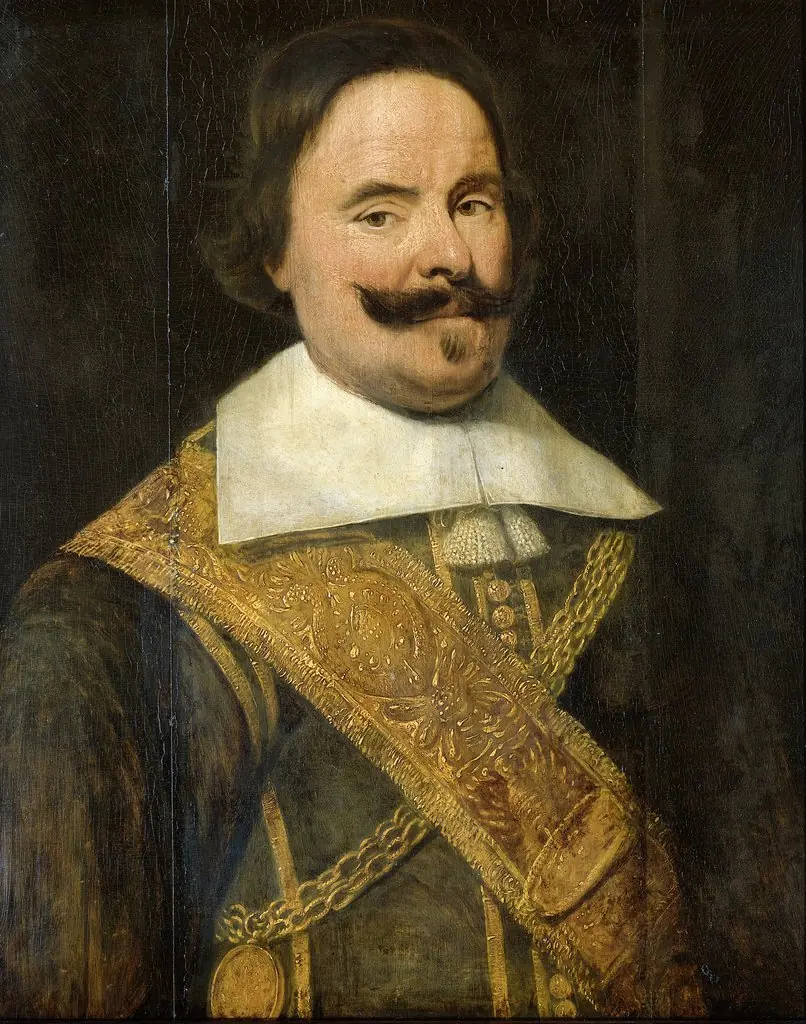 Michiel Adriaensz de Ruyter (1607-1676). Vice Admiral
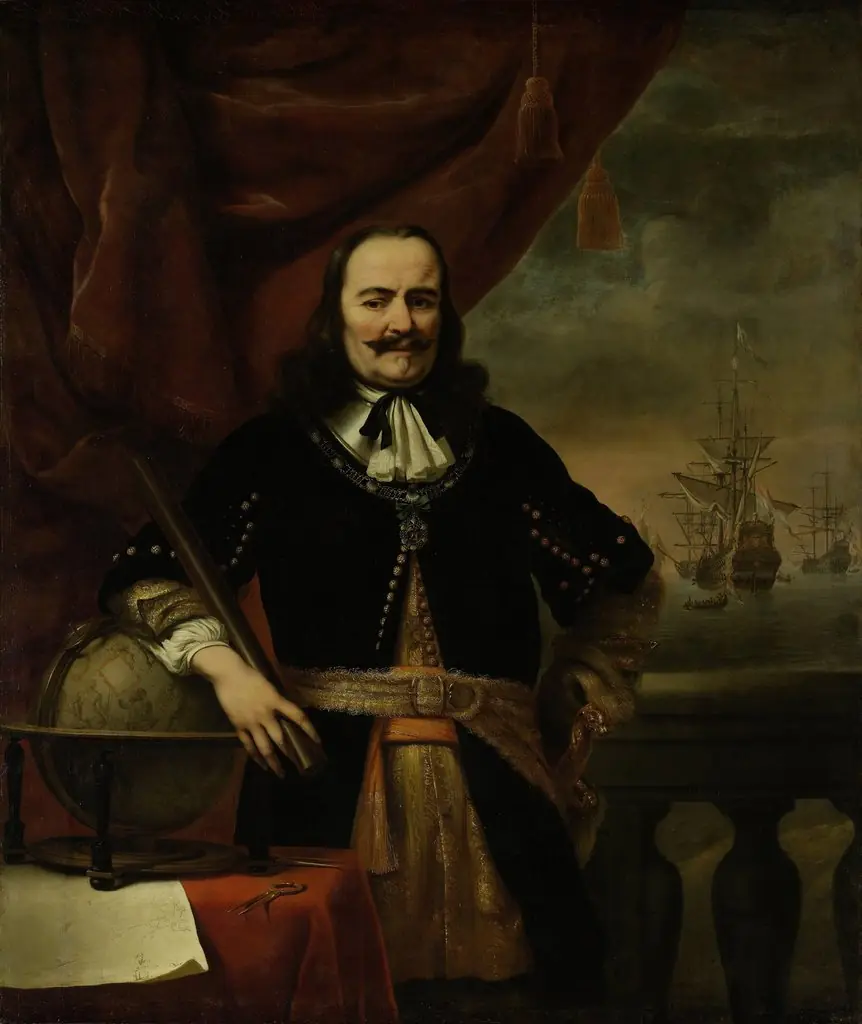 Michiel de Ruyter as Lieutenant-Admiral
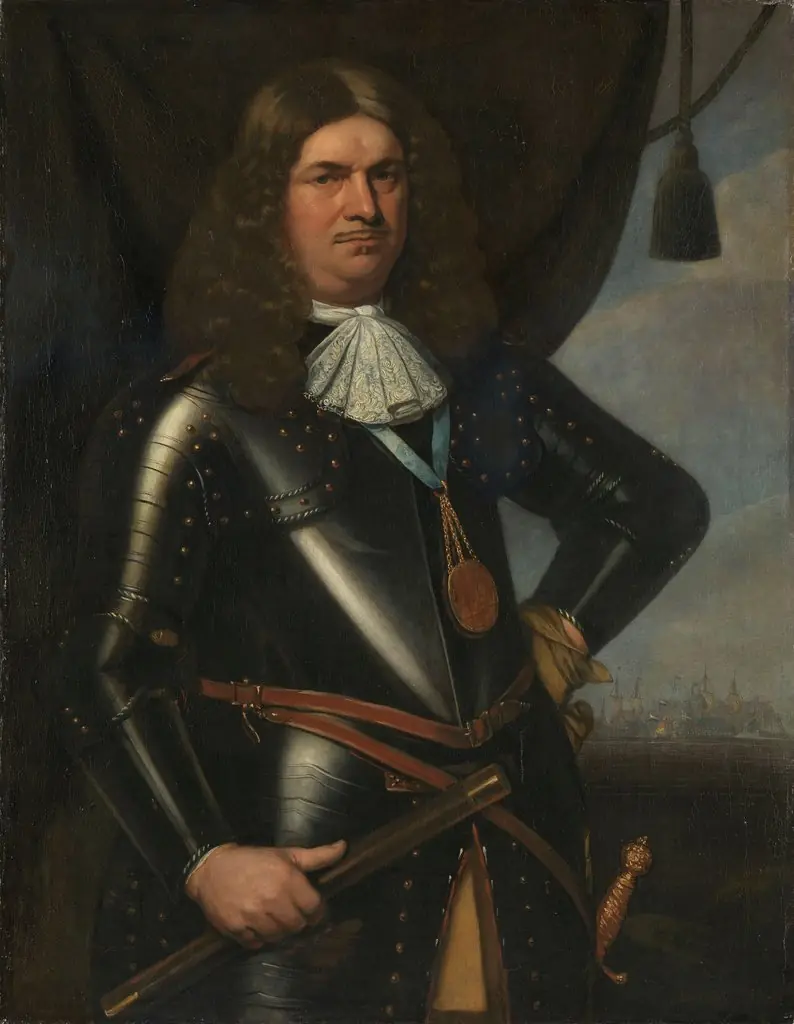 Adriaen Banckert (c 1620-1684), Vice Admiral of Zeeland
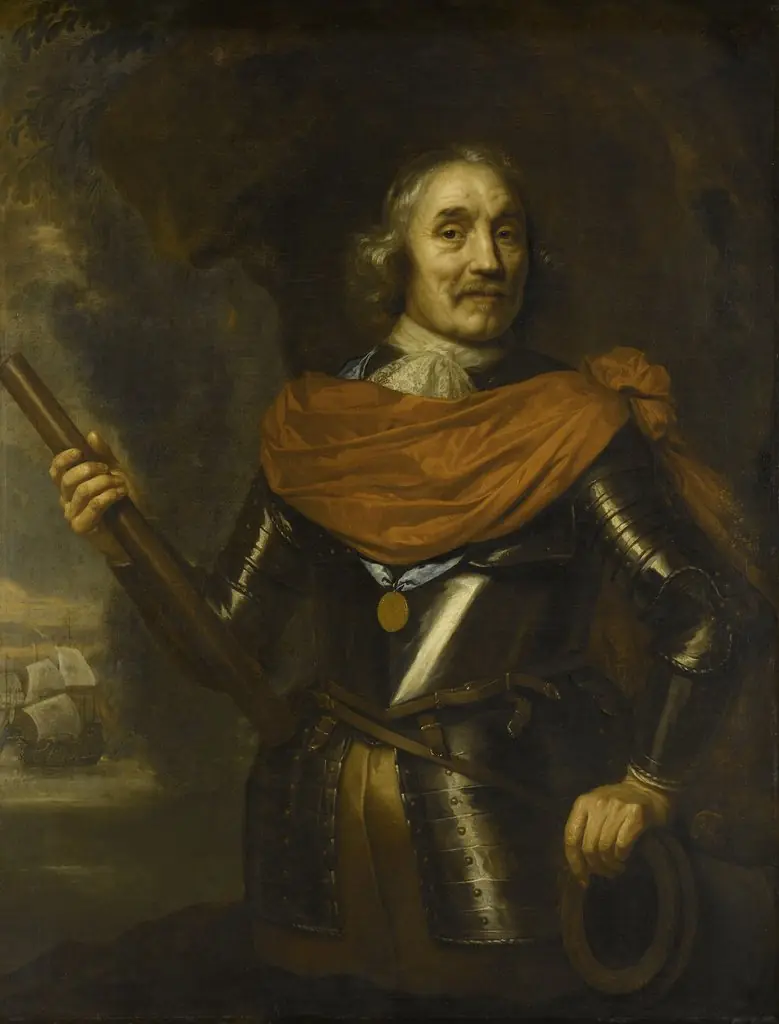 Maerten Harpertsz Tromp (1597-1653). Vice admiral
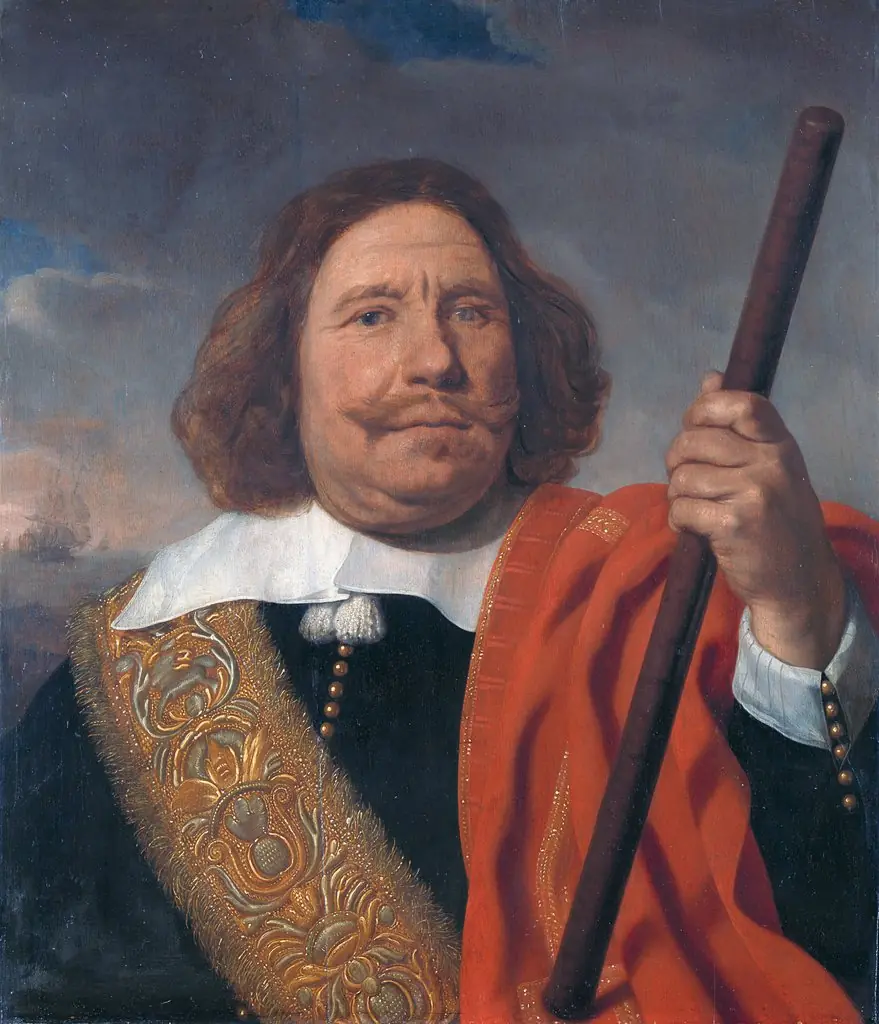 Egbert Meeuwsz Cortenaer (1605-65). Vice admiral, admiralty of the Maas, Rotterdam
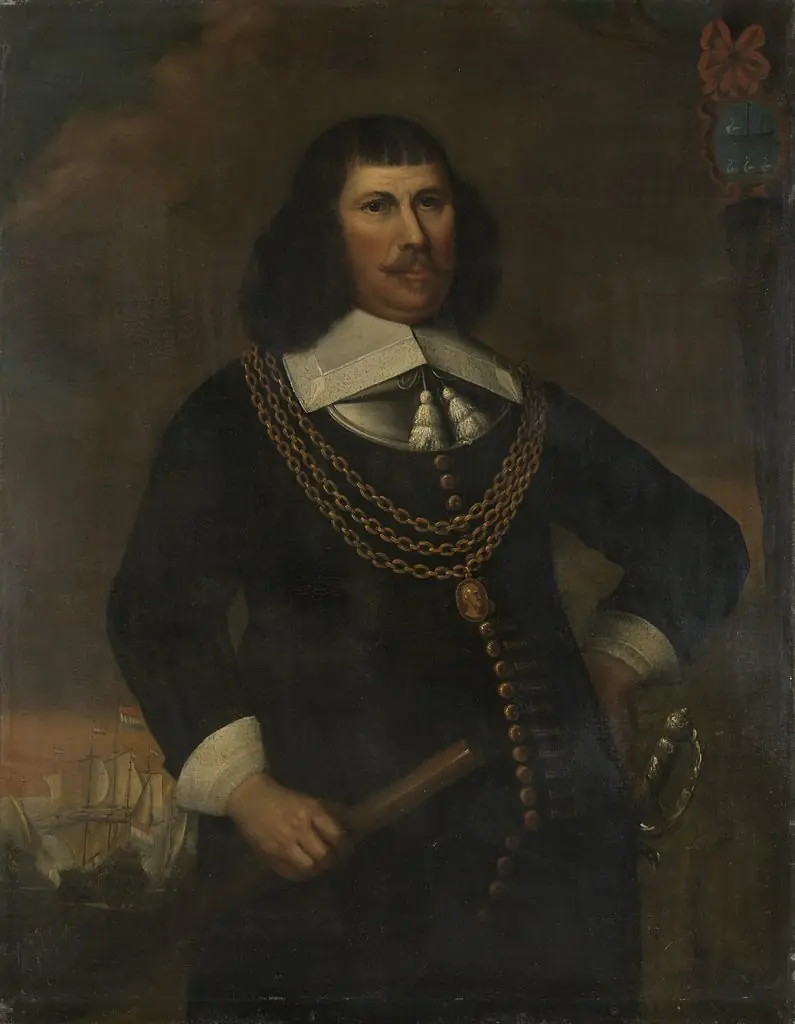 Portrait of Pieter Florisz (1605-58), vice-admiral of the northern district