Artwork
Three cavaliers
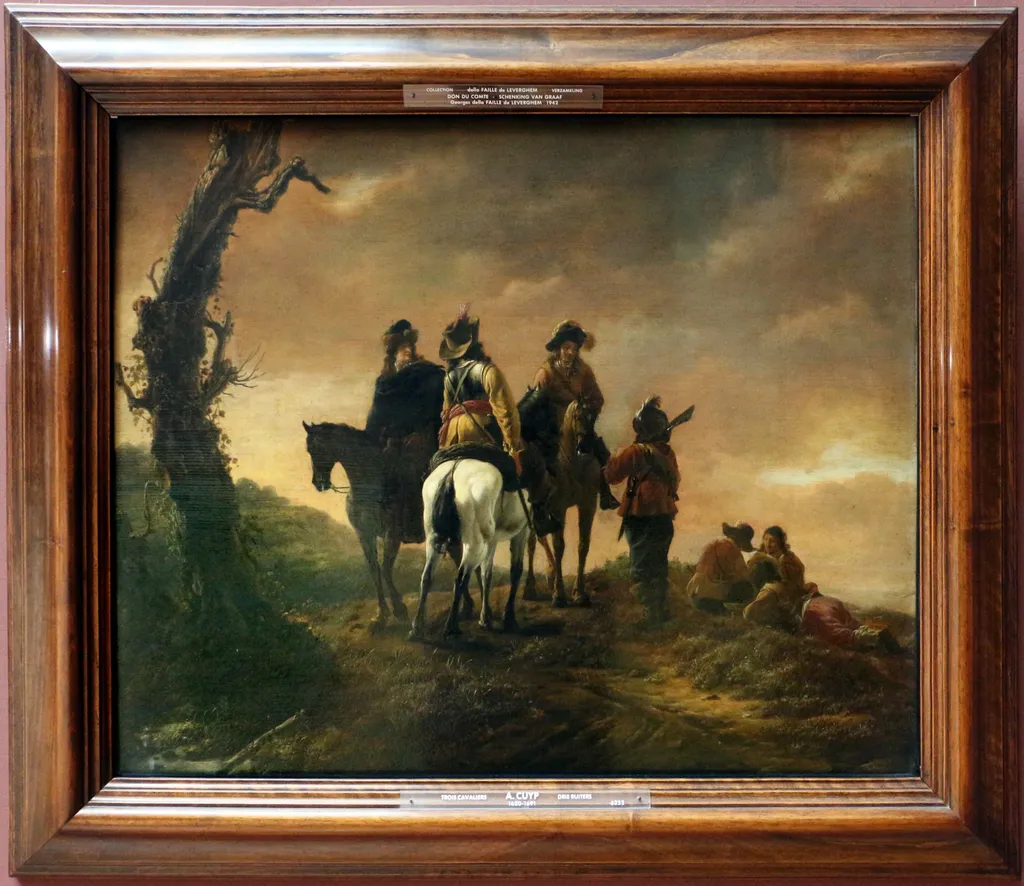
Three cavaliers is an oil painting by the Dutch Golden Age artist Aelbert Cuyp. It dates from 1650 and is held in the collection of the Royal Museums of Fine Arts of Belgium.
About this work
Overview
The composition emphasizes stillness and harmony, aligning with Cuyp’s broader focus on tranquil, sunlit natural settings rather than narrative drama.
Painted around 1650 by Aelbert Cuyp, *Three Cavaliers* is an oil-on-canvas landscape that captures a quiet moment of travel in the Dutch countryside. Though titled for three riders, the scene includes additional figures: a standing man and a seated companion with a dog. The composition emphasizes stillness and harmony, aligning with Cuyp’s broader focus on tranquil, sunlit natural settings rather than narrative drama.
Subject & Meaning
The painting portrays a group of men on horseback, likely members of the local gentry, pausing during a journey. Their attire and posture suggest leisure rather than military purpose. The inclusion of a seated figure and a dog implies a moment of rest, reinforcing a theme of calm rural life. The absence of conflict or urgency reflects the Dutch Golden Age’s preference for serene, everyday scenes over heroic or dramatic subjects.
Technique & Style
Cuyp employed subtle chiaroscuro to model forms and guide the eye across the landscape. Soft, diffused light bathes the grassy hillside and hazy sky, creating a luminous atmosphere. The horses and figures are rendered with quiet precision, their forms integrated into the broader environment rather than dominating it. Brushwork is restrained, favoring tonal harmony over detail, enhancing the painting’s meditative mood.
History & Provenance
The painting has been part of the Royal Museums of Fine Arts of Belgium’s collection since at least the 19th century. It entered the museum’s holdings through established European collections, though its earlier ownership prior to that remains undocumented. Cuyp’s works were widely collected in the Netherlands and beyond during his lifetime, and this piece reflects the enduring appeal of his atmospheric landscapes among 17th- and 18th-century patrons.
Context
During the mid-17th century, Dutch painters increasingly turned to landscapes as subjects worthy of serious attention. Cuyp, working in Dordrecht, distinguished himself by infusing these scenes with golden light and a sense of quiet grandeur. Unlike contemporaries who emphasized urban life or maritime activity, he focused on rural tranquility, often drawing from the river valleys and pastures of his native region.
Legacy
Cuyp’s approach to landscape painting influenced later artists interested in atmospheric effects and naturalism. While not as widely recognized today as Rembrandt or Vermeer, his ability to convey mood through light and composition secured his place in the Dutch tradition. *Three Cavaliers* exemplifies his signature style—calm, luminous, and deeply attuned to the quiet rhythms of the natural world.
Artist & collection
Artist
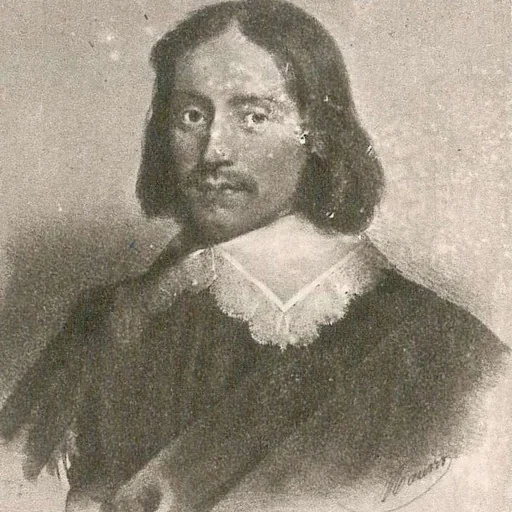
Aelbert Jacobszoon Cuyp or Cuijp (Dutch pronunciation: ; 20 October 1620 – 15 November 1691) was one of the leading Dutch Golden Age painters, producing mainly landscapes.

Museum
Royal Museums of Fine Arts of Belgium
Continue through works from the same source collection.
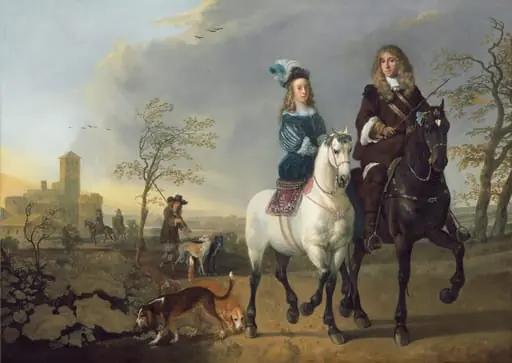 Lady and Gentleman on Horseback
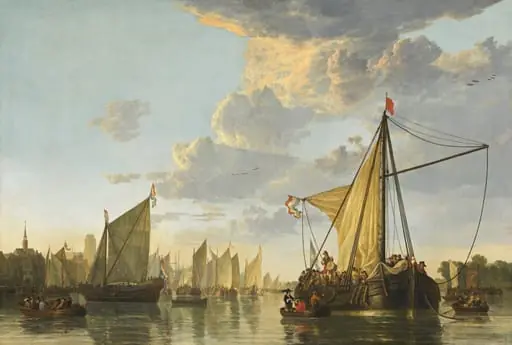 The Maas at Dordrecht
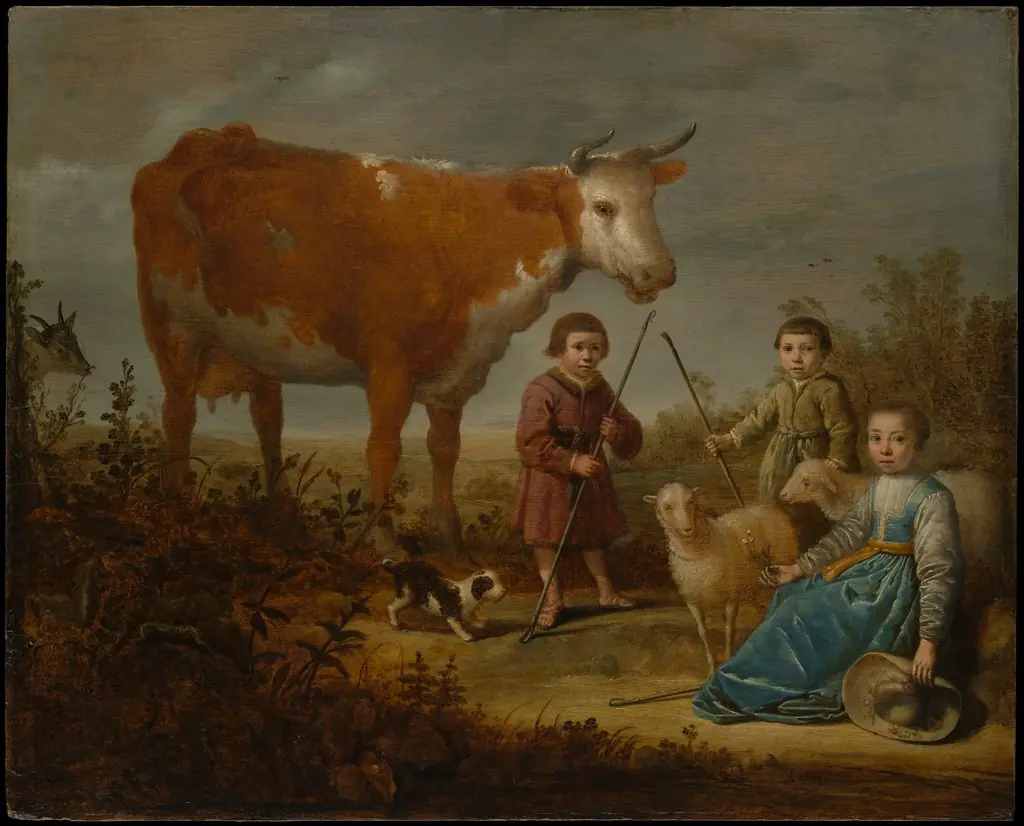 Children and a Cow
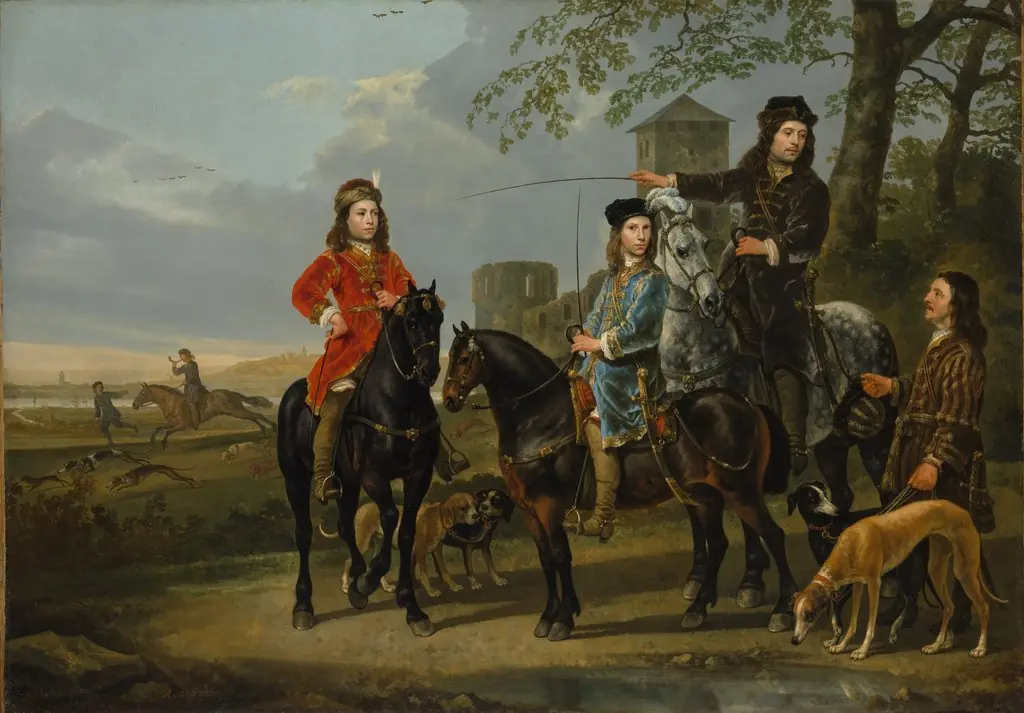 Equestrian Portrait of Cornelis (1639–1680) and Michiel Pompe van Meerdervoort (1638–1653) with Their Tutor and Coachman ("Starting for the Hunt")
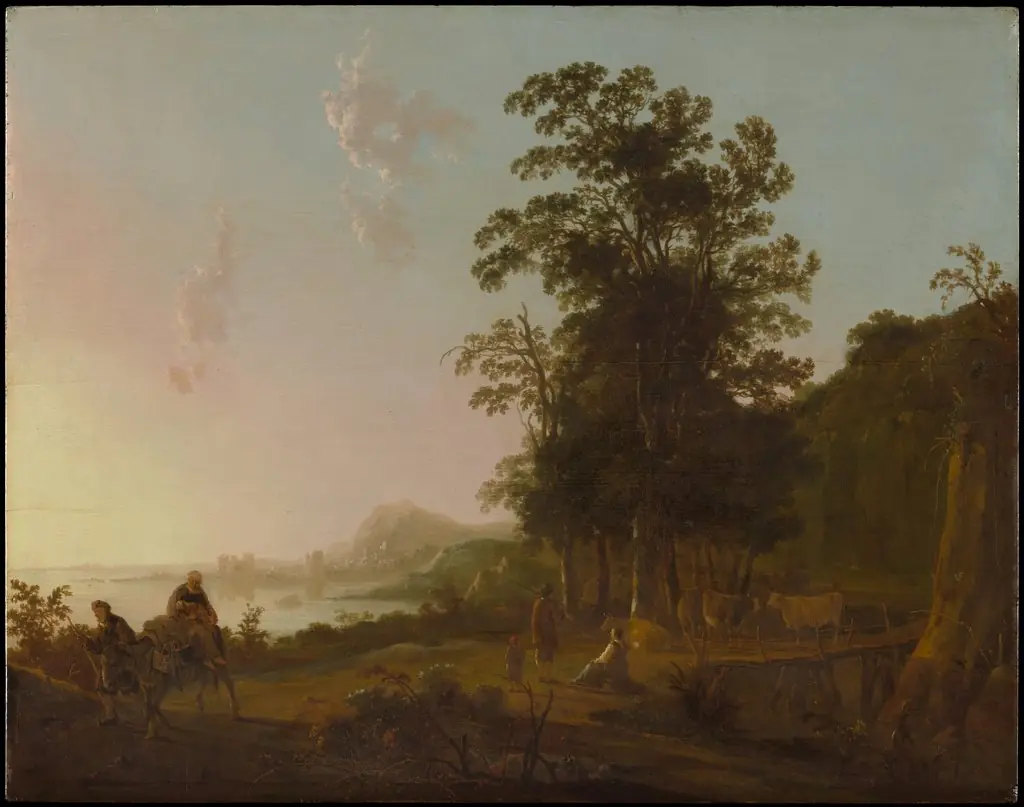 Landscape with the Flight into Egypt
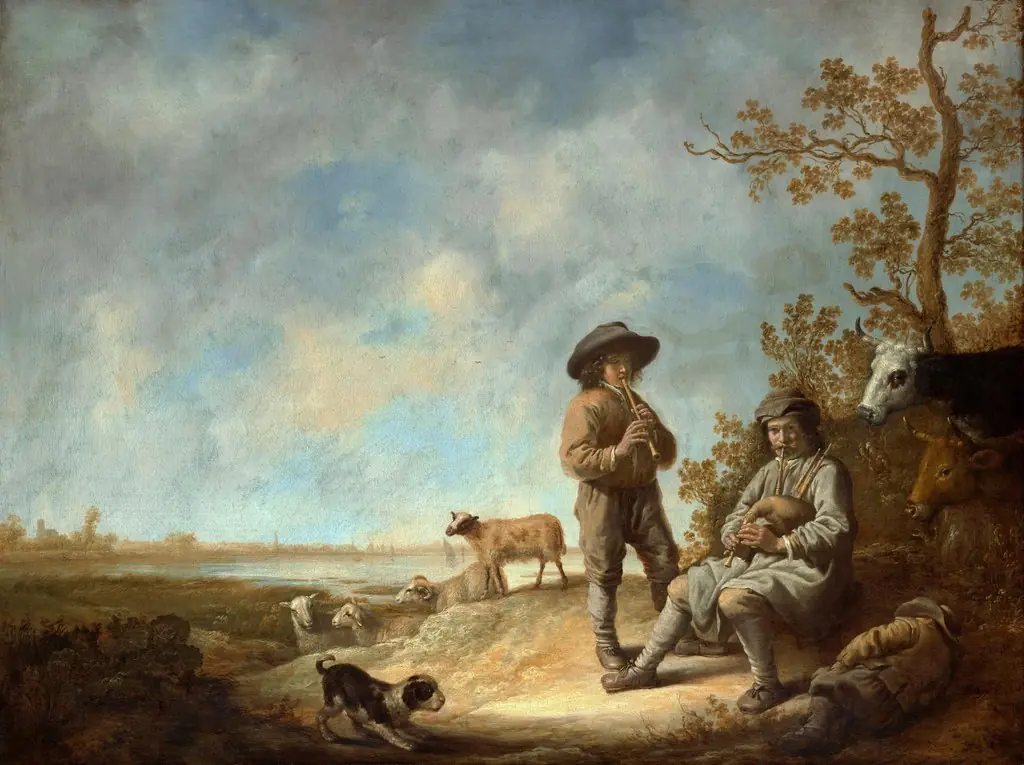 Piping Shepherds
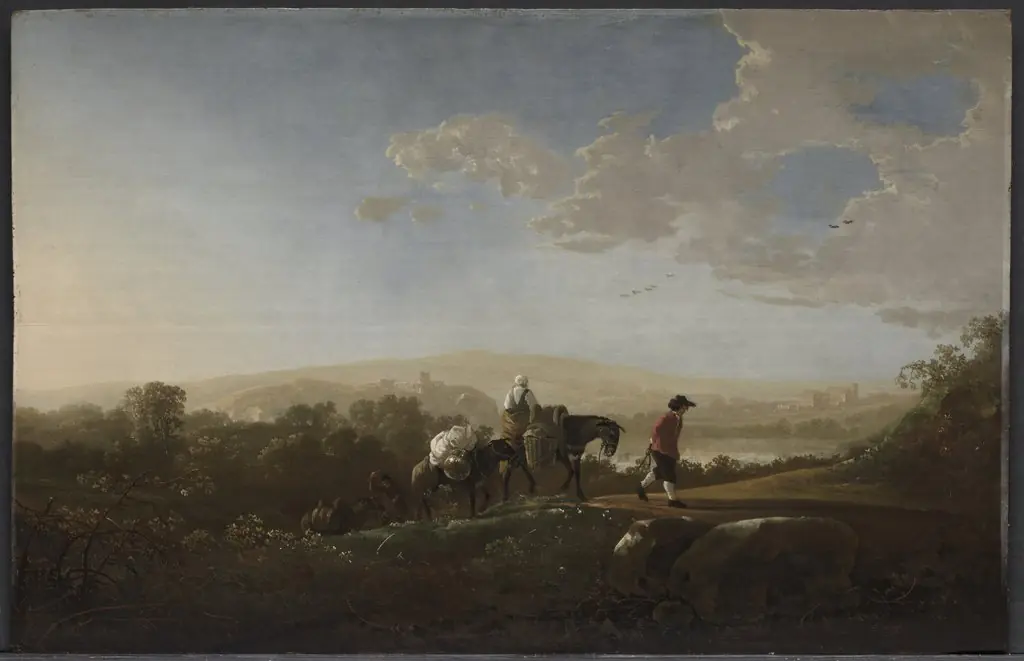 Travellers in Hilly Countryside
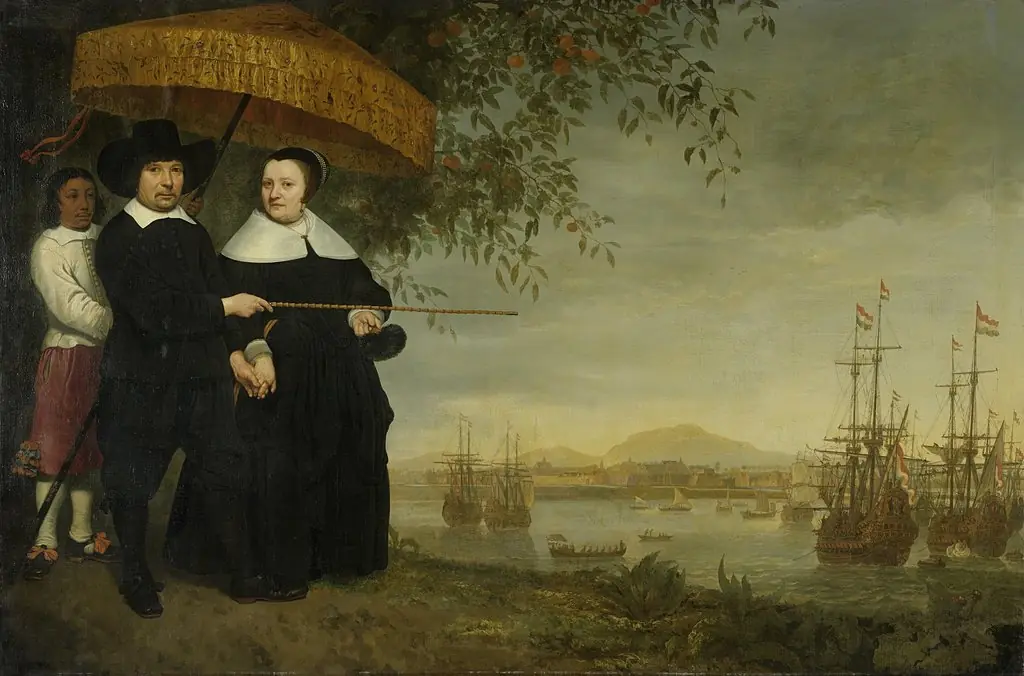 A Chief Merchant of the VOC with his Wife and an Enslaved Servant
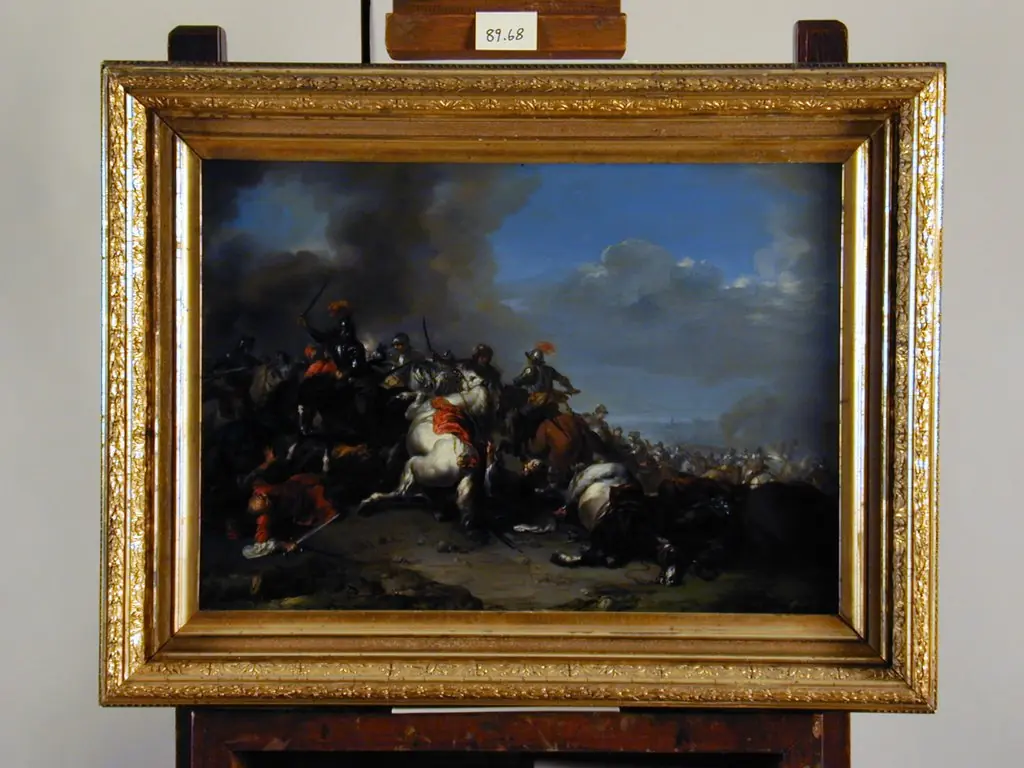 Cavalry
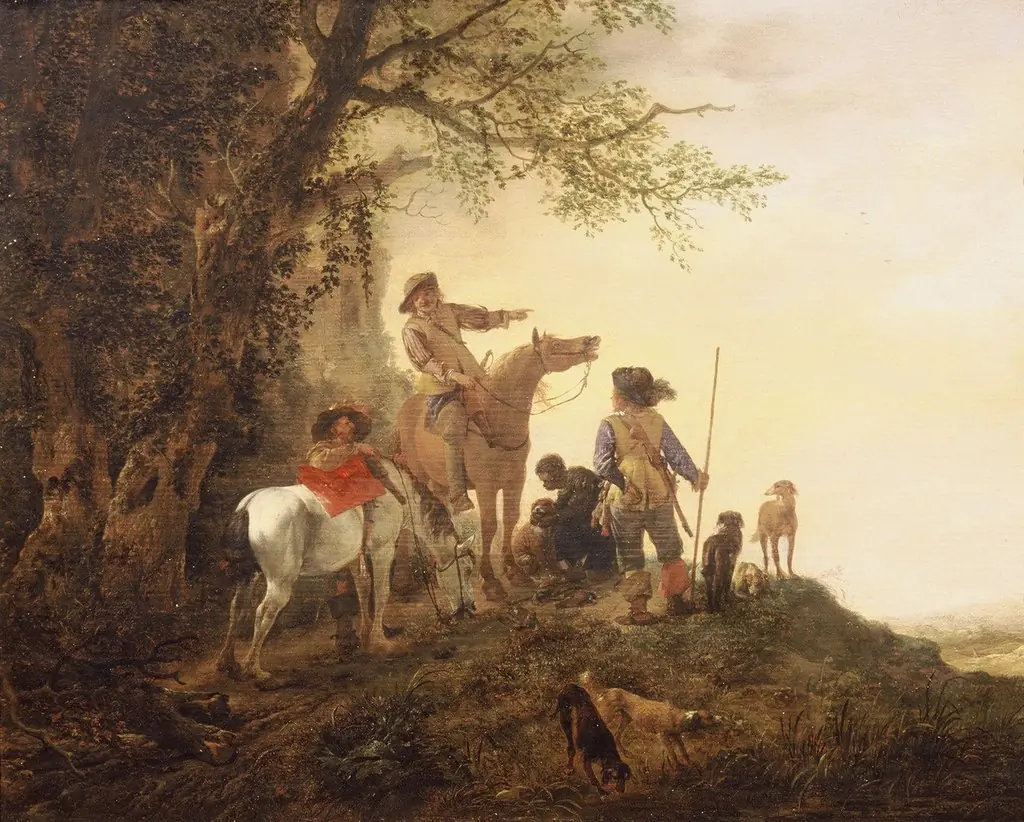 Resting Hunters
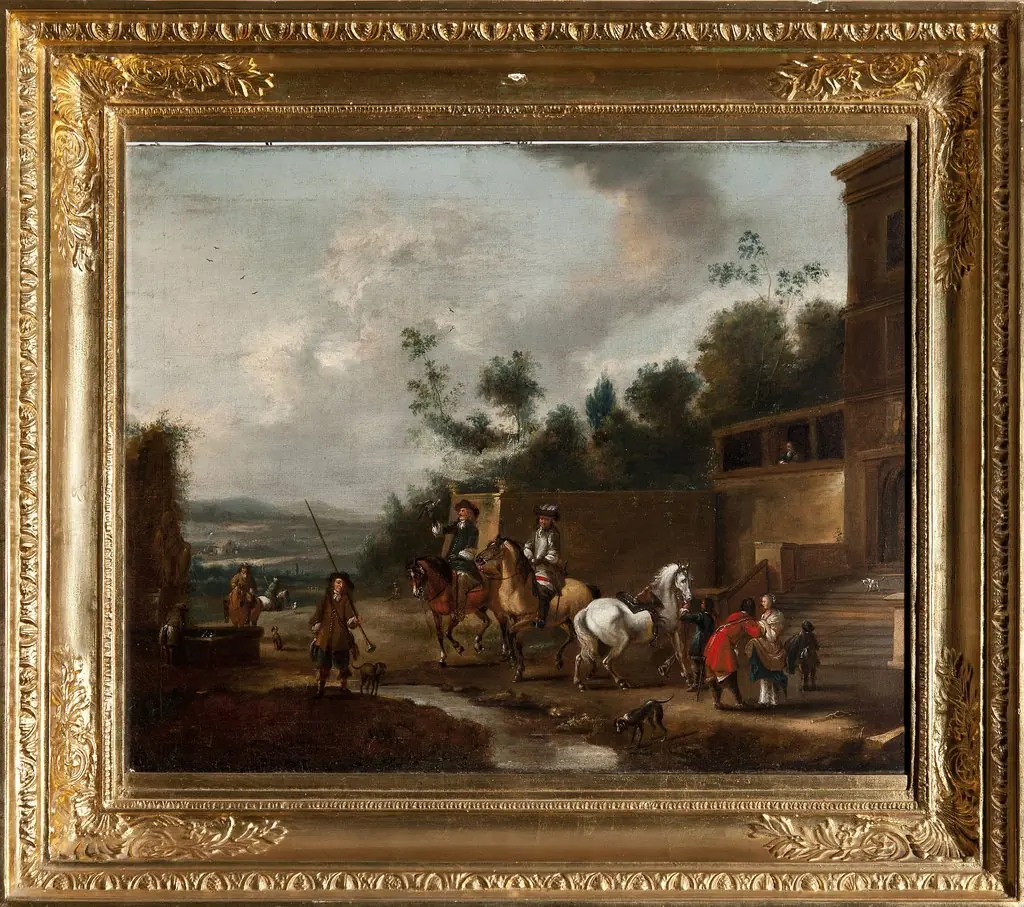 Departure for hunting
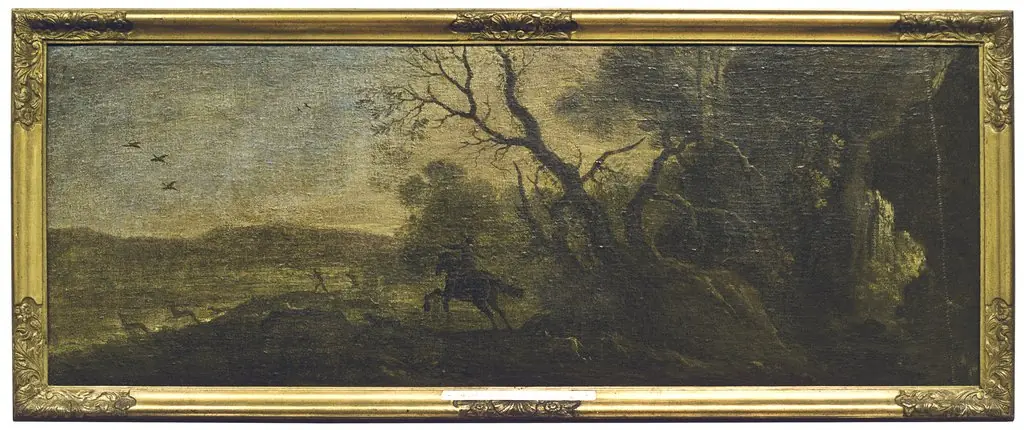 Landskap
 Atacul hoților (în registrul inventar: Hoți atacând pe neașteptate)
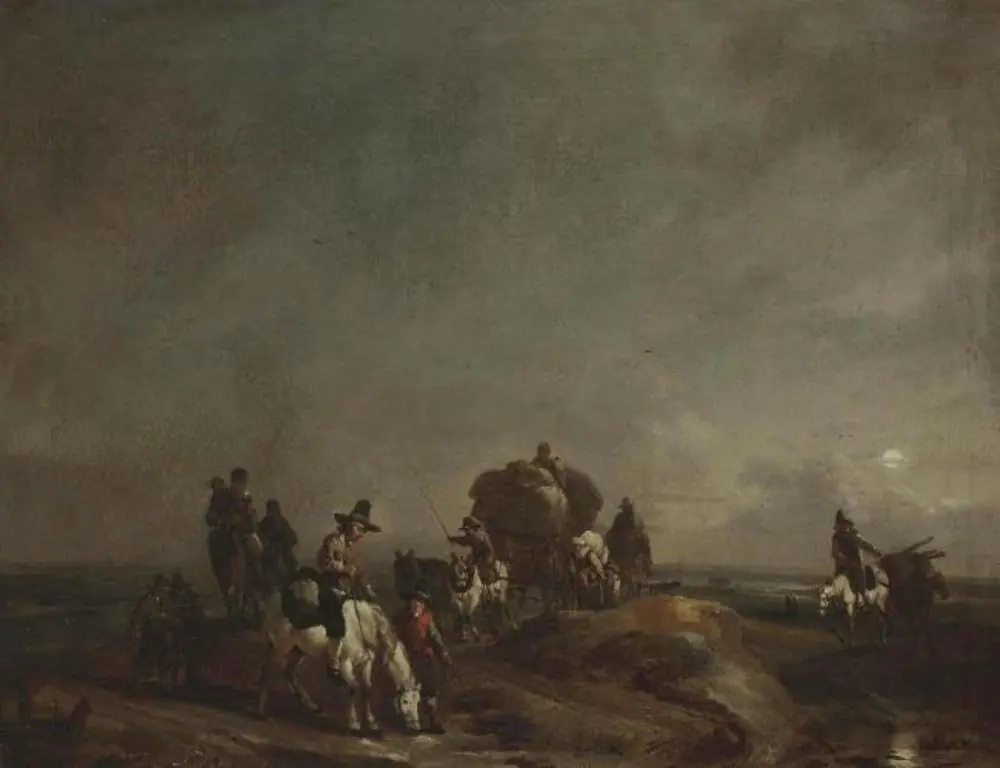 Returning from the Hay Harvest
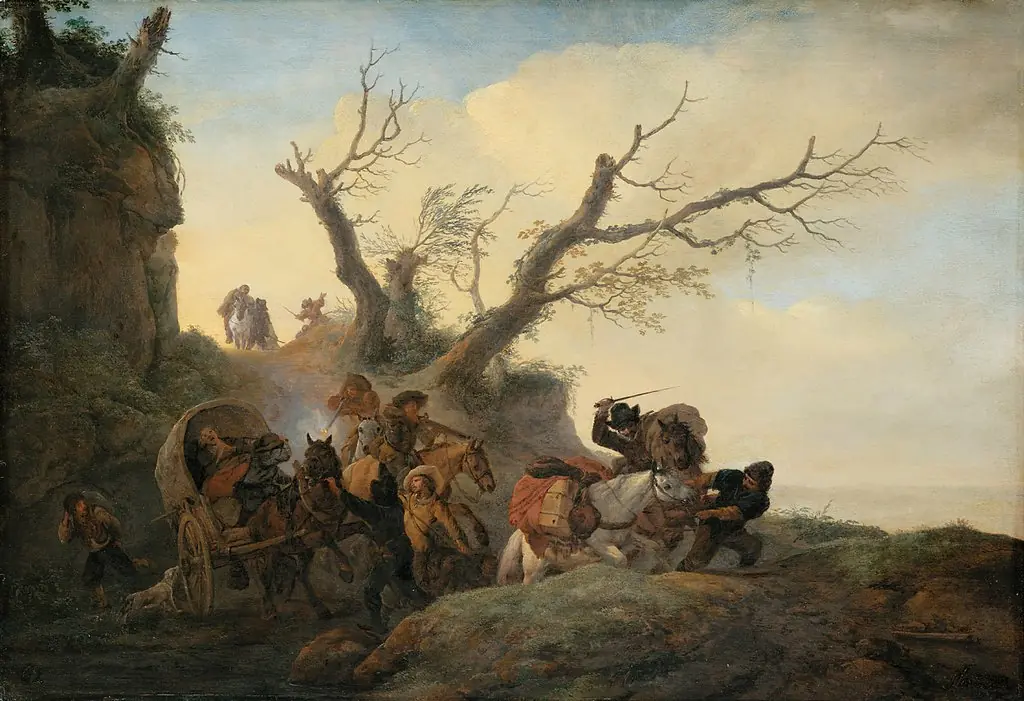 Robbers attacking Travellers
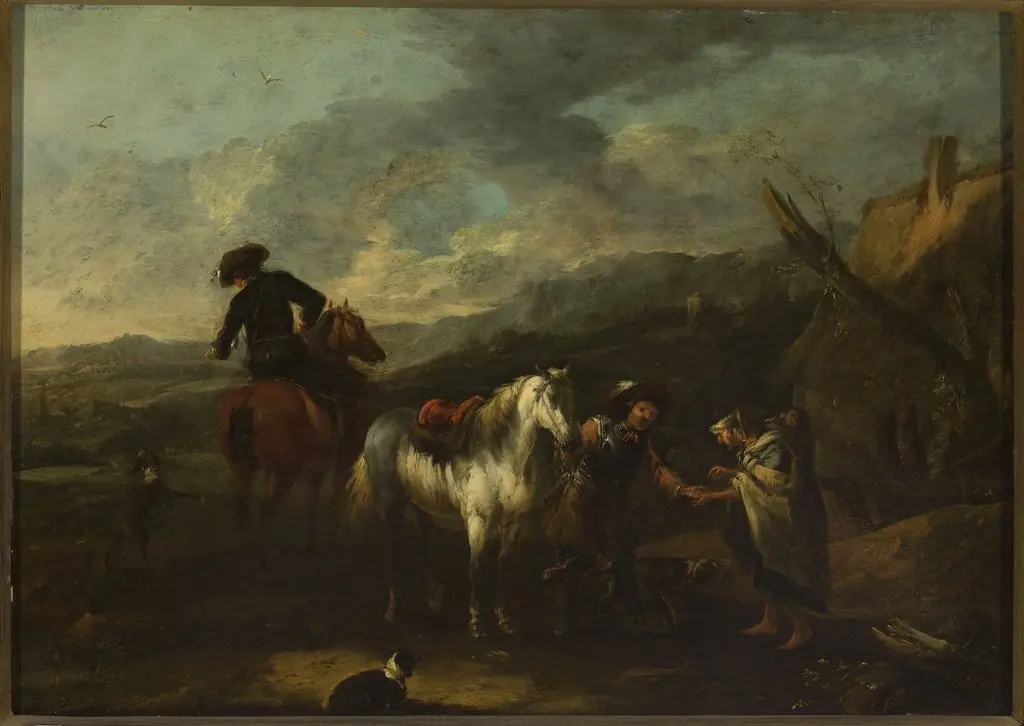 Horsemen and a beggar woman against landscape
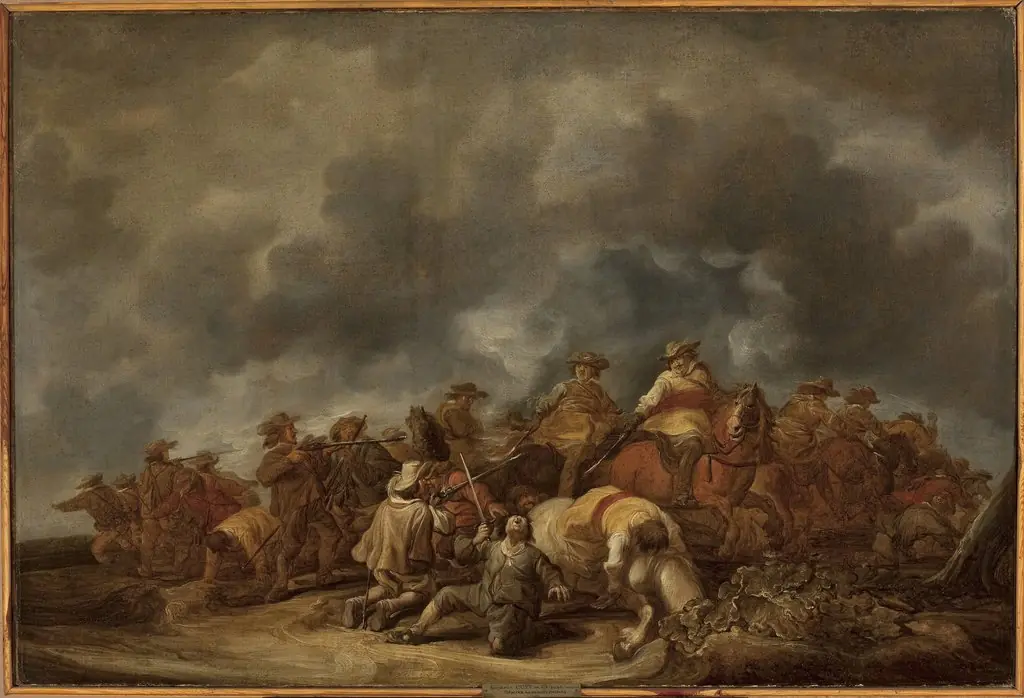 Skirmish of cavalry and infantry
 Luptă de cavalerie la marginea codrului
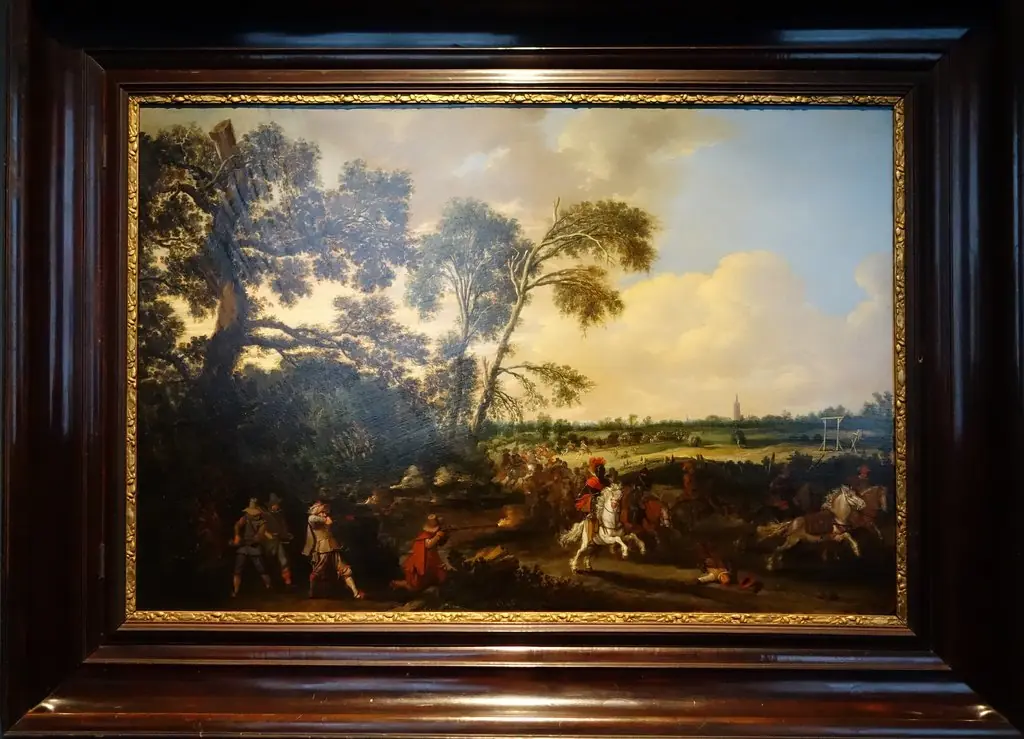 Attack on a Convoy
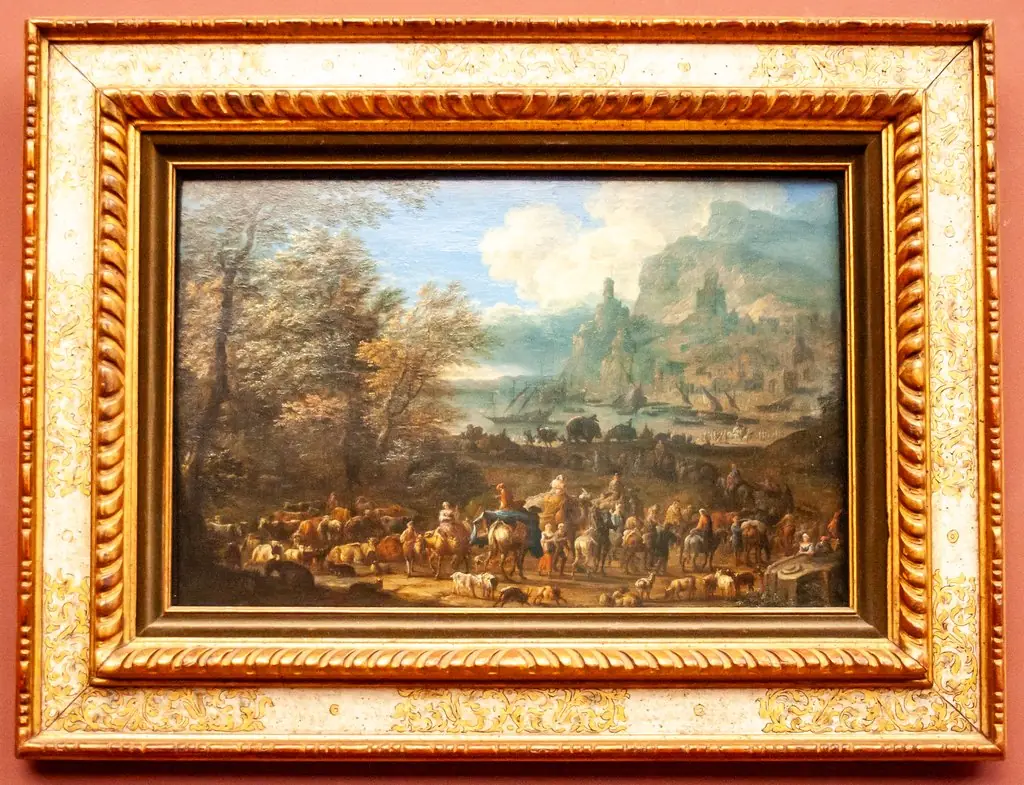 Landschap met figuren bij een inham aan de zee