Artwork
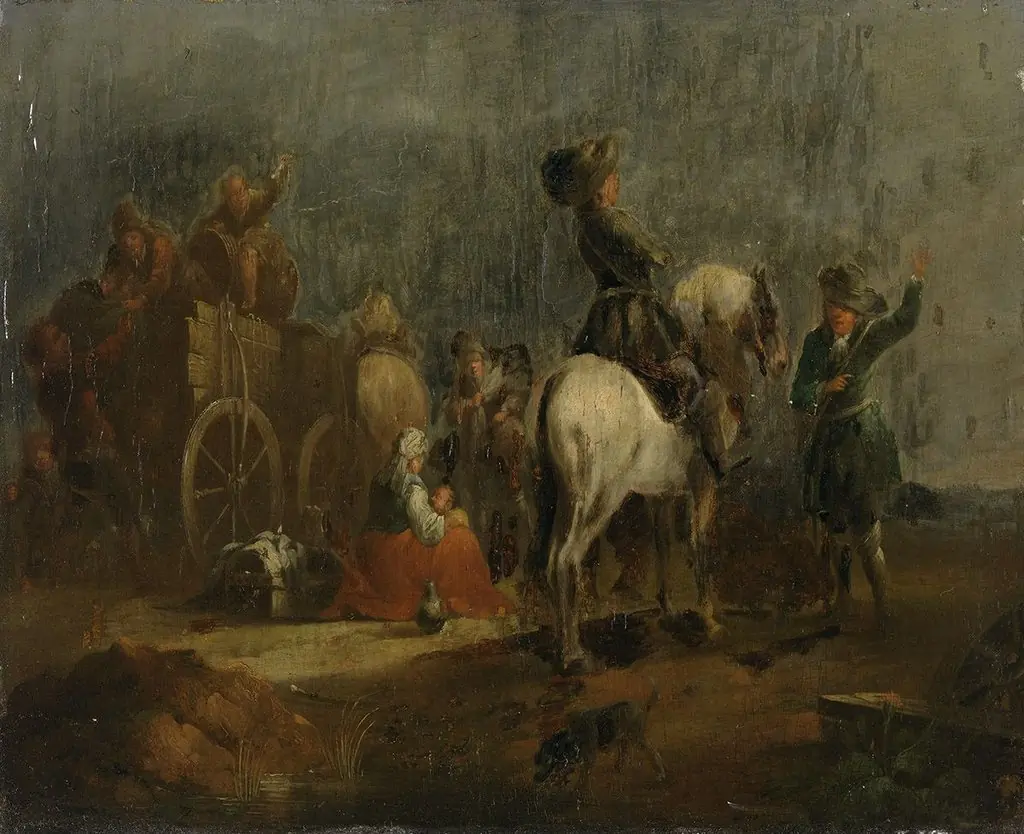
Horsemen and a beggar woman against landscape
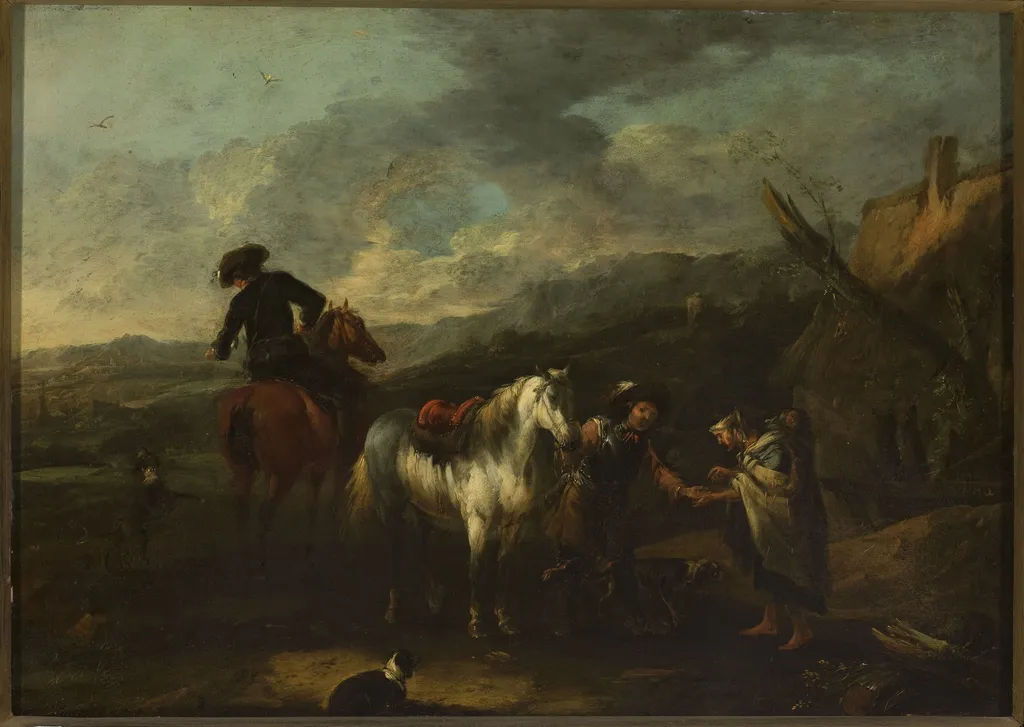
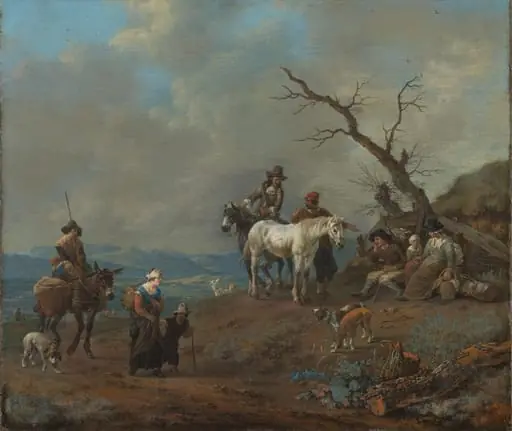
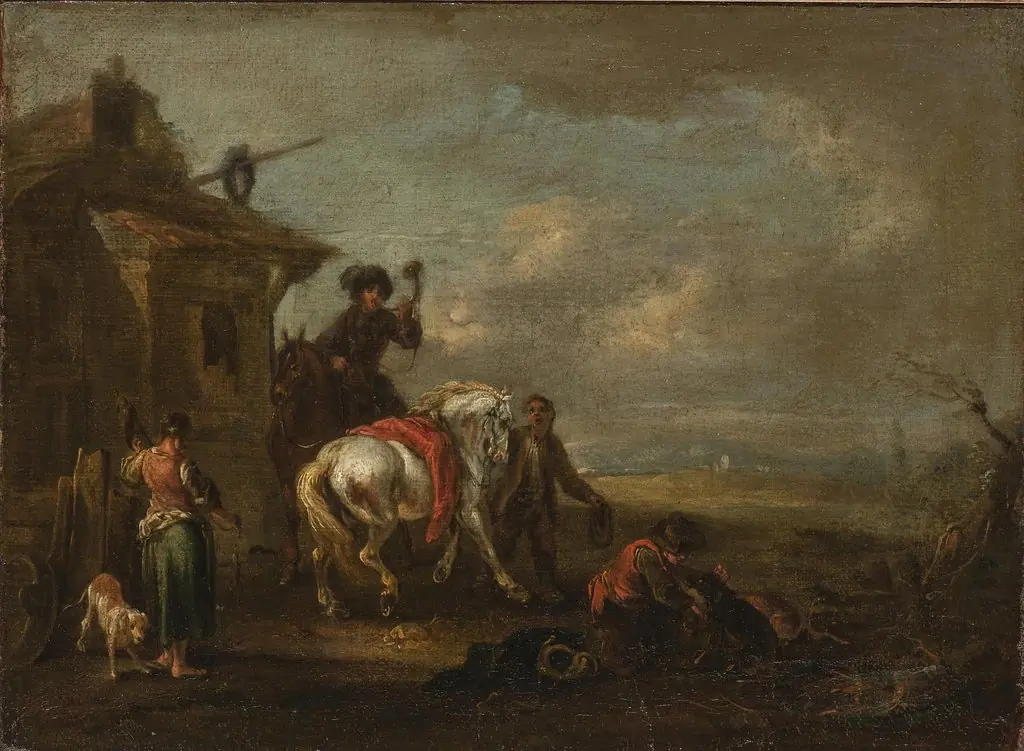
Horsemen and a beggar woman against landscape is an unspecified painting by August Querfurt. It dates from 1738 and is held in the collection of the National Museum in Warsaw.
About this work
Overview
Painted around 1738 by Austrian artist August Querfurt, this work blends equestrian action with a solitary human figure against a sweeping natural setting.
Painted around 1738 by Austrian artist August Querfurt, this work blends equestrian action with a solitary human figure against a sweeping natural setting. Though rooted in the landscape tradition, it incorporates narrative elements drawn from military and genre scenes. The painting resides in the National Museum in Warsaw, reflecting Querfurt’s broader output centered on cavalry and rural life, shaped by his early training and exposure to Flemish and German predecessors.
Subject & Meaning
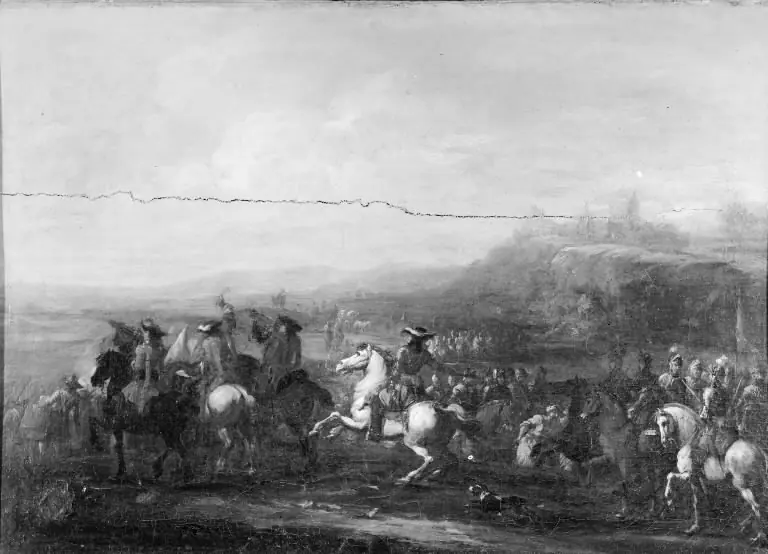
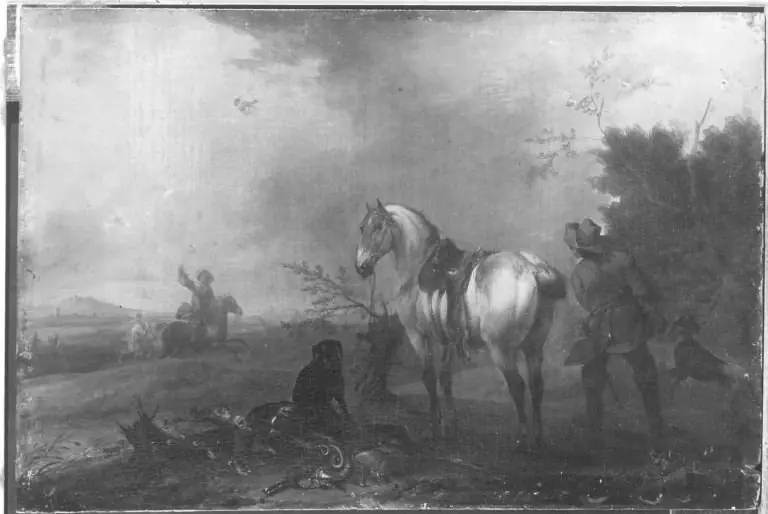
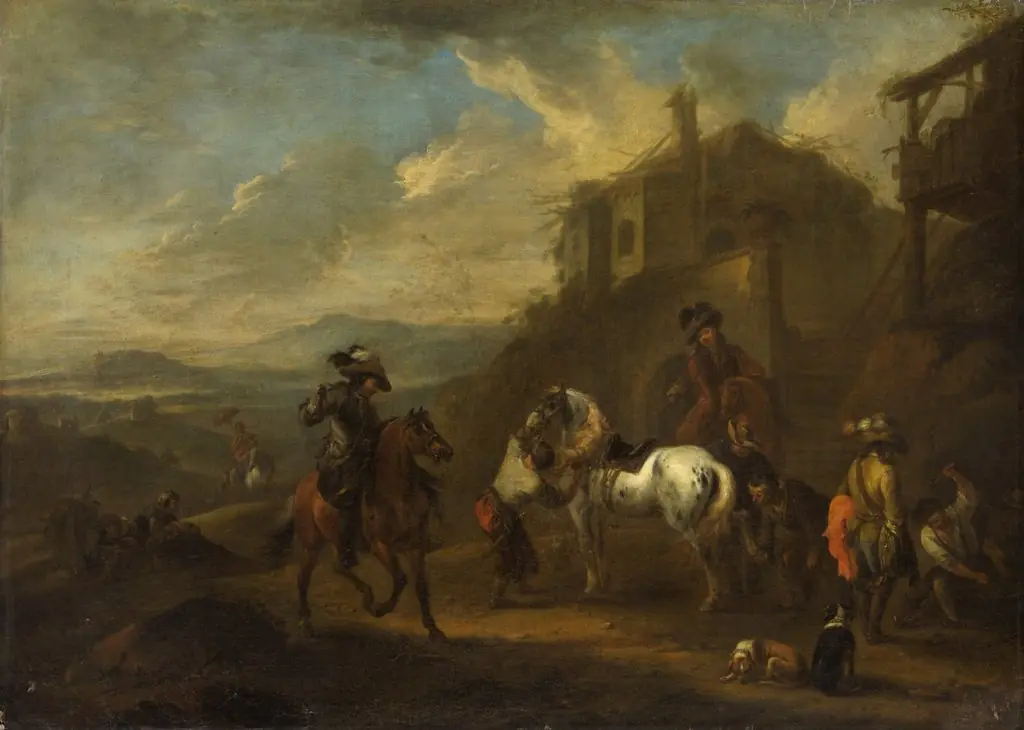
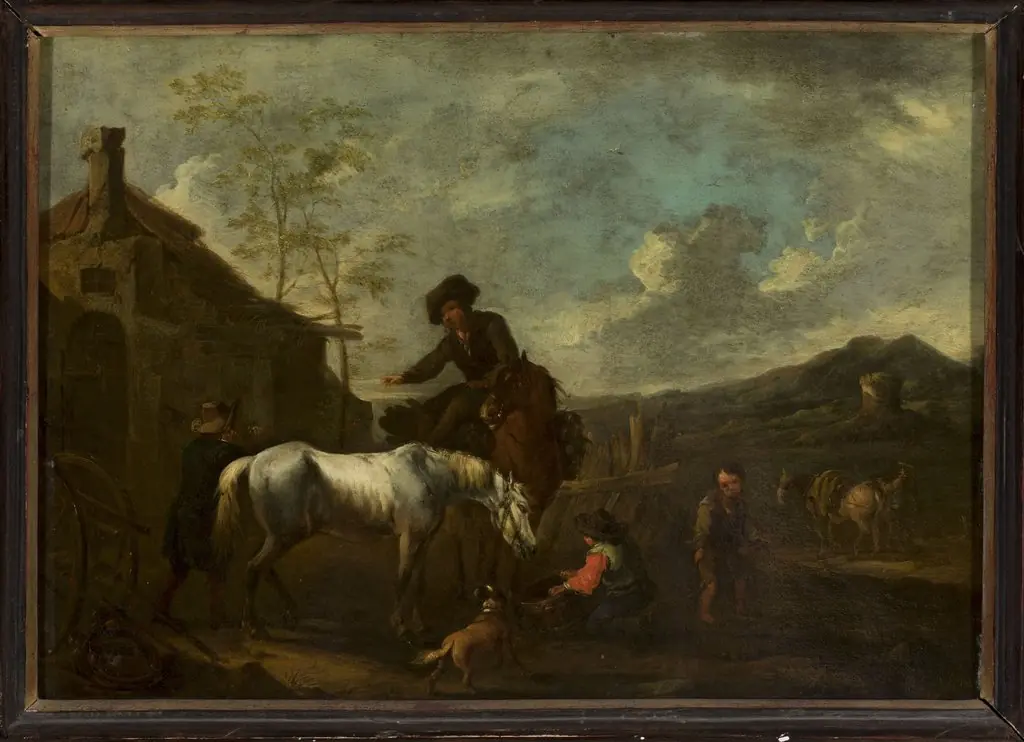
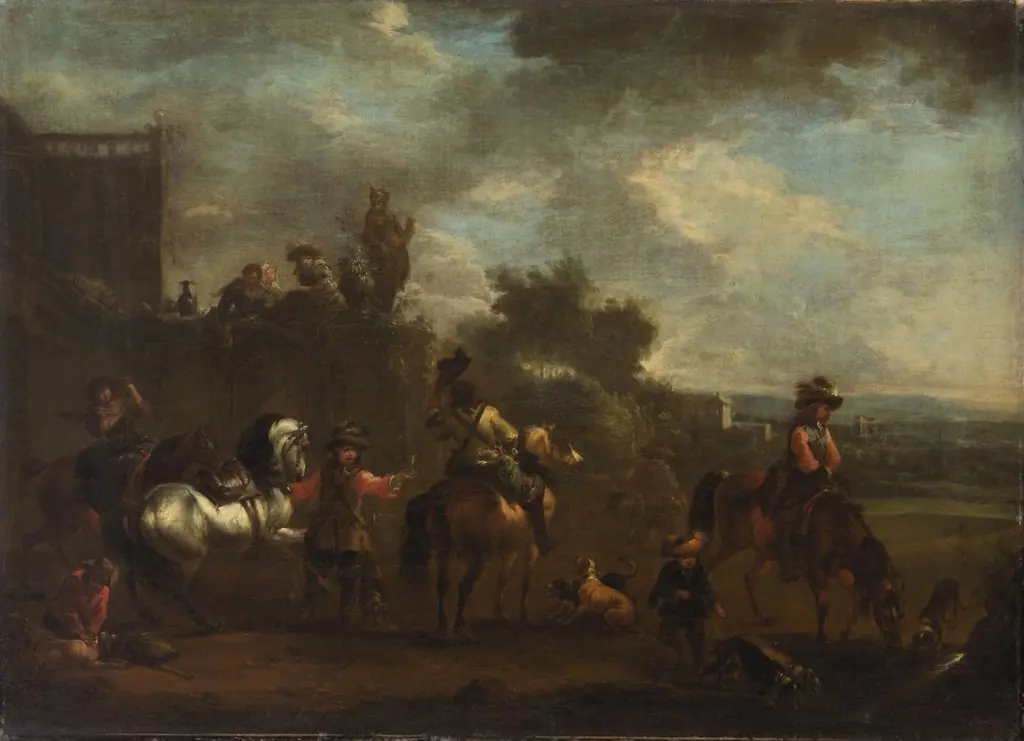
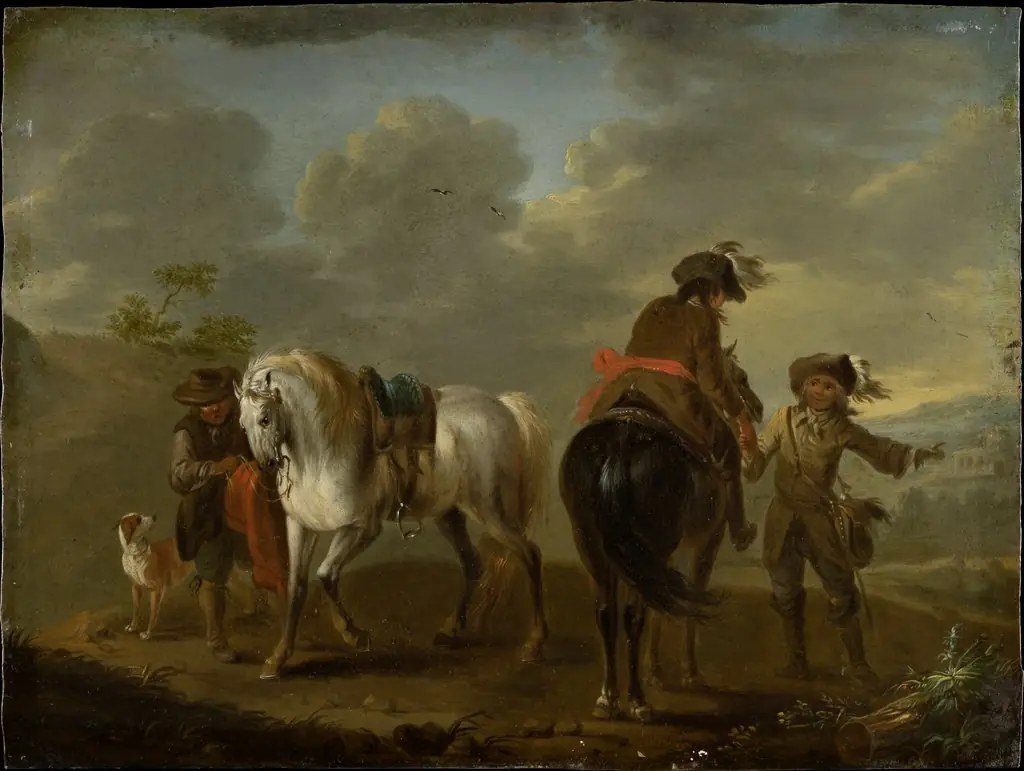
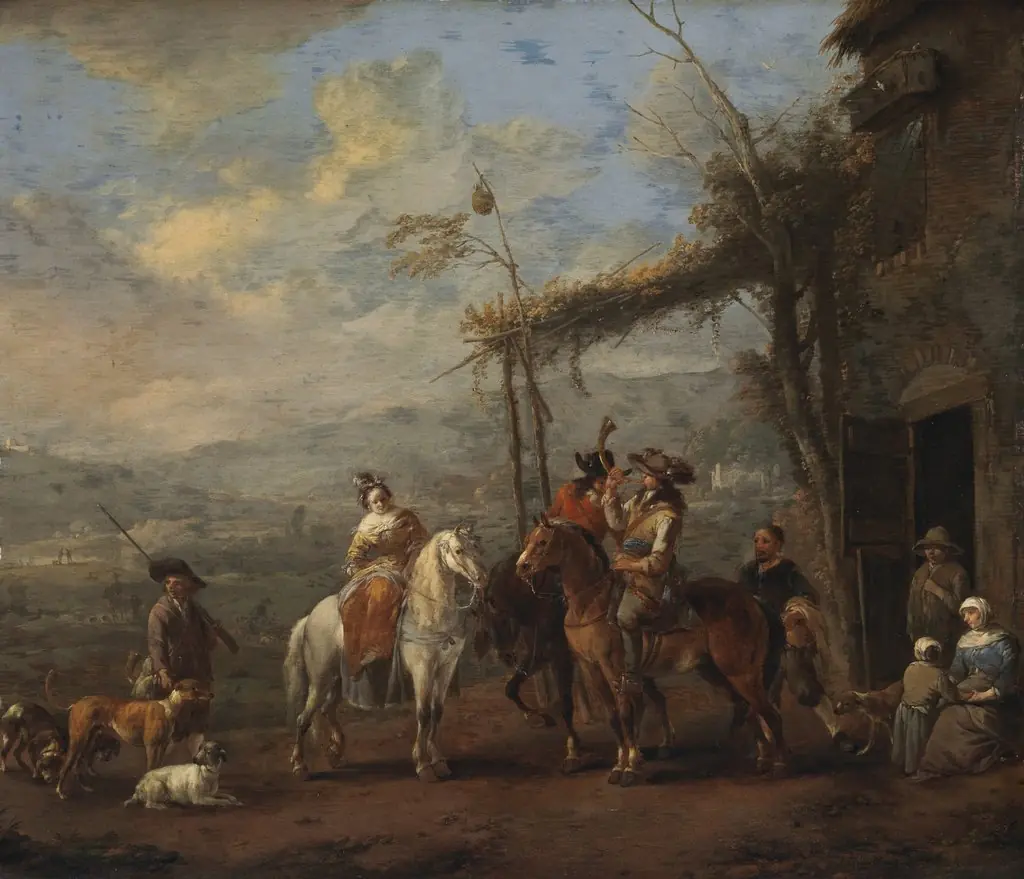
A group of mounted riders, clad in dark garments, advances across the composition, their motion directed toward the right. In the foreground, a beggar woman extends her hands in supplication, creating a quiet point of human vulnerability amid the movement. The white horse and its rider, positioned near her, suggest a moment of pause or interaction. The contrast between the transient power of the cavalry and the stillness of the marginalized figure introduces a subtle commentary on social disparity.
Technique & Style
Querfurt employs chiaroscuro to define form and mood, using strong contrasts between light and shadow to model the figures and terrain. The brushwork is brisk yet controlled, capturing the energy of galloping horses and the texture of fabric and terrain. The sky, rendered in broad, layered clouds, adds atmospheric depth, while the distant mountains frame the scene without dominating it. The composition guides the eye diagonally, reinforcing the sense of forward motion.
History & Provenance
August Querfurt, trained initially by his father and later by Johann Jacob Haid and Johann Georg von Hahn, absorbed influences from Dutch and German equestrian painters like Wouwerman and Van der Meulen. The painting entered the National Museum in Warsaw’s collection in the 19th century, though its earlier ownership remains undocumented. Querfurt spent much of his career in Vienna, where he died in 1761, leaving behind a body of work tied to Central European military and pastoral themes.
Context
In early 18th-century Central Europe, paintings of cavalry and rural life served both decorative and documentary functions, often commissioned by nobility or military patrons. Querfurt’s scenes reflect a broader trend of combining topographical accuracy with human drama. The inclusion of a beggar figure aligns with emerging interest in everyday social conditions, even within traditionally heroic or martial subjects, hinting at a shift toward more nuanced narrative painting.
Legacy
Querfurt’s work, though not widely celebrated in modern art history, contributes to the understanding of regional painting practices in the Habsburg territories. His synthesis of landscape, genre, and military themes influenced lesser-known contemporaries and preserved visual records of cavalry culture. This painting remains a representative example of how narrative and environment were balanced in Central European art before the rise of Romanticism.
Artist & collection
Artist
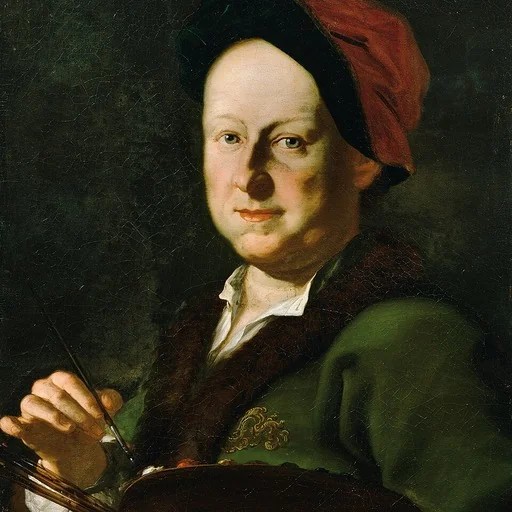
August Querfurt (1696, Wolfenbüttel – 1761, Vienna) was an Austrian painter. He painted primarily soldiers and battle scenes. He was first instructed by his father, Tobias Querfurt, a landscape and animal painter, and…