Artwork
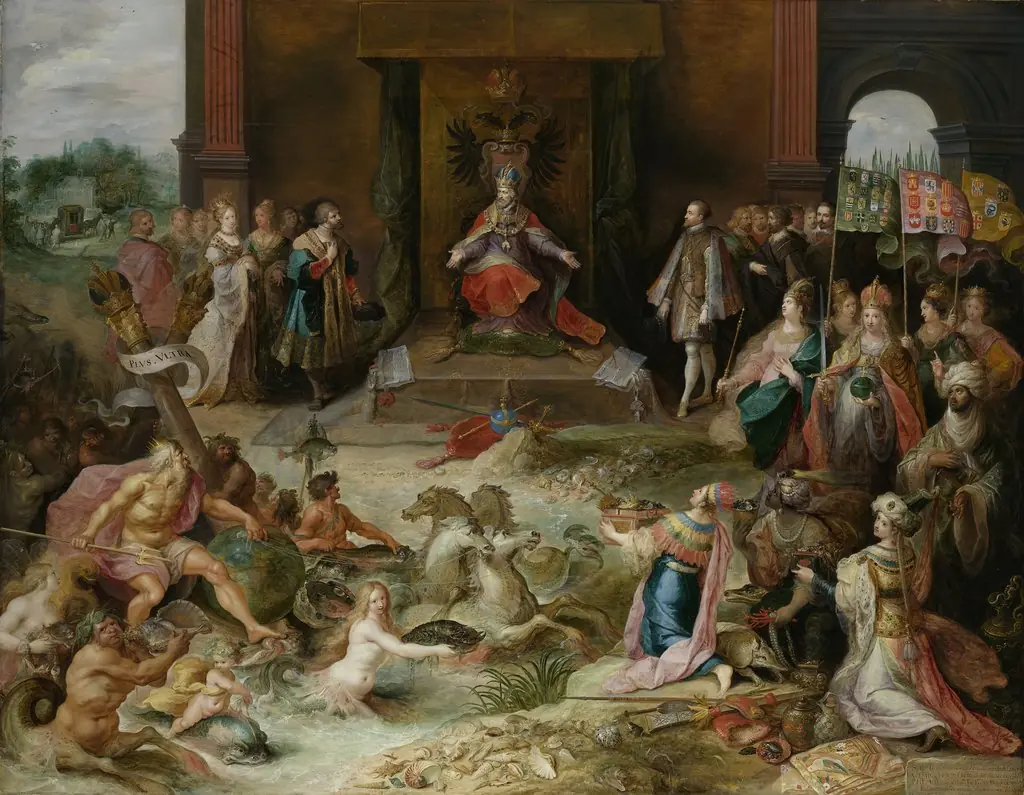
Allegory on the tyranny of the Duke of Alva in the Netherlands
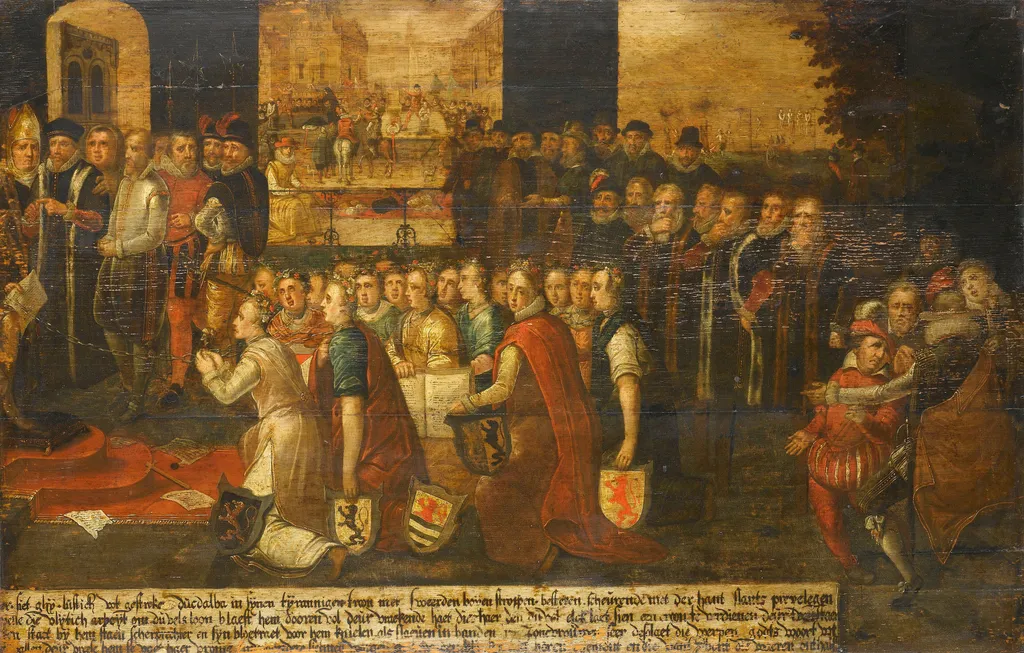
Allegory on the tyranny of the Duke of Alva in the Netherlands is an oil painting by the Flemish Baroque painting artist Unknown. It dates from 1626 and is held in the collection of the Rijksmuseum.
About this work
Overview
The oil painting titled *Allegory on the tyranny of the Duke of Alva in the Netherlands* portrays a crowded interior scene. A multitude of figures, some standing, others kneeling, occupy a room filled with symbolic objects such as a table draped in red, an open large book, and several heraldic shields. The composition conveys a solemn, reverent atmosphere.
Subject & Meaning
At the center, a man in a white robe holds a staff and stands upon a red carpet, suggesting authority or judgment. He is flanked by a woman in a red dress and a man wearing a black hat, figures that may represent different social or political roles within the allegory of oppression under the Duke of Alva.
Technique & Style
The artist employs chiaroscuro to model forms and create spatial depth, allowing light to fall on the central figures while the surrounding space recedes into shadow. This contrast guides the viewer’s eye toward the foreground and enhances the three‑dimensional illusion of the interior.
Context
The work references the historical period of the Spanish Duke of Alva’s rule over the Netherlands, a time marked by harsh repression. By presenting an allegorical scene rather than a literal narrative, the painting comments on the broader themes of tyranny and resistance.
History & Provenance
No specific details about the painting’s ownership history or exhibition record are provided in the source material.
Artist & collection

 Domestic Scene
 Giacomo and Cardinal Marco, investing Andrea, Abbot of San Zeno, with his Benefice
 The Nymph of Fontainebleau
 Portrait of a Woman
 Madonna and Child with Saints in the Enclosed Garden
 Venus and Minerva
 Family Group of Four on Sofa
 Wall painting from Room H of the Villa of P. Fannius Synistor at Boscoreale
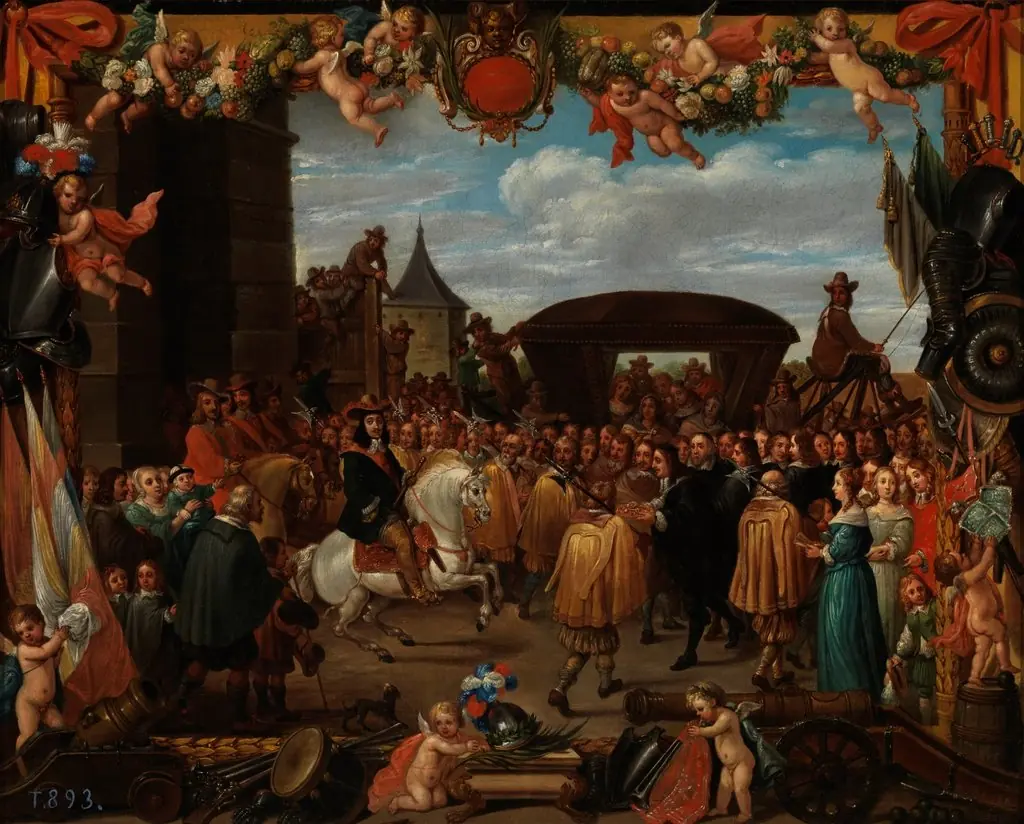 Entrada triunfal de don Juan José de Austria (?)
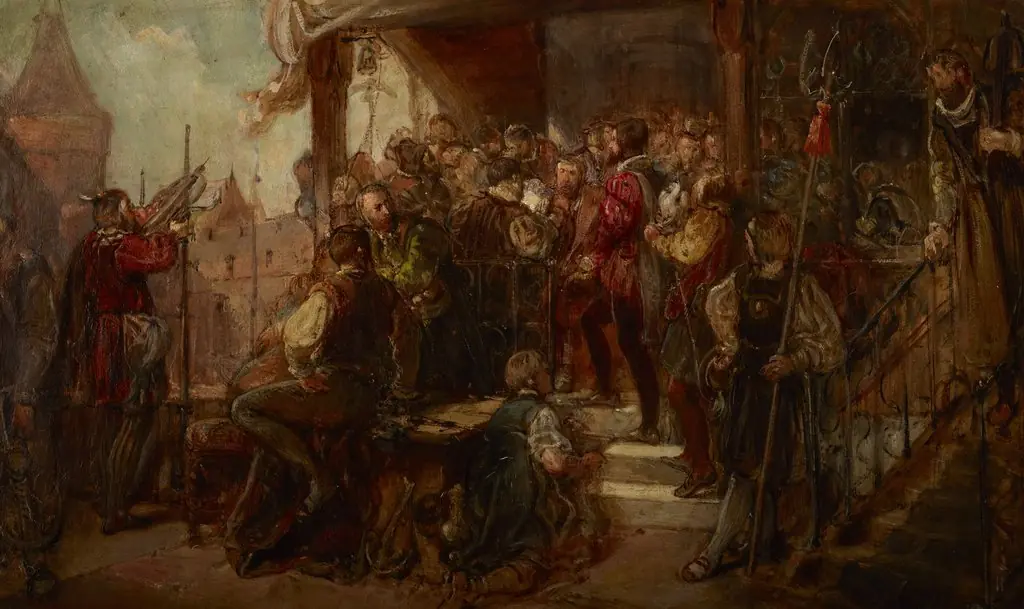 Presenting the Fowler to the Fowler Brotherhood (Sketch)
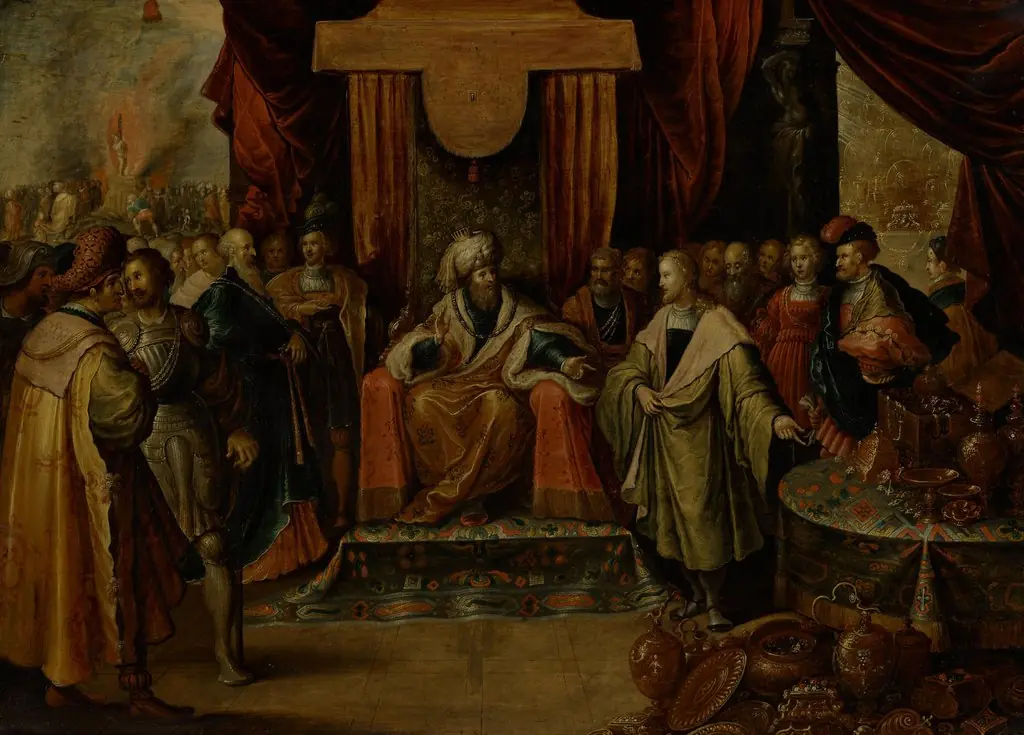 Solon und Krösus
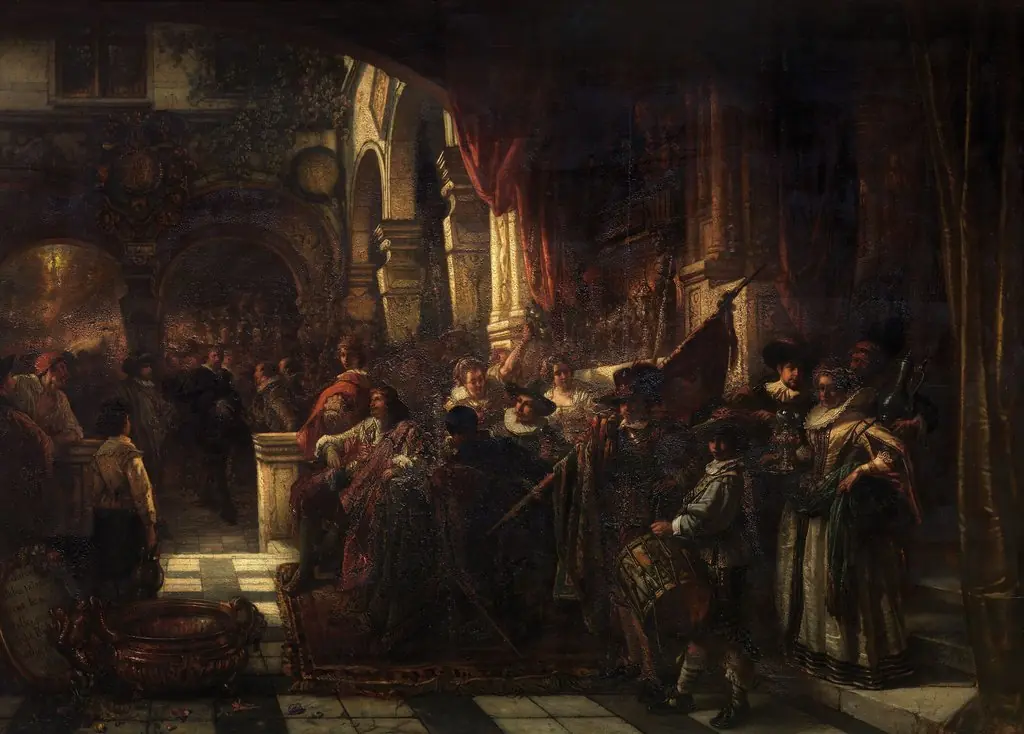 The Reception of Peter Paul Rubens by the Antwerp Arquebusiers
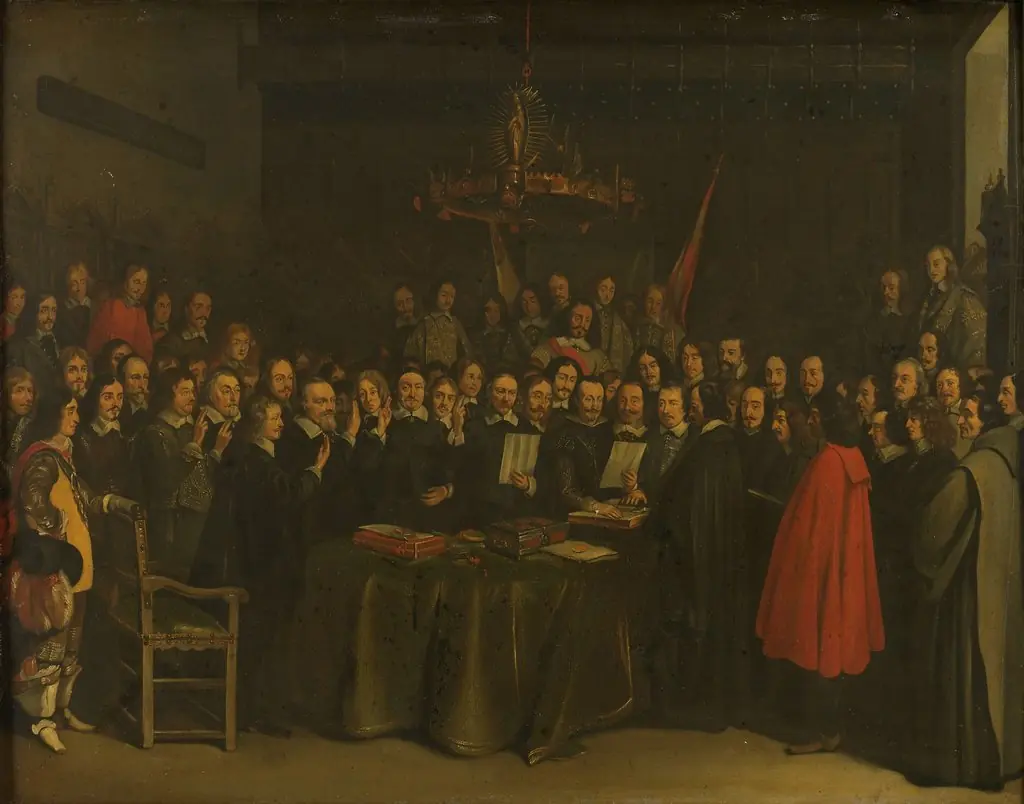 Ratification of the Peace of Münster between Spain and the Dutch Republic in the town hall of Münster, 15 May 1648
 Untitled
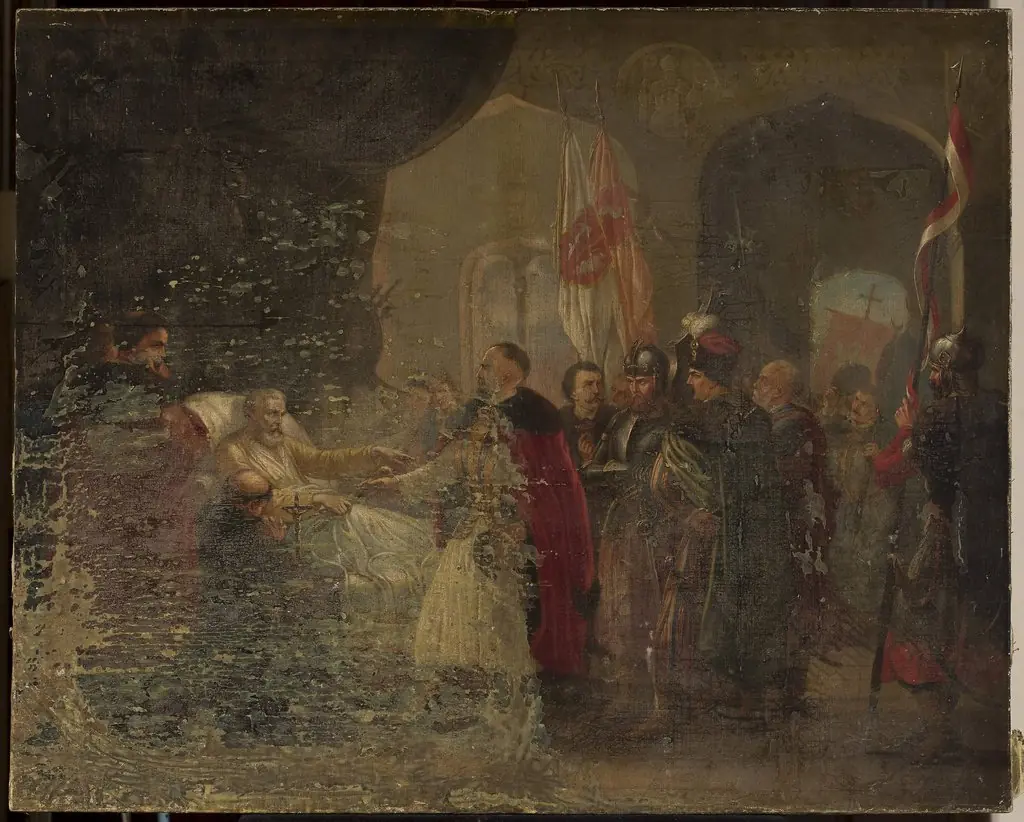 Death of the leader
 Władysław IV after the Battle of Smoleńsk
 Saul Welcoming David after his Victory over Goliath
 Charles II Giving Audience at Christ's Hospital
 David's Brother Relating to Him Goliath's Challenge
 Allegory on the Abdication of Emperor Charles V in Brussels