Artwork
Untitled
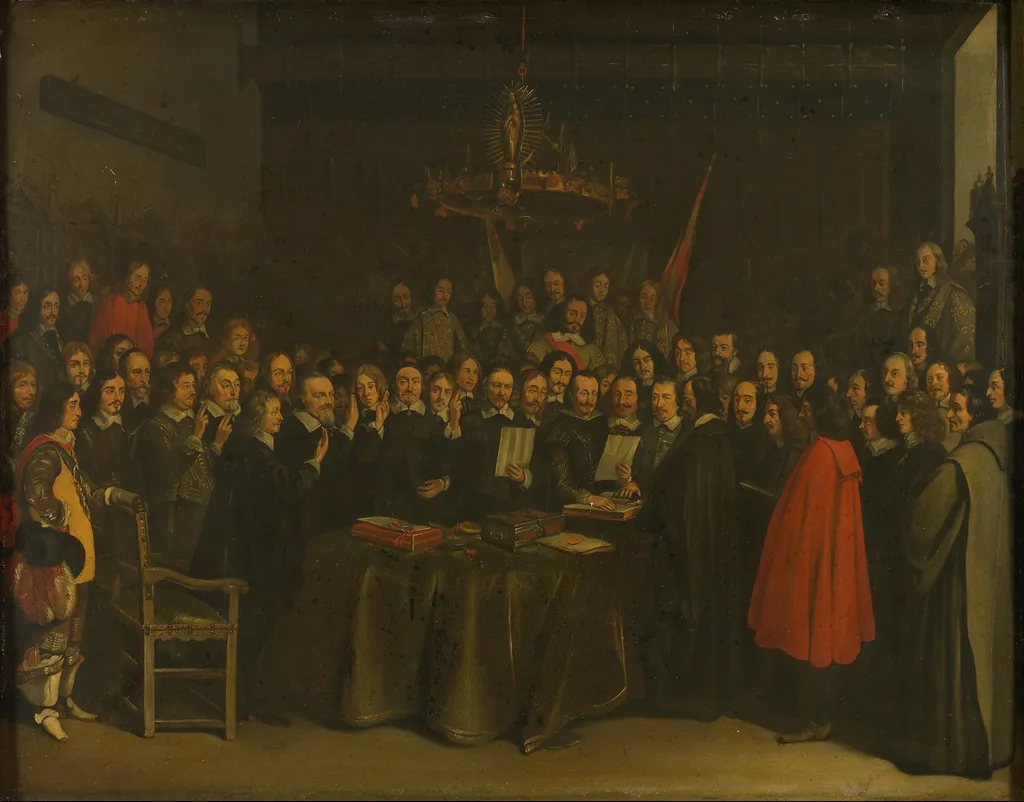
Untitled is an unspecified painting by the Dutch Golden Age artist Unknown. It dates from 1659 and is held in the collection of the Rijksmuseum.
About this work
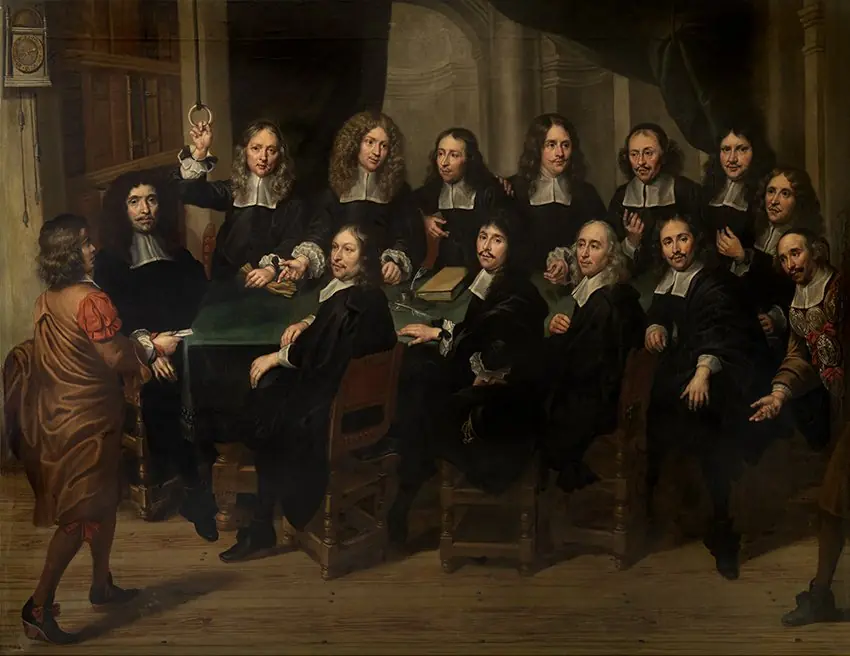
You see a crowded room where two groups of men stand facing each other across a long table.
You see a crowded room where two groups of men stand facing each other across a long table.
This painting shows the moment in 1648 when the Dutch and Spanish signed a peace treaty. The Dutch raised two fingers—a Protestant gesture—while the Spanish swore on a Bible. The small wooden boxes on the table held the signed documents. No one knows who painted it, but it feels like a quick, honest record of history.
To see more scenes like this, visit the Rijksmuseum.
Overview
The work records the historic signing of the peace treaty on 15 May 1648 in the Münster town hall, when the Dutch Republic and Spain formally ended their war. Two opposing groups of men stand on either side of a long table, their gestures and objects highlighting the moment of reconciliation.
Subject & Meaning
On the left, the Dutch delegation raises the index and middle fingers, a gesture associated with their Protestant identity, while on the right the Spanish envoys, representing Catholic Spain, place their right hands upon a cross and a Bible as they swear. The composition underscores the religious and diplomatic contrast that defined the negotiations.
Technique & Style
Rendered in a straightforward, documentary manner, the painting employs a muted palette and clear delineation of figures to convey a factual record rather than an idealised scene. The focus on the gestures and the modest wooden boxes on the table draws attention to the legal instruments being exchanged.
History & Provenance
Gerard ter Borch was present at the ceremony in Münster, providing an eyewitness connection to the event, though the artist of the canvas remains unidentified. The painting has been held in private collections before entering a public museum, where it serves as a visual testimony to the 1648 peace.
Context
The treaty concluded the Eighty‑Years' War, reshaping the political map of Europe and confirming Dutch independence. The scene captures the formalities of early‑modern diplomacy, where religious symbolism and legal documentation were central to the validation of peace.
Legacy
As a visual document, the work offers scholars a rare glimpse of the ceremonial aspects of 17th‑century treaty‑making, complementing written accounts of the Treaty of Münster and informing understandings of Dutch‑Spanish relations.
Artist & collection

 Domestic Scene
 Giacomo and Cardinal Marco, investing Andrea, Abbot of San Zeno, with his Benefice
 The Nymph of Fontainebleau
 Portrait of a Woman
 Madonna and Child with Saints in the Enclosed Garden
 Venus and Minerva
 Family Group of Four on Sofa
 Wall painting from Room H of the Villa of P. Fannius Synistor at Boscoreale
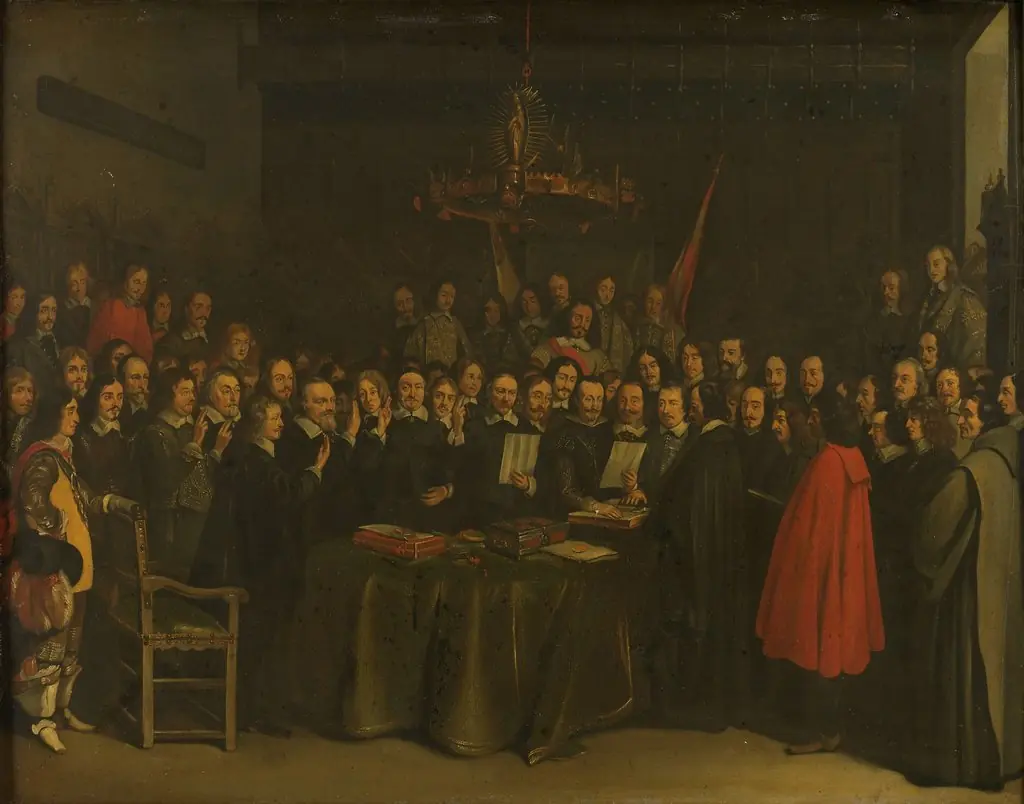 Ratification of the Peace of Münster between Spain and the Dutch Republic in the town hall of Münster, 15 May 1648
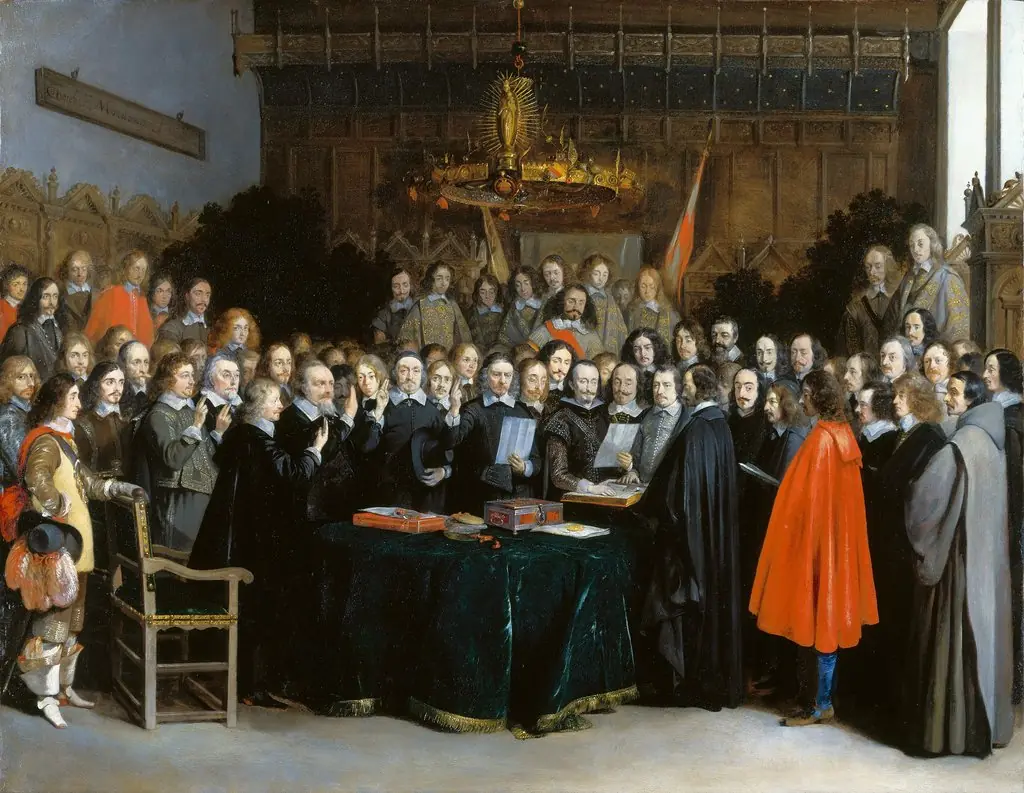 The Ratification of the Treaty of Münster
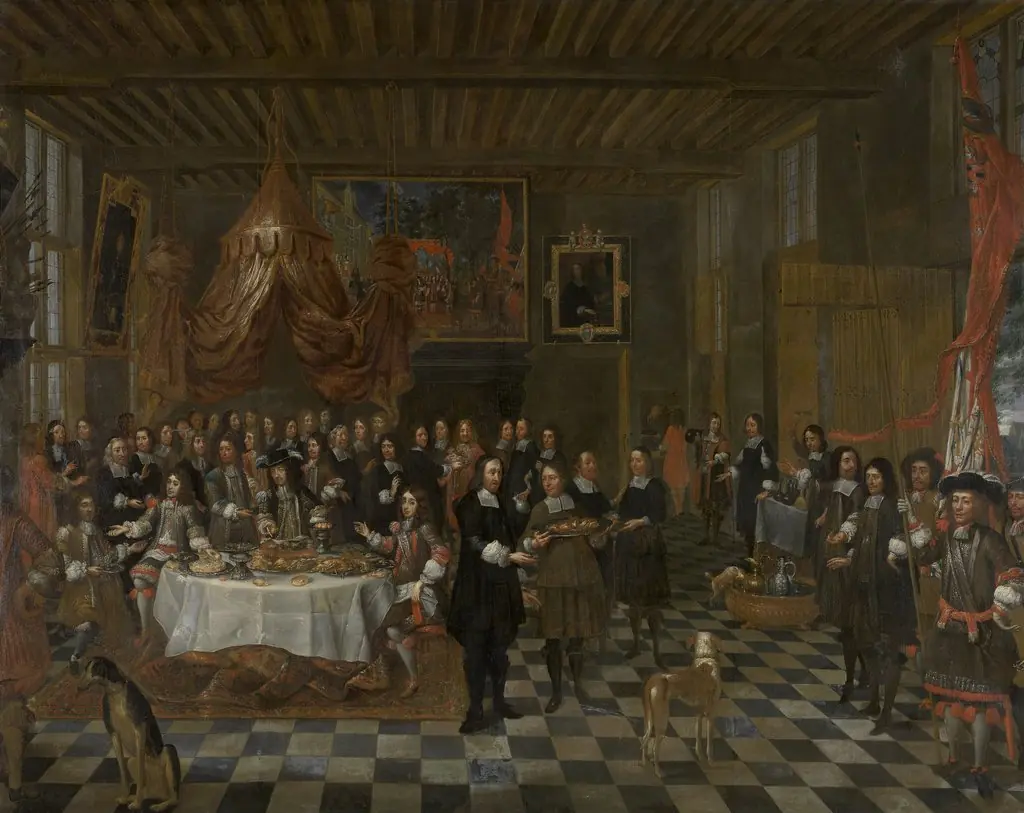 The Reception of Charles II and his Brothers in the Guild of Saint Barbara in Bruges
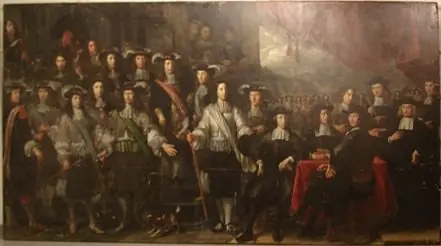 Council of war of eleven companies of the Dordrecht militia, ca 1675
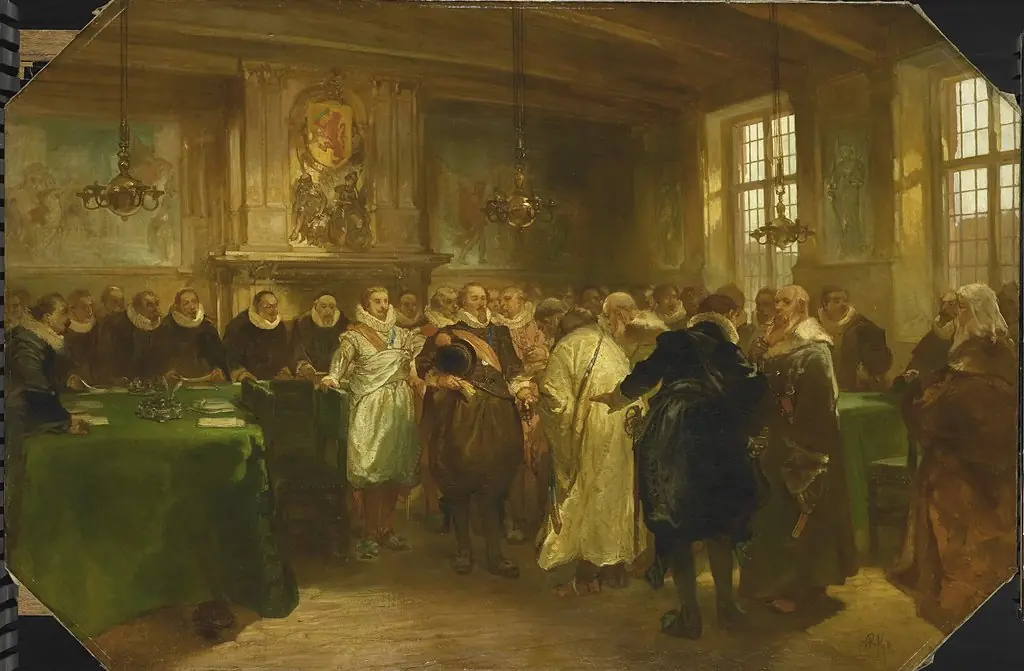 Prince Maurits Receiving a Russian Delegation in 1614
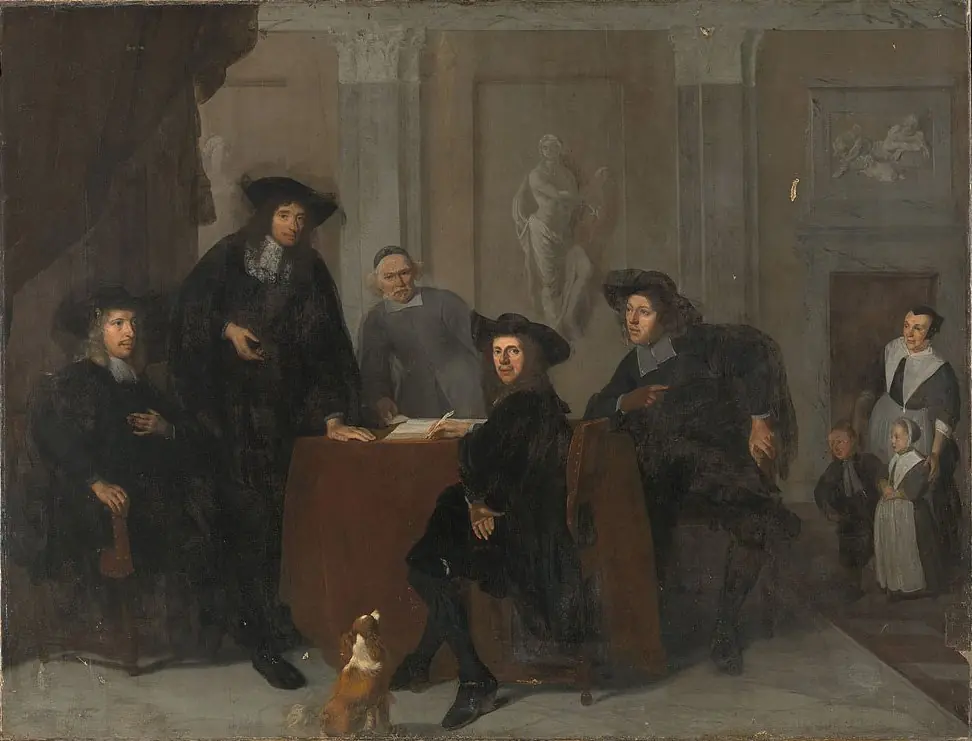 Regents of the Leper's house in Amsterdam
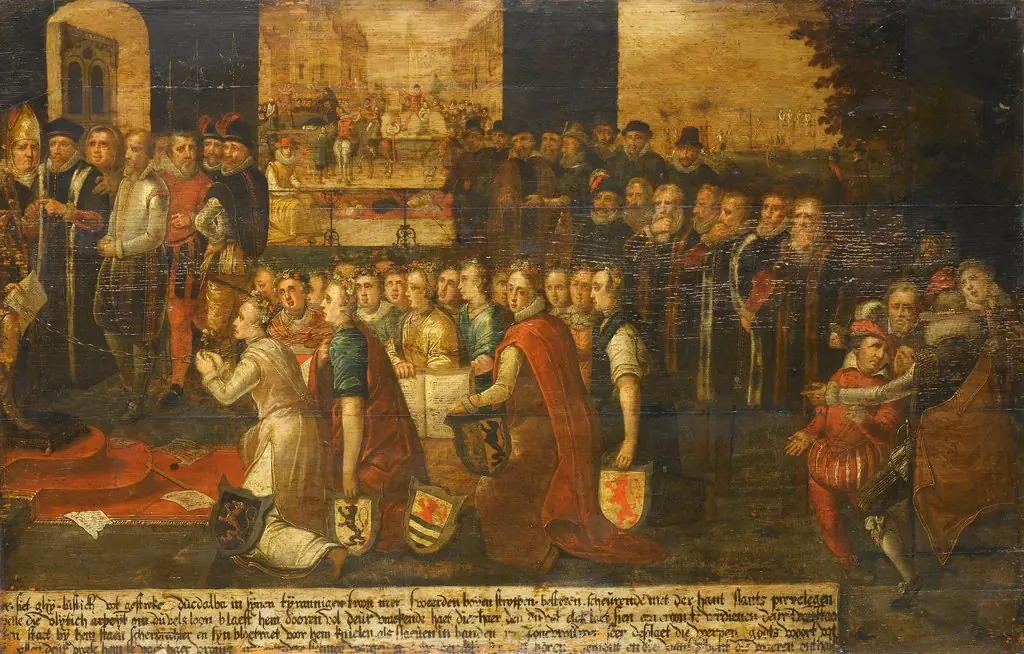 Allegory on the tyranny of the Duke of Alva in the Netherlands
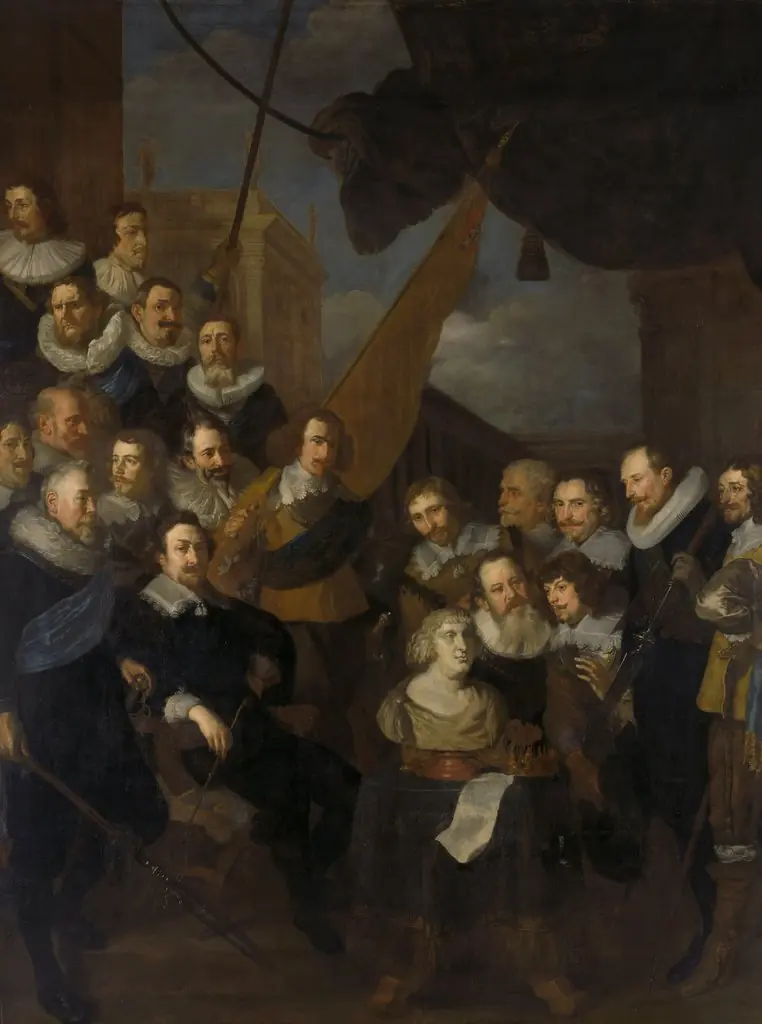 Officers of the militia of departmetn XIX in Amsterdam under the command of Cornelis Bicker and Frederick van Banchem, ready to receive Maria de' Medici in 1638
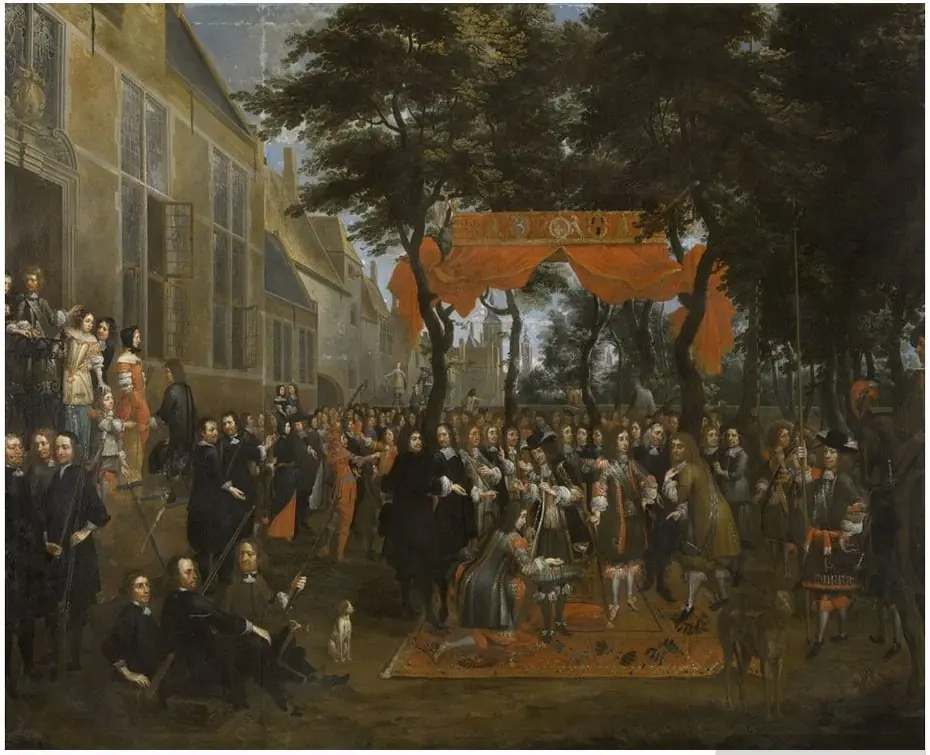 The Reception of Charles II and his Brothers
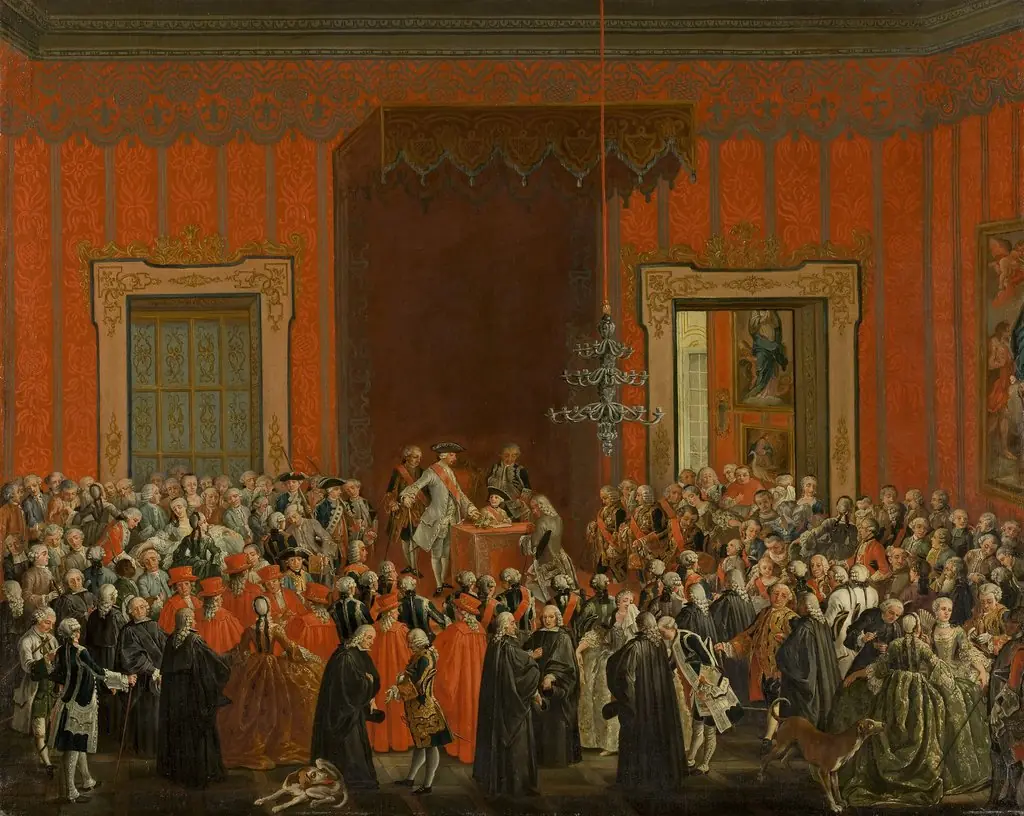 Carlos III renuncia a la corona de Nápoles
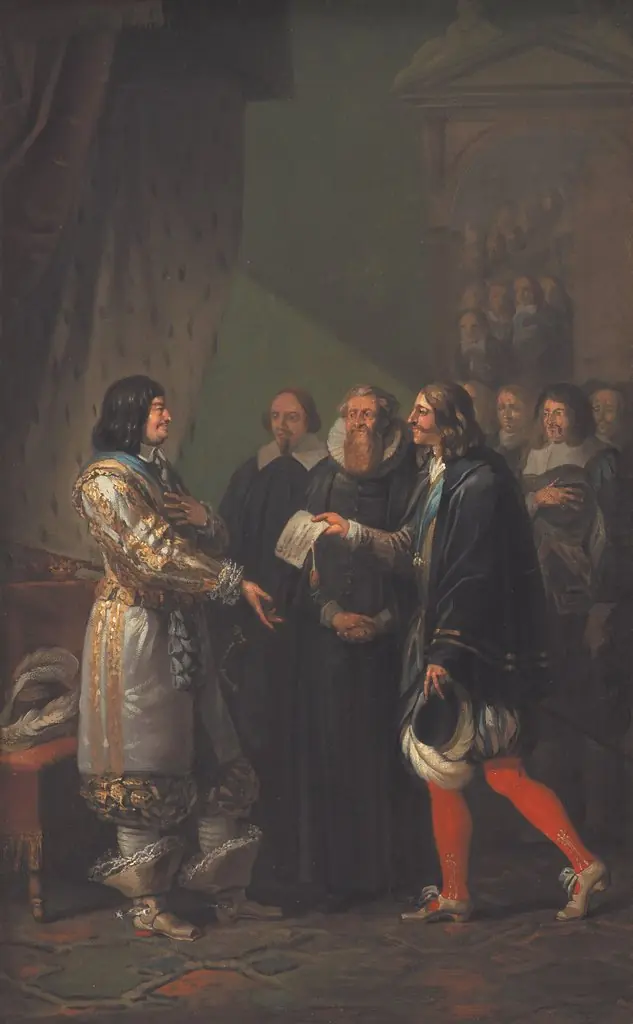 Absolute Monarchy Assigned to Frederik III in 1660
 Het bestuur van het Brugse chirurgijnsambacht