Artwork
Street Pedlar (dummy board)
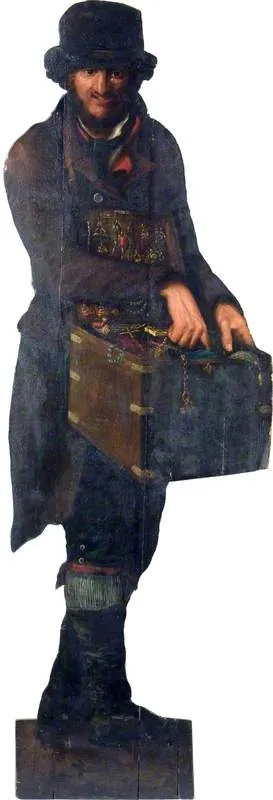
Street Pedlar (dummy board) is an unspecified painting by the Realist artist Unknown. It dates from 1820 and is held in the collection of the Victoria and Albert Museum. This painting depicts a solitary figure standing on a wooden platform, dressed in dark, practical clothing typical of a traveling vendor.
About this work
Overview
Rendered with careful attention to form and shadow, the work functions as a dummy board—a painted figure used to attract attention in commercial settings.
This painting depicts a solitary figure standing on a wooden platform, dressed in dark, practical clothing typical of a traveling vendor. The figure holds a large case, suggesting the role of a peddler. Rendered with careful attention to form and shadow, the work functions as a dummy board—a painted figure used to attract attention in commercial settings. Its realism and scale imply it was designed for public display rather than private collection.
Subject & Meaning
The figure represents a common occupational type of the early 19th century: a street vendor transporting goods from place to place. His stillness and direct gaze create a sense of quiet presence, inviting passersby to engage. The absence of context or background focuses attention on his role and attire, transforming the image into a symbolic representation of itinerant labor and commerce in urban or roadside economies.
Technique & Style
The artist employs chiaroscuro to model the figure with strong contrasts between light and shadow, giving the form a sculptural solidity. Brushwork is restrained, emphasizing volume over texture. The background is muted and flat, ensuring the figure remains the sole focus. This approach aligns with portrait conventions of the period but adapts them for a functional, public-facing purpose rather than personal commemoration.
History & Provenance
The painting was likely created as a dummy board, a type of painted figure used in shopfronts or marketplaces to draw attention to goods or services. Such works were common in Europe and North America during the early 1800s but rarely preserved. Its survival suggests it may have been collected later as an example of vernacular art, though its original location and creator remain undocumented.
Context
In the early 19th century, street vendors played a vital role in local economies, especially in areas lacking formal retail. Dummy boards like this one served as visual advertisements before the rise of printed signage. Their creation often fell to local painters or signmakers, blending artistic skill with commercial pragmatism. This work reflects the intersection of art and everyday economic life in pre-industrial urban settings.
Legacy
Though once a functional object, this painting now offers insight into the visual culture of commerce and labor. It stands as a rare surviving example of a once-common genre, preserving the appearance and dignity of ordinary workers. Its preservation has shifted its meaning from advertisement to historical artifact, valued for its testimony to social and economic practices of its time.
Artist & collection

 Domestic Scene
 Giacomo and Cardinal Marco, investing Andrea, Abbot of San Zeno, with his Benefice
 The Nymph of Fontainebleau
 Portrait of a Woman
 Madonna and Child with Saints in the Enclosed Garden
 Venus and Minerva
 Family Group of Four on Sofa
 Wall painting from Room H of the Villa of P. Fannius Synistor at Boscoreale
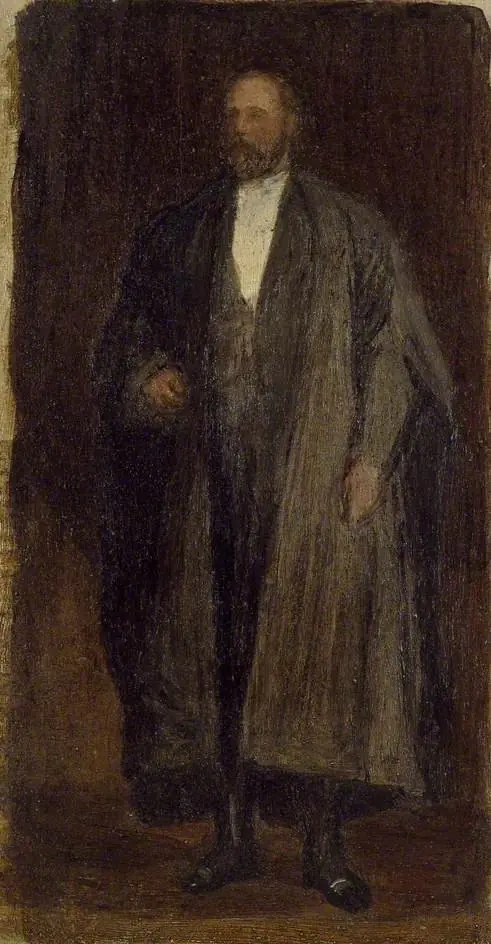 Edward VII as Prince of Wales
 St Augustine
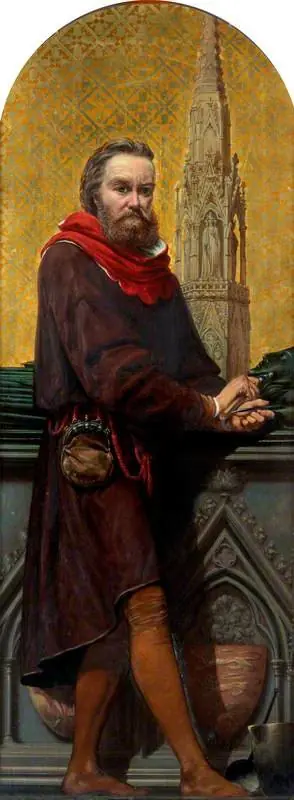 William Torrel (1291–1303) (design for a mosaic in the Victoria and Albert Museum)
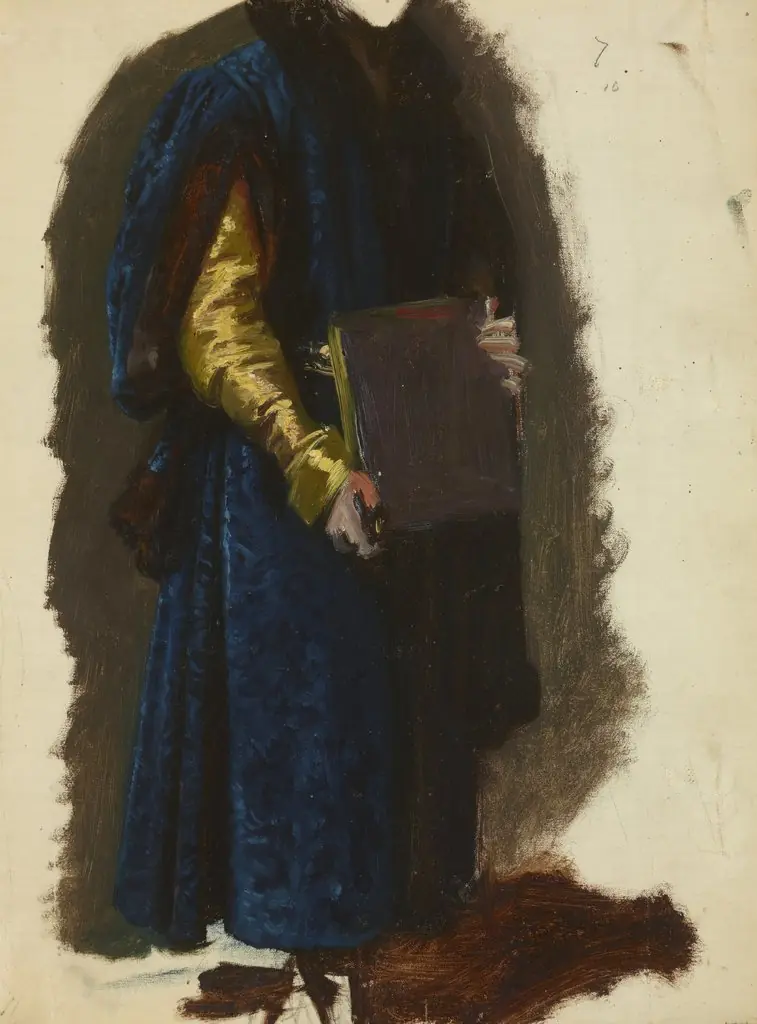 Jaśko of Tęczyn's Garment. Study to the Painting "The Oath of Queen Jadwiga"
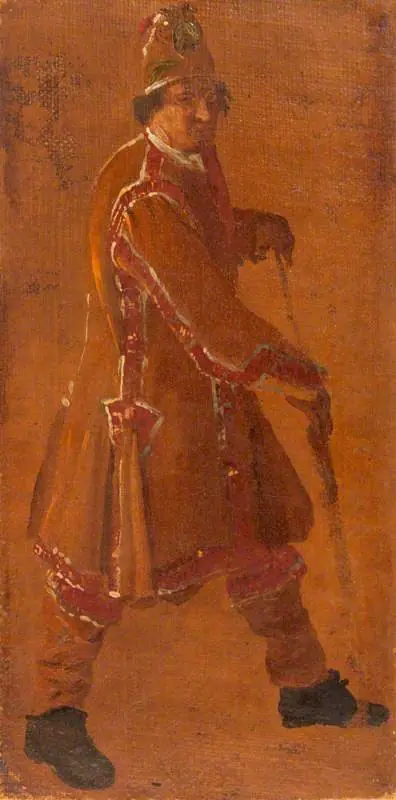 A Gondolier
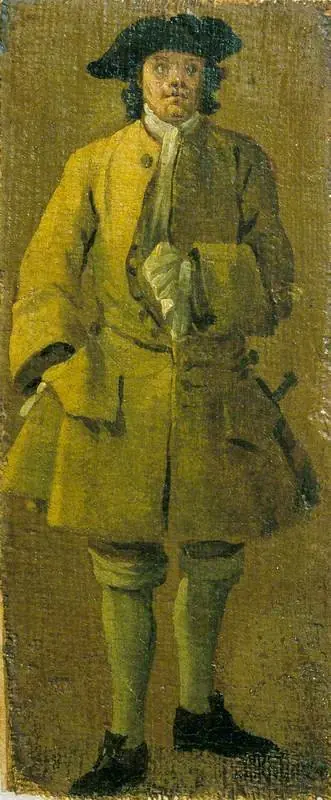 A Man Wearing a Yellow Coat
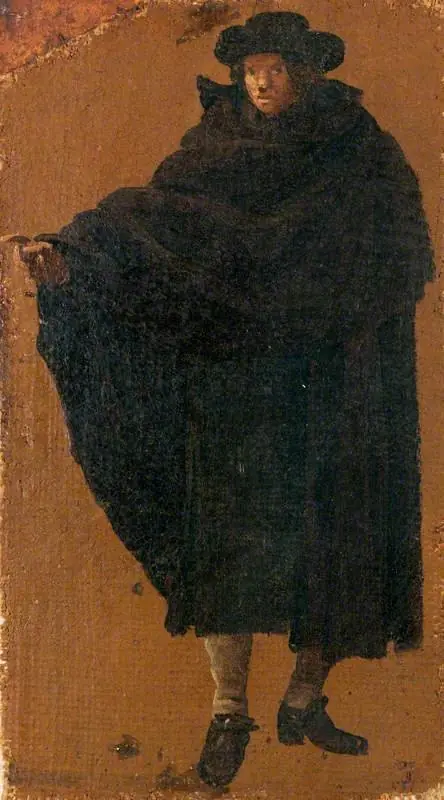 A Man in a Dark Cloak
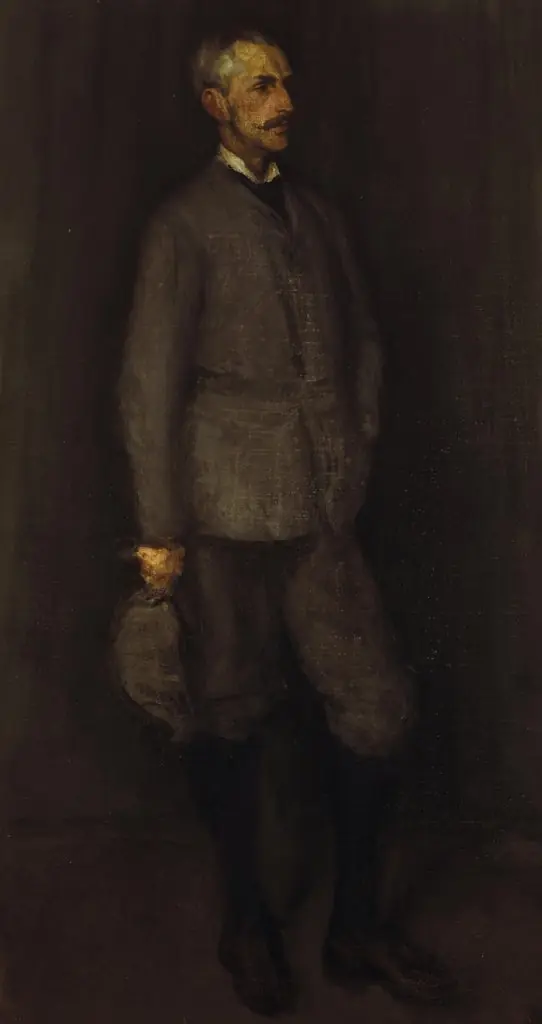 Arrangement in Grey and Green. Portrait of John James Cowan
 A Man Wearing a Green Coat
 Autorretrato de cuerpo entero (María Roësset Mosquera)
 Cyril Jones
 Man with a Barrel Organ (dummy board)