Artwork
Tantric Manuscript "Sangrahani Sutra"
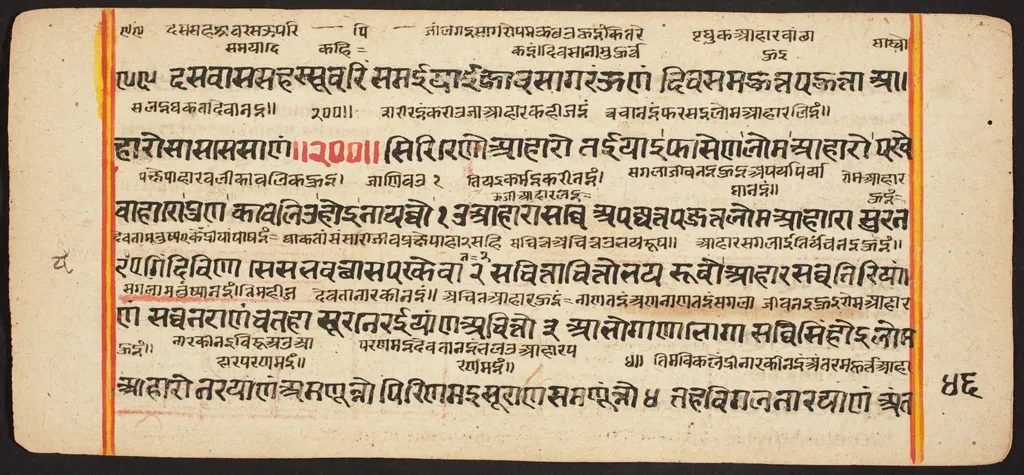
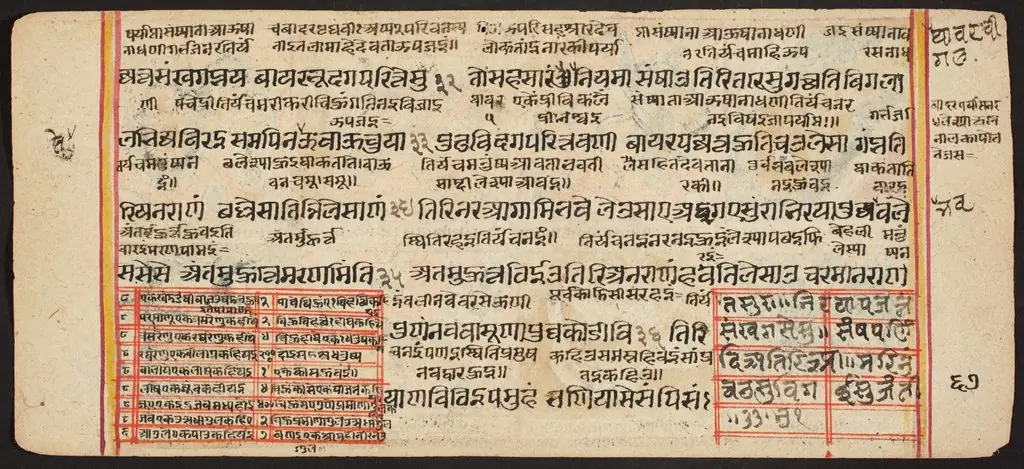
Tantric Manuscript "Sangrahani Sutra" is an unspecified painting by Unknown. It is held in the collection of the Detroit Institute of Arts. This manuscript page is part of the Sangrahani Sutra, a tantric Buddhist text written in Sanskrit.
About this work
Overview
The surface shows signs of wear—fading, creases, and minor tears—yet the handwriting remains legible, suggesting careful handling over centuries.
This manuscript page is part of the Sangrahani Sutra, a tantric Buddhist text written in Sanskrit. Created on aged paper, it features dense black ink script with occasional red highlights, likely used for emphasis or ritual marking. The surface shows signs of wear—fading, creases, and minor tears—yet the handwriting remains legible, suggesting careful handling over centuries. Its formal cursive style reflects the precision expected in sacred textual transmission.
Subject & Meaning
The Sangrahani Sutra belongs to the Vajrayana Buddhist tradition, offering doctrinal summaries and meditative instructions for practitioners. Its content organizes key tantric principles, often serving as a guide for initiates. The use of red ink may denote protective syllables or sacred names, aligning with ritual conventions in esoteric Buddhist manuscripts. The text’s structure implies it was meant for study, recitation, or ritual use rather than public display.
Technique & Style
The script is executed in a highly stylized cursive form typical of medieval Indian scribal traditions, with deliberate flourishes that enhance readability and aesthetic reverence. Black ink, likely iron gall, was used for the main text, while red pigment—possibly vermilion—marked important passages. The paper, handmade and thin, shows signs of aging but retains structural integrity, indicating durable materials and skilled preservation practices.
History & Provenance
The manuscript likely originated in eastern India or Nepal between the 10th and 13th centuries, a period of flourishing tantric Buddhist scholarship. It was probably copied by monastic scribes in a temple or monastery setting. The Detroit Institute of Arts acquired it as part of a broader collection of South Asian religious artifacts, though its exact provenance prior to modern collection remains undocumented.
Context
During the late first millennium CE, tantric Buddhism thrived in regions like Bihar and Bengal, where textual transmission was central to spiritual practice. Manuscripts such as this were not merely records but ritual objects, often kept in monastic libraries or carried by traveling teachers. Their production required specialized training, and their preservation reflected deep reverence for the Dharma as embodied in written form.
Legacy
This fragment exemplifies the enduring role of handwritten scripture in preserving esoteric Buddhist teachings. Though overshadowed by later printed texts, such manuscripts remain vital to scholarly understanding of tantric practice and material culture. Its survival, despite environmental and temporal degradation, underscores the value placed on these texts by generations of practitioners and custodians.
Artist & collection

 Domestic Scene
 Giacomo and Cardinal Marco, investing Andrea, Abbot of San Zeno, with his Benefice
 The Nymph of Fontainebleau
 Portrait of a Woman
 Madonna and Child with Saints in the Enclosed Garden
 Venus and Minerva
 Family Group of Four on Sofa
 Wall painting from Room H of the Villa of P. Fannius Synistor at Boscoreale
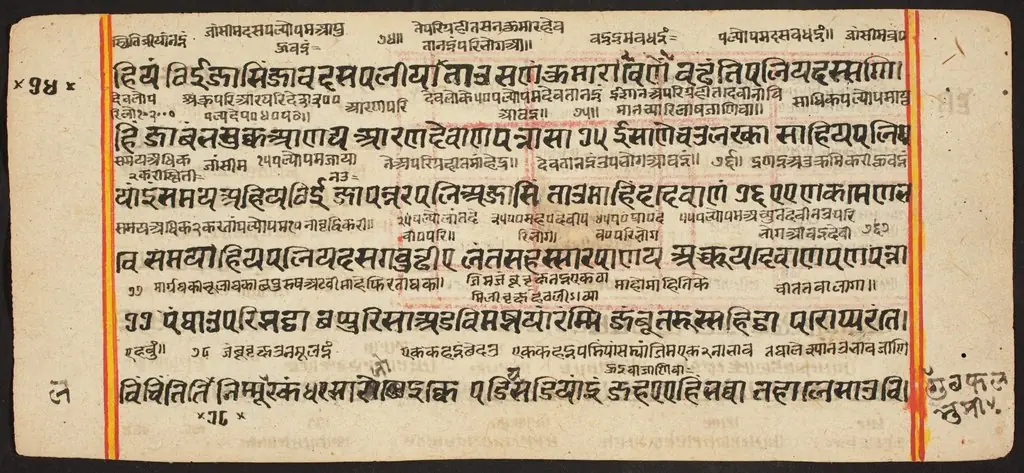 Tantric Manuscript "Sangrahani Sutra"
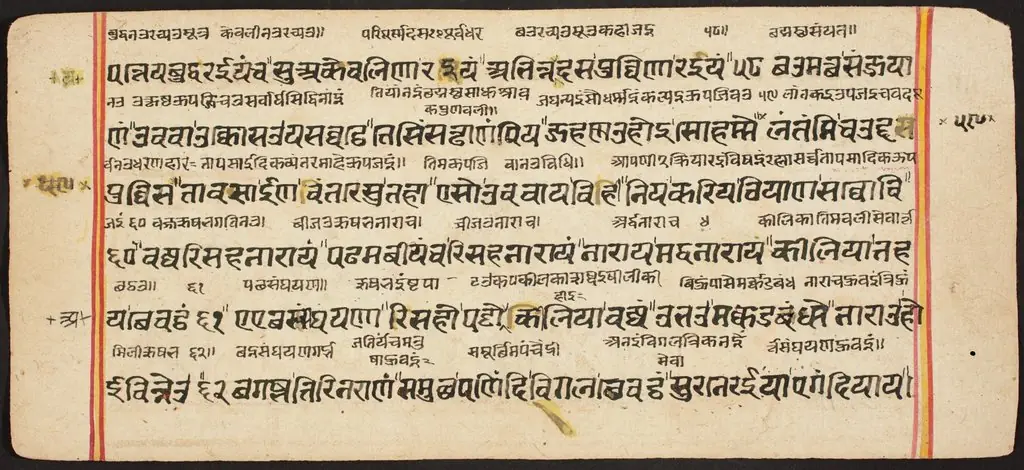 Tantric Manuscript "Sangrahani Sutra"
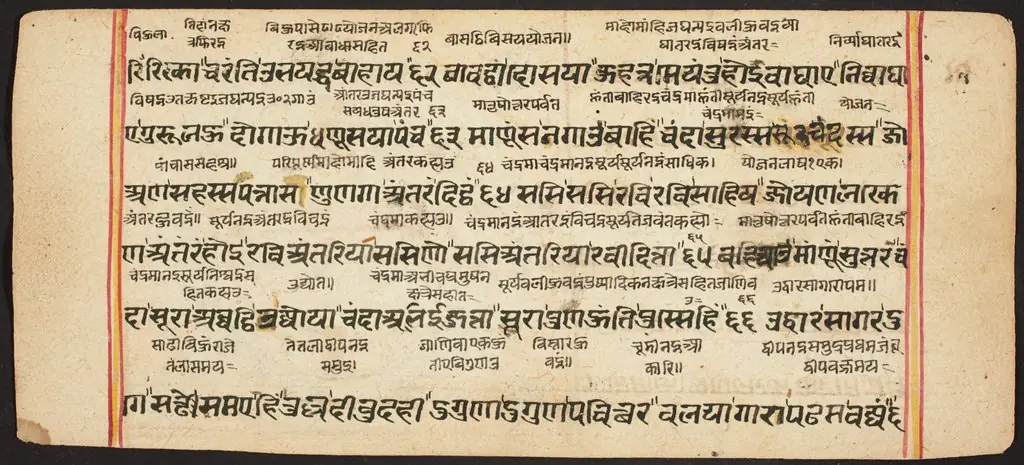 Tantric Manuscript "Sangrahani Sutra"
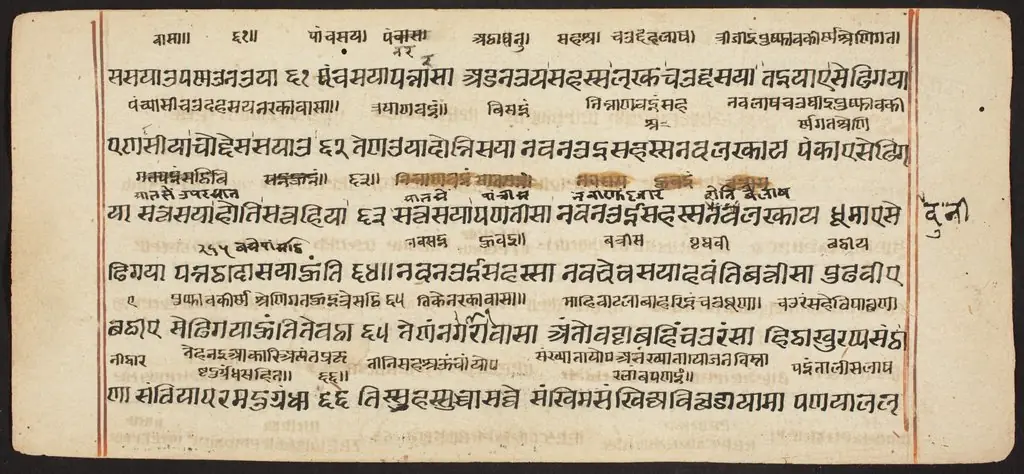 Tantric Manuscript "Sangrahani Sutra"
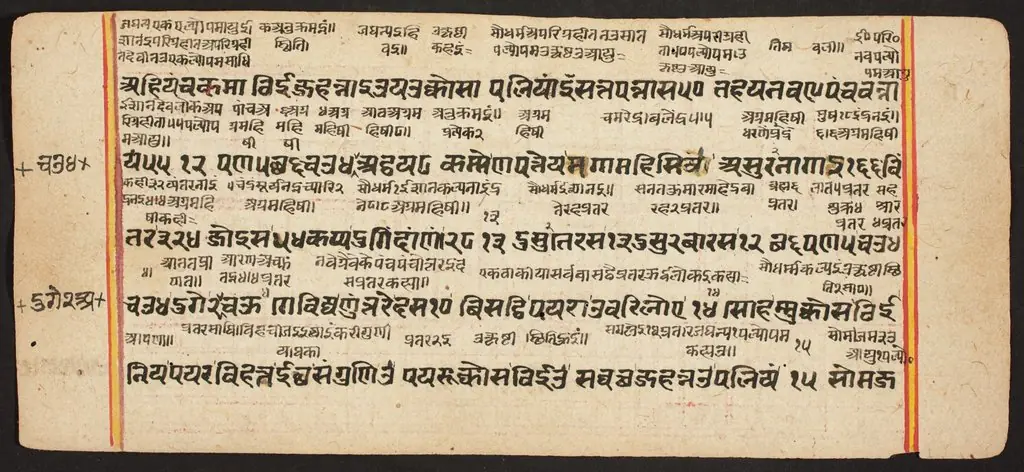 Tantric Manuscript "Sangrahani Sutra"
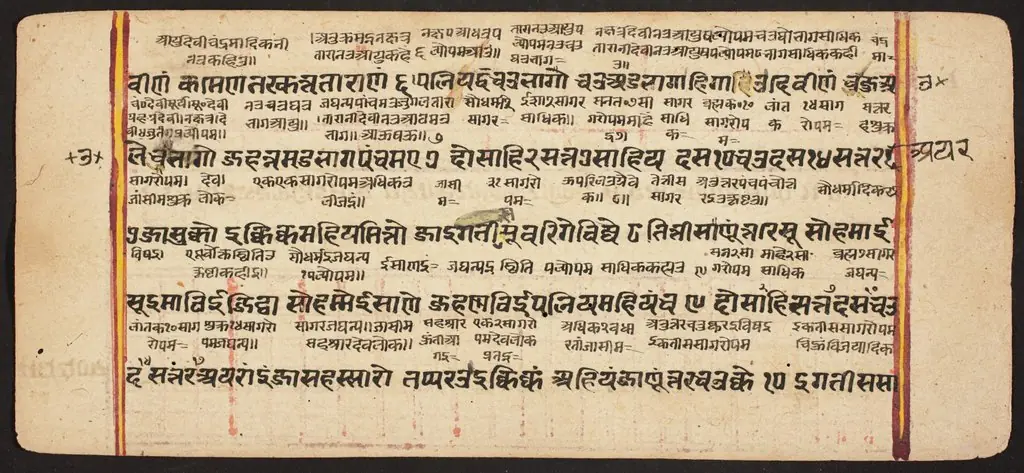 Tantric Manuscript "Sangrahani Sutra"
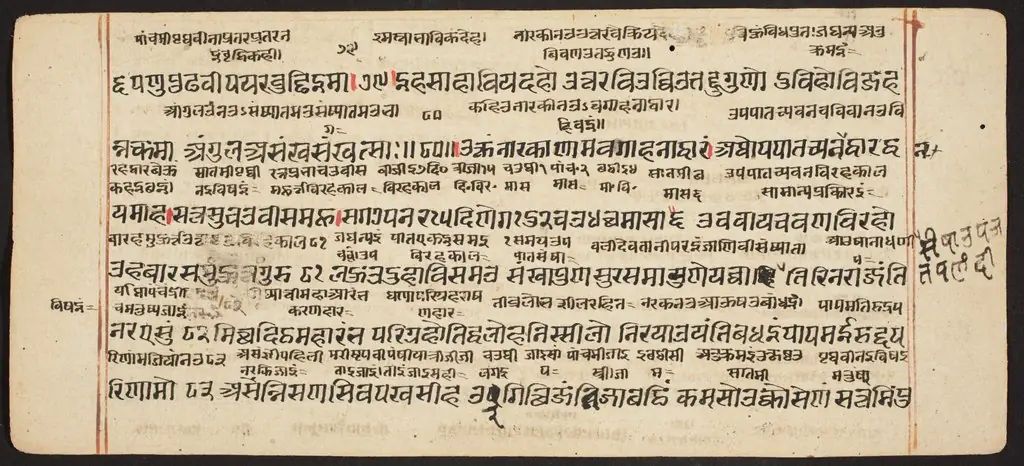 Tantric Manuscript "Sangrahani Sutra"
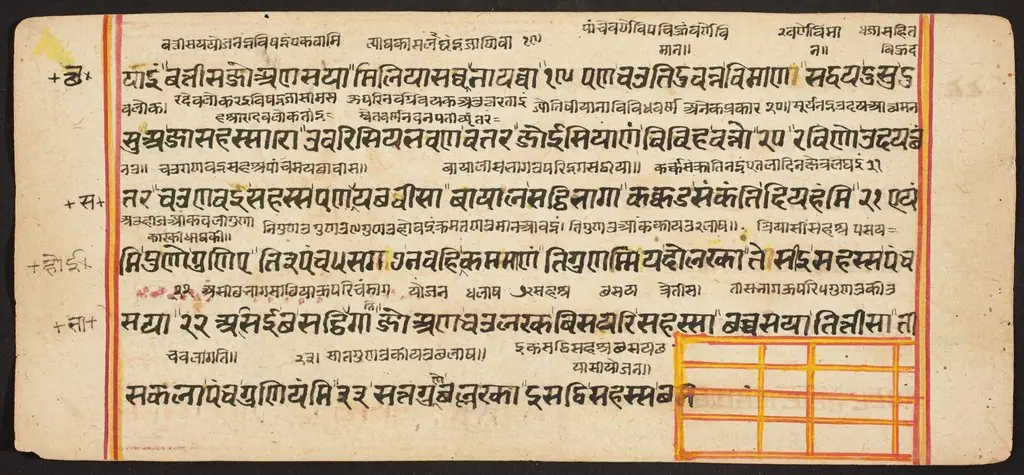 Tantric Manuscript "Sangrahani Sutra"
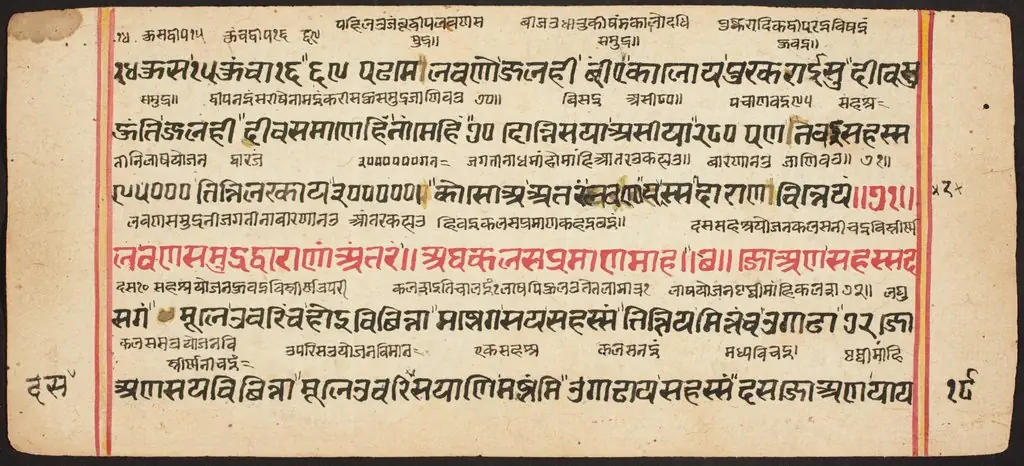 Tantric Manuscript "Sangrahani Sutra"
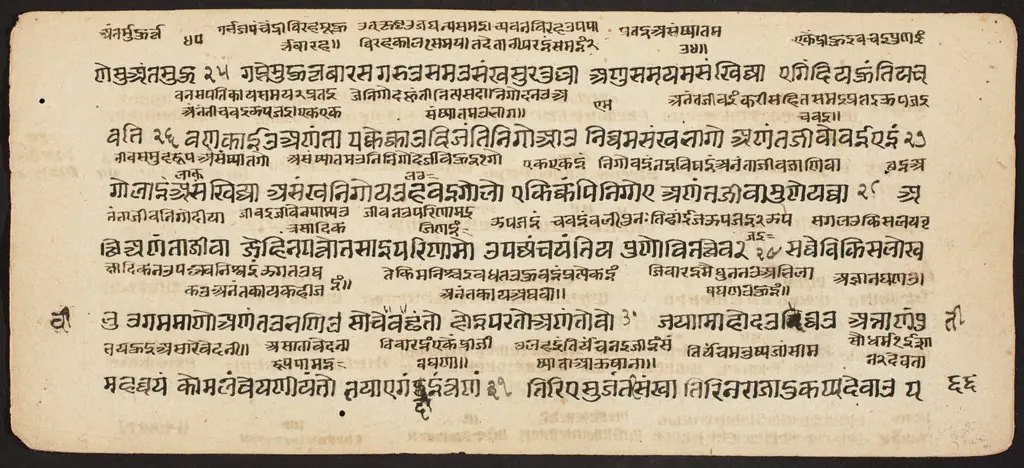 Tantric Manuscript "Sangrahani Sutra"
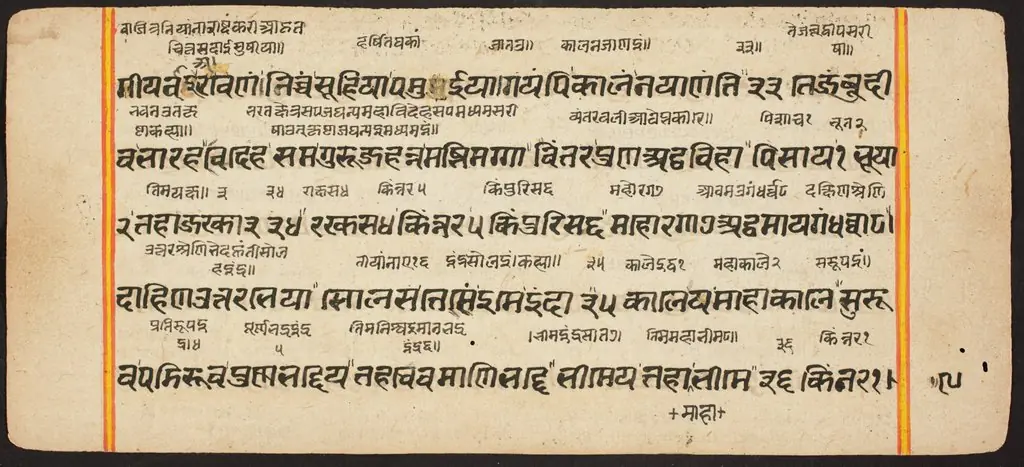 Tantric Manuscript "Sangrahani Sutra"
 Tantric Manuscript "Sangrahani Sutra"