Artwork
Kalpa Sutra
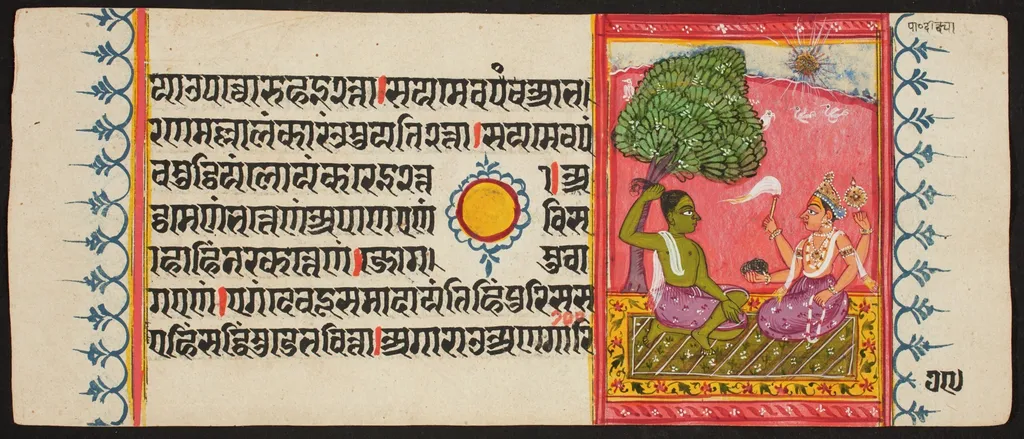
Kalpa Sutra is an unspecified painting by Unknown. It is held in the collection of the Detroit Institute of Arts.
About this work
Overview
The composition centers the figures through balanced color and spatial arrangement, emphasizing their ritual or ceremonial role within a sacred context.
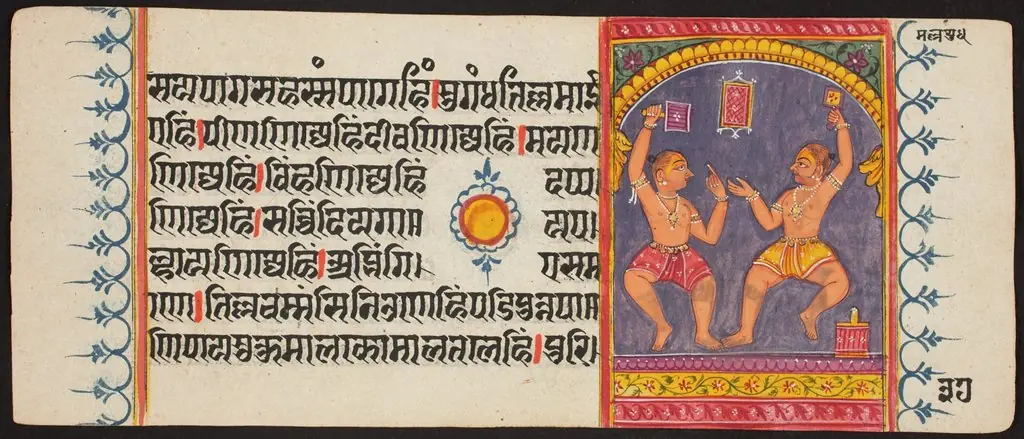
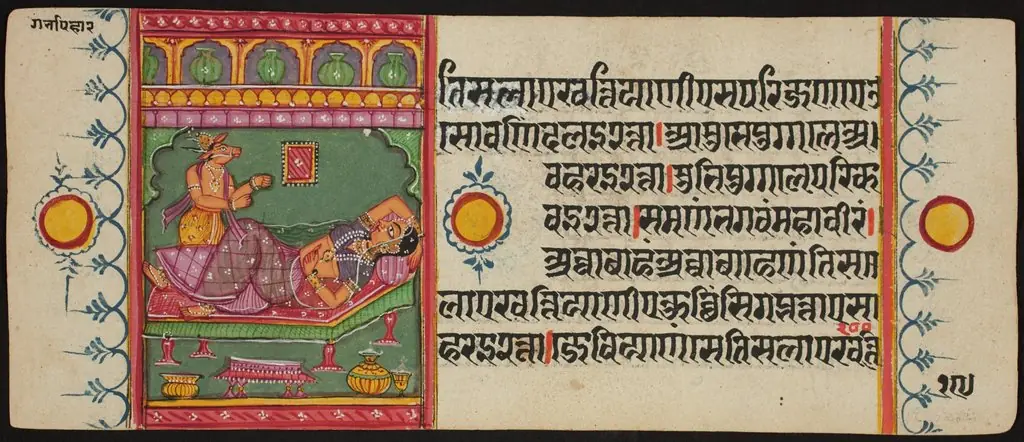
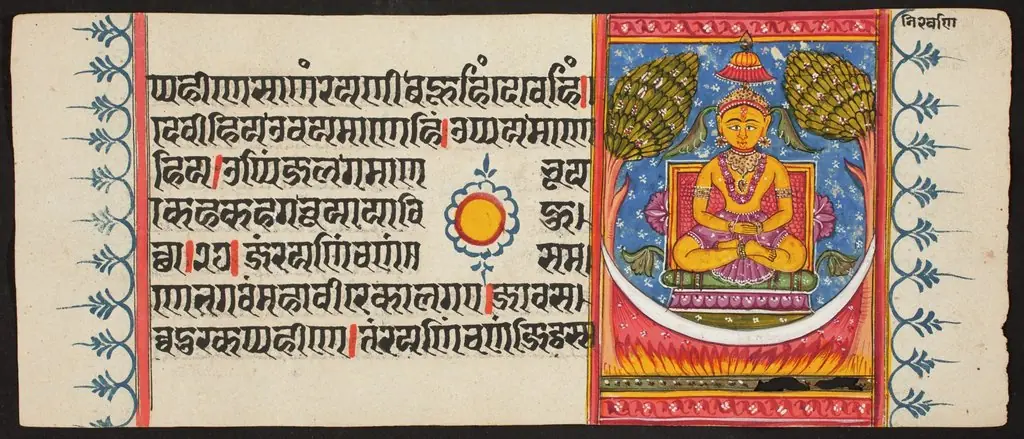
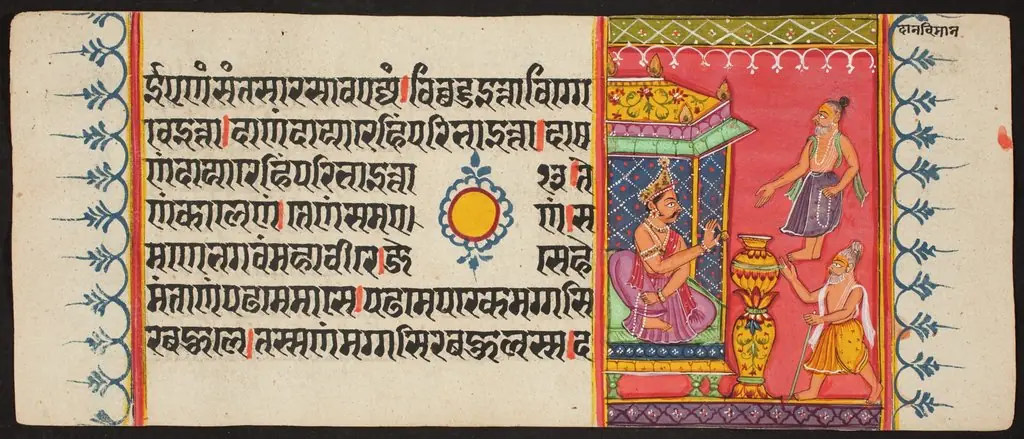
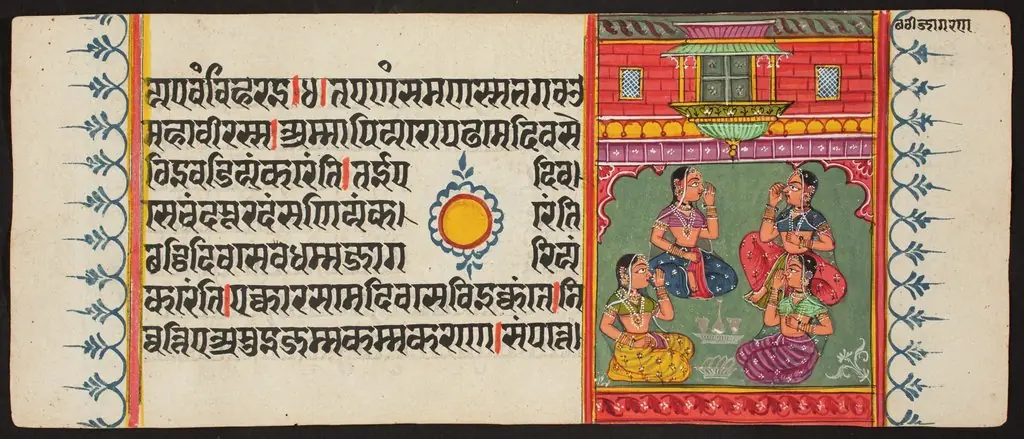
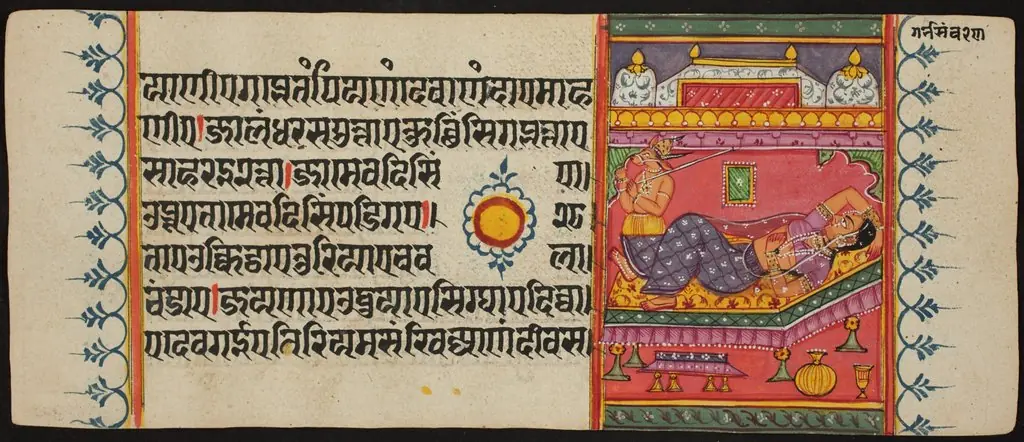
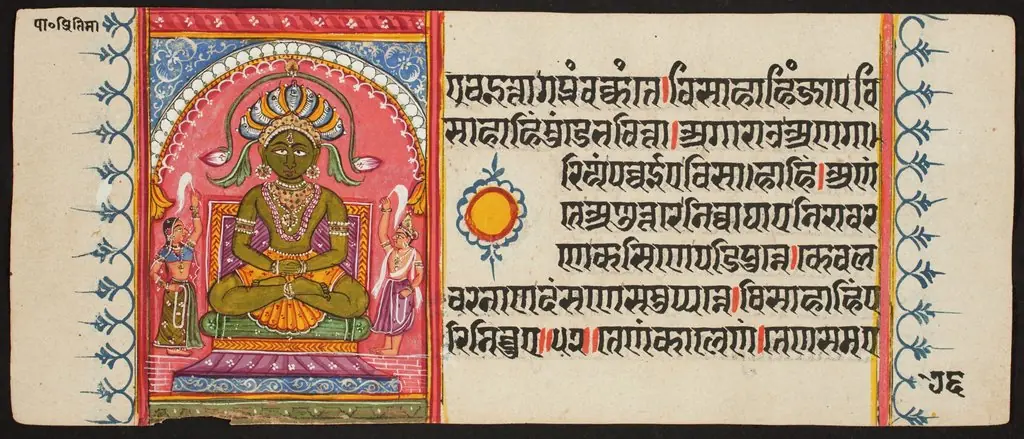
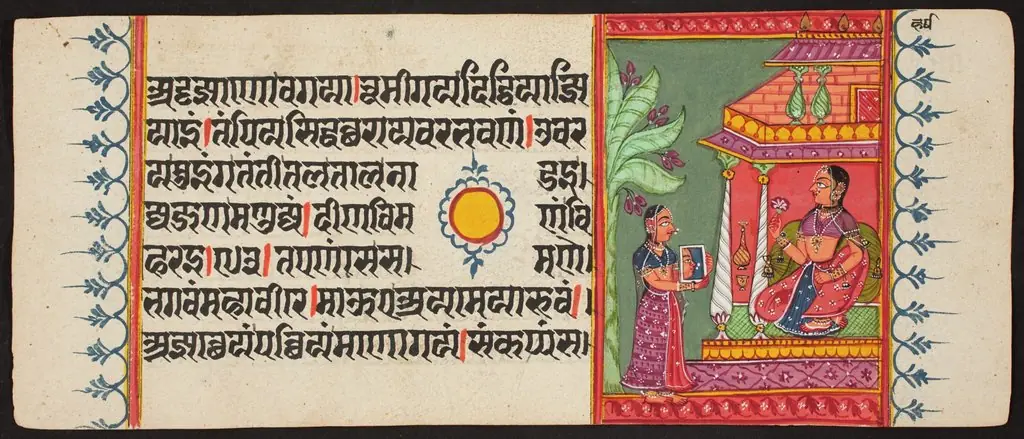
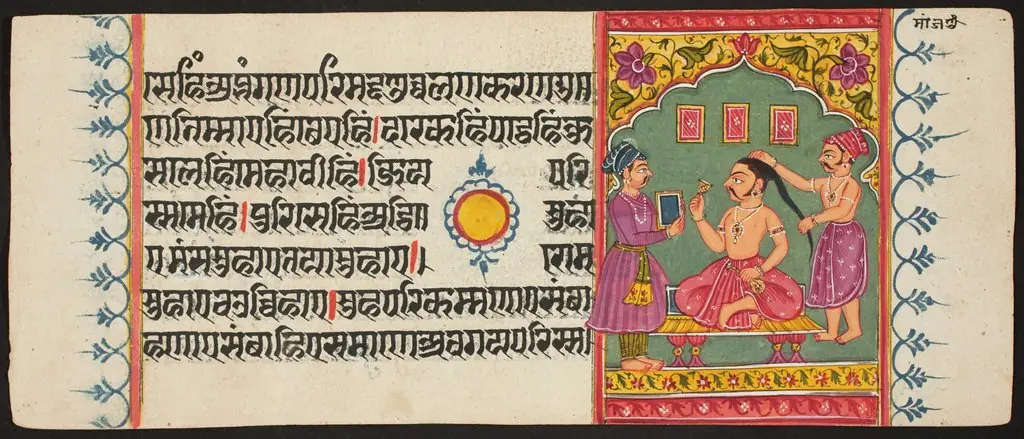
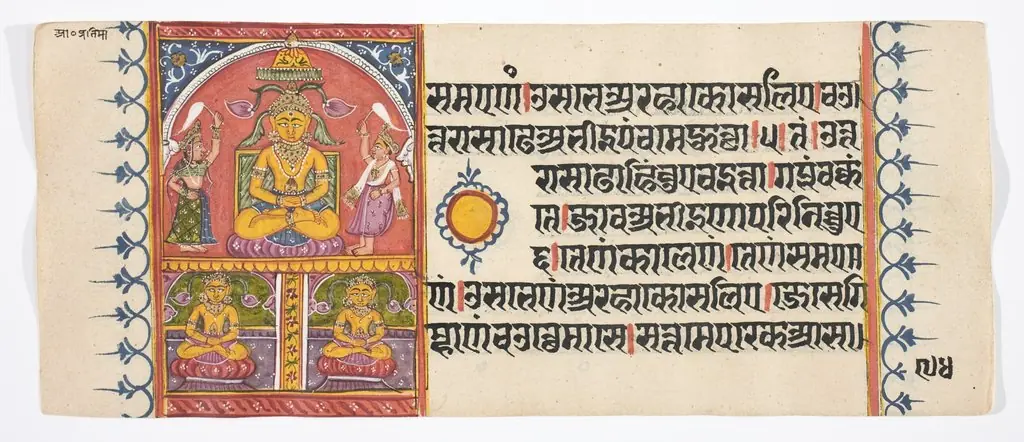
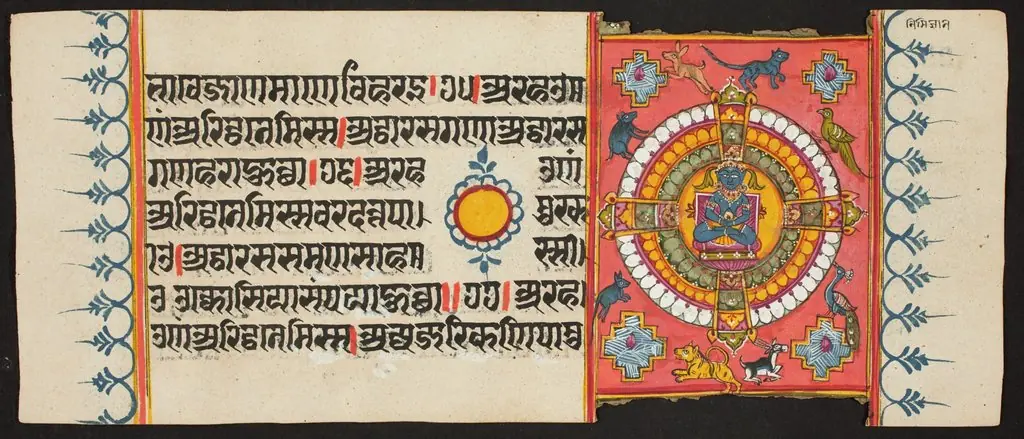
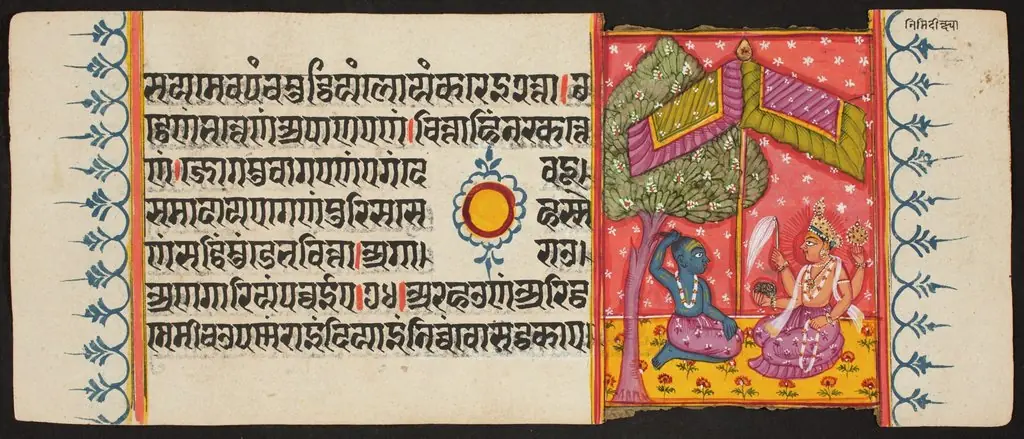
This painting belongs to the Kalpa Sutra tradition, a Jain manuscript illustration style known for its detailed narrative scenes. It depicts a seated male and female figure on a multicolored platform, set against a vivid red background with symbolic elements like a tree and sun. The composition centers the figures through balanced color and spatial arrangement, emphasizing their ritual or ceremonial role within a sacred context.
Subject & Meaning
The figures likely represent a Jain Tirthankara and a devotee, though the green skin of the male figure suggests a divine or transcendent form. The woman’s white object may be a ritual offering, such as a lotus or vessel, reinforcing spiritual devotion. Their attire and positioning reflect Jain ideals of asceticism and harmony, with the surrounding flora and celestial symbols indicating a sacred, timeless setting.
Technique & Style
The painting employs mineral pigments on paper, with flat planes of saturated color and fine linear detail. The border features intricate geometric and floral patterns typical of medieval Indian manuscript art. Figures are rendered with stylized proportions and minimal shading, prioritizing symbolic clarity over naturalism. The contrast between the vibrant red background and the figures’ muted tones enhances their centrality.
History & Provenance
Created in the 15th or 16th century in western India, likely in Gujarat or Rajasthan, this work was part of a larger illustrated manuscript of the Kalpa Sutra, a key Jain text detailing the lives of Tirthankaras. Such manuscripts were commissioned by wealthy patrons for temple use or private devotion. The painting’s preservation suggests it was carefully stored and handled within monastic or lay Jain communities.
Context
The Kalpa Sutra tradition emerged alongside Jain monastic practices, where illustrated texts served both educational and devotional purposes. Artists worked within strict iconographic rules, ensuring doctrinal accuracy. The use of gold, purple, and red pigments reflected the sacred status of the text, while the inclusion of nature motifs aligned with Jain cosmology’s emphasis on interconnected life.
Legacy
Works like this preserved Jain theological narratives through centuries, influencing later regional painting styles. Though production declined after the 17th century, surviving examples remain vital to understanding medieval Indian religious art. Today, they are studied for their technical precision and as cultural artifacts of Jain identity and spiritual practice.
Artist & collection

 Domestic Scene
 Giacomo and Cardinal Marco, investing Andrea, Abbot of San Zeno, with his Benefice
 The Nymph of Fontainebleau
 Portrait of a Woman
 Madonna and Child with Saints in the Enclosed Garden
 Venus and Minerva
 Family Group of Four on Sofa
 Wall painting from Room H of the Villa of P. Fannius Synistor at Boscoreale