Artwork
Kalpa Sutra
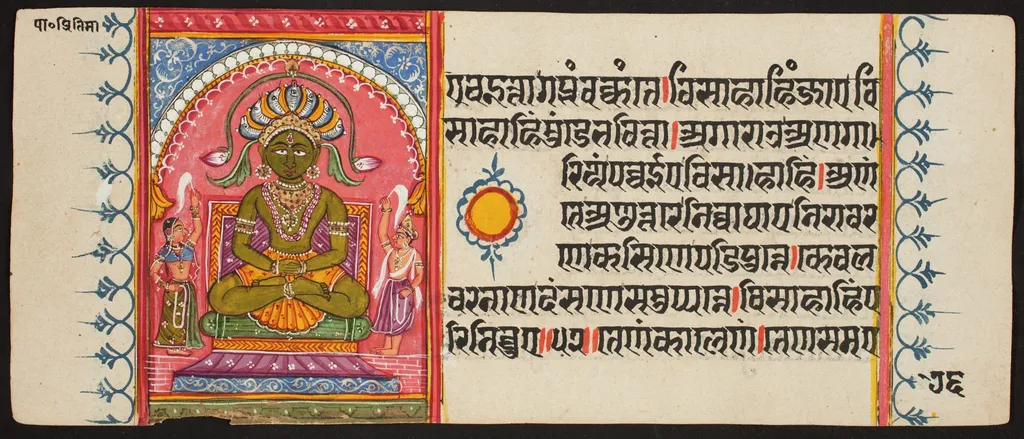
Kalpa Sutra is an unspecified painting by Unknown. It is held in the collection of the Detroit Institute of Arts.
About this work
Overview
The composition is framed by a decorative border and rendered in mineral pigments on paper, typical of pre-modern Indian manuscript art.
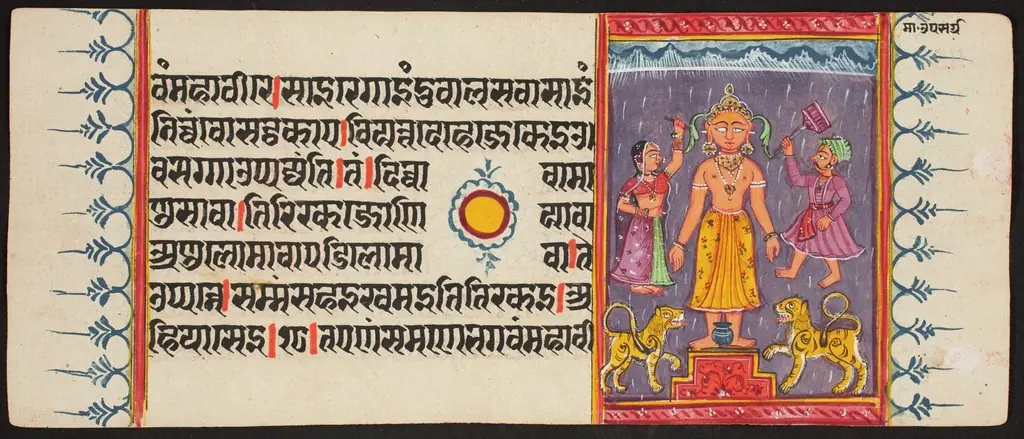
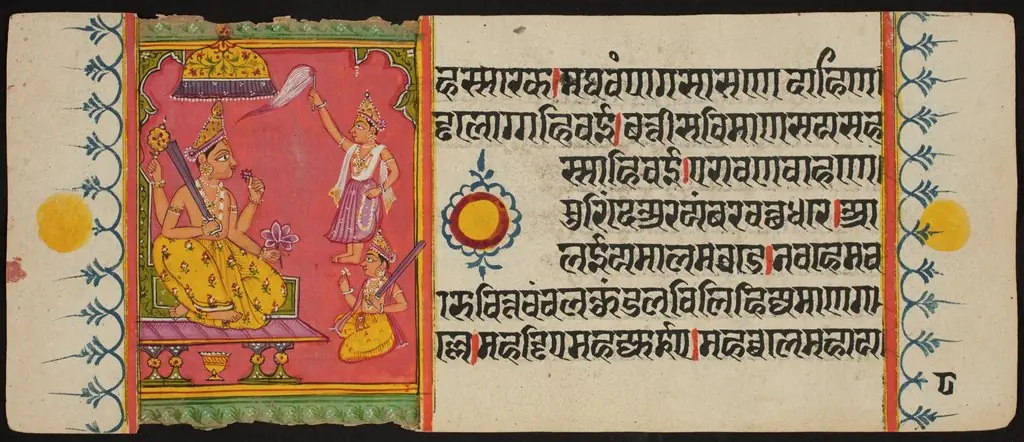
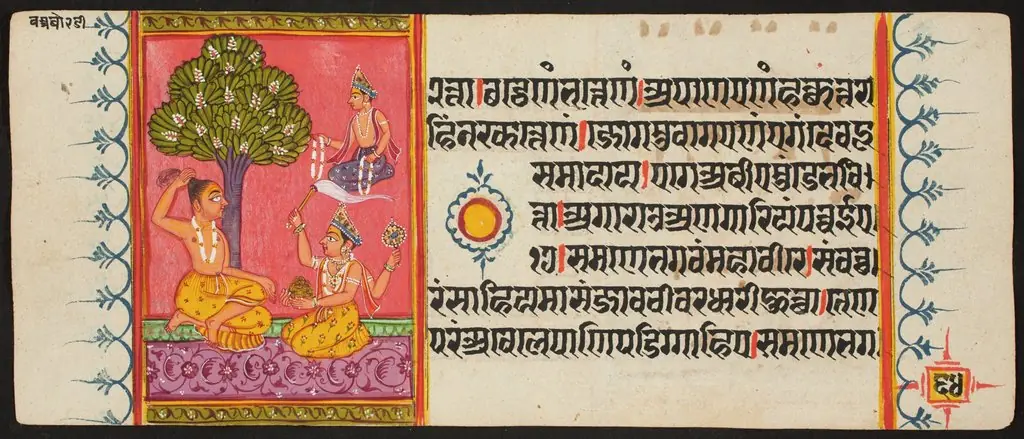
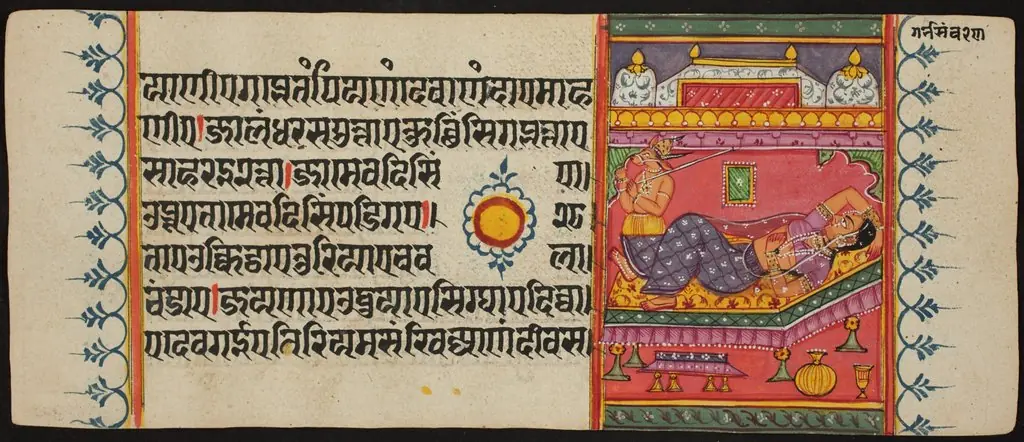
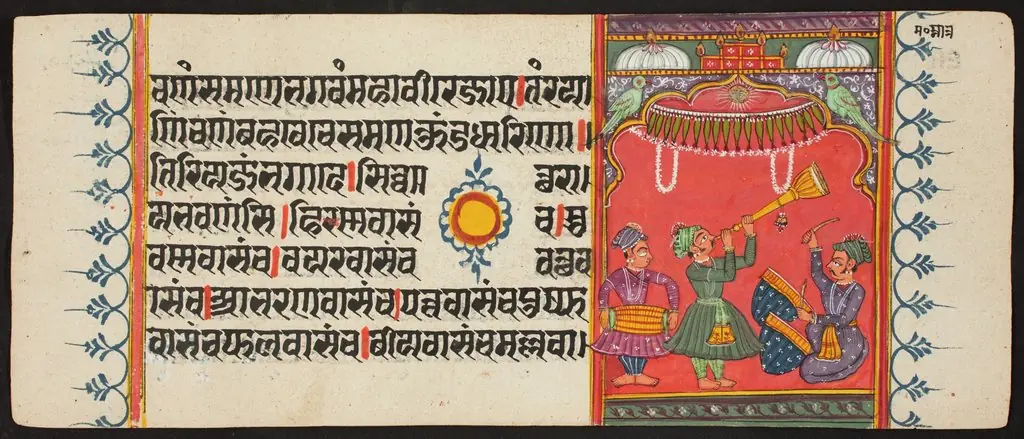
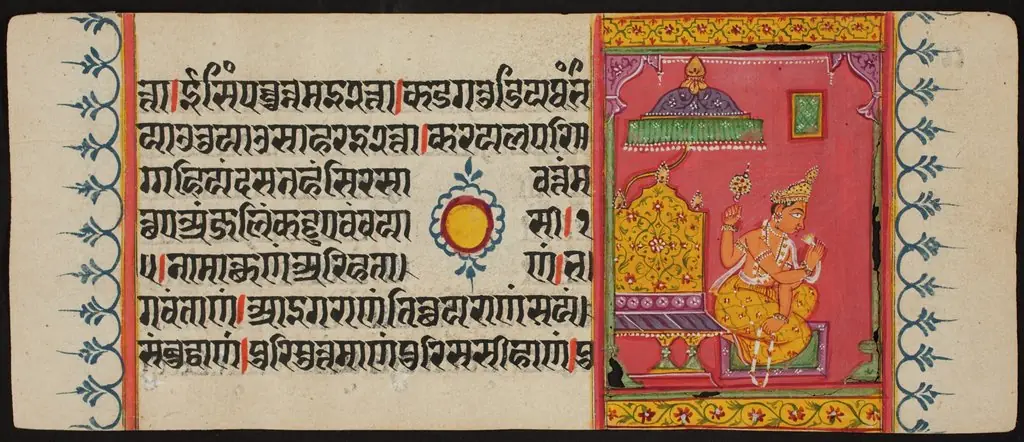
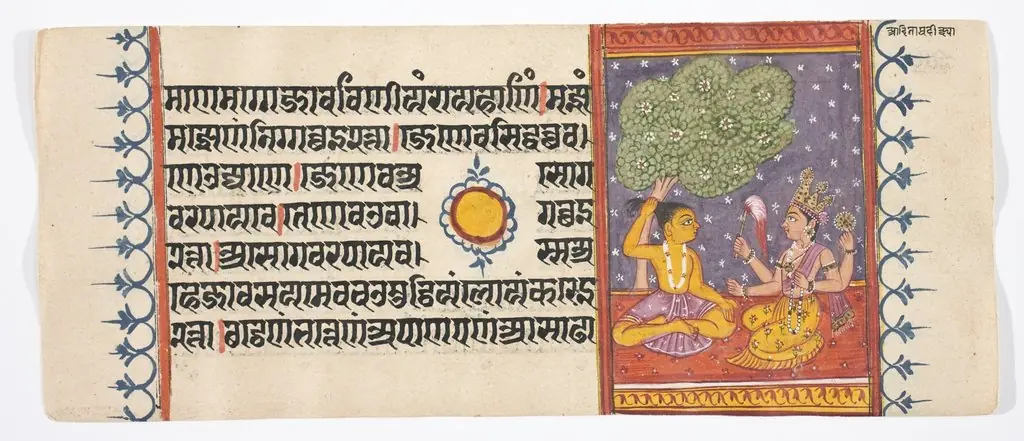
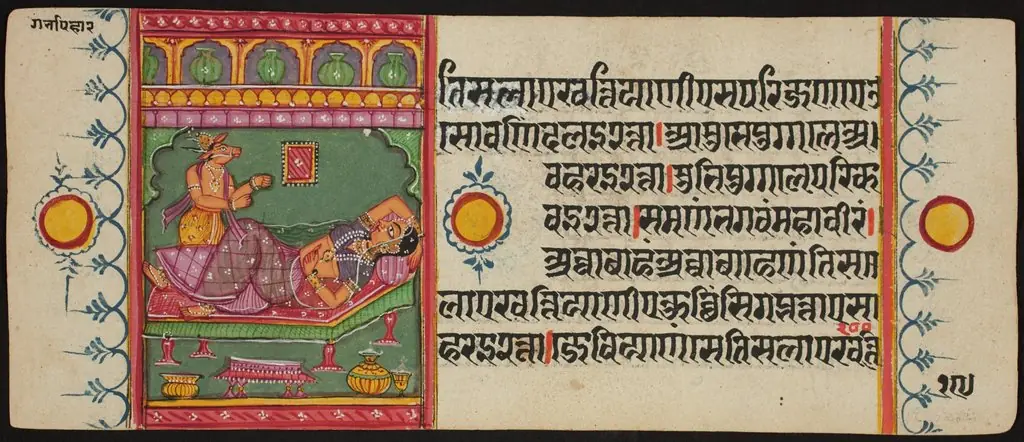
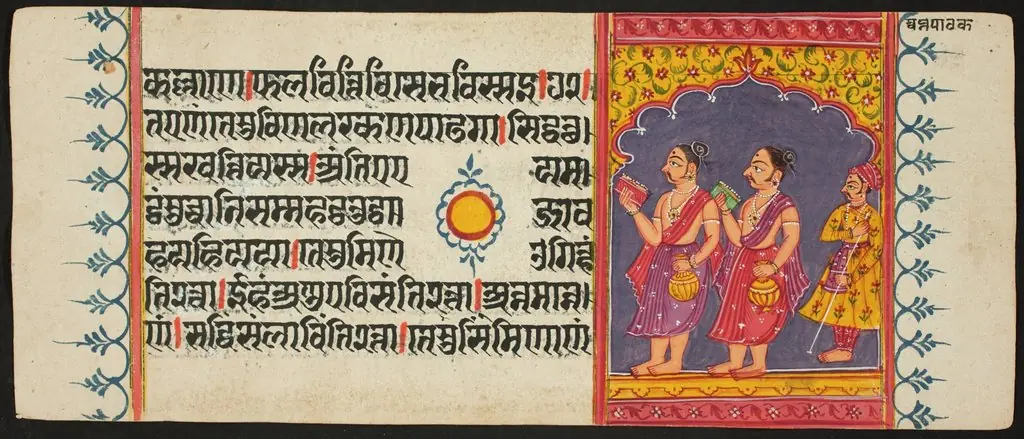
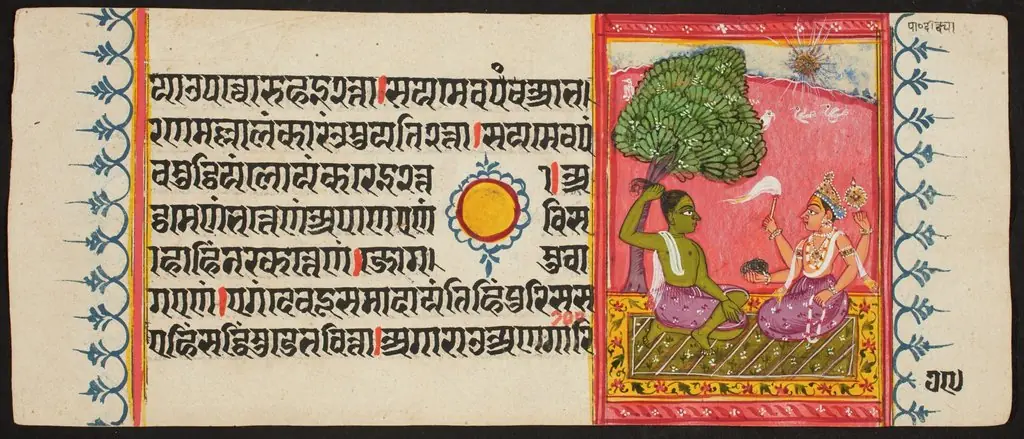
This painting belongs to the Kalpa Sutra tradition, a Jain manuscript illustration style from western India. It depicts a central figure seated in meditation on a ornate throne, surrounded by symbolic attendants. The composition is framed by a decorative border and rendered in mineral pigments on paper, typical of pre-modern Indian manuscript art. The scene conveys spiritual authority through formal symmetry and rich detail.
Subject & Meaning
The green-skinned central figure likely represents a Tirthankara, a liberated soul revered in Jainism. The crown and jewelry signify spiritual sovereignty rather than worldly power. The two flanking figures, raising objects, may be disciples offering reverence or ritual items. Their dynamic posture suggests active devotion, reinforcing the theme of spiritual continuity and communal worship within Jain cosmology.
Technique & Style
Executed in opaque watercolor, the painting uses fine brushwork to render intricate jewelry and textile patterns. The green skin tone follows iconographic conventions for certain Tirthankaras, while the pink background and blue-white border reflect regional aesthetic preferences. Figures are outlined sharply, with minimal shading, emphasizing line and color over naturalism. The flat, layered space aligns with manuscript traditions prioritizing symbolic clarity over perspective.
History & Provenance
This work originates from a handwritten Kalpa Sutra manuscript, likely produced in Gujarat or Rajasthan between the 15th and 17th centuries. Such manuscripts were commissioned by Jain lay patrons for ritual use in monastic settings. The painting’s preservation suggests it was carefully stored and occasionally consulted, rather than displayed publicly. Its current location reflects institutional acquisition from private or temple collections in the 20th century.
Context
Jain manuscript painting flourished in western India during the late medieval period, supported by wealthy merchant communities. The Kalpa Sutra, detailing the lives of Tirthankaras, was a favored text for illustrated codices. Artists worked in workshops under monastic guidance, adhering to strict iconographic rules. This painting reflects a devotional culture where visual representation served as an aid to meditation and doctrinal transmission.
Legacy
The Kalpa Sutra tradition influenced later Indian miniature painting, particularly in its use of color and symbolic composition. While production declined after the 17th century, surviving examples remain vital to understanding Jain religious art and pre-colonial manuscript culture. Modern scholars study these works for insights into Jain theology, artisan practices, and the role of visual media in spiritual life.
Artist & collection

 Domestic Scene
 Giacomo and Cardinal Marco, investing Andrea, Abbot of San Zeno, with his Benefice
 The Nymph of Fontainebleau
 Portrait of a Woman
 Madonna and Child with Saints in the Enclosed Garden
 Venus and Minerva
 Family Group of Four on Sofa
 Wall painting from Room H of the Villa of P. Fannius Synistor at Boscoreale