Artwork
Saint Jerome
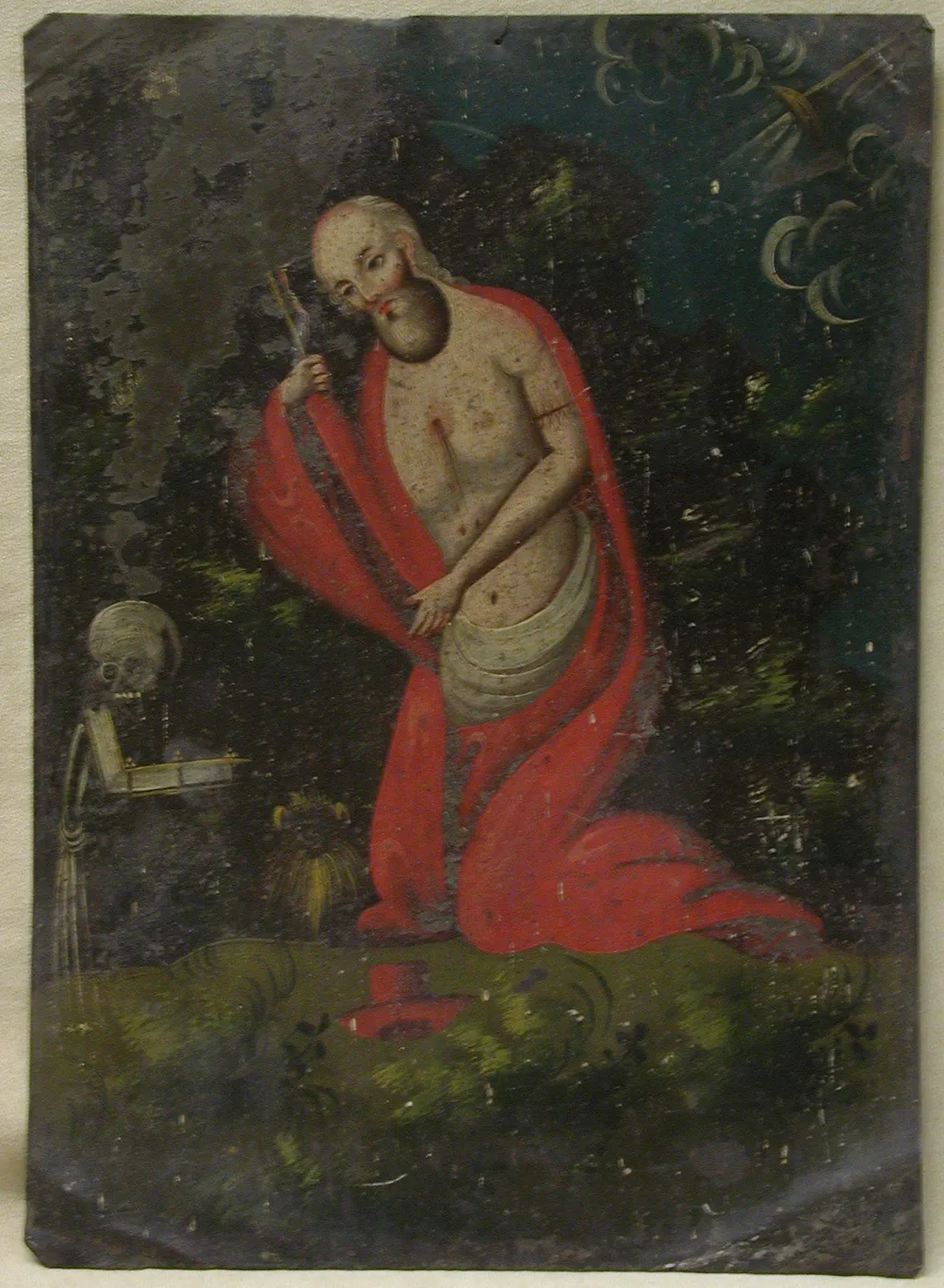
Saint Jerome is an unspecified painting. It dates from 1749 and is held in the collection of the Metropolitan Museum of Art.
About this work
Overview
This painting portrays Saint Jerome in a moment of contemplation or penance. The figure, partially unclothed and draped in a vibrant red cloak, kneels on a rugged terrain. His weary expression and gesture of scratching his arm convey a sense of human frailty. A skull rests on a ledge behind him, a traditional memento mori, set against a somber, indistinct background.
Subject & Meaning
His exposed torso and the act of scratching suggest physical discomfort or spiritual struggle, aligning with narratives of hermitic devotion.
The artwork centers on Saint Jerome, a revered figure in Christian tradition often depicted in ascetic self-reflection. His exposed torso and the act of scratching suggest physical discomfort or spiritual struggle, aligning with narratives of hermitic devotion. The prominent skull serves as a symbolic reminder of mortality and the transient nature of earthly existence, inviting viewers to consider themes of penance and salvation.
Technique & Style
The artist employs a stark visual contrast to heighten the painting's emotional impact. The brilliant red of Saint Jerome's cloak dramatically offsets the muted tones of the rocky landscape and the deep, uneven background. This strong interplay of light and shadow, characteristic of chiaroscuro, emphasizes the figure's solemnity and physical state. The composition's directness contributes to its raw and unadorned aesthetic.
Artist & collection