Artwork
Manuscript Illumination with Initial H, from a Bible
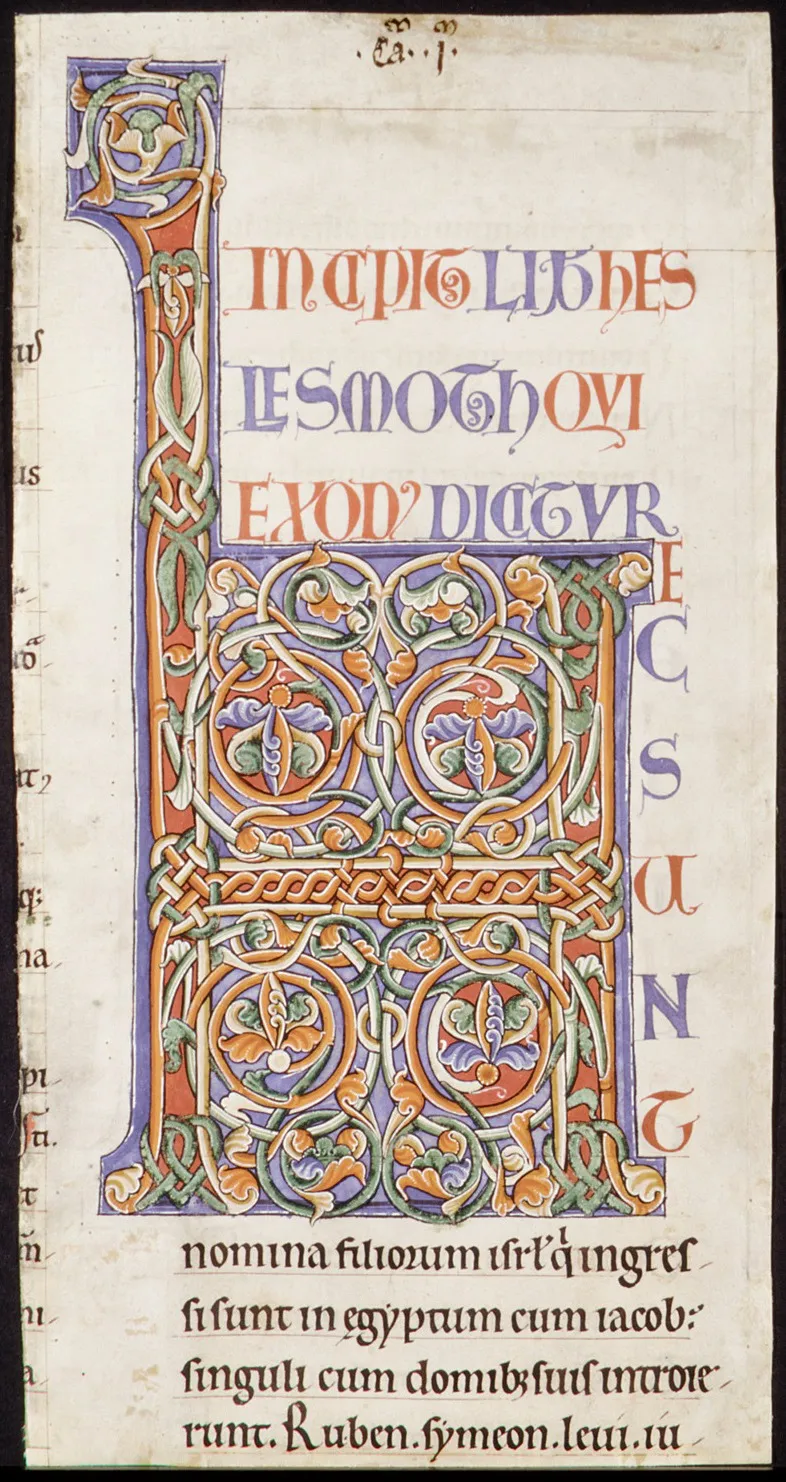
Manuscript Illumination with Initial H, from a Bible is an unspecified painting. It dates from 1175 and is held in the collection of the Metropolitan Museum of Art. This illuminated manuscript page centers on a decorative initial letter H, set against a light beige background.
About this work
Overview
Flanking the illuminated letter are lines of text in a formal, darker brown script, the language of which remains unidentified.
This illuminated manuscript page centers on a decorative initial letter H, set against a light beige background. The letter is surrounded by elaborate vegetal motifs rendered in shades of purple, orange, and green. Flanking the illuminated letter are lines of text in a formal, darker brown script, the language of which remains unidentified. The composition reflects the high level of skill typical of medieval manuscript production.
Subject & Meaning
The prominent initial H functions as a visual cue marking the beginning of a textual section, a common practice in liturgical and biblical codices. The surrounding foliage and vine patterns symbolize growth and renewal, motifs often associated with spiritual themes in religious texts. Though the exact passage is unclear, the decorative emphasis underscores the reverence afforded to the written word.
Technique & Style
Executed with fine brushwork, the illumination combines pigment washes and gilded accents to achieve depth in the vegetal designs. The palette of purples, oranges, and greens creates a vibrant contrast against the muted background, while the brown ink of the marginal text provides legibility. The intricate interlacing of leaves demonstrates the artist’s mastery of linear composition and ornamental detail.
History & Provenance
The manuscript’s origin and date are not specified, and the language of the surrounding text has not been identified, limiting precise attribution. Its preservation as a painted page suggests it belonged to a larger codex, likely a biblical volume, used in a liturgical or scholarly context. The work’s survival indicates careful handling and possible inclusion in a collection of illuminated books.
Context
Illuminated initials such as this H were integral to medieval book production, serving both decorative and functional purposes. The use of vivid colors and naturalistic motifs reflects broader artistic trends in manuscript art, where illumination complemented textual content and aided readers in navigating complex works like the Bible.
Legacy
Pages like this exemplify the craftsmanship of medieval scribes and painters, contributing to our understanding of visual culture in manuscript traditions. Their detailed ornamentation informs studies of iconography, pigment use, and the transmission of textual material across centuries.
Artist & collection