Artwork
Retrato do escultor Jacques Buirette
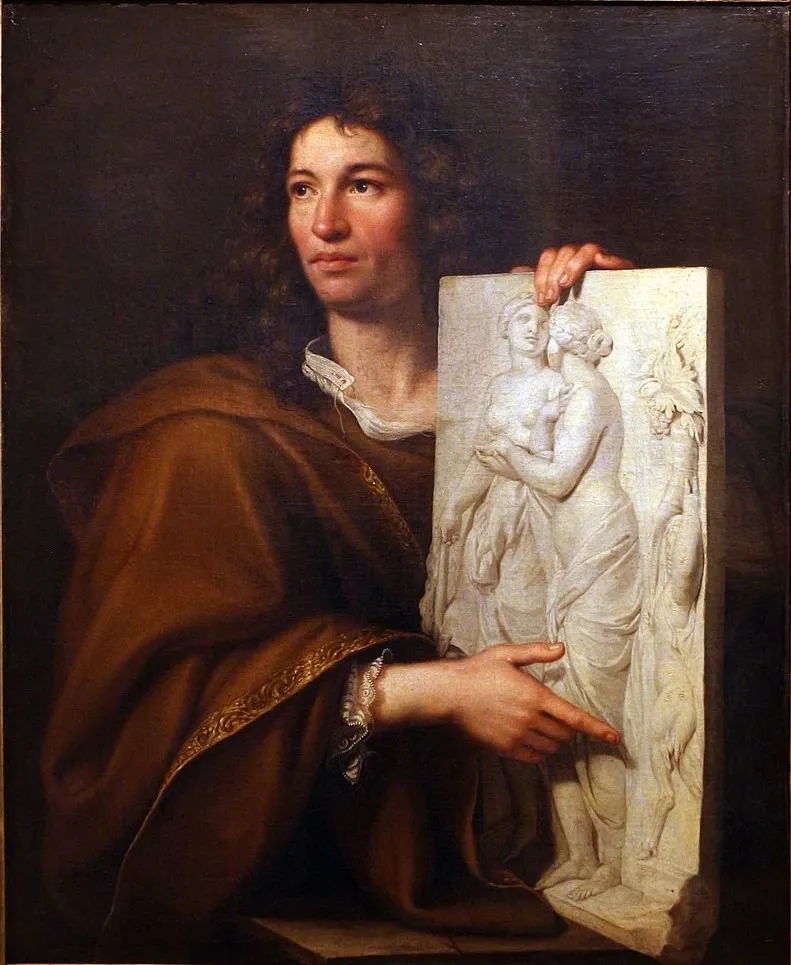
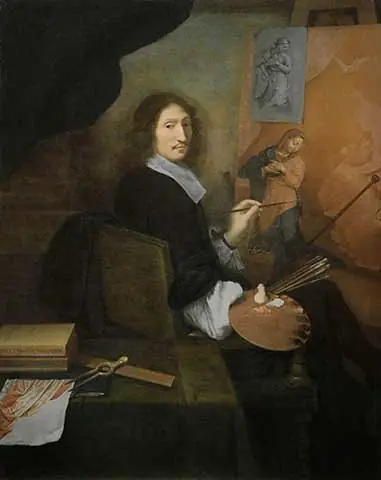
Retrato do escultor Jacques Buirette is an unspecified painting by the Dutch Golden Age artist Unknown. It dates from 1665 and is held in the collection of the National Museum of Ancient Art. This portrait captures Jacques Buirette, a sculptor of the early 17th century, engaged with his own work.
About this work
Overview
This portrait captures Jacques Buirette, a sculptor of the early 17th century, engaged with his own work. He is depicted from the waist up, dressed in a brown robe with white linen collar and cuffs, his long curly hair falling loosely. His left hand gestures toward a relief sculpture he holds, while his gaze turns away from the viewer, suggesting contemplation of his creation.
Subject & Meaning
The painting presents the artist not merely as a figure but as a maker, defined by his craft. By holding a classical relief of two figures—one male, one female—Buirette aligns himself with the tradition of Renaissance humanism. His pointing gesture emphasizes the connection between his identity and the sculpted forms, reinforcing the idea of artistic authorship and intellectual engagement.
Technique & Style
Light falls softly on Buirette’s face and hands, drawing attention to his expression and the tactile quality of the relief.
The artist employs a dark, unmodeled background to isolate the figure and sculpture, enhancing their three-dimensionality. Light falls softly on Buirette’s face and hands, drawing attention to his expression and the tactile quality of the relief. The rendering of fabric and hair suggests attention to texture, while the relief’s classical forms are rendered with restrained detail, reflecting the sculptural style of the period.
History & Provenance
The portrait was likely commissioned during Buirette’s active years in France, possibly by a patron or academy familiar with his work. It remained in private collections until the 19th century, when it entered a public museum. Documentation from the early 1600s confirms Buirette’s presence in Parisian artistic circles, supporting the portrait’s attribution and date.
Context
In early 17th-century France, artists were increasingly recognized as intellectuals rather than mere craftsmen. Portraits of sculptors often included their works to assert their place within the liberal arts. Buirette’s depiction aligns with this trend, reflecting a broader cultural shift that elevated the status of visual artists through association with classical ideals and scholarly practice.
Legacy
The portrait endures as a quiet testament to the sculptor’s role in the artistic culture of his time. It offers insight into how artists wished to be seen—not as laborers, but as thinkers engaged with antiquity. Though Buirette’s name is less known today, this image preserves his presence in the visual record of French art history.
Artist & collection

 Domestic Scene
 Giacomo and Cardinal Marco, investing Andrea, Abbot of San Zeno, with his Benefice
 The Nymph of Fontainebleau
 Portrait of a Woman
 Madonna and Child with Saints in the Enclosed Garden
 Venus and Minerva
 Family Group of Four on Sofa
 Wall painting from Room H of the Villa of P. Fannius Synistor at Boscoreale
 Tânăr sculptor
 Portrait of a young man
 Self-portrait
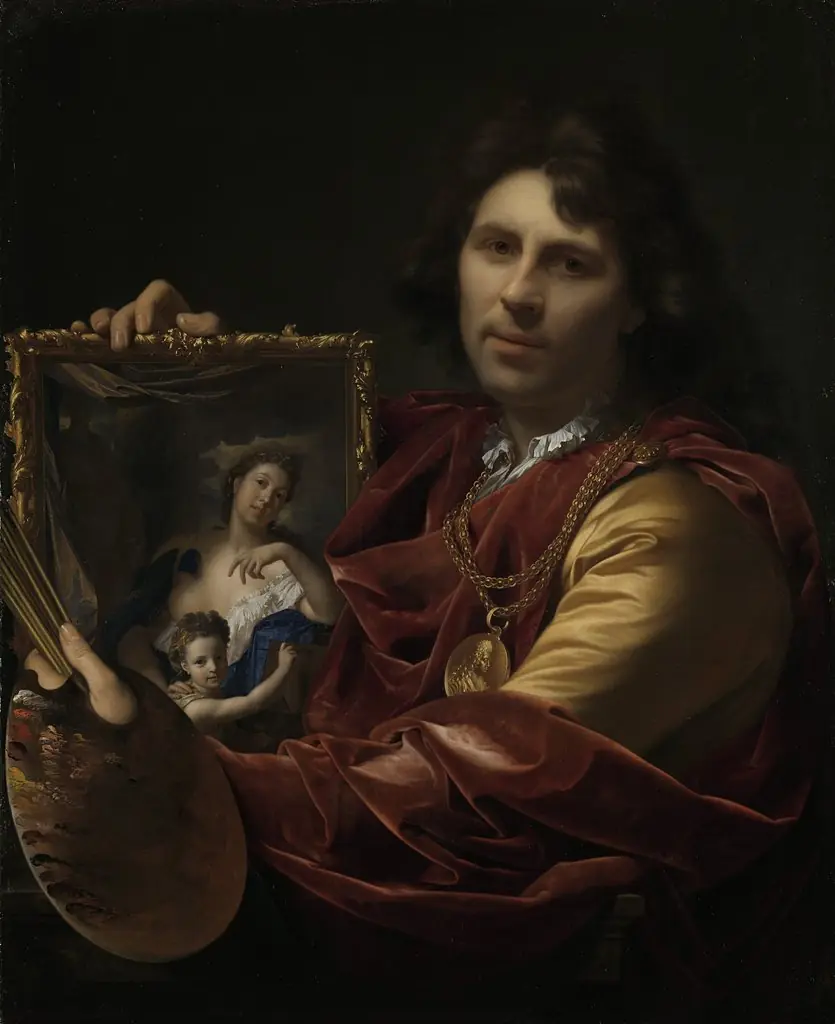 Self-portrait with the Portrait of his Wife, Margaretha van Rees, and their Daughter Maria
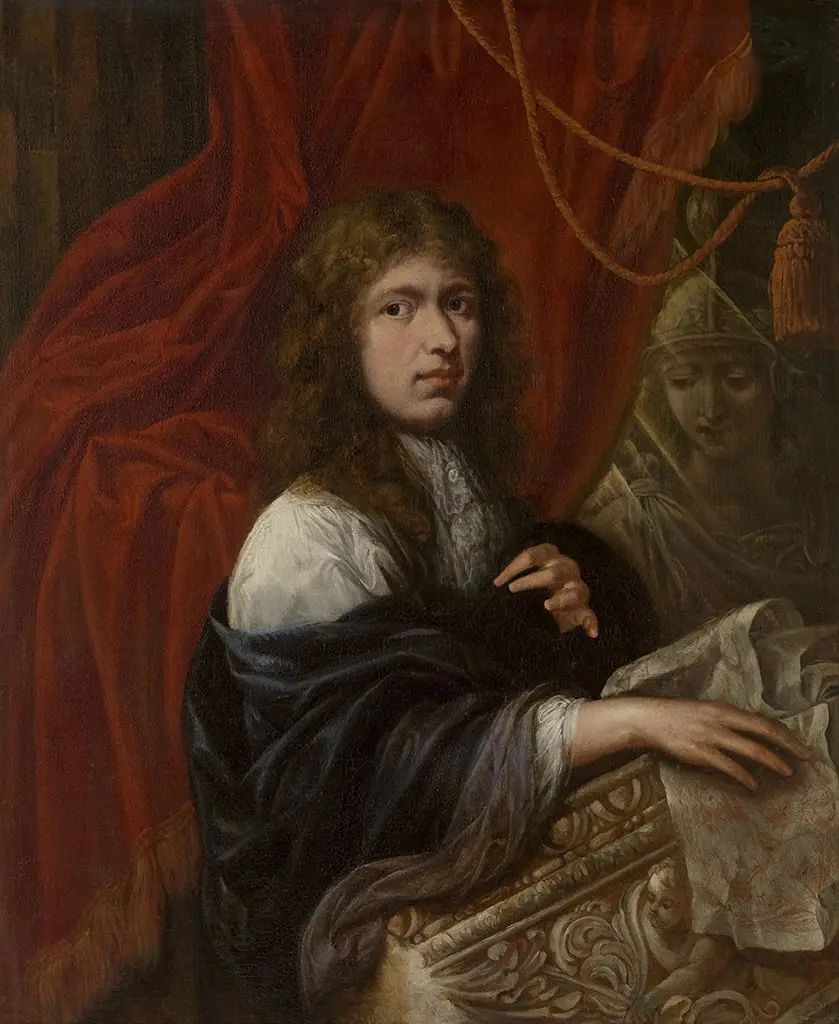 Self-Portrait
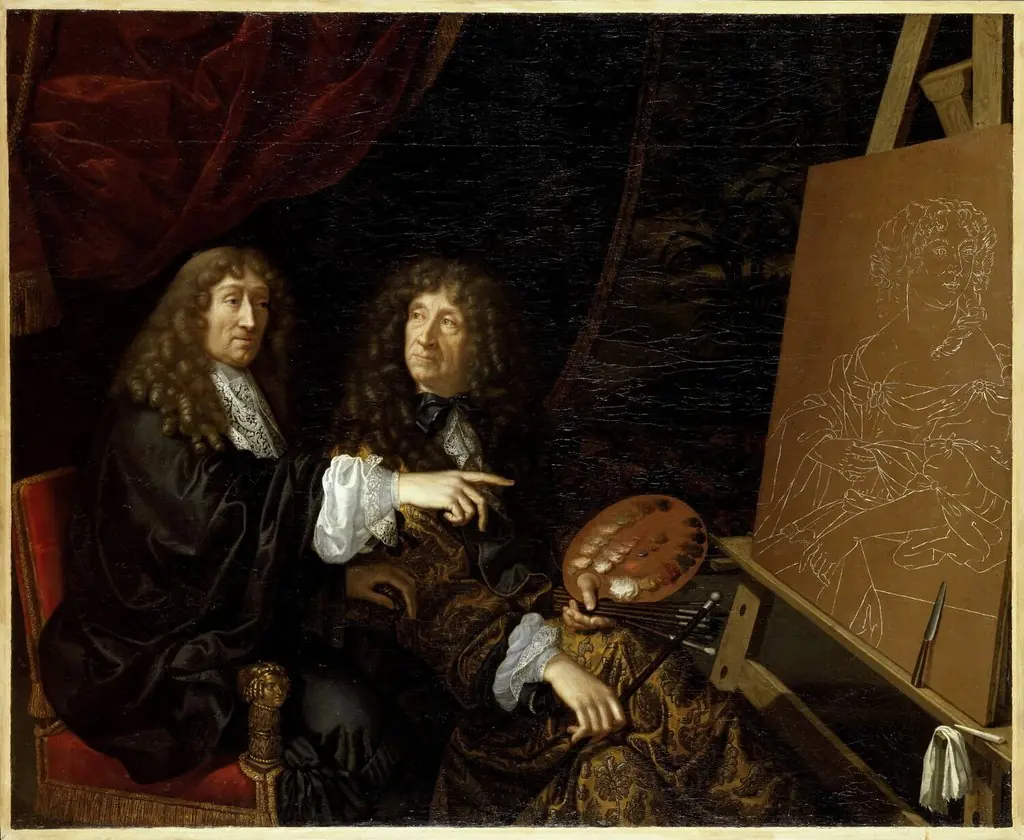 Henri and Charles Beaubrun making the portrait of Queen Marie-Thérèse
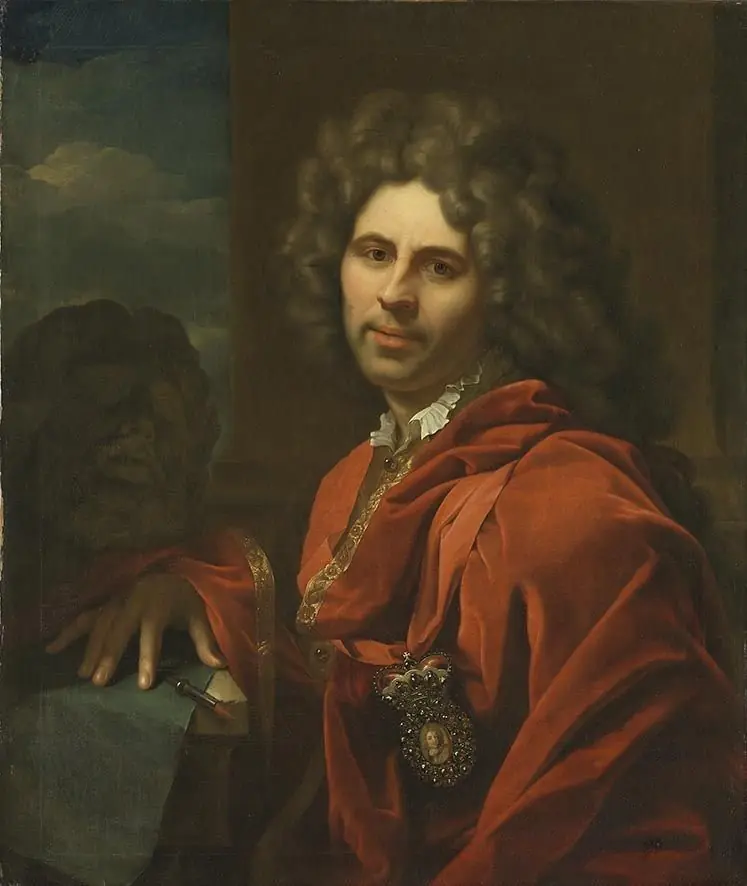 Selbstbildnis (nach)
 Self-portrait
 Portrait of Pieter de Graeff (1638-1707), lord of Zuid-Polsbroek, Purmerland, and Ilpendam. Alderman of Amsterdam
 Portrait of Joost van Geel, Painter and Poet in Rotterdam
 Portrait of Antoine Coypel
 Portrait of Nicolas Mignard (1606-1668)