Artwork
Roundel with Agony in the Garden
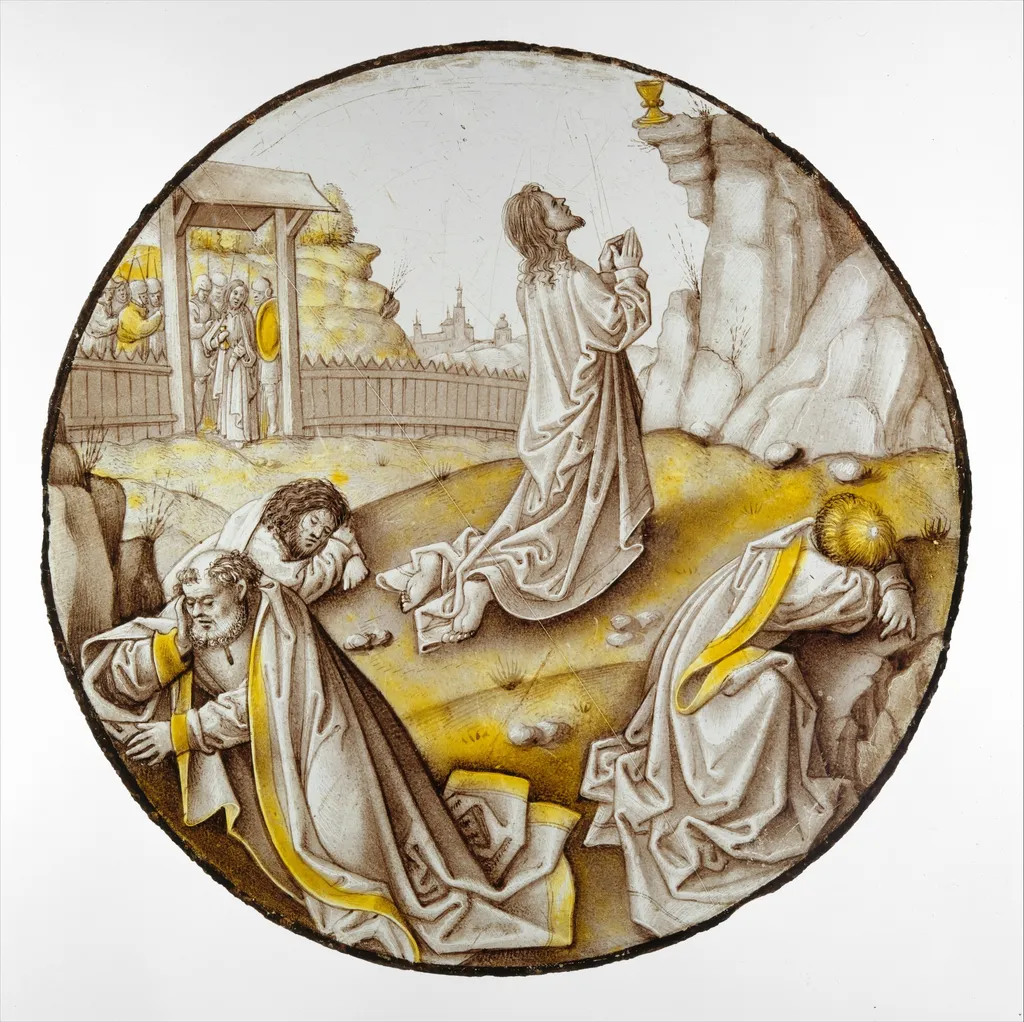
Roundel with Agony in the Garden is an unspecified painting. It dates from 1515 and is held in the collection of the Metropolitan Museum of Art. The work is a circular panel depicting a nocturnal scene dominated by a solitary, robed figure with uplifted arms, appearing to pray.
About this work
Overview
The work is a circular panel depicting a nocturnal scene dominated by a solitary, robed figure with uplifted arms, appearing to pray. He is surrounded by three cloaked men lying on the ground, while a modest structure with a lit window behind them frames a small group of standing figures. The palette relies on earthy browns and yellows, punctuated by occasional gold highlights.
Subject & Meaning
The central praying figure suggests a moment of supplication or spiritual distress, possibly alluding to a biblical or mythological narrative of suffering.
The central praying figure suggests a moment of supplication or spiritual distress, possibly alluding to a biblical or mythological narrative of suffering. The three recumbent men may represent companions or victims, their slumber contrasting with the active prayer of the standing figure. The illuminated window and the external group hint at a broader setting, perhaps a sanctuary or refuge, underscoring themes of darkness versus inner light.
Technique & Style
The artist employs chiaroscuro, using the window’s glow to carve out the forms against a deep, shadowed background. This contrast creates a three‑dimensional effect, emphasizing the central figure’s gesture. The composition balances flat decorative elements of the round format with a realistic rendering of light and texture, while the limited color range reinforces the somber atmosphere.
History & Provenance
The painting is identified as a roundel, a format often used for devotional objects in the late medieval and early Renaissance periods. Its exact origin and ownership trail are not recorded in the supplied data, indicating that further archival research would be required to trace its creation and subsequent collection history.
Artist & collection