Artwork
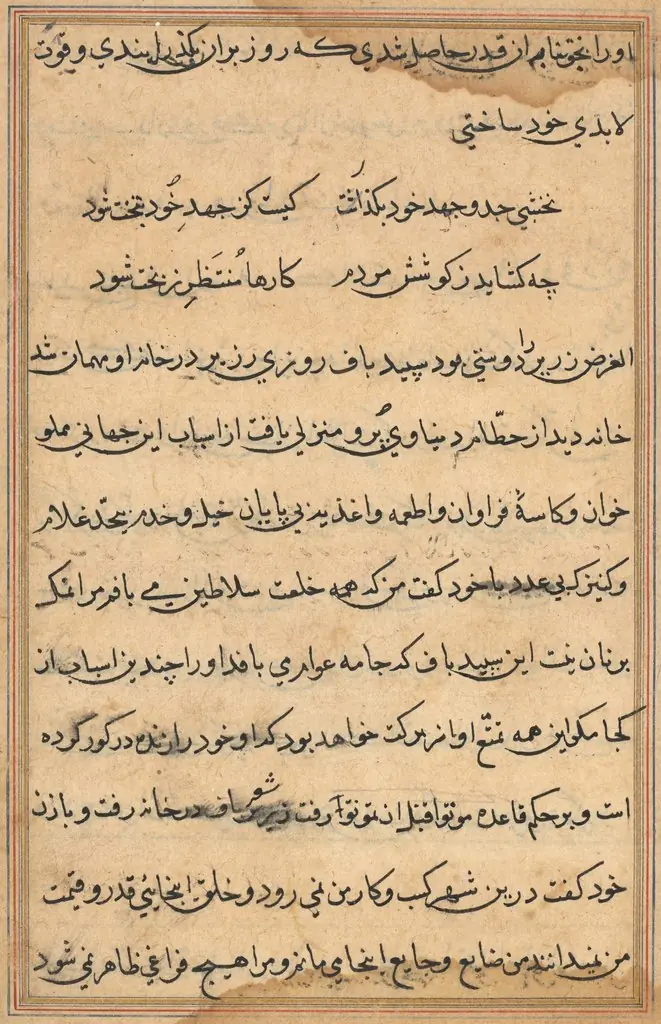
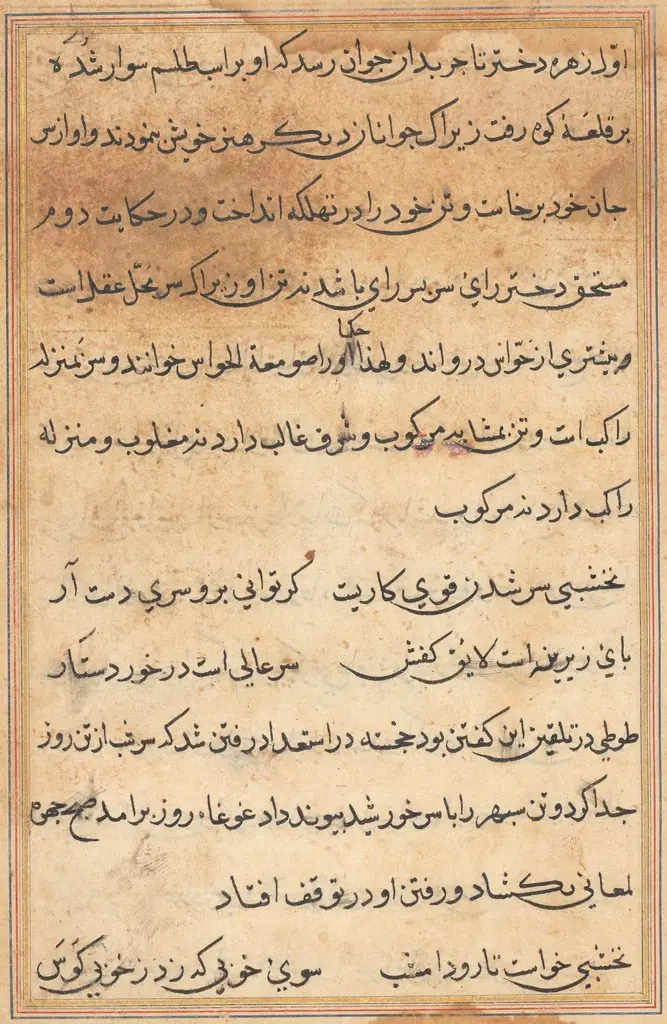
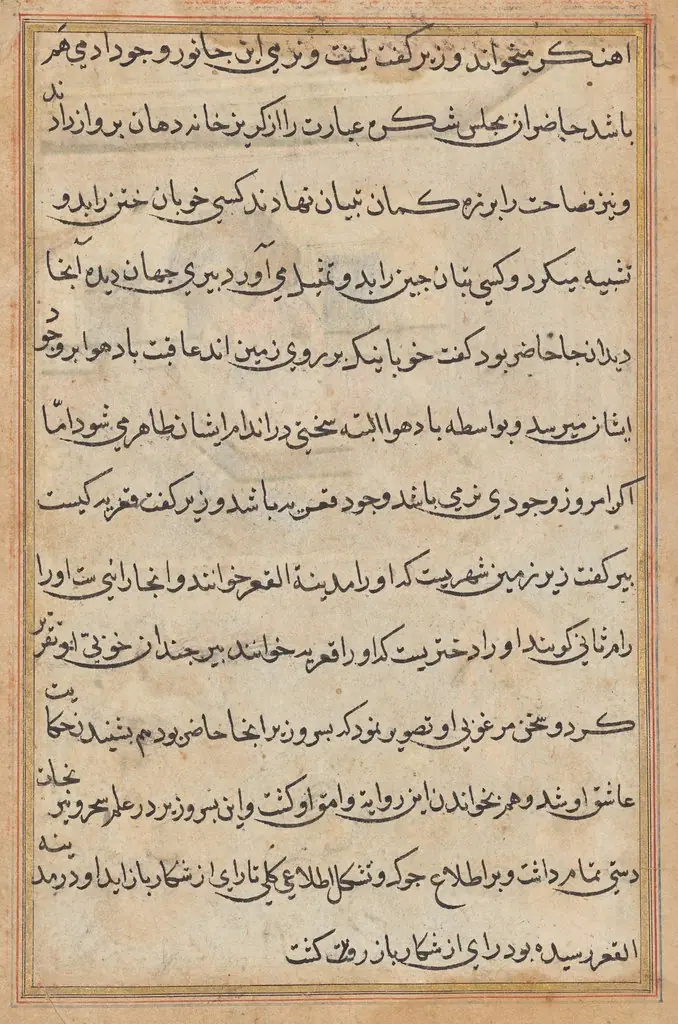
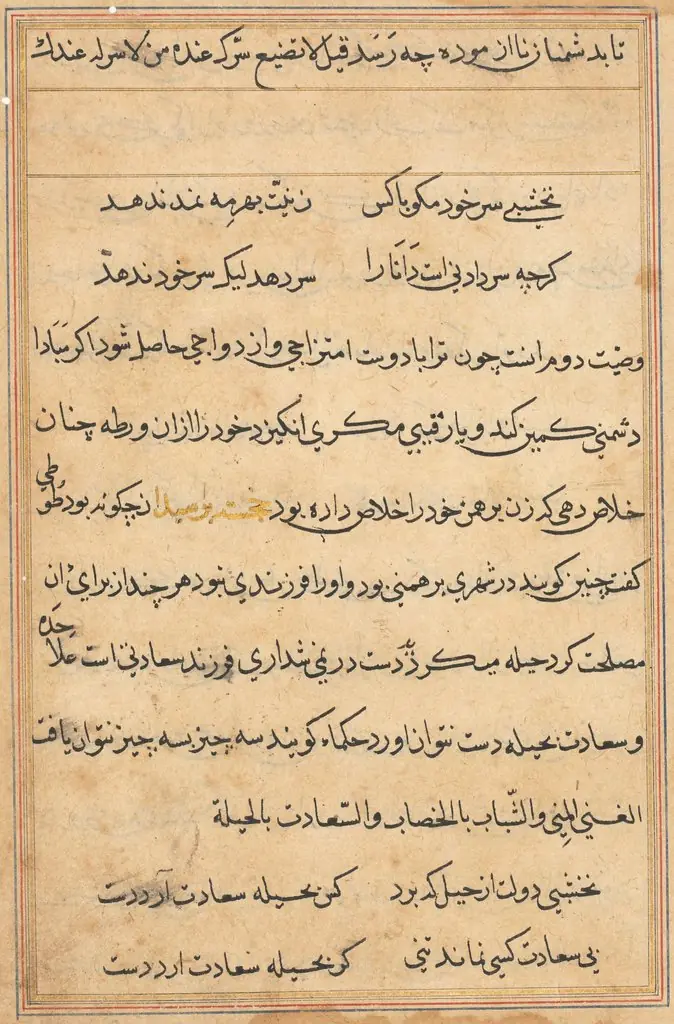
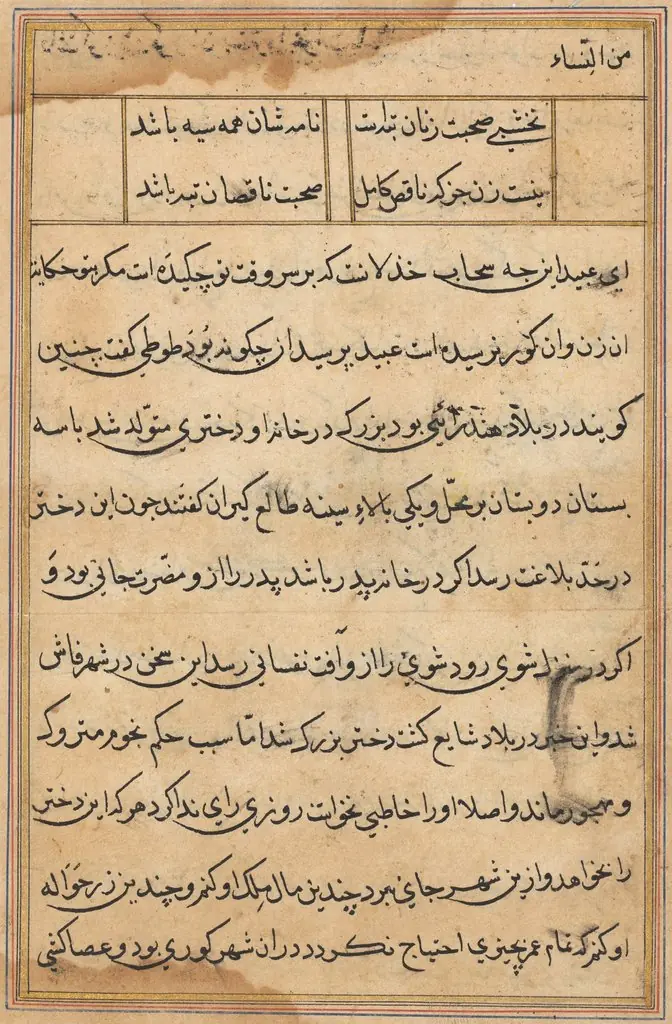
Page from Tales of a Parrot (Tuti-nama): text page
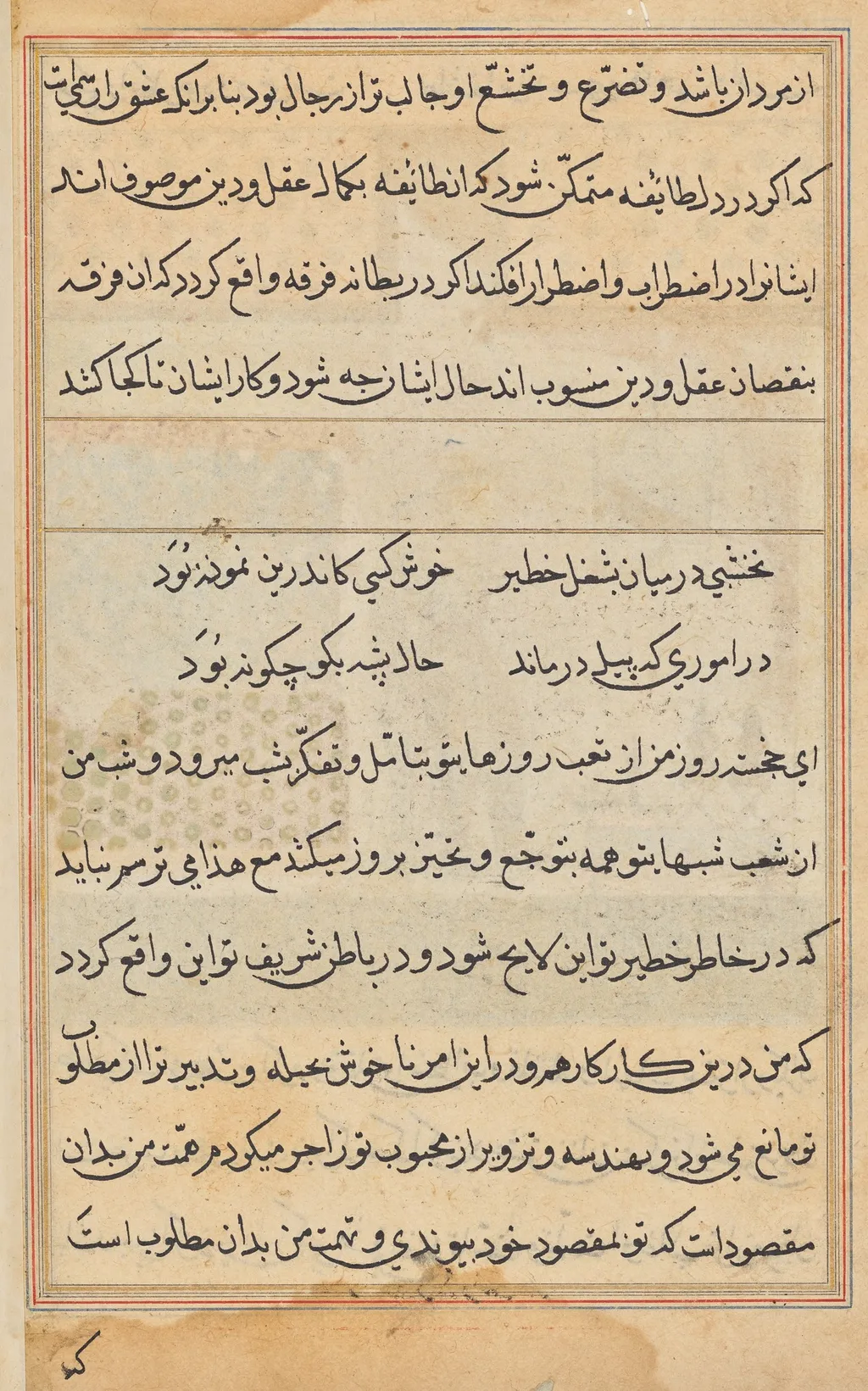
Page from Tales of a Parrot (Tuti-nama): text page is an unspecified painting. It dates from 1560 and is held in the collection of the Cleveland Museum of Art. This object is a painted representation of a single folio from the 16th‑century manuscript known as *Tales of a Parrot*.
About this work
You can learn more about this painting by checking out the Cleveland Museum of Art.
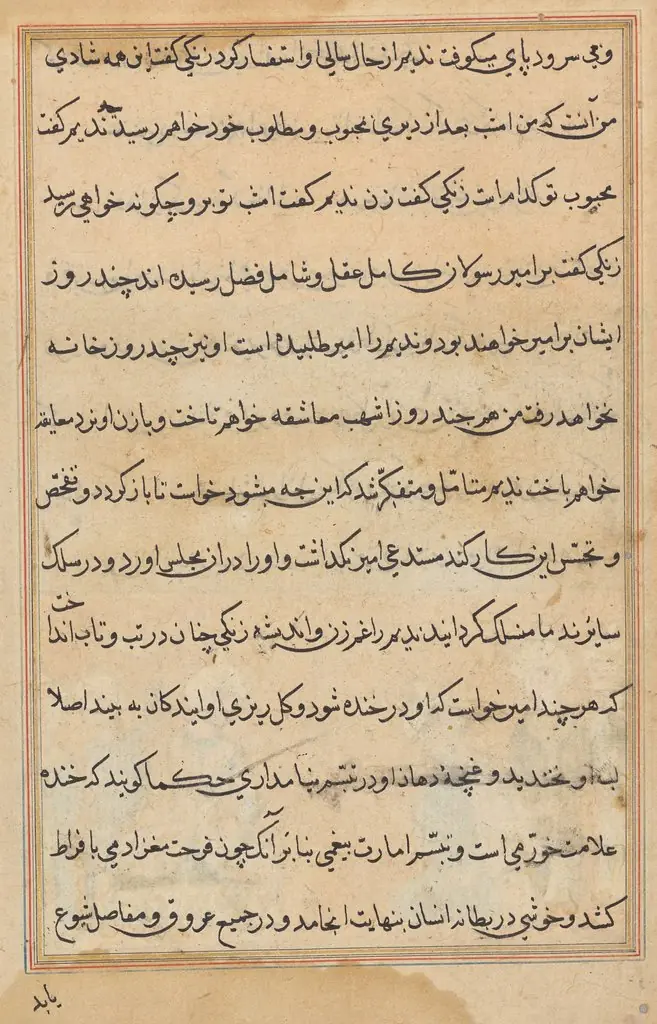
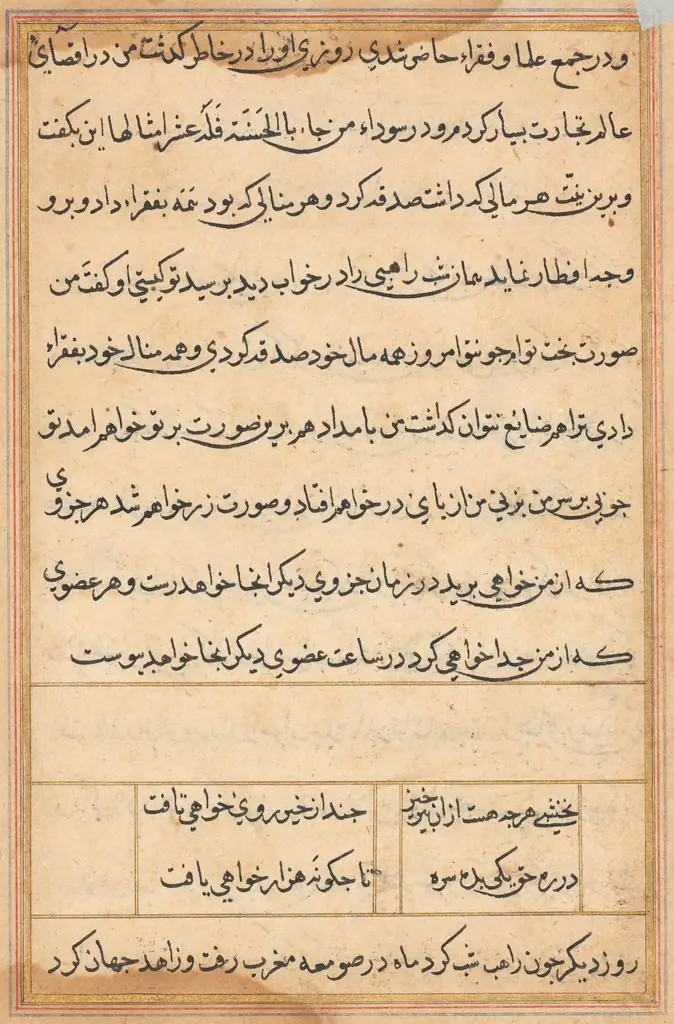
This painting shows a page from an old book. The page has lines of writing in a language that looks like Arabic or Persian. The writing is in black ink and is very decorative.
The page is a light brown color and has some darker brown spots on it. There are some red and blue lines around the edges of the page. The writing is very intricate and has lots of flourishes.
The page is from a book called "Tales of a Parrot" and was made in 1560. You can learn more about this painting by checking out the Cleveland Museum of Art.
Overview
This object is a painted representation of a single folio from the 16th‑century manuscript known as *Tales of a Parrot*. The image captures the page’s parchment tone, mottled brown hues, and the ornamental borders rendered in red and blue pigment. The work is held in the collection of the Cleveland Museum of Art.
Subject & Meaning
The depicted page contains lines of script resembling Arabic or Persian calligraphy, executed in black ink. The elaborate lettering and decorative flourishes suggest a literary or poetic text, typical of illustrated manuscripts that combined visual embellishment with narrative content.
Technique & Style
The artist employed a flat application of pigment to suggest the texture of aged paper, while the script is rendered with fine, sinuous strokes that emphasize its ornamental quality. Red and blue linear motifs frame the composition, providing a contrasting chromatic edge to the muted parchment background.
History & Provenance
The original manuscript dates to circa 1560, a period of prolific production of illustrated books in the Persianate world. The painted page entered the Cleveland Museum of Art’s holdings through acquisition, though the precise chain of ownership prior to its museum entry is not documented in the available record.
Artist & collection

 Page from Tales of a Parrot (Tuti-nama): text page
 Page from Tales of a Parrot (Tuti-nama): text page
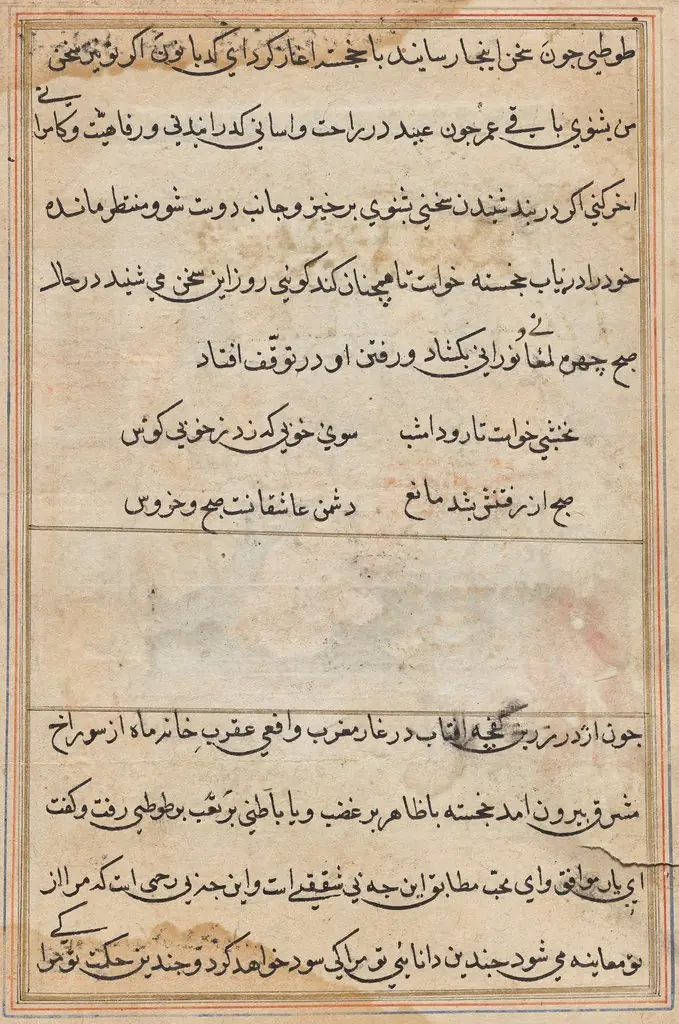 Page from Tales of a Parrot (Tuti-nama): text page
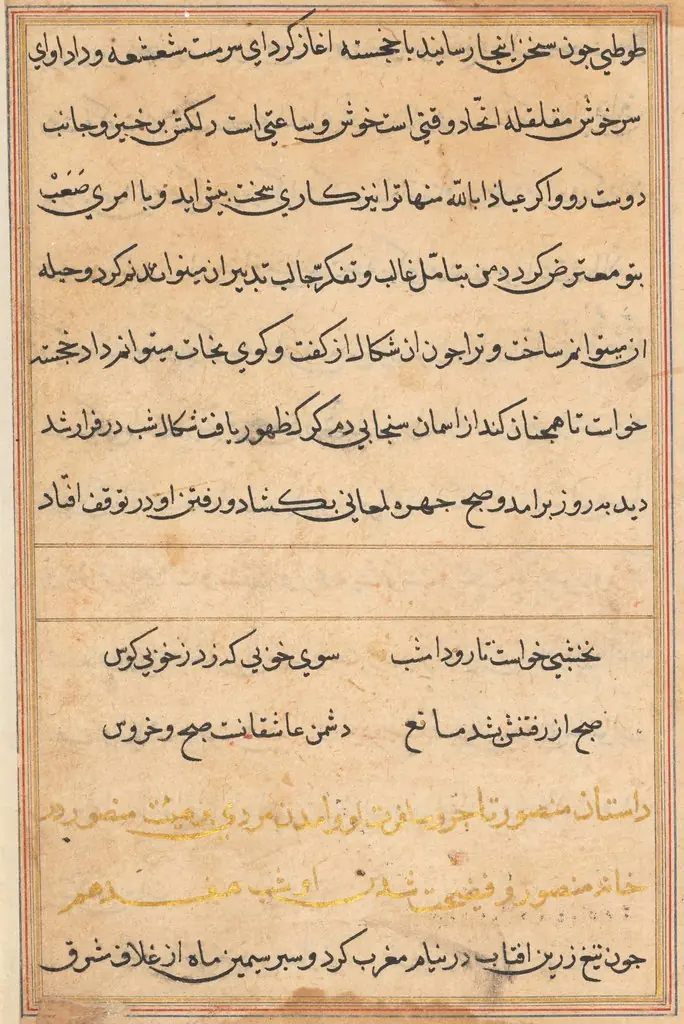 Page from Tales of a Parrot (Tuti-nama): text page
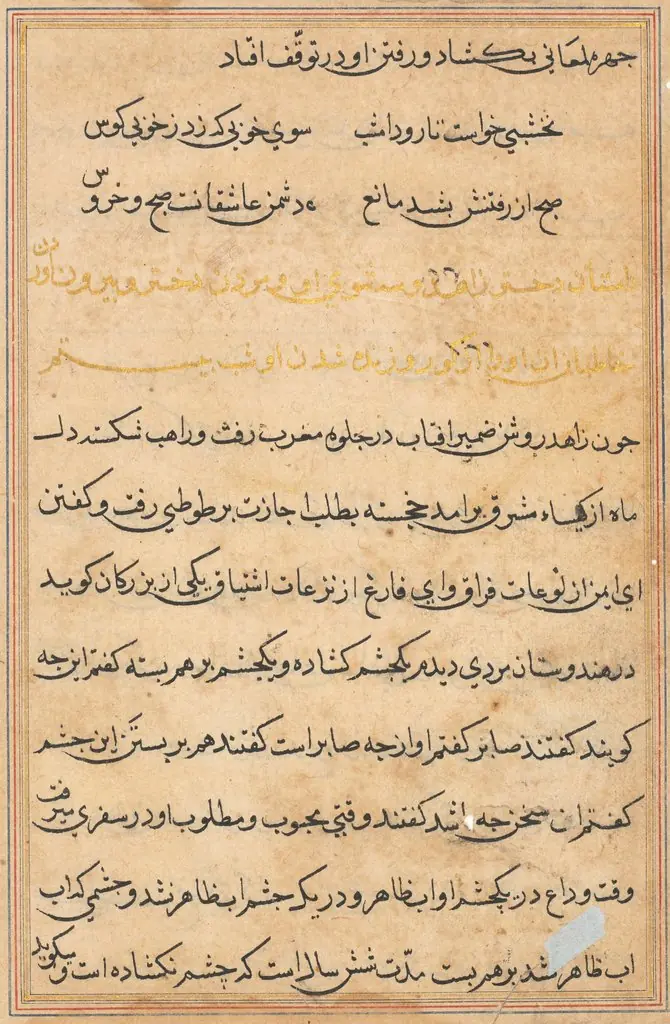 Page from Tales of a Parrot (Tuti-nama): text page
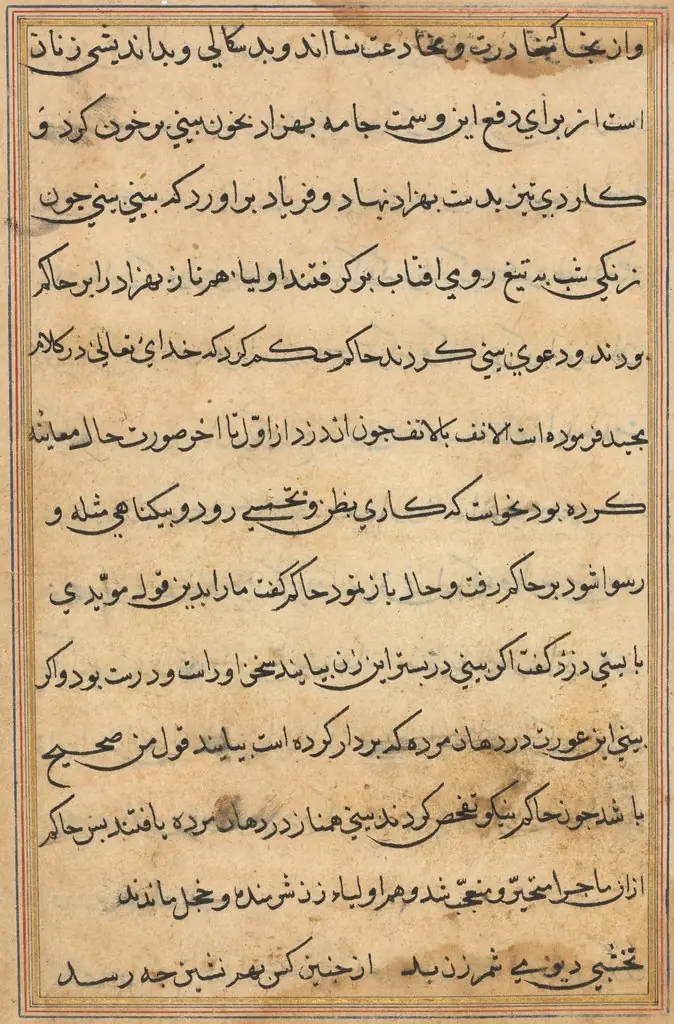 Page from Tales of a Parrot (Tuti-nama): text page