Artwork
Page from Tales of a Parrot (Tuti-nama): text page
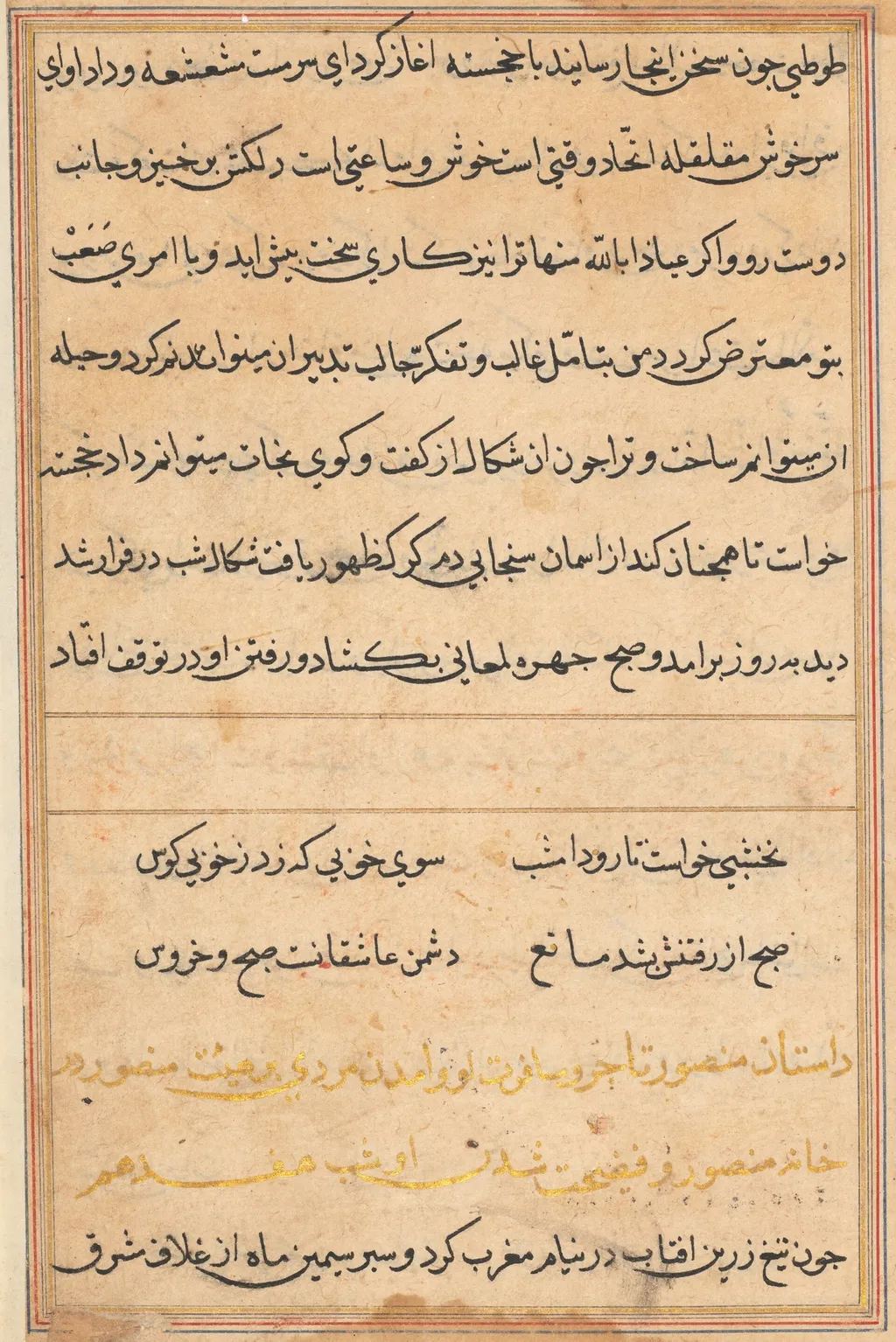
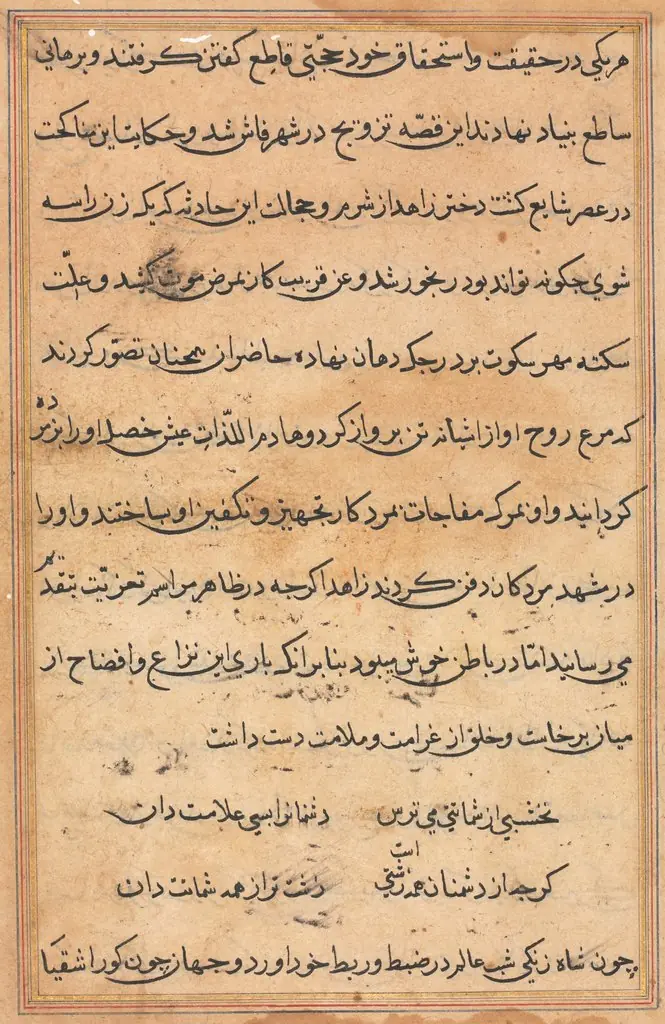
Page from Tales of a Parrot (Tuti-nama): text page is an unspecified painting. It dates from 1560 and is held in the collection of the Cleveland Museum of Art. The work is a single page from the illustrated manuscript known as *Tales of a Parrot* (Tuti‑nama).
About this work
Overview
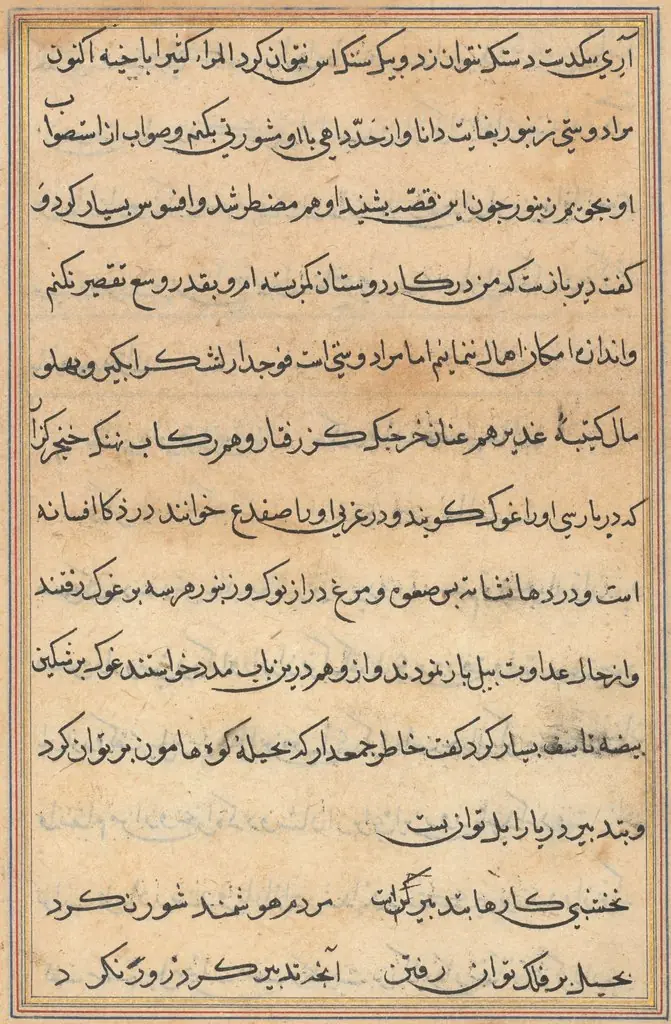
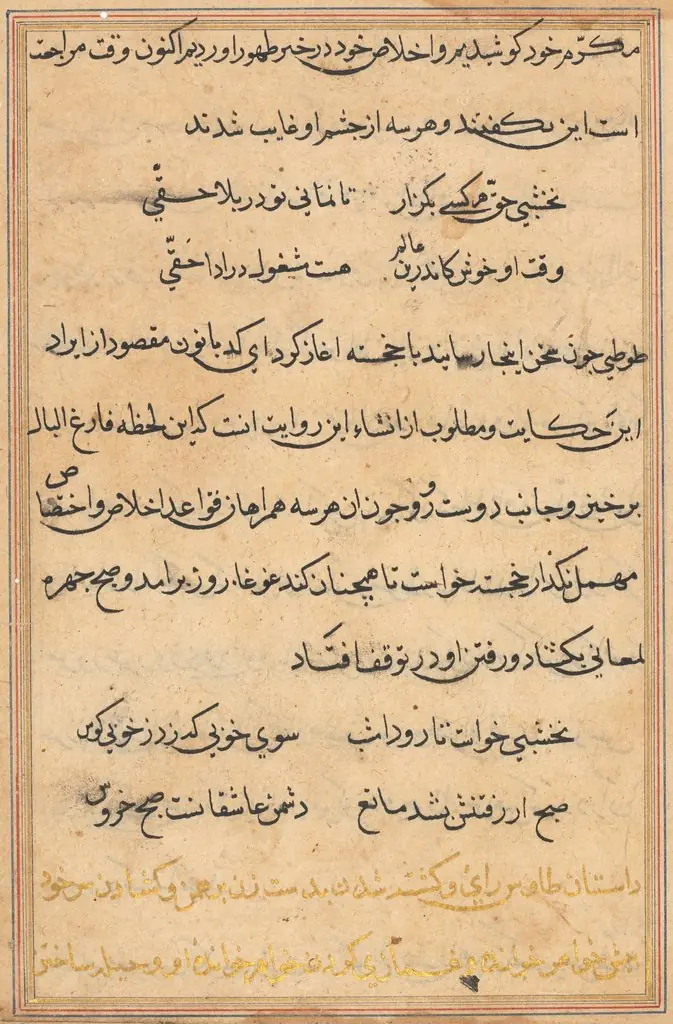
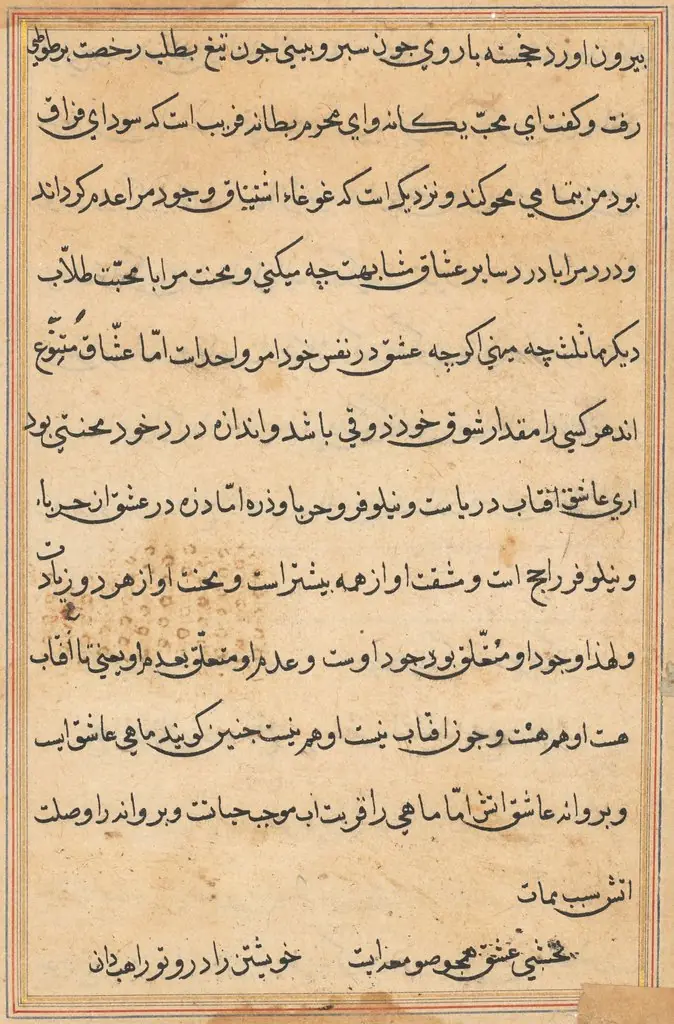
The work is a single page from the illustrated manuscript known as *Tales of a Parrot* (Tuti‑nama). It consists of black ink calligraphy on a light tan paper, framed by a thin red border and accented with simple blue and red lines along the edges. Select words are highlighted in gold ink, a decorative practice commonly reserved for texts intended for elite patrons.
Subject & Meaning
The page contains narrative text, presumably part of the larger collection of stories about a parrot, a popular motif in Persian literary tradition. The highlighted gold words likely emphasize key names or moral points, guiding the reader’s attention to the most significant elements of the tale.
Technique & Style
Ink is applied in precise, evenly spaced lines, reflecting a disciplined calligraphic hand. Gold pigment is laid over the black script to create contrast, while the surrounding red, blue, and red lines are executed in thin washes, framing the composition without overwhelming the text.
History & Provenance
The page originates from a manuscript produced for a royal audience, as indicated by its ornamental gold lettering. It now belongs to the collection of the Cleveland Museum of Art, which houses several similar pages from the same work.
Context
*Tales of a Parrot* belongs to a tradition of Persian illustrated books that combined literary storytelling with elaborate visual decoration. Such manuscripts were often commissioned by courts to display both literary taste and artistic patronage.
Legacy
The Cleveland Museum of Art’s display of this page offers insight into the material culture of Persian courtly literature, illustrating the interplay of text, illumination, and decorative framing that characterized high‑status manuscripts of the period.
Artist & collection

 Page from Tales of a Parrot (Tuti-nama): text page
 Page from Tales of a Parrot (Tuti-nama): text page
 Page from Tales of a Parrot (Tuti-nama): text page
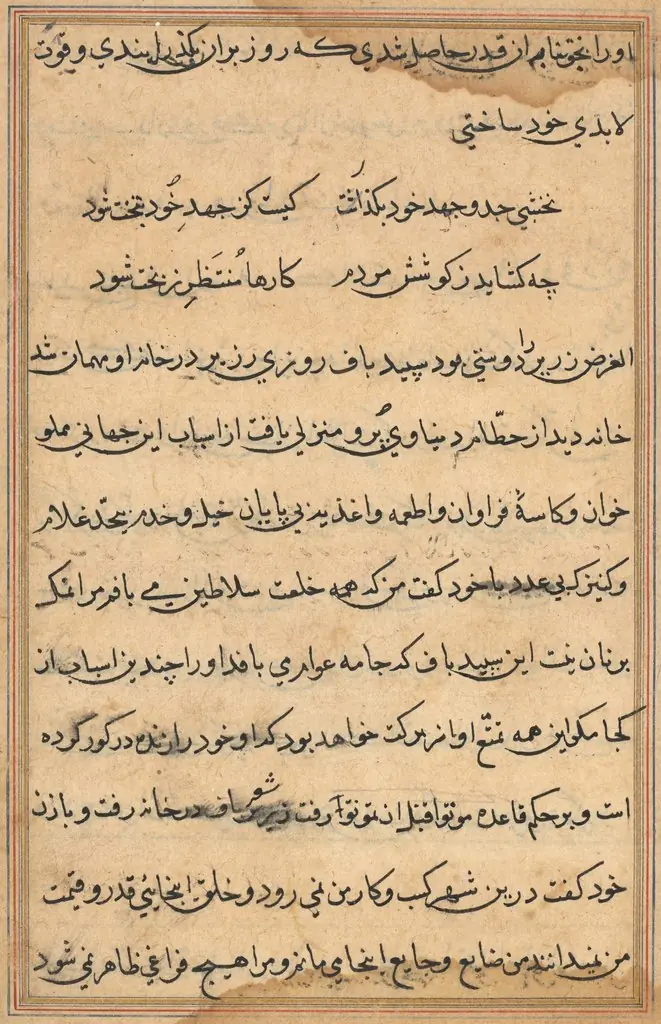 Page from Tales of a Parrot (Tuti-nama): text page
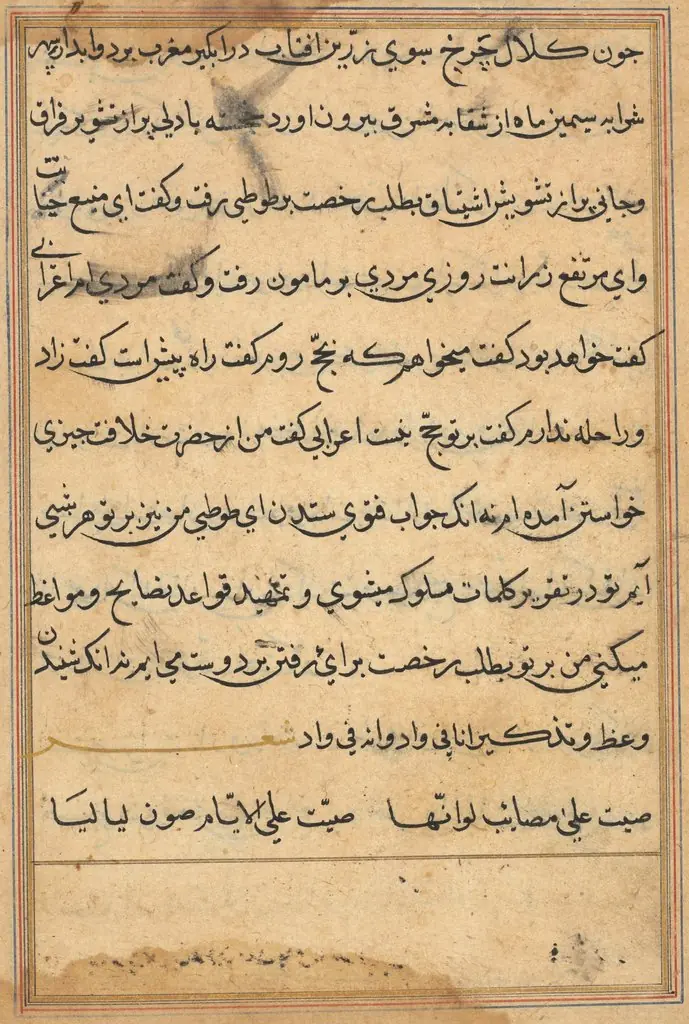 Page from Tales of a Parrot (Tuti-nama): text page
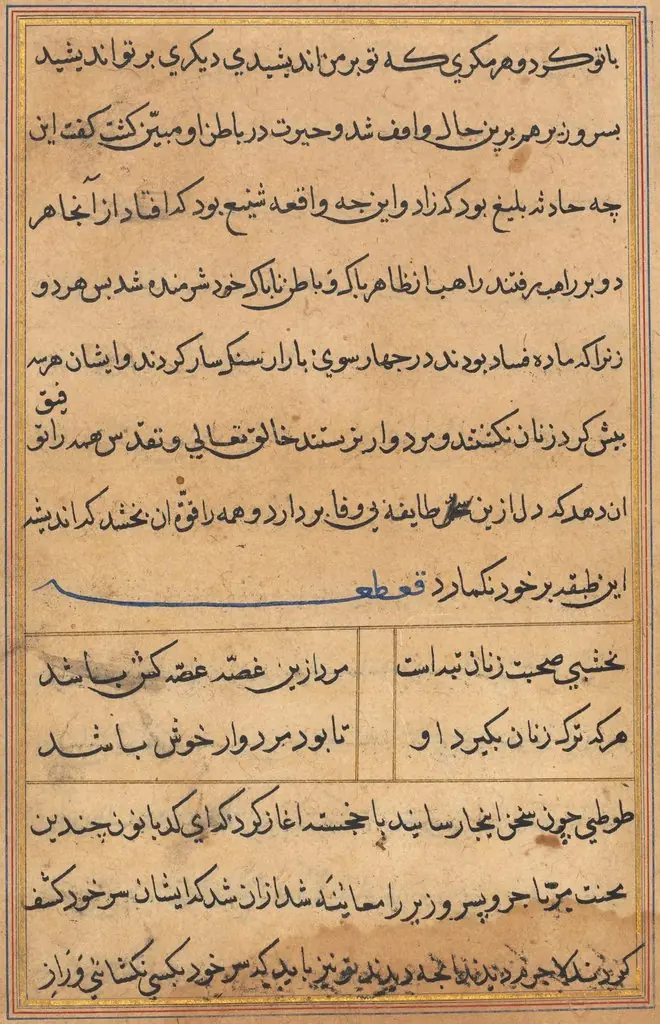 Page from Tales of a Parrot (Tuti-nama): text page
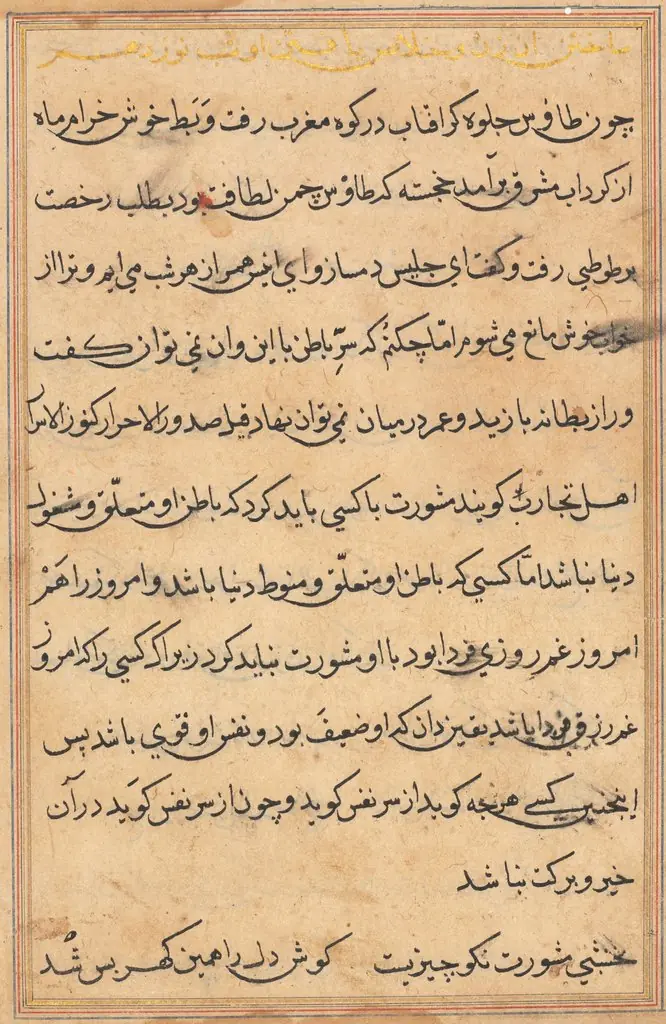 Page from Tales of a Parrot (Tuti-nama): text page
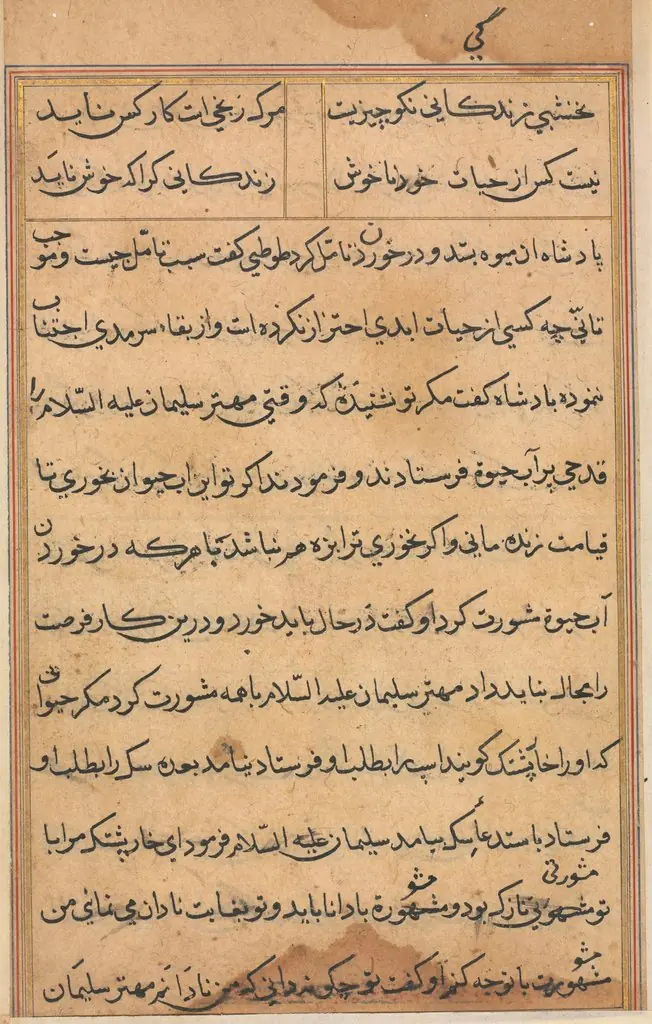 Page from Tales of a Parrot (Tuti-nama): text page
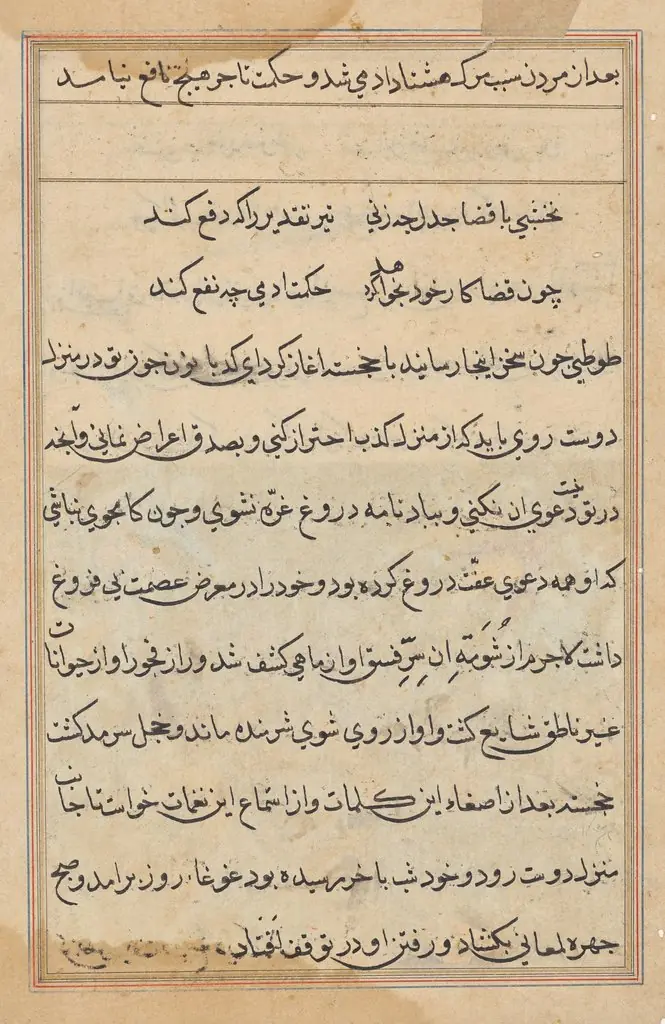 Page from Tales of a Parrot (Tuti-nama): text page
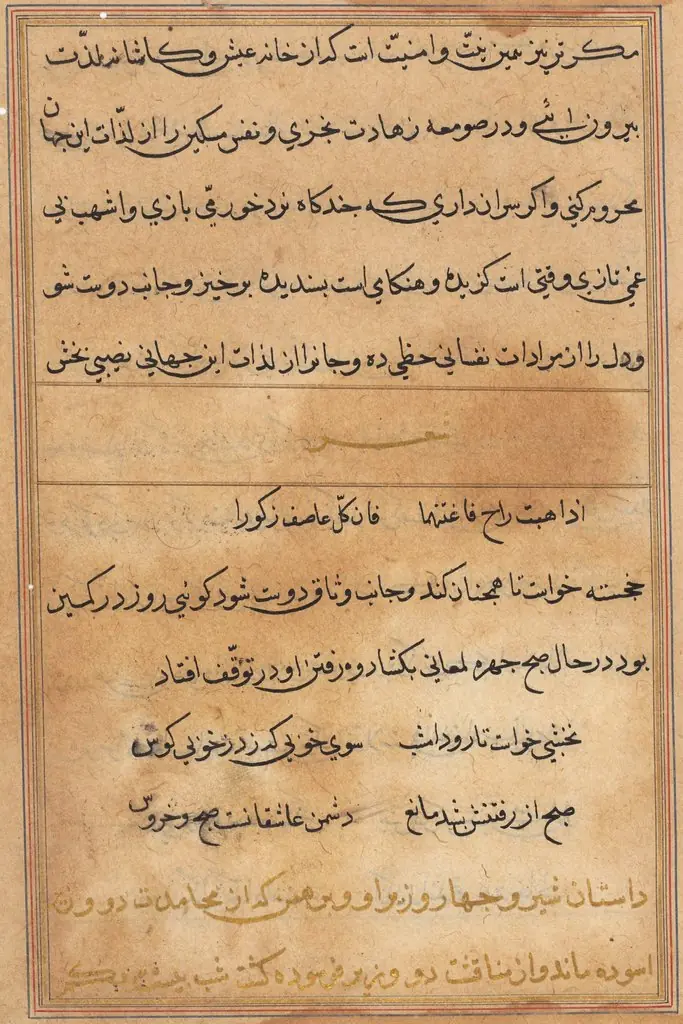 Page from Tales of a Parrot (Tuti-nama): text page
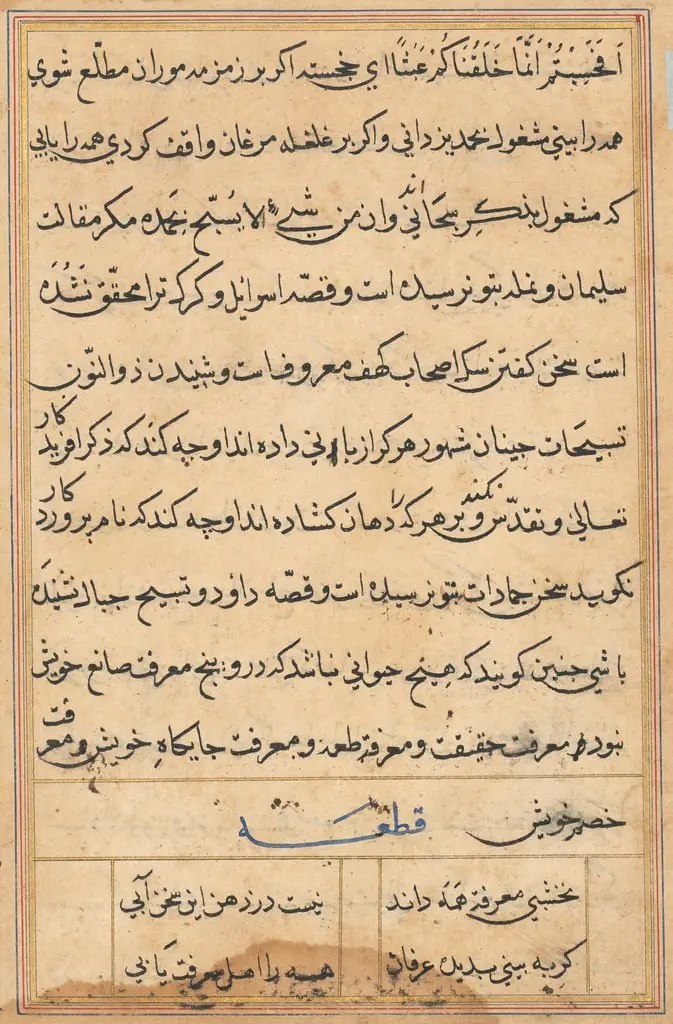 Page from Tales of a Parrot (Tuti-nama): text page
 Page from Tales of a Parrot (Tuti-nama): text page