Artwork
Christ's Entry into Jerusalem
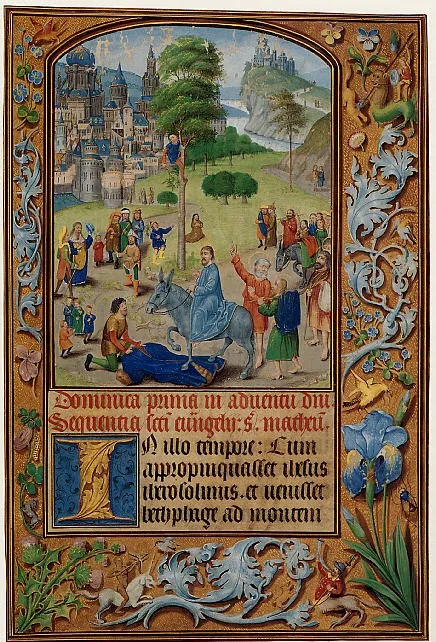
Christ's Entry into Jerusalem is an unspecified painting. It dates from 1490 and is held in the collection of the Metropolitan Museum of Art.
About this work
Overview
The composition is framed, suggesting a contained view, and is characterized by bright colors and intricate decorative elements.
This artwork, titled Christ's Entry into Jerusalem, presents a vibrant and detailed scene. It depicts a central figure on a donkey amidst cheering crowds, set against a backdrop of an elaborate city. The composition is framed, suggesting a contained view, and is characterized by bright colors and intricate decorative elements. Its format, with rich ornamentation and accompanying text, indicates it was likely created as a page from a significant illuminated manuscript rather than a standalone painting.
Subject & Meaning
The primary focus of the composition is a man riding a donkey, surrounded by individuals waving palm branches and expressing jubilation. This imagery directly references the biblical narrative of Christ's triumphal entry into Jerusalem, a pivotal event celebrated during Palm Sunday. The surrounding city, with its distinctive towers and spires, establishes the historical and geographical context for this religious moment, emphasizing its significance within Christian tradition.
Technique & Style
The artwork is distinguished by its rich visual complexity and meticulous execution. The central narrative is enclosed within a defined space, reminiscent of a window, while the margins are densely adorned. These borders feature elaborate gold patterns, floral motifs, and small figural details, contributing to the work's opulent aesthetic. A line of Latin text, initiated by an ornate capital letter, runs along the bottom, integrating the visual with a textual component typical of illuminated manuscripts.
Context
The intricate detailing, vibrant palette, and extensive use of gold in Christ's Entry into Jerusalem strongly suggest its origin as an illumination within a precious book. Such works were often commissioned for religious or scholarly purposes, intended for private devotion or public liturgy. The integration of decorative borders and Latin script further supports its function as a page from a manuscript, designed to enhance and illustrate sacred texts for a discerning audience.
Artist & collection
