Artwork
Sanit Francis
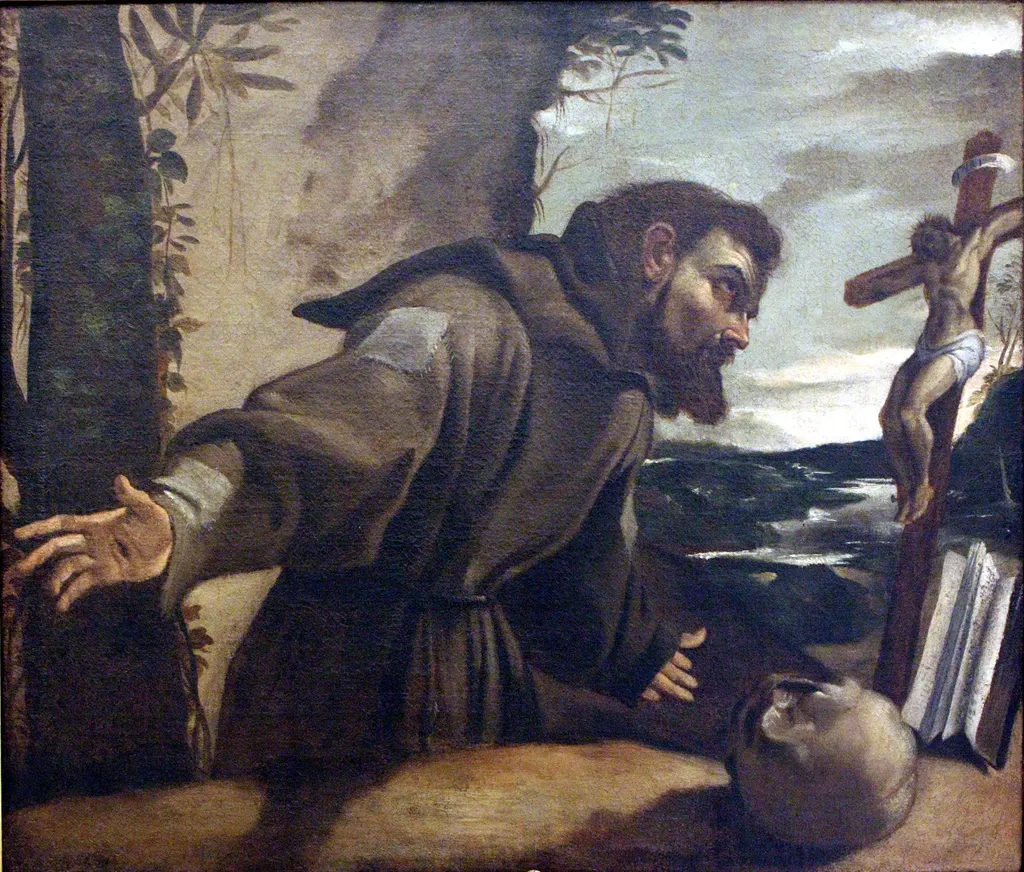
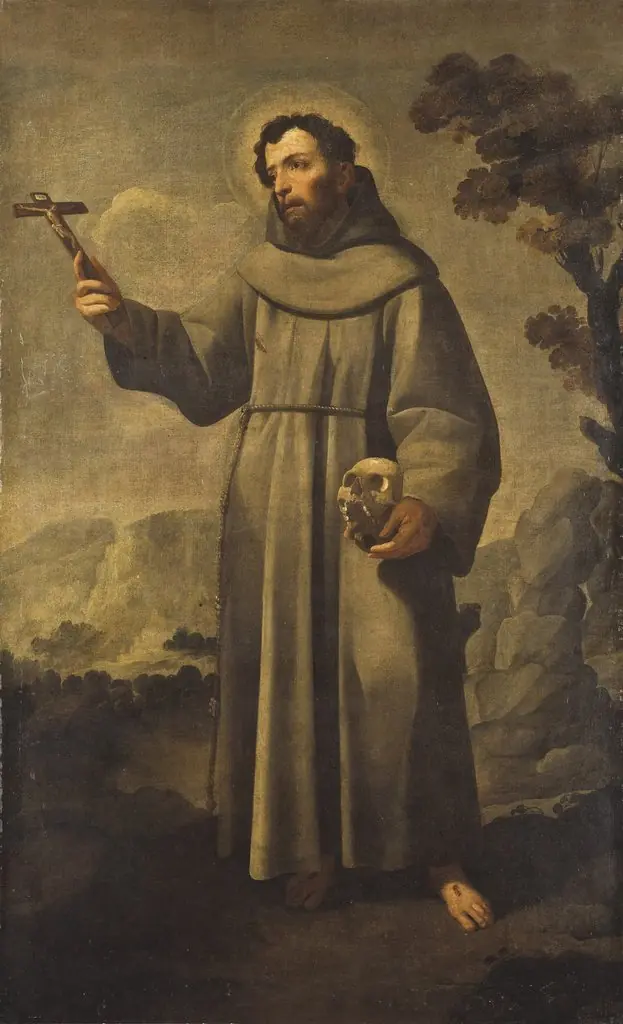
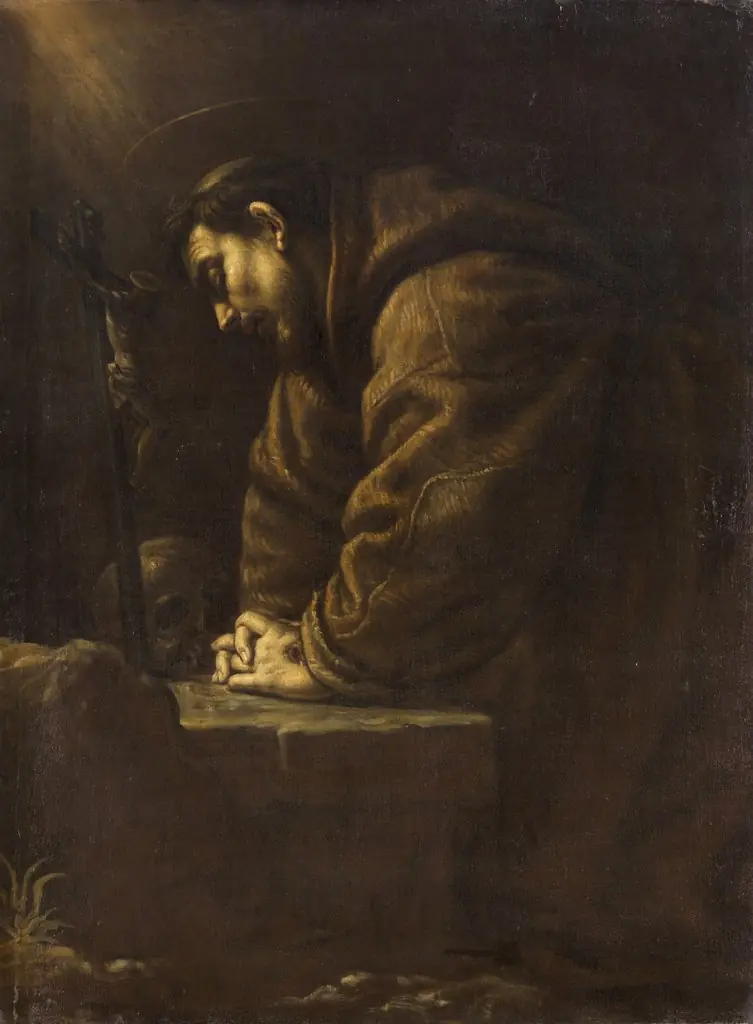
Sanit Francis is an oil painting by the Early Baroque Italian artist Unknown. It dates from 1550 and is held in the collection of the Capitoline Museums. This oil painting depicts a solitary figure in a hooded robe, kneeling before a skull.
About this work
Overview
The figure’s posture and expression convey introspection, while the heavy shadows and subdued palette create a somber, contemplative atmosphere.
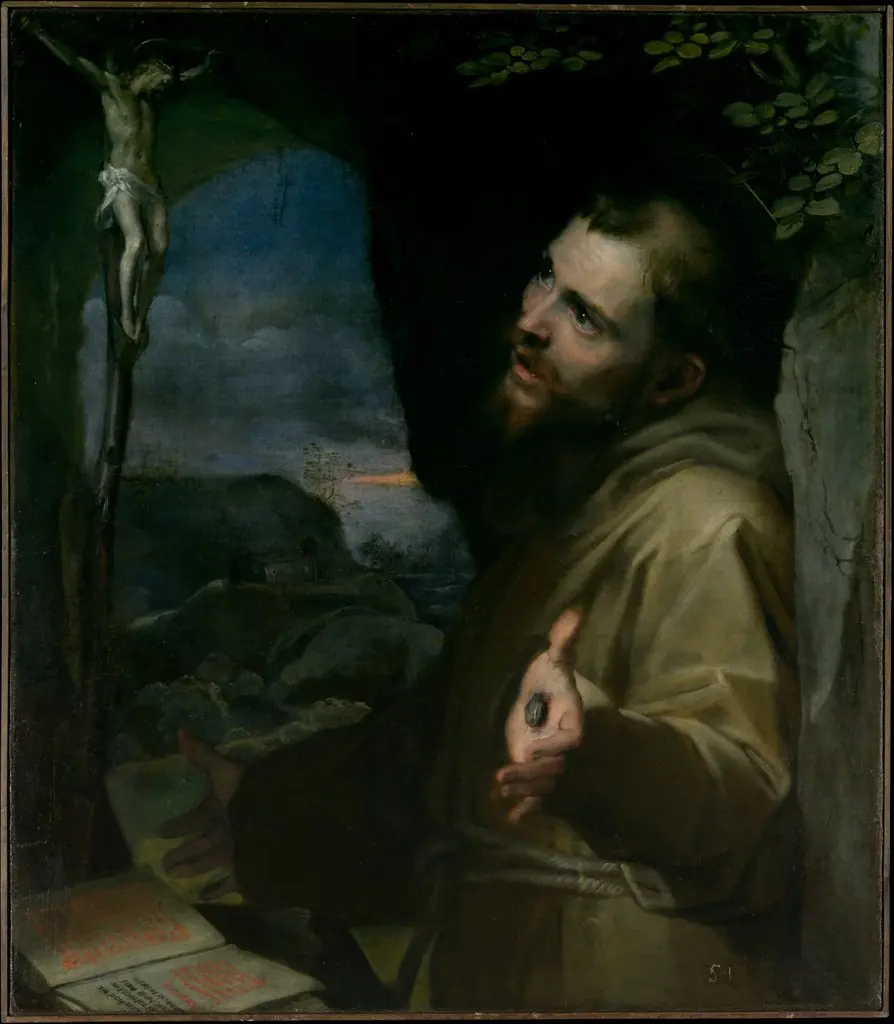
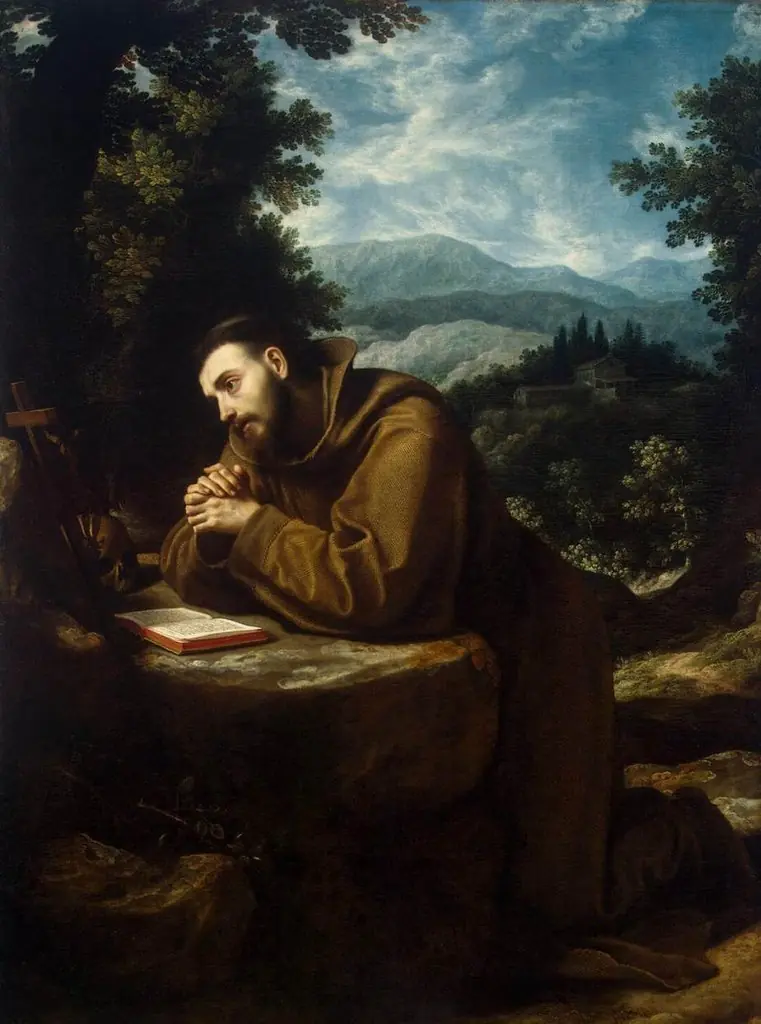
This oil painting depicts a solitary figure in a hooded robe, kneeling before a skull. The scene is set against a muted, overcast sky with a distant crucifix and sparse vegetation. The figure’s posture and expression convey introspection, while the heavy shadows and subdued palette create a somber, contemplative atmosphere. The work is rendered in a style emphasizing contrast between light and dark, characteristic of chiaroscuro techniques.
Subject & Meaning
The figure, traditionally interpreted as Saint Francis of Assisi, engages in a moment of memento mori—a meditation on mortality. The worn skull before him symbolizes the transience of life, while the crucifix in the background suggests spiritual reflection. His tattered robe and downcast gaze imply ascetic devotion and inner sorrow, aligning with Franciscan ideals of humility and penitence.
Technique & Style
The artist employs chiaroscuro to deepen the emotional tone, using stark contrasts between shadow and dim light to model the figure and objects. The robe’s texture is suggested through layered, uneven brushwork, emphasizing its worn state. The background elements are rendered with softer edges, receding into the gray sky, which enhances the figure’s isolation and the scene’s quiet gravity.
History & Provenance
The painting’s origins are undocumented in public records, and no known artist or date is securely attributed. It appears to be a 17th-century devotional work, possibly from a regional workshop influenced by Counter-Reformation themes. Its survival suggests it was once held in a religious setting, though its early ownership remains unclear.
Context
Created during a period when religious imagery emphasized personal piety and the contemplation of death, this work reflects broader trends in Catholic Europe. Devotional paintings of saints in solitude, often with skulls or crosses, were common in monastic and private chapels. The emphasis on inner spiritual struggle resonated with reform-minded audiences seeking authentic faith.
Legacy
Though not widely exhibited or studied, the painting exemplifies a quiet tradition of Counter-Reformation art focused on individual devotion. Its restrained composition and emotional restraint distinguish it from more dramatic Baroque works. It remains a modest but evocative example of how spiritual themes were rendered in intimate, non-idealized forms.
Artist & collection

 Domestic Scene
 Giacomo and Cardinal Marco, investing Andrea, Abbot of San Zeno, with his Benefice
 The Nymph of Fontainebleau
 Portrait of a Woman
 Madonna and Child with Saints in the Enclosed Garden
 Venus and Minerva
 Family Group of Four on Sofa
 Wall painting from Room H of the Villa of P. Fannius Synistor at Boscoreale