Artwork
Man between Virtue and Vice
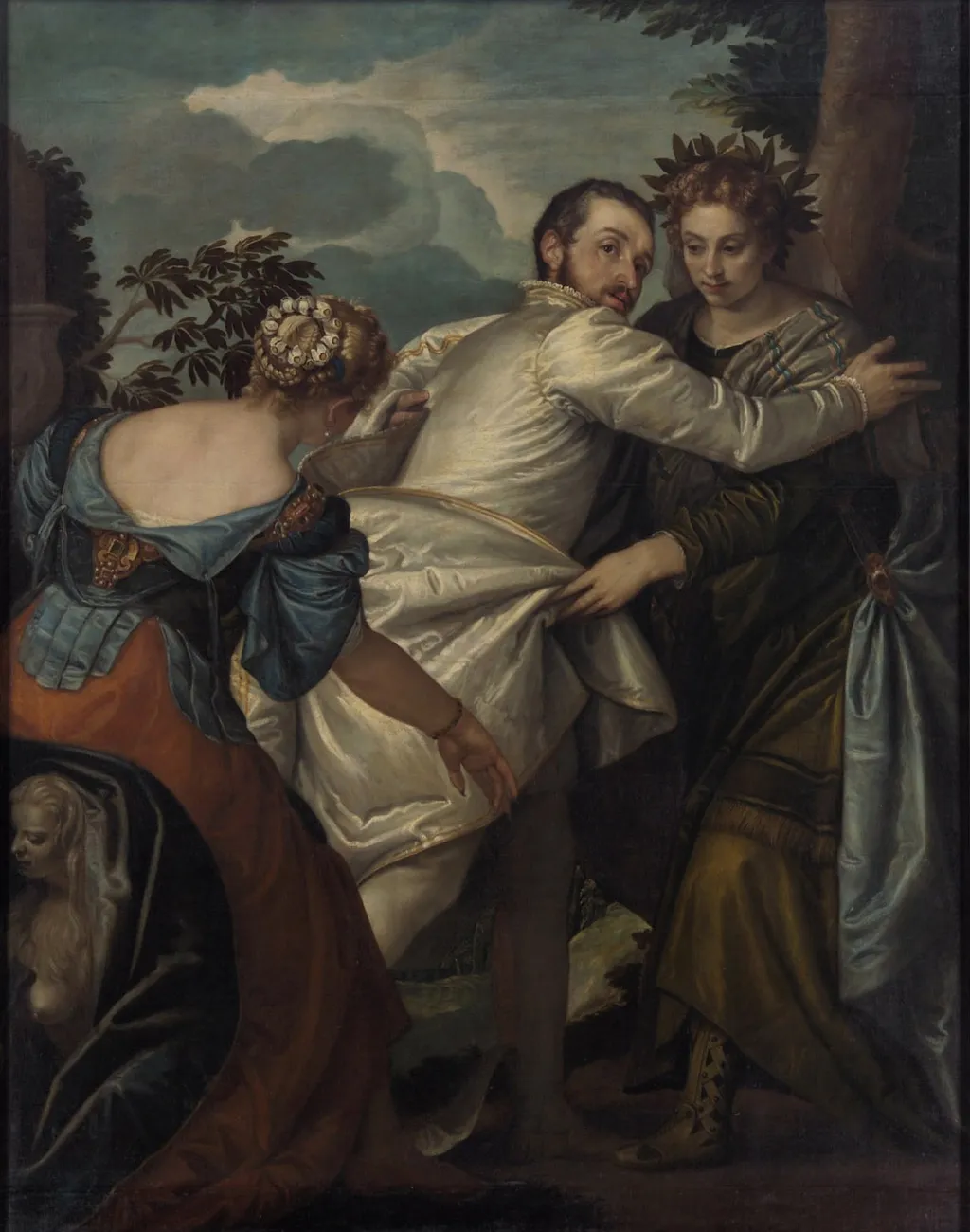
Man between Virtue and Vice is an oil painting by the Early Baroque Italian artist Unknown. It dates from 1600 and is held in the collection of the Kunsthistorisches Museum.
About this work
Overview
This oil painting depicts a man clad in a shiny silver robe positioned between two women, set against a somber backdrop of a dark forest and cloudy sky. The composition conveys a sense of quiet drama through the subjects' poses and expressions.
Subject & Meaning
The woman on the left, with her back turned and adorned with a flower crown, may symbolize Virtue or rejection of worldly desires.
The scene likely represents a moral allegory, with the man caught between two influences embodied by the women. The woman on the left, with her back turned and adorned with a flower crown, may symbolize Virtue or rejection of worldly desires. Conversely, the woman on the right, engaging with the man and holding a long blue cloth, could represent Vice or temptation, suggesting a choice or internal conflict.
Technique & Style
The painting utilizes chiaroscuro, an artistic technique emphasizing strong contrasts between light and dark to create volume and depth. This is evident in the shiny silver robe set against the dark forest and the play of light on the subjects' faces and clothing, enhancing the emotional intensity of the scene.
Context
The use of chiaroscuro and the moral allegory theme place the painting within the broader context of Baroque or early modern European art, where such techniques and subjects were common for conveying moral lessons or emotional depth.
Legacy
While the painting's specific impact on the art historical canon is not detailed here, its employment of chiaroscuro reflects a wider influence of this technique in Western art, encouraging viewers to explore similar works that leverage light and shadow for narrative effect.
Artist & collection

 Domestic Scene
 Giacomo and Cardinal Marco, investing Andrea, Abbot of San Zeno, with his Benefice
 The Nymph of Fontainebleau
 Portrait of a Woman
 Madonna and Child with Saints in the Enclosed Garden
 Venus and Minerva
 Family Group of Four on Sofa
 Wall painting from Room H of the Villa of P. Fannius Synistor at Boscoreale