Artwork
Portrait of Maerten Harpertsz Tromp (1597-1653)
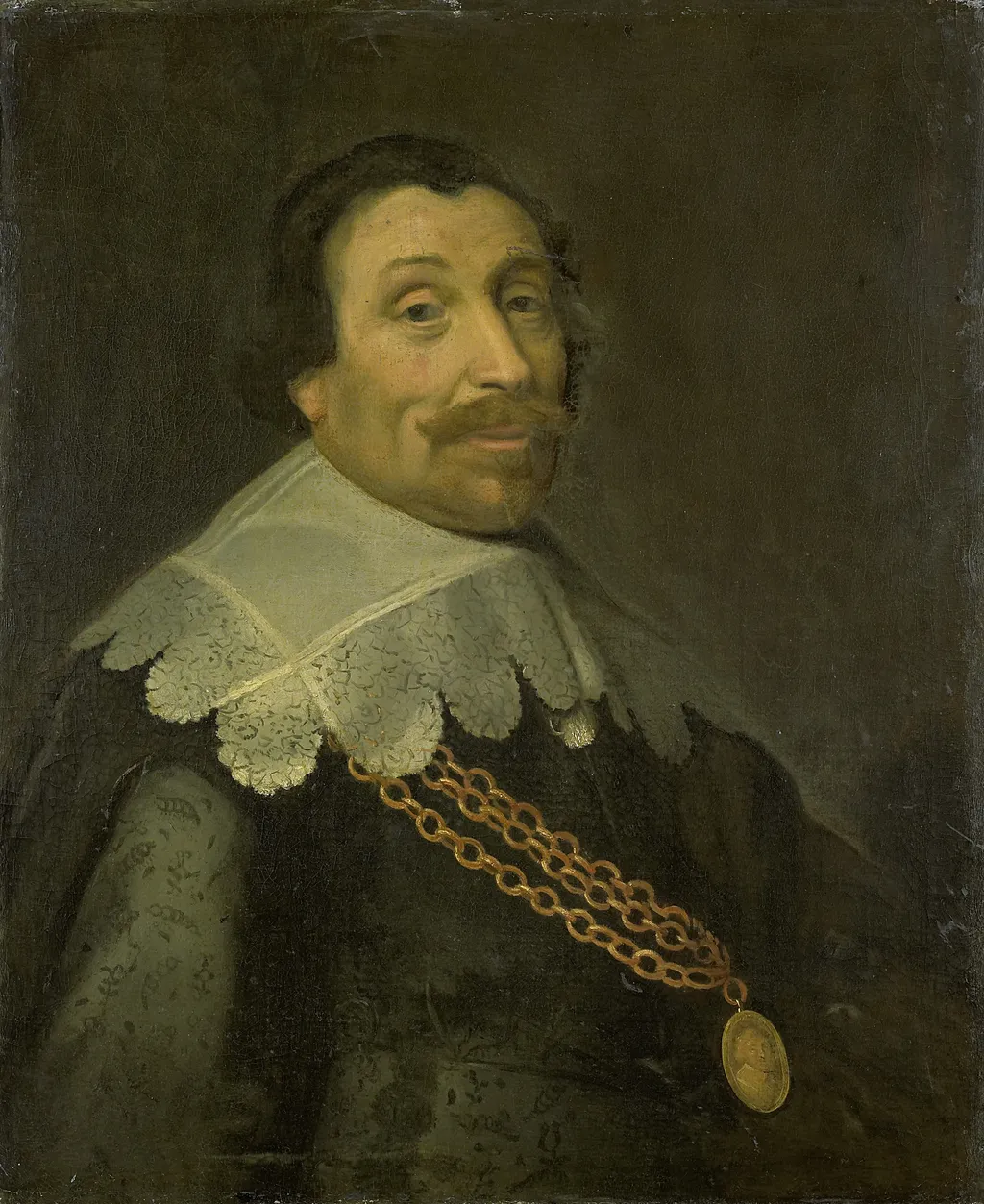
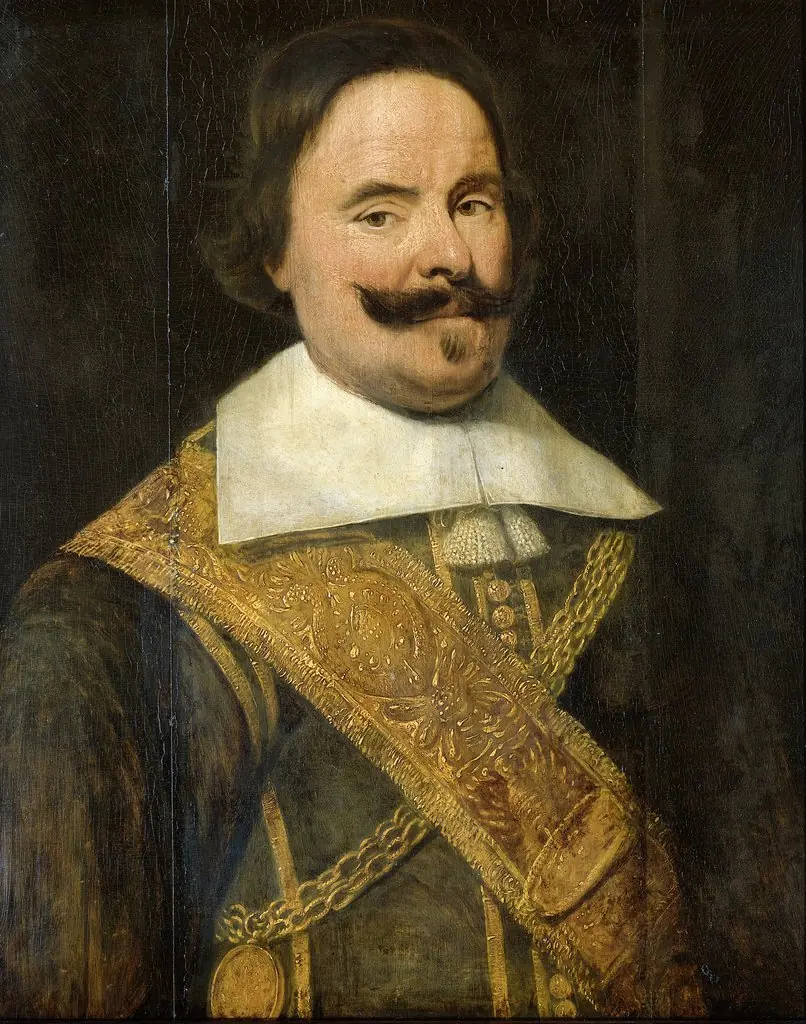
Portrait of Maerten Harpertsz Tromp (1597-1653) is an oil painting. It dates from 1640 and is held in the collection of the Rijksmuseum. The work is an oil painting portraying Maerten Harpertsz Tromp, a notable figure of the Dutch Golden Age.
About this work
Overview
The composition follows the conventions of Dutch portraiture, focusing on realism and the dignified presence of the sitter.
The work is an oil painting portraying Maerten Harpertsz Tromp, a notable figure of the Dutch Golden Age. Executed in the early seventeenth century, the portrait presents Tromp against a deep, shadowed backdrop that isolates his figure and emphasizes his facial features and attire. The composition follows the conventions of Dutch portraiture, focusing on realism and the dignified presence of the sitter.
Subject & Meaning
Tromp is shown with dark hair, a neatly trimmed mustache, and a solemn expression. He wears a dark jacket complemented by a white lace collar, a gold chain, and a medallion, elements that signal his high rank, likely within the naval or military hierarchy of the Dutch Republic. The restrained palette and solemn demeanor convey authority and a sense of personal gravitas.
Technique & Style
The painter employs chiaroscuro, using strong contrasts between the illuminated figure and the surrounding darkness to model form and create spatial depth. Impasto is evident in the textured rendering of the lace collar and metallic accessories, adding tactile quality to the surface. The overall style reflects the naturalistic approach of seventeenth‑century Dutch portraitists, emphasizing precise detail and subdued colour.
Context
Created during a period when portraiture served both personal commemoration and public display of status, the painting aligns with the Dutch Republic’s emphasis on individual achievement. Tromp’s depiction, with its military insignia, would have functioned as a visual assertion of his service and standing within a society that prized maritime power and civic virtue.
Artist & collection