Artwork
Saint Eugenius
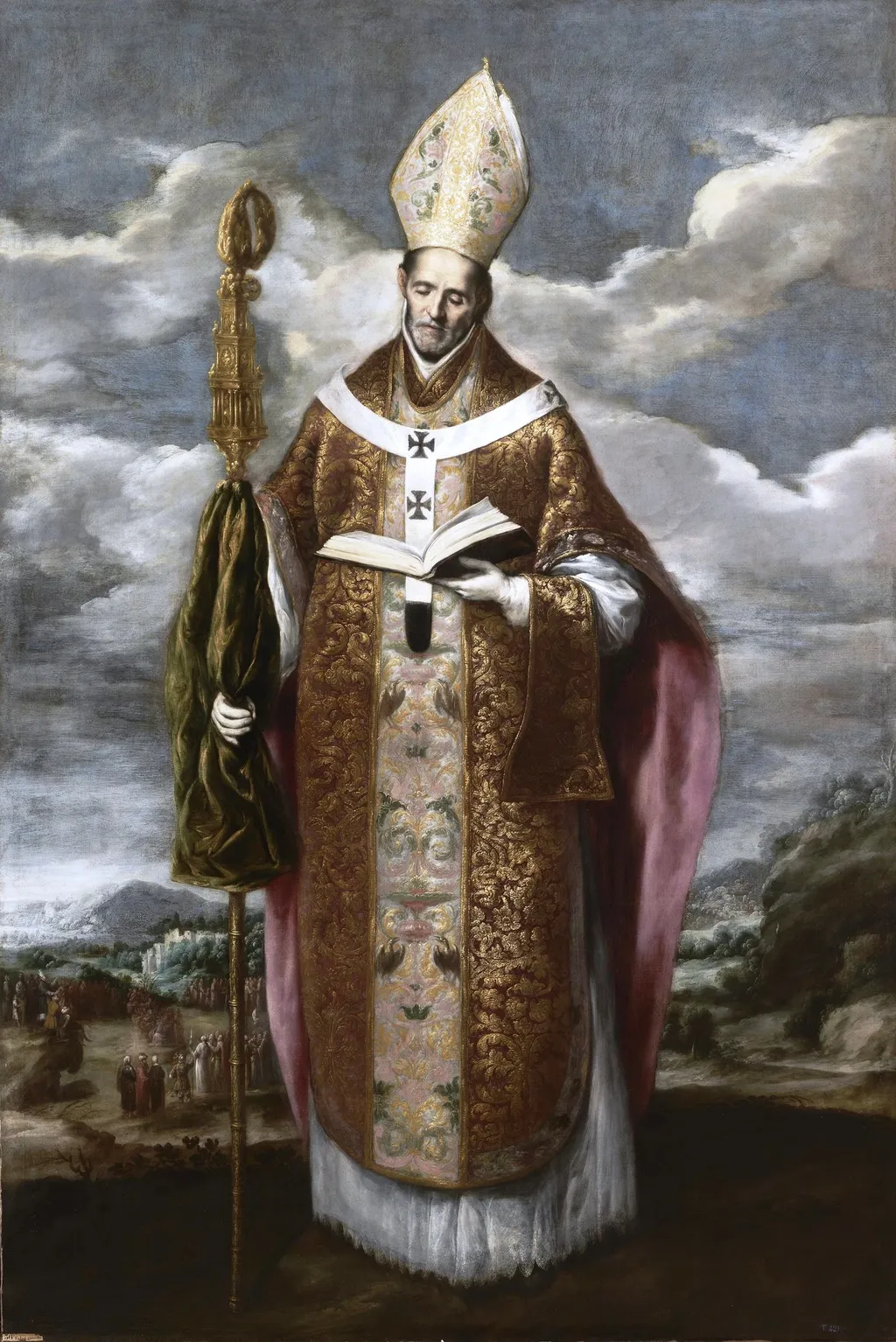
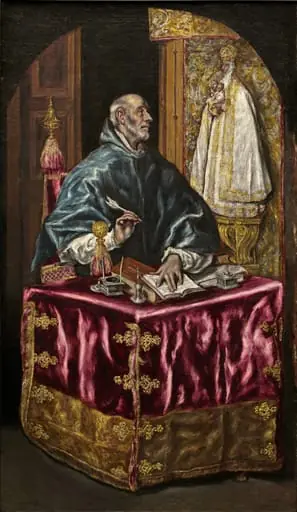
Saint Eugenius is an oil painting by the Early Baroque Italian artist El Greco. It is held in the collection of the Museo del Prado.
About this work
Overview
Saint Eugenius is a 1634 oil-on-canvas painting by El Greco (Doménikos Theotokópoulos), created during the early Baroque period in Italy. The work is part of the Museo del Prado’s collection in Madrid.
Subject & Meaning
The painting portrays Saint Eugenius of Carthage in religious attire, symbolizing his devotion through a book in one hand and a staff with a draped green cloth in the other, set against a serene landscape.
Technique & Style
Characterized by El Greco’s distinctive style, the painting features elongated forms (notably the saint’s tall, pointed hat and long robe), vivid patterns, and a softly rendered cloudy sky, evoking solemnity.
History & Provenance
Painted in 1634, the artwork’s history prior to its acquisition by the Museo del Prado is not detailed here, though it is known to be part of the Prado’s holdings.
Context
As an early Baroque work, *Saint Eugenius* reflects the period’s emphasis on emotional depth and religious themes, while also showcasing El Greco’s unique blend of Byzantine and Western European influences.
Legacy
While specific influences of *Saint Eugenius* on later art are not highlighted, the painting contributes to El Greco’s reputation as a pivotal figure in the development of Baroque painting, notable for his distinctive spiritual and aesthetic approach.
Own this work as a print
Artist & collection
Artist
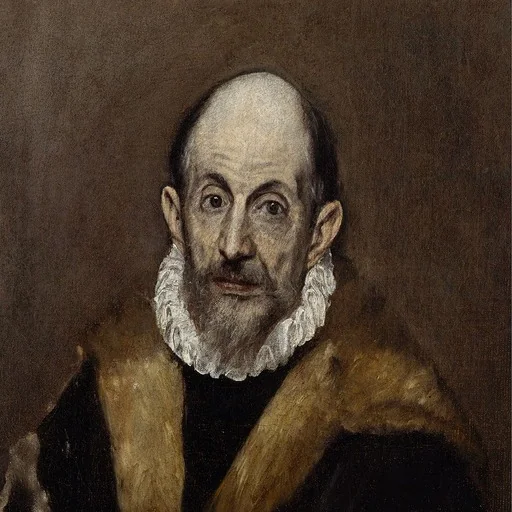
Doménikos Theotokópoulos was born in 1541 in Candia (modern Heraklion), the capital of Venetian-ruled Crete, where he was trained in the post-Byzantine tradition of icon painting.