Artwork
Khujasta kills the pet mynah who advises her not to be unfaithful to Maymun, her husband, from a Tuti-nama (Tales of the Parrot): First Night
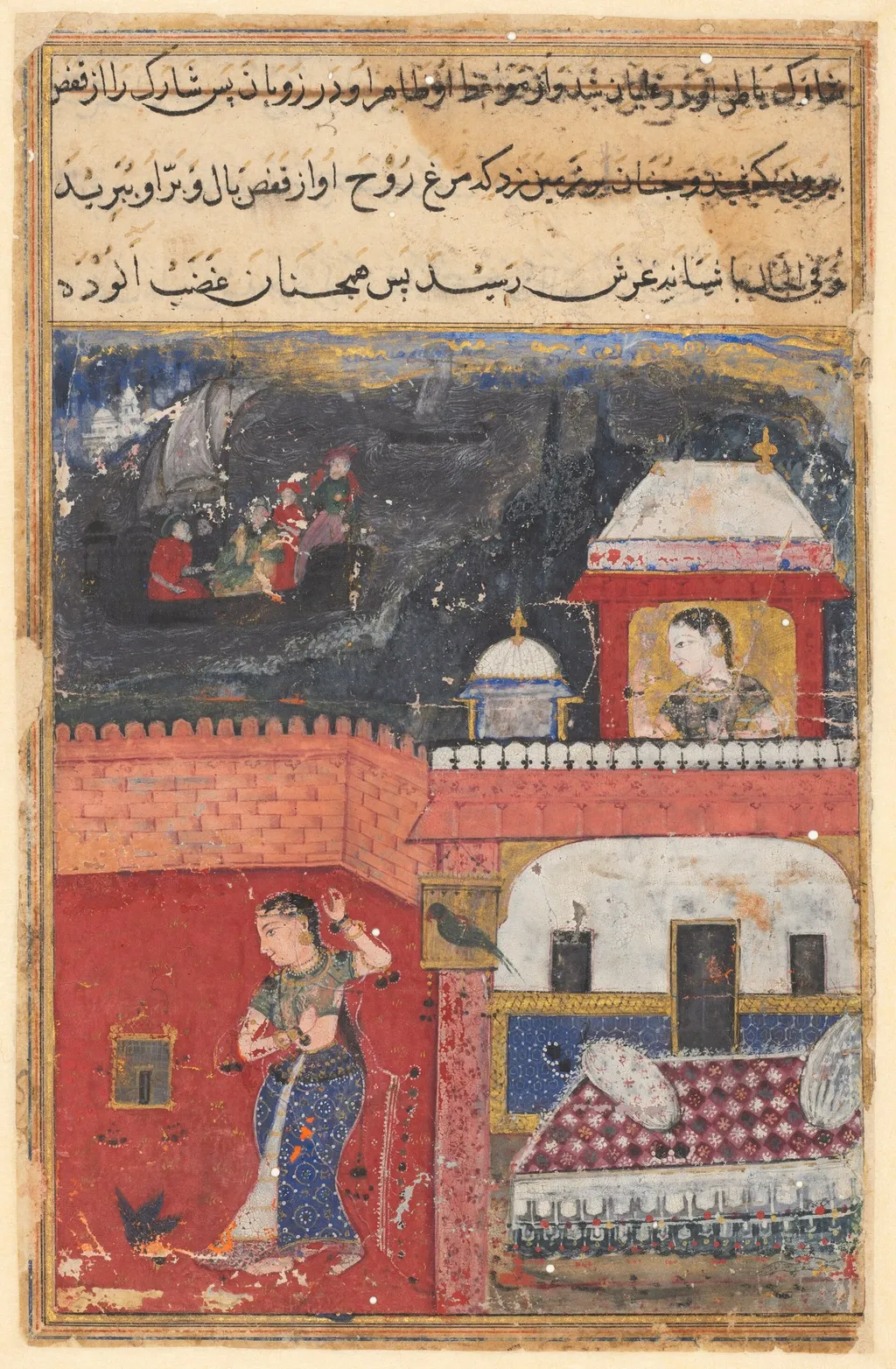
Khujasta kills the pet mynah who advises her not to be unfaithful to Maymun, her husband, from a Tuti-nama (Tales of the Parrot): First Night is an unspecified painting. It dates from 1560 and is held in the collection of the Cleveland Museum of Art.
About this work
Overview
The work, titled *Khujasta kills the pet mynah who advises her not to be unfaithful to Maymun, her husband, from a Tuti‑nama (Tales of the Parrot): First Night*, is a painted scene that portrays a woman in vivid blue and red garments standing on a balcony. She clutches a small bird, poised to strike it, while a secondary tableau of a rooftop with figures and a white dome unfolds behind her.
Subject & Meaning
The narrative derives from the medieval Persian *Tuti‑nama*, a collection of moral tales featuring a talking parrot. In this episode, the heroine Khujasta is warned by her mynah about marital fidelity; her decision to kill the bird underscores a moment of defiance and the tension between counsel and personal choice.
Technique & Style
Executed in a palette of saturated reds, deep blues, and gold highlights, the painting employs bold outlines and a flat decorative surface typical of manuscript illustration. The composition is divided between the foreground figure and a background architectural vignette, and the edges show signs of wear that suggest an antiquated surface.
History & Provenance
The piece is part of the Cleveland Museum of Art’s collection, acquired through the museum’s holdings of Persian and Islamic art. Its provenance traces back to the tradition of illustrated *Tuti‑nama* manuscripts, though specific ownership before museum acquisition is not recorded in the available data.
Context
Illustrations like this were used to accompany literary texts, providing visual reinforcement of moral lessons. The scene reflects the broader cultural practice of embedding ethical instruction within entertaining stories, a hallmark of Persian courtly literature during the medieval period.
Legacy
As a surviving example of narrative painting linked to the *Tuti‑nama*, the work offers insight into the visual language of Persian storytelling and the role of animal allegory in conveying social values. Its presence in a major museum allows continued study of cross‑cultural narrative art.
Artist & collection

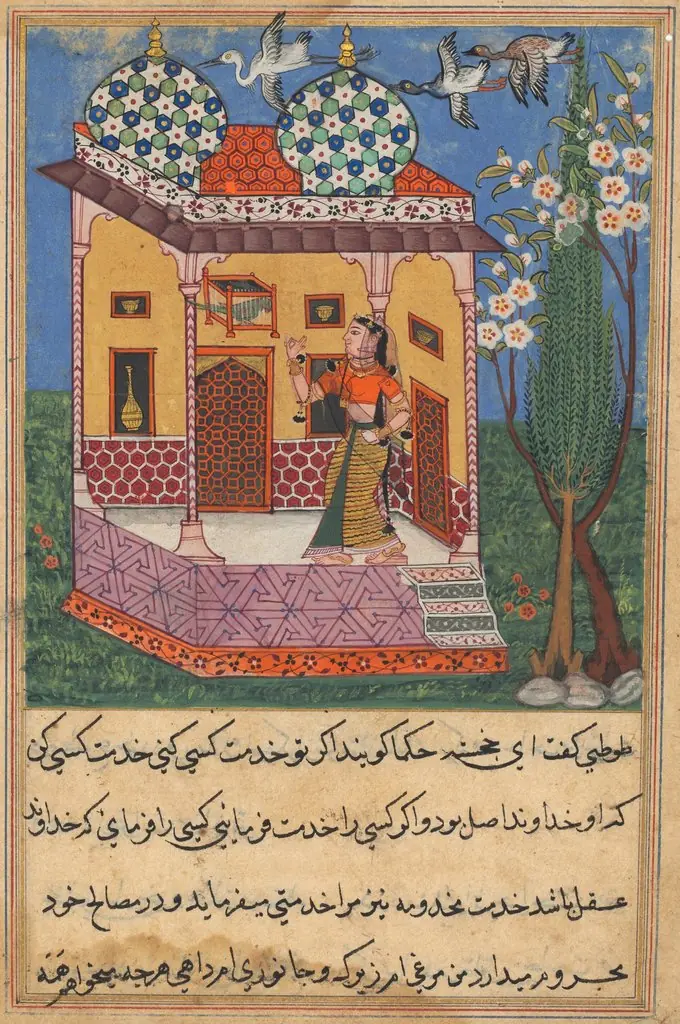 The Parrot Addresses Khujasta at the Beginning of the Twenty-sixth Night, from a Tuti-nama (Tales of a Parrot)
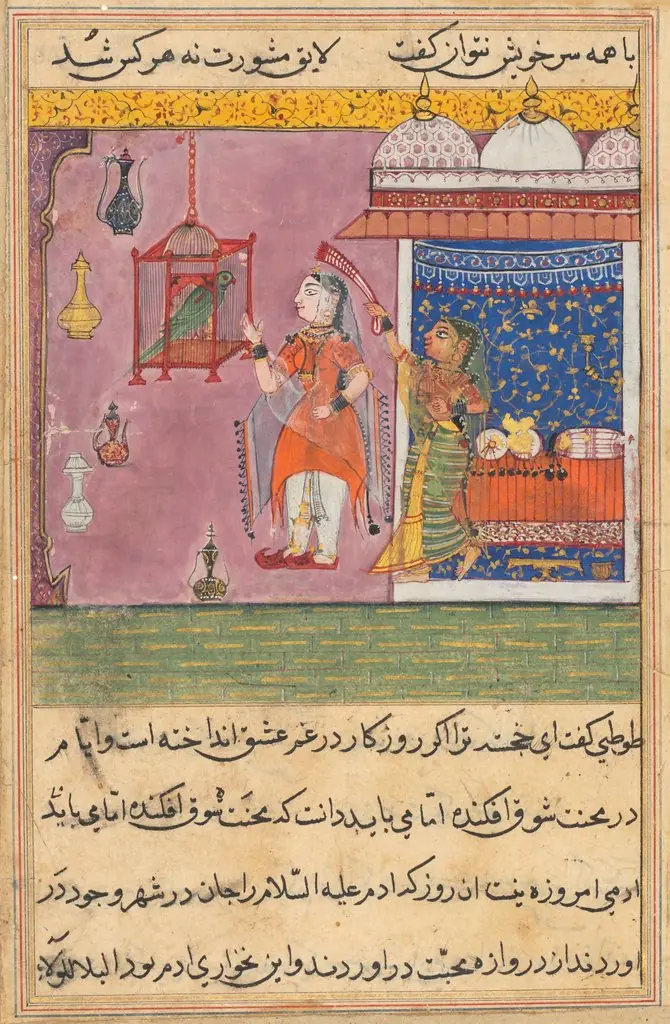 The Parrot Addresses Khujasta at the Beginning of the Nineteenth Night, from a Tuti-nama (Tales of a Parrot)
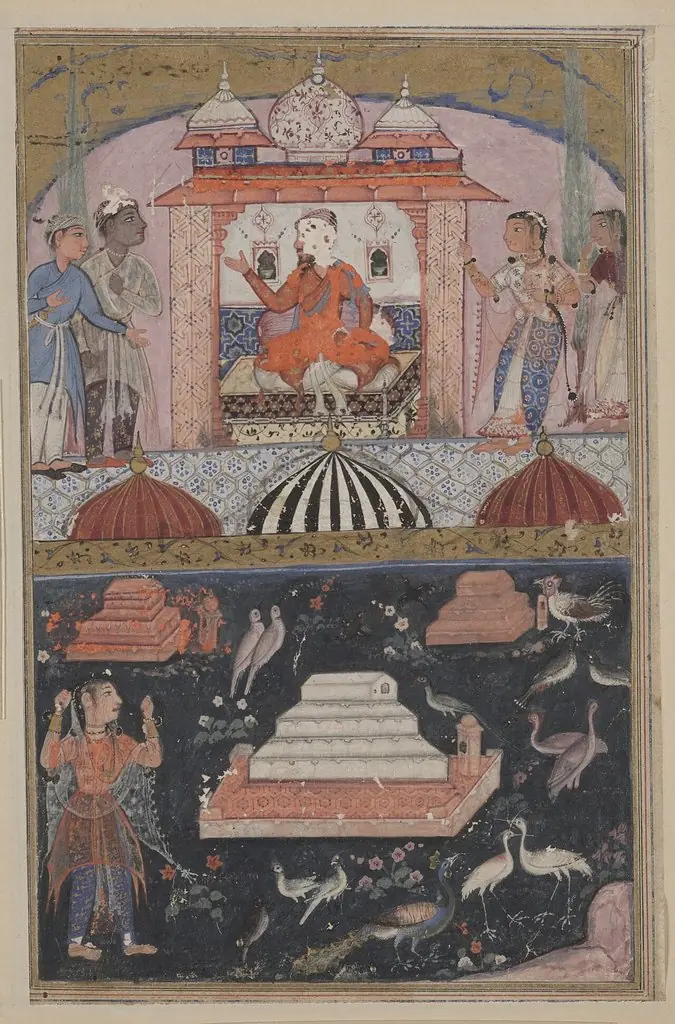 The merchant hears of his wife’s unfaithfulness (above); the unfaithful wife performs penance by plucking her hair (below), from a Tuti-nama (Tales of a Parrot): First Night