Artwork
The merchant hears of his wife’s unfaithfulness (above); the unfaithful wife performs penance by plucking her hair (below), from a Tuti-nama (Tales of a Parrot): First Night
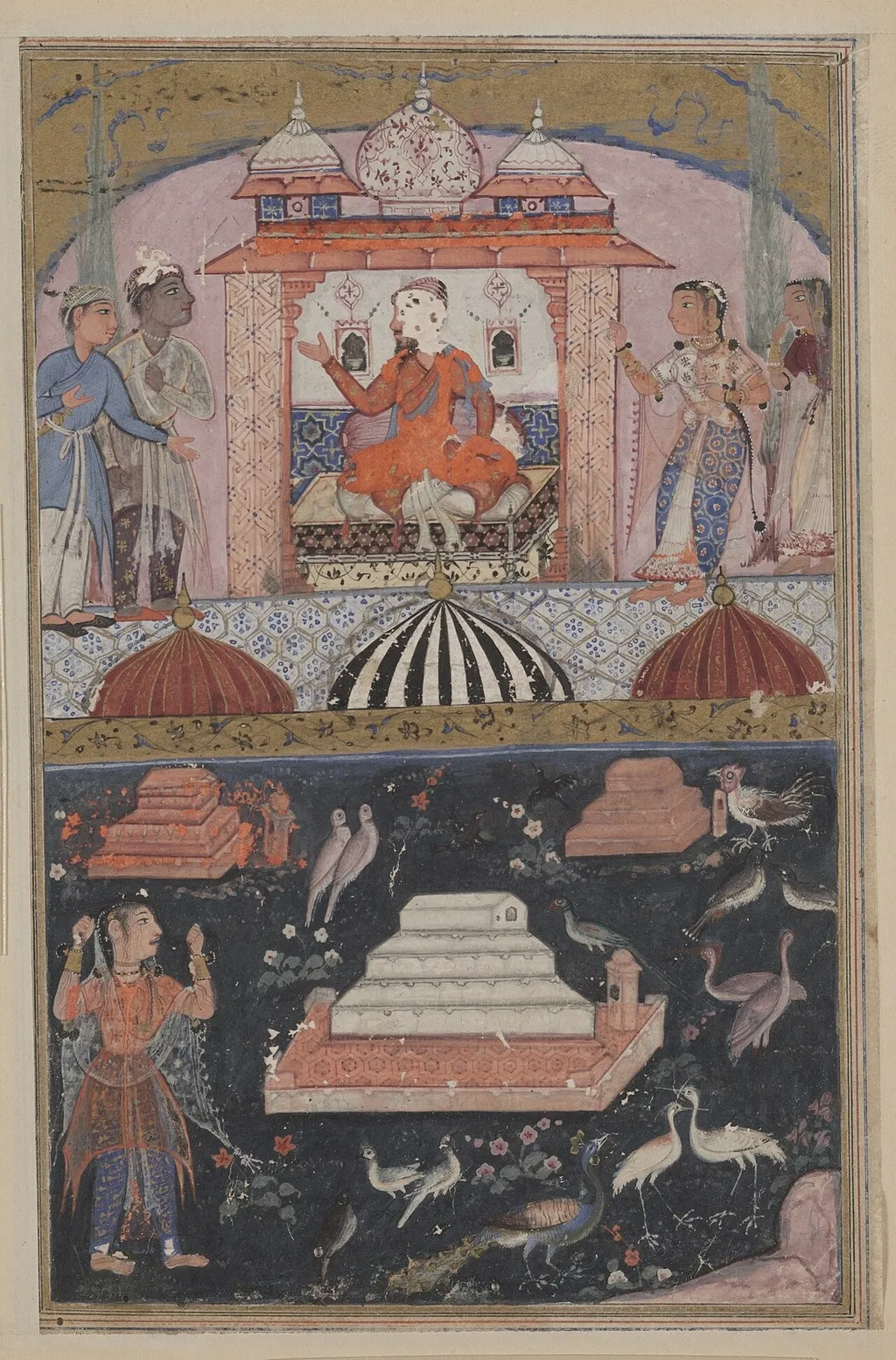
The merchant hears of his wife’s unfaithfulness (above); the unfaithful wife performs penance by plucking her hair (below), from a Tuti-nama (Tales of a Parrot): First Night is an unspecified painting. It dates from 1560 and is held in the collection of the Cleveland Museum of Art. The work is a double‑scene painting taken from the Persian illustrated manuscript known as the Tuti‑nama, or Tales of a Parrot.
About this work
Overview
The work is a double‑scene painting taken from the Persian illustrated manuscript known as the Tuti‑nama, or Tales of a Parrot. The upper register portrays a merchant learning of his wife’s infidelity, while the lower register shows the same woman performing a penitential act by pulling out her hair. Both scenes are rendered in vivid hues and are separated by distinct background colors.
Subject & Meaning
In the top vignette a man dressed in an orange robe sits on a raised platform, surrounded by three onlookers as he receives the disturbing news of his spouse’s betrayal. The lower vignette shifts focus to the wife, now in an orange dress, standing before a white architectural element; she is depicted plucking her own hair, a symbolic gesture of remorse, amid a setting populated by birds and flowering motifs that underscore the moral narrative of repentance.
Technique & Style
The upper scene is set against a soft pink backdrop, whereas the lower scene rests on a deep blue field, creating visual contrast between the two episodes.
The painter employs a bright palette of orange, pink, blue and white, using flat areas of color to delineate figures and architectural forms. The upper scene is set against a soft pink backdrop, whereas the lower scene rests on a deep blue field, creating visual contrast between the two episodes. Fine line work defines the characters and decorative elements, while the inclusion of birds and flora adds ornamental richness typical of Persian miniature tradition.
Context
The Tuti‑nama, compiled in the 14th‑15th centuries, is a collection of moral tales illustrated for elite patrons. This particular illustration belongs to the episode titled “First Night,” which explores themes of marital fidelity, guilt, and atonement. The work reflects the broader cultural practice of using narrative art to convey ethical lessons within courtly literature.
Legacy
As an example of Persian miniature painting, the piece illustrates the genre’s capacity to combine storytelling with elaborate visual design. Its vivid coloration and dual‑scene composition have informed later studies of manuscript illustration, highlighting how artists balanced narrative clarity with decorative complexity.
Artist & collection

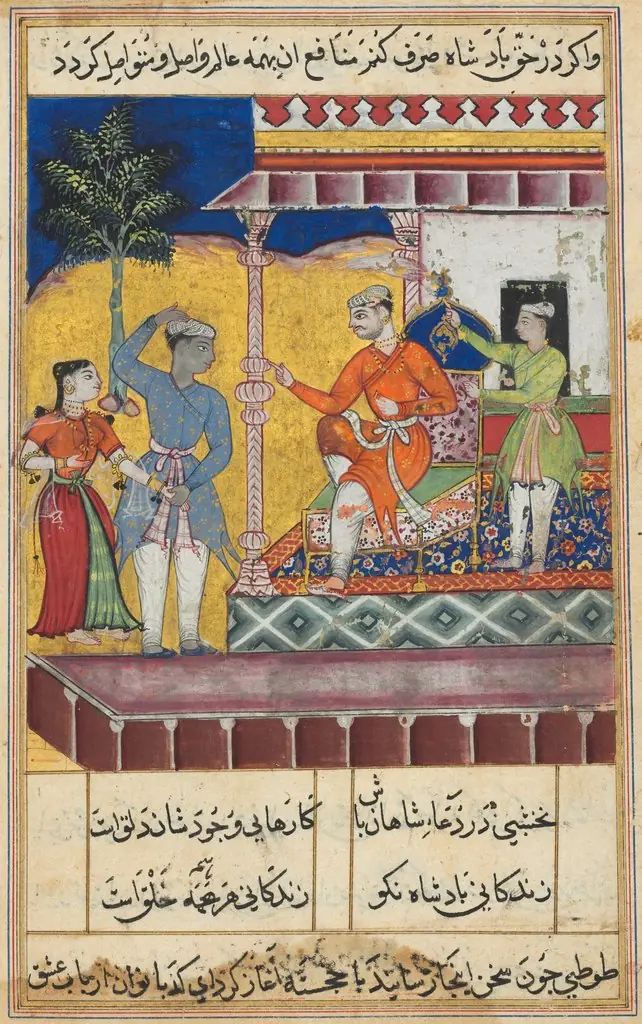 The rejuvenated old man and the daughter of the king of the jinns take leave of the King of Kings, from a Tuti-nama (Tales of a Parrot): Seventh Night
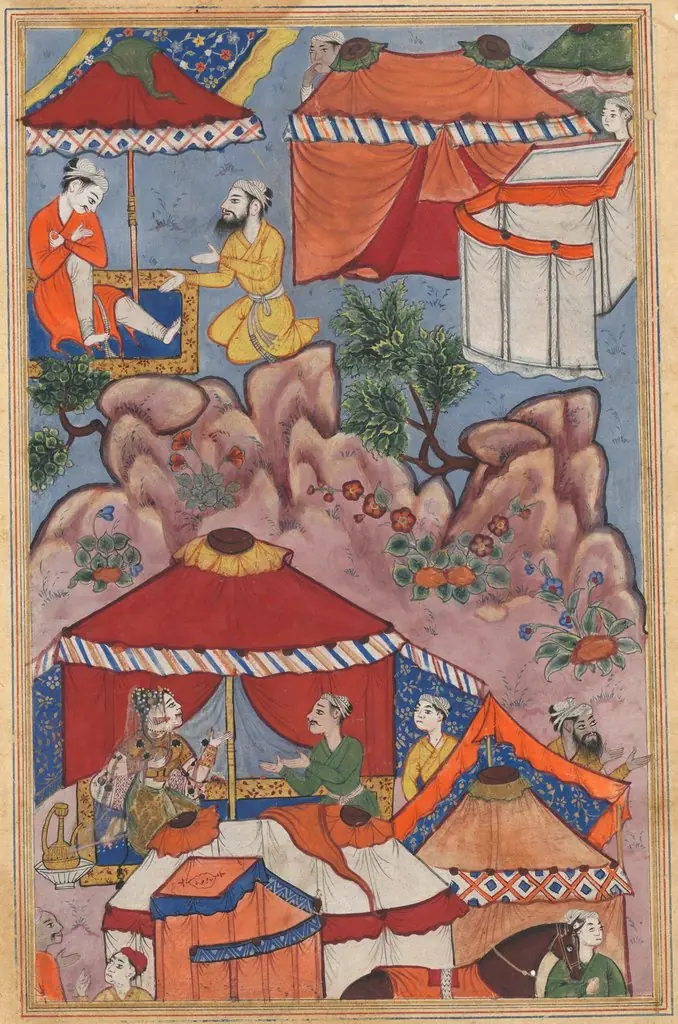 Bashir confides his love for Habbaza to an Arab friend, and sends him to her with a message, from a Tuti-nama (Tales of a Parrot): Twenty-fourth Night
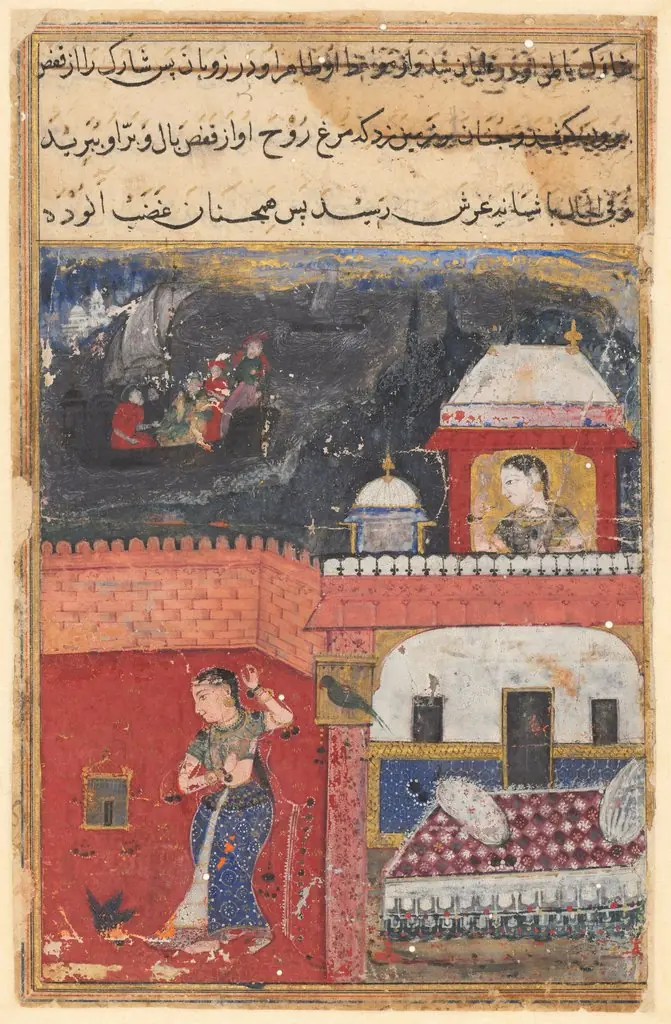 Khujasta kills the pet mynah who advises her not to be unfaithful to Maymun, her husband, from a Tuti-nama (Tales of the Parrot): First Night
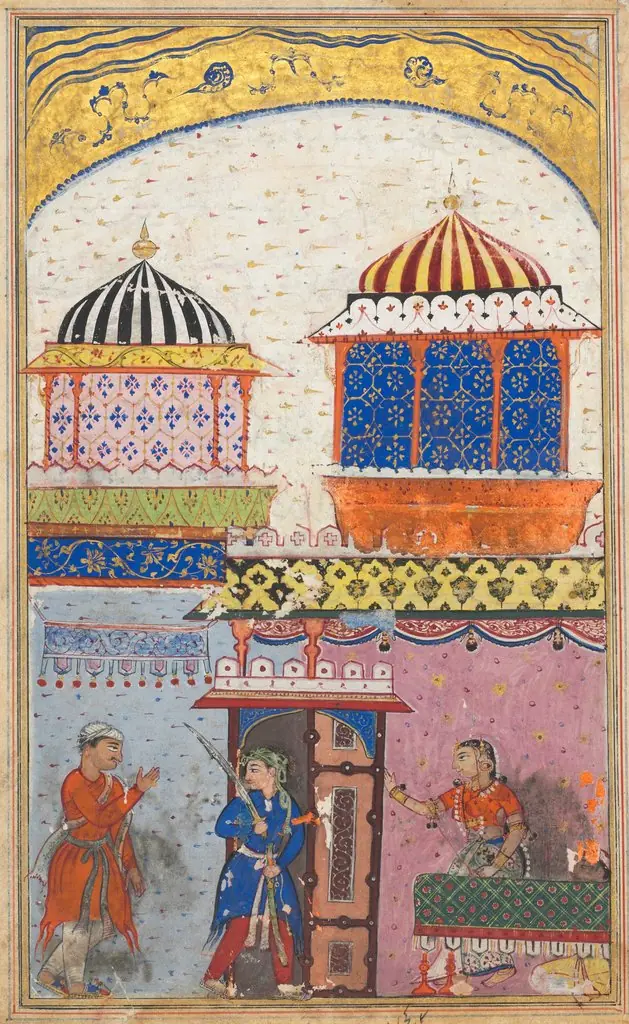 A woman asks her lover to leave her house, brandishing his sword and feigning rage in order to deceive her husband who has just arrived, from a Tuti-nama (Tales of a Parrot): Eighth Night
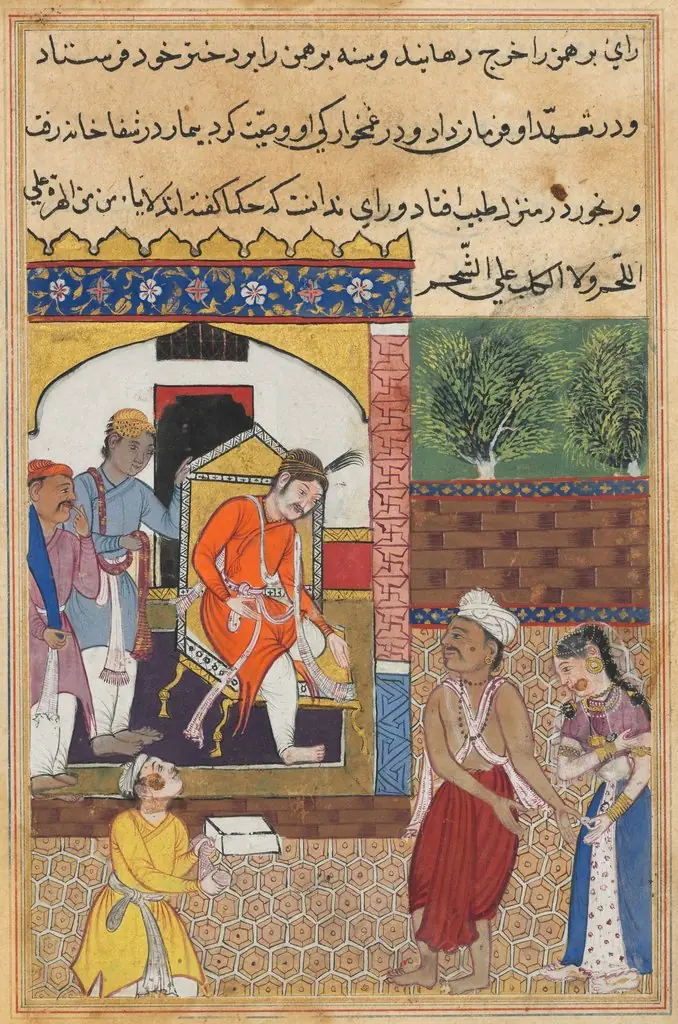 The magician, disguised as a Brahman, visits the king of Babylon, from a Tuti-nama (Tales of a Parrot): Thirty-fifth Night
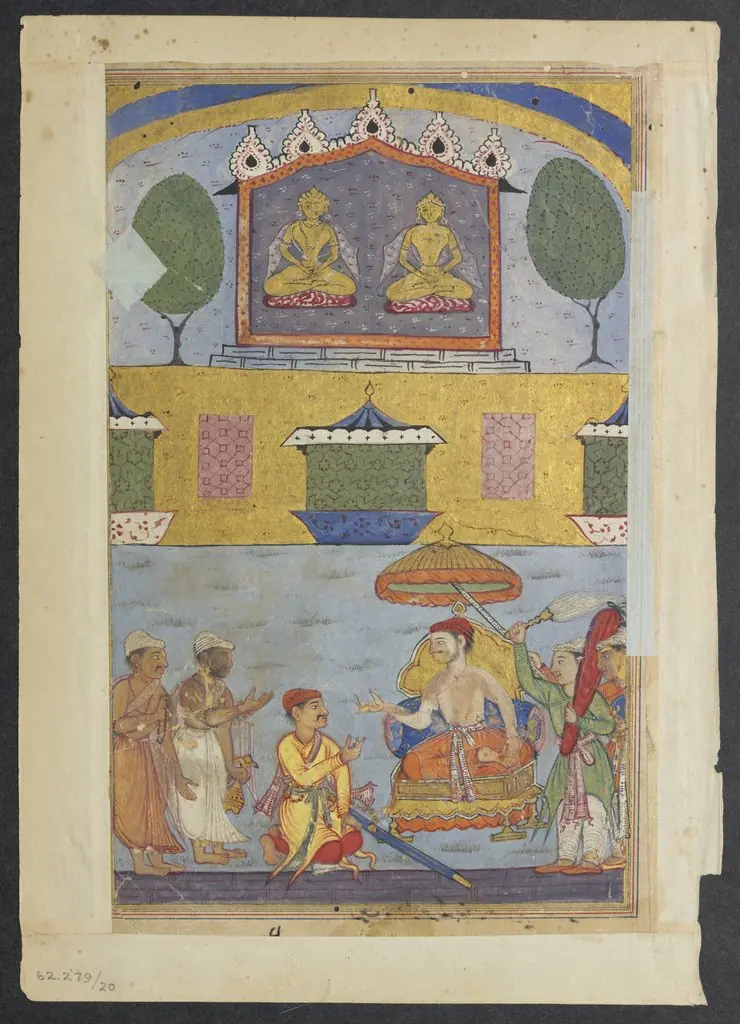 The goldsmith and the carpenter inform the king of a dream in which the golden images plan to desert the city for lack of worshippers, from a Tuti-nama (Tales of a Parrot): Third Night
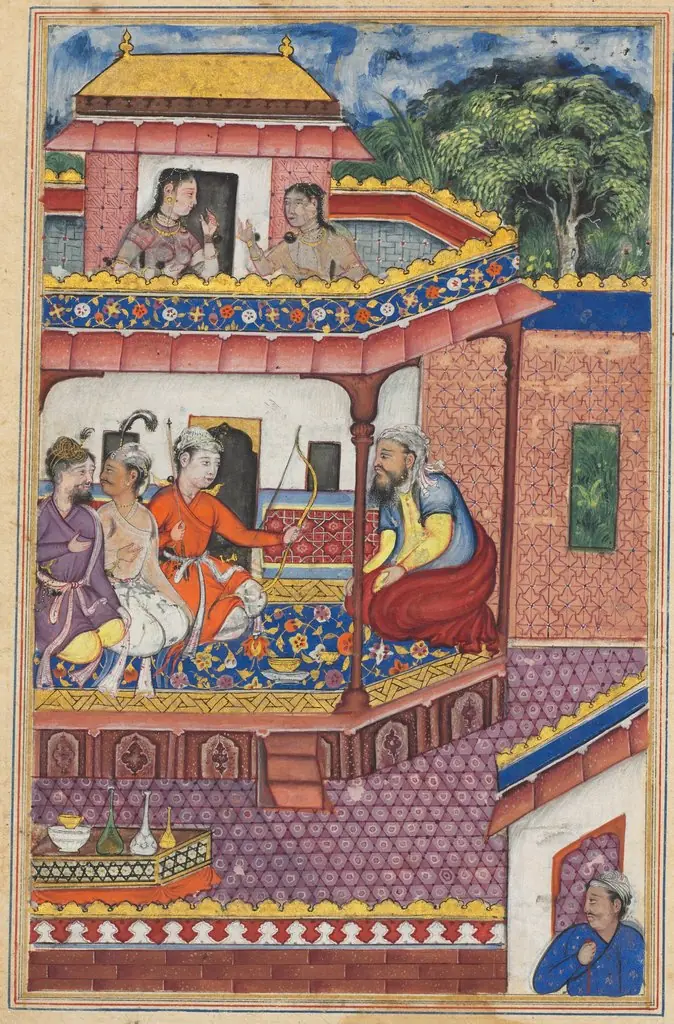 The three young men present themselves as suitors for the hand of Zuhra, the daughter of the merchant of Kabul, from a Tuti-nama (Tales of a Parrot): Thirty-fourth Night
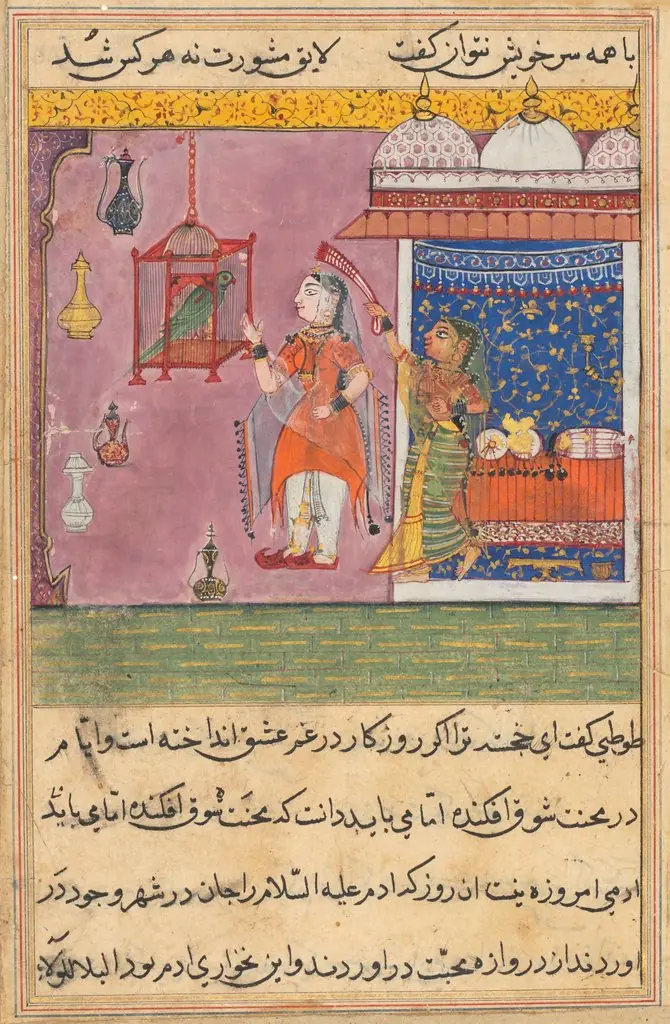 The Parrot Addresses Khujasta at the Beginning of the Nineteenth Night, from a Tuti-nama (Tales of a Parrot)
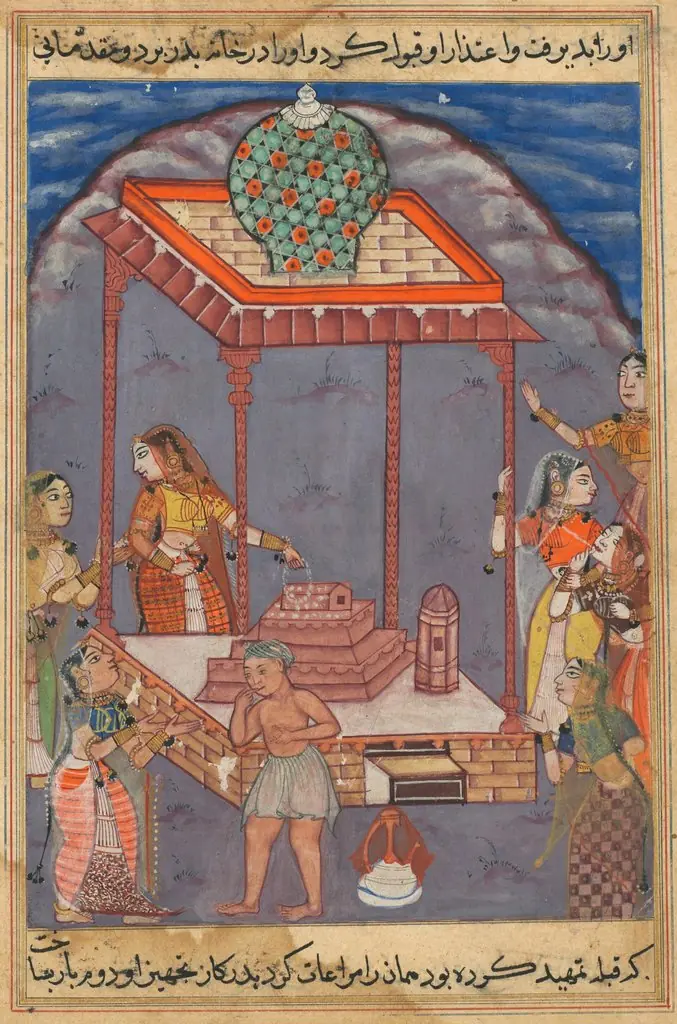 The destitute Mukhtar meets his wife Maimuna at a holy shrine, from a Tuti-nama (Tales of a Parrot): Twenty-fifth Night
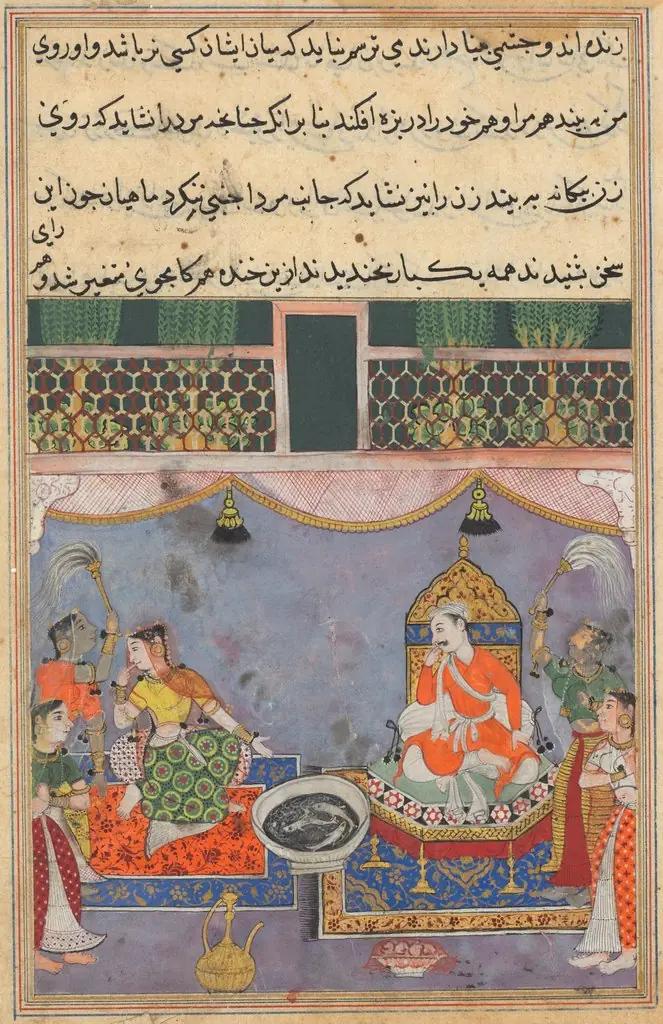 Kamjuy, the wife of the Raja, averts her face from the fishes, from a Tuti-nama (Tales of a Parrot): Twenty-third Night