Artwork
Emperor Charles V in armour
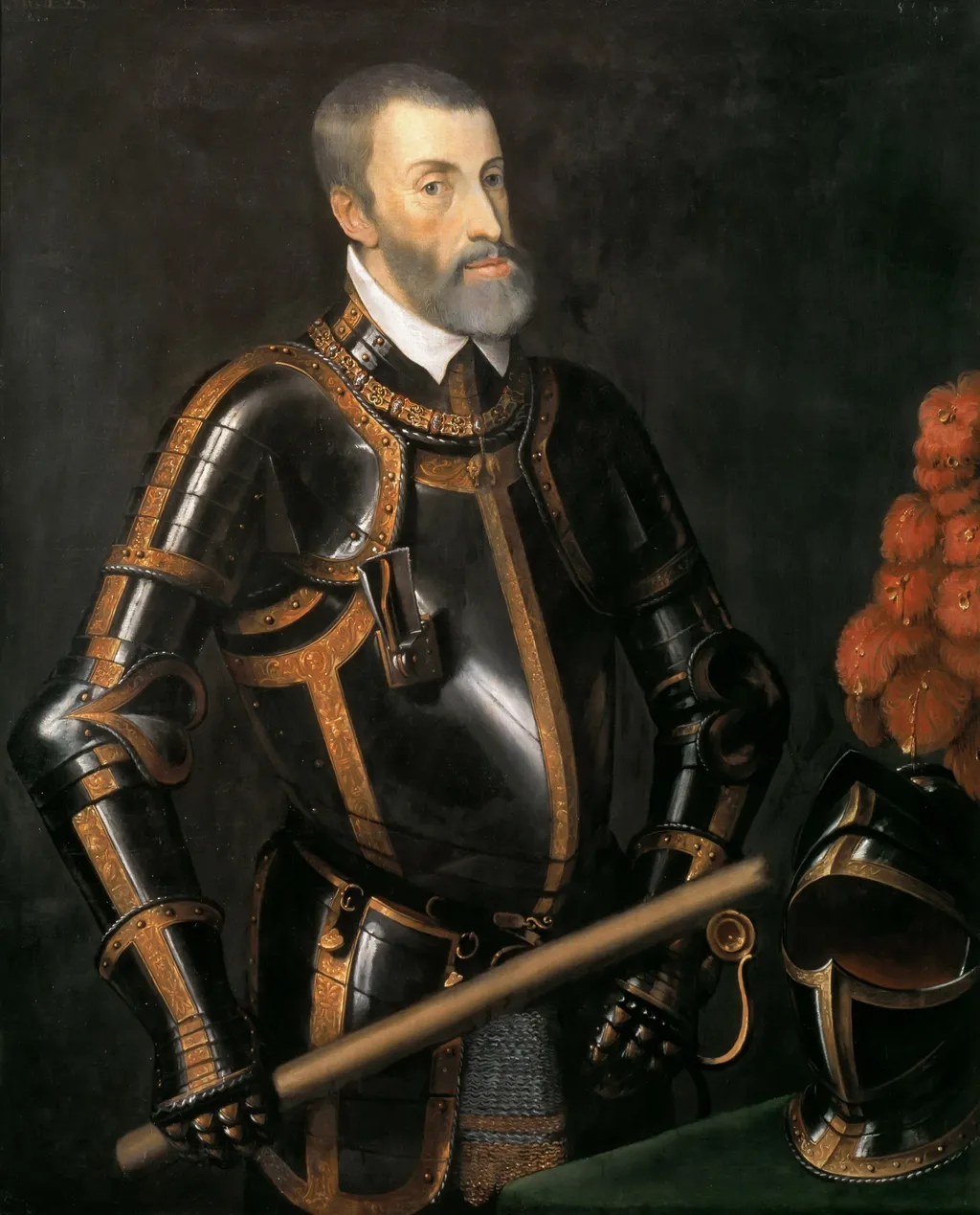
Emperor Charles V in armour is an unspecified painting by the Mannerist artist Unknown. It dates from 1550 and is held in the collection of the Kunsthistorisches Museum. The work is a painted portrait of a man in richly decorated black and gold armor, holding a long brown object in his right hand.
About this work
Overview
The work is a painted portrait of a man in richly decorated black and gold armor, holding a long brown object in his right hand. He is shown wearing a white, collared shirt beneath the cuirass, his short dark hair and gray beard framing a composed, confident expression. The background is rendered in a subdued, dark tone that emphasizes the figure’s solemn presence.
Subject & Meaning
The sitter is identified as Emperor Charles V, ruler of the Holy Roman Empire and the Spanish kingdoms in the early sixteenth century. By portraying him in full plate armor, the artist underscores his role as a military leader and protector of Christendom, while the dignified pose and restrained gaze convey the authority and gravitas associated with imperial power.
Technique & Style
Executed in oil on canvas, the painting demonstrates meticulous attention to the reflective surfaces of the armor, with gold gilding and intricate embossing rendered through fine brushwork. The contrast between the dark background and the luminous metal highlights the three‑dimensionality of the figure, while the subdued palette and soft modeling of the flesh suggest a Northern Renaissance sensibility.
History & Provenance
The portrait dates from the mid‑sixteenth century, a period when portraiture served diplomatic and propagandistic purposes. It entered the collection of the Royal Museum in the early nineteenth century, having previously been part of a private noble estate. Documentation records its attribution to an anonymous court painter active in the Habsburg territories.
Context
Charles V’s reign was marked by extensive military campaigns across Europe and the Americas. Portraits in armor were common among his contemporaries, reflecting the martial ideals of the era and the emperor’s self‑presentation as the defender of the Catholic faith during the Reformation.
Artist & collection

 Domestic Scene
 Giacomo and Cardinal Marco, investing Andrea, Abbot of San Zeno, with his Benefice
 The Nymph of Fontainebleau
 Portrait of a Woman
 Madonna and Child with Saints in the Enclosed Garden
 Venus and Minerva
 Family Group of Four on Sofa
 Wall painting from Room H of the Villa of P. Fannius Synistor at Boscoreale
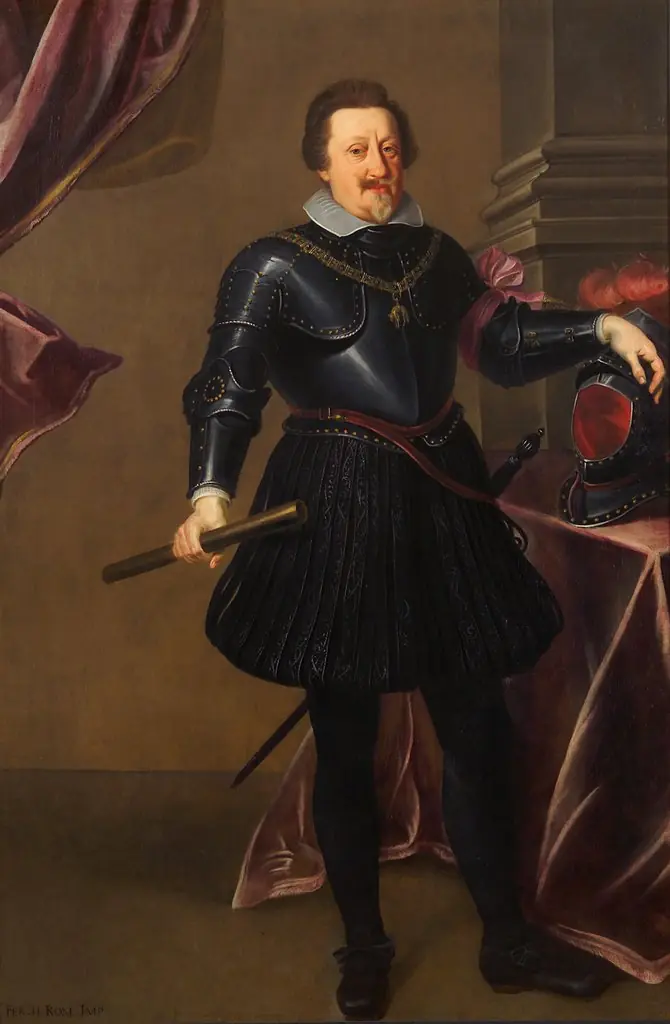 Emperor Ferdinand II. (1578-1637) in black armor, full-length
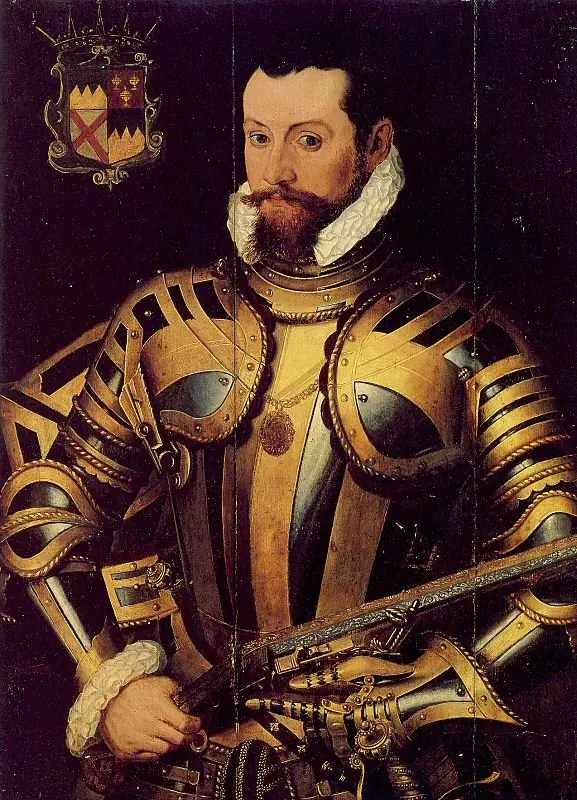 Portrait of Thomas Butler, 10th Earl of Ormonde (1532-1614)
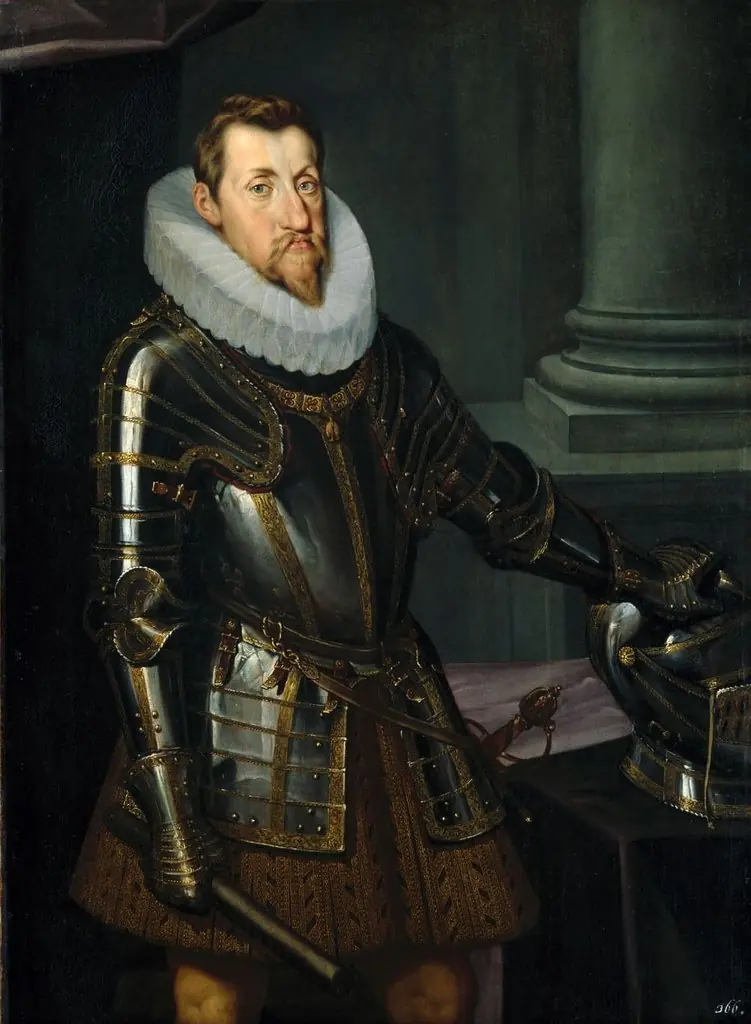 Portrait of Ferdinand II, Holy Roman Emperor (1578-1637)
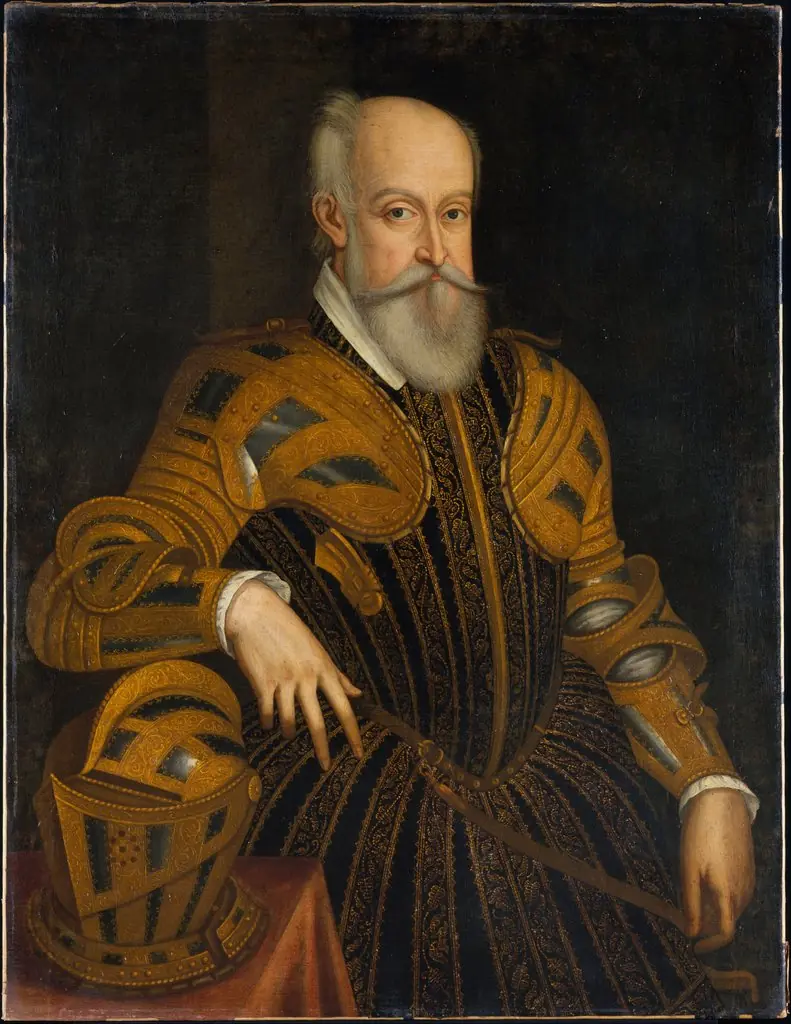 Alfonso II d'Este (1533–1597), Duke of Ferrara
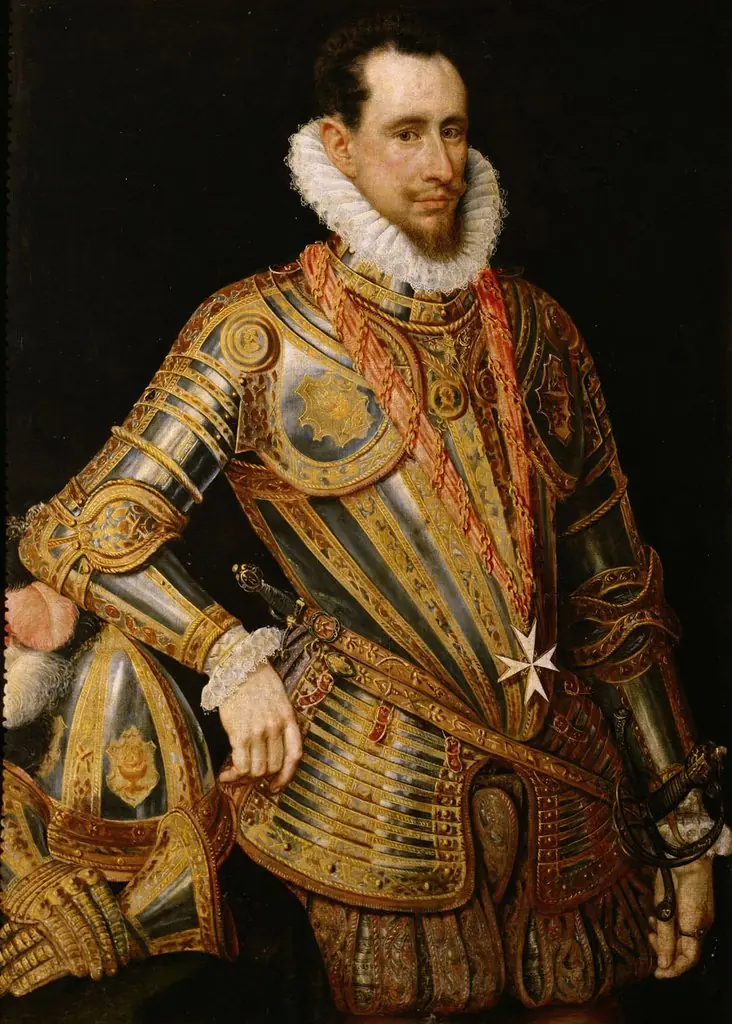 Bildnis eines Malteserritters
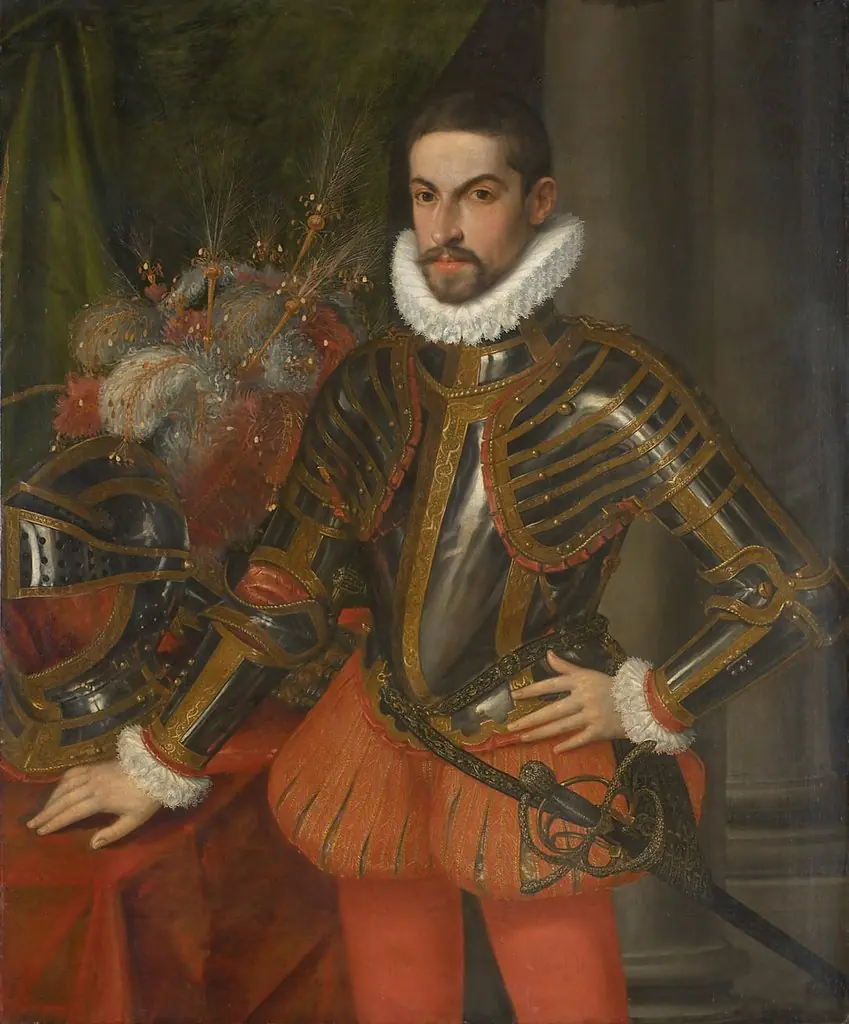 Erzherzog Maximilian III. (1558-1618) im Harnisch, Kniestück
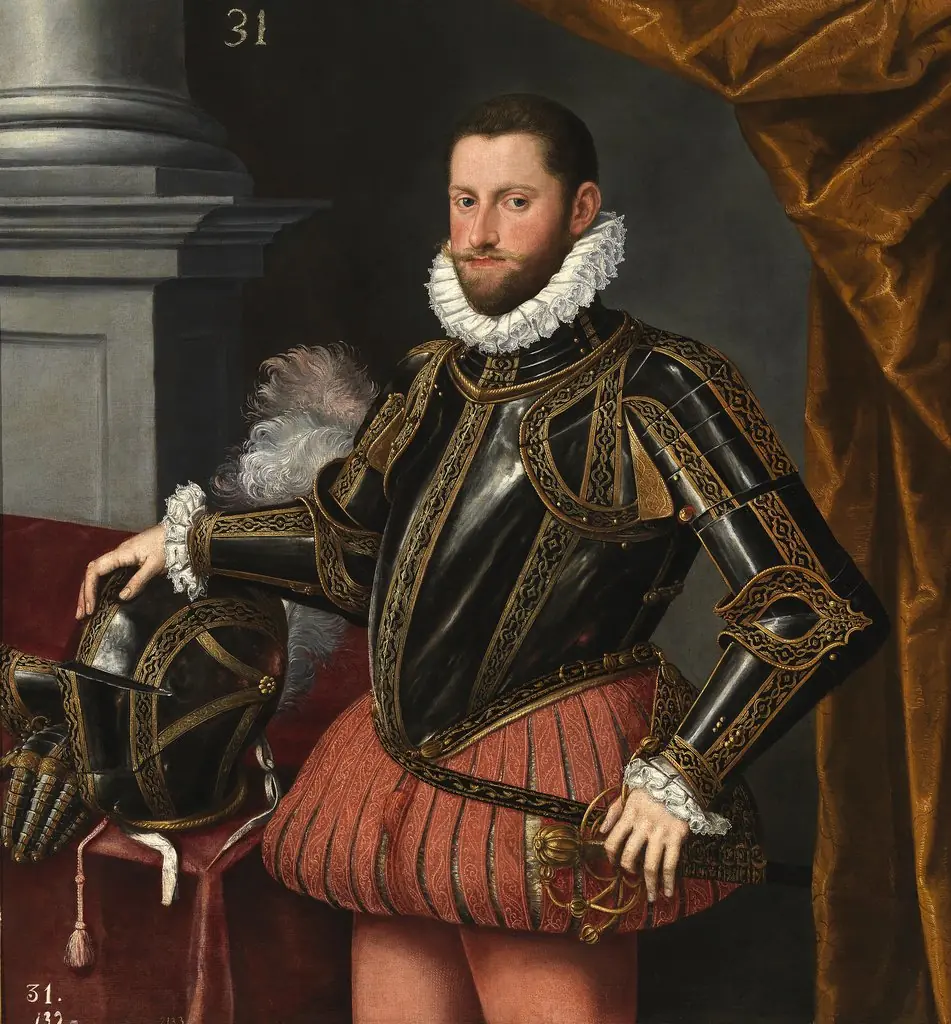 El archiduque Diego Ernesto de Austria
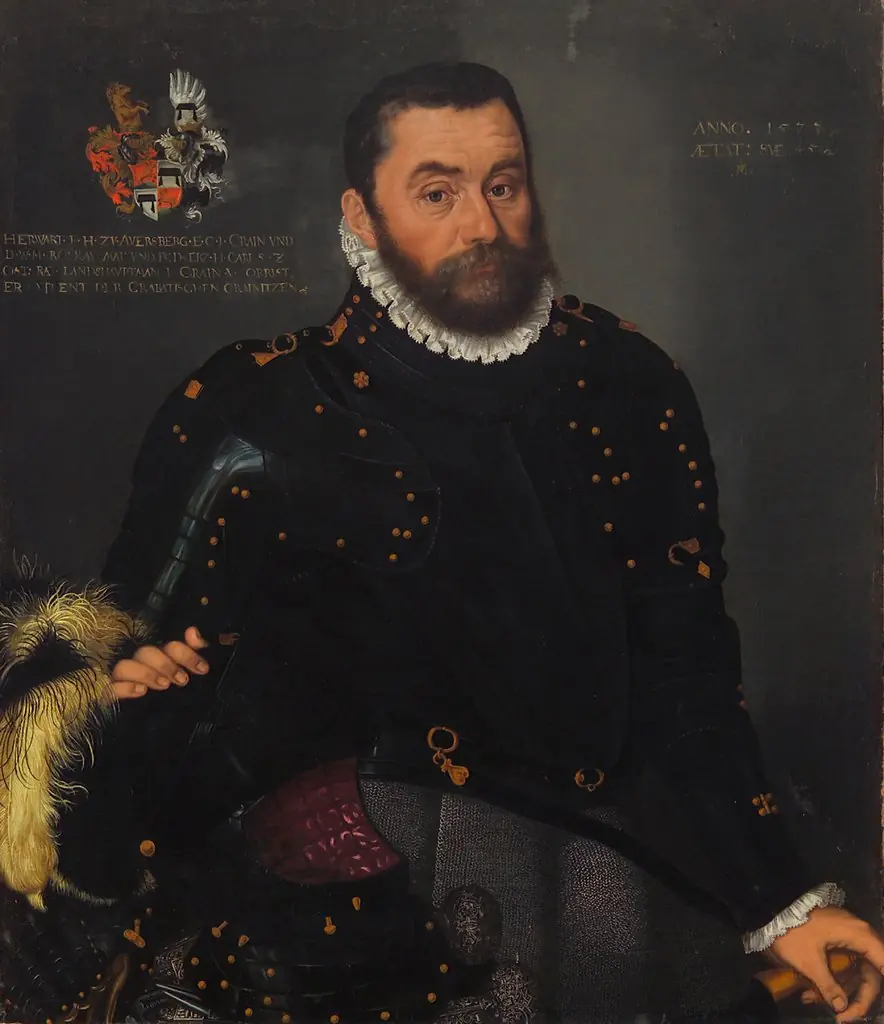 Herwart VIII. Freiherr von Auersperg (1528-1575)
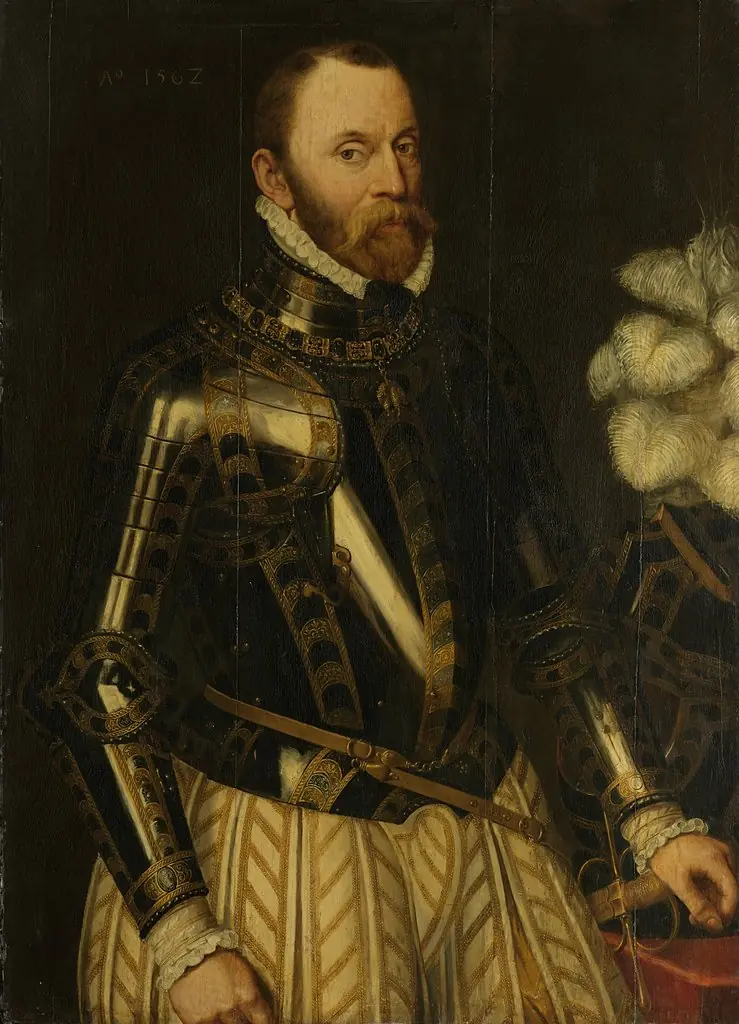 Philippe de Montmorency