Artwork
smithy
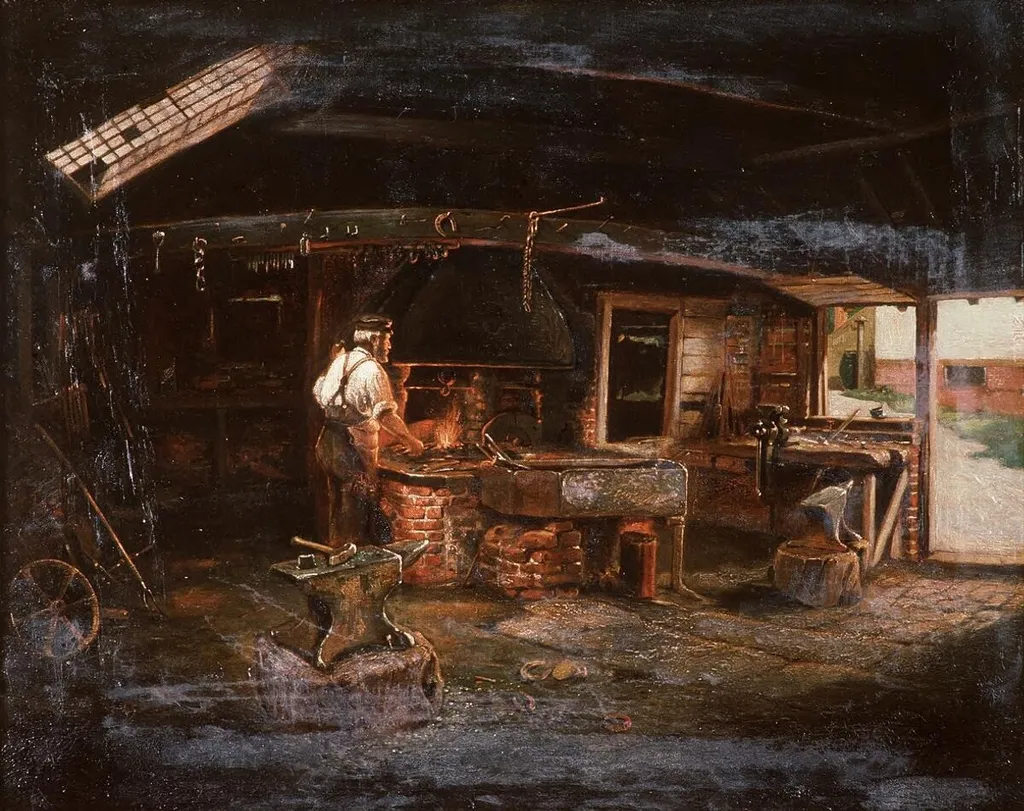
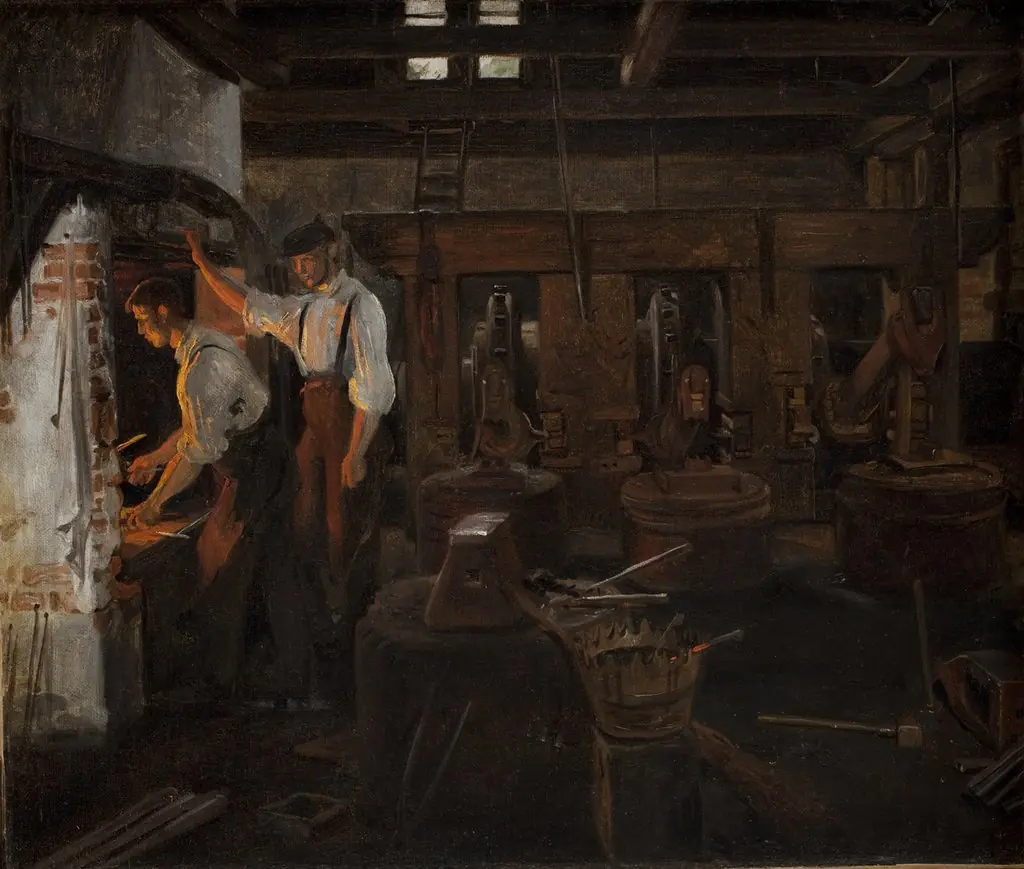
smithy is an oil painting by the Impressionist artist Unknown. It dates from 1890 and is held in the collection of the National Library of Wales. This oil painting portrays a blacksmith engaged in his labor within a dimly lit forge.
About this work
Overview
This oil painting portrays a blacksmith engaged in his labor within a dimly lit forge. The composition centers on the figure, illuminated solely by the glow of burning coals, while surrounding tools and equipment suggest the functional space of a working workshop. The artist employs careful lighting and texture to convey both physical presence and atmospheric depth.
Subject & Meaning
The blacksmith, clad in a simple white shirt and apron, is depicted in quiet concentration, emphasizing the dignity of manual labor. The absence of narrative detail or symbolic elements directs focus to the act of making—heat, effort, and craftsmanship rendered without idealization. The scene reflects an unembellished observation of everyday work.
Technique & Style
The artist uses chiaroscuro to heighten the contrast between the forge’s glow and the surrounding shadows, enhancing spatial depth. Impasto builds texture in the metal and embers, while glazing adds subtle luminosity to the skin and fabric. These methods combine to create a tactile realism, drawing attention to the physicality of the scene.
History & Provenance
The painting’s origin and early ownership remain undocumented. No exhibition records or collector histories are publicly available. It is known only through its visual content and technical execution, with no documented connection to broader artistic movements or commissions.
Context
Created during a period when industrialization was transforming labor, the image quietly resists romanticization or political commentary. It aligns with a growing interest in depicting working-class life with observational accuracy, though it lacks the social critique found in contemporaneous realist works.
Legacy
The painting endures as a quiet testament to the artist’s technical control and sensitivity to light. While not widely reproduced or studied, it contributes to a modest tradition of interior workshop scenes that prioritize atmosphere and craft over spectacle.
Artist & collection

 Domestic Scene
 Giacomo and Cardinal Marco, investing Andrea, Abbot of San Zeno, with his Benefice
 The Nymph of Fontainebleau
 Portrait of a Woman
 Madonna and Child with Saints in the Enclosed Garden
 Venus and Minerva
 Family Group of Four on Sofa
 Wall painting from Room H of the Villa of P. Fannius Synistor at Boscoreale