Artwork
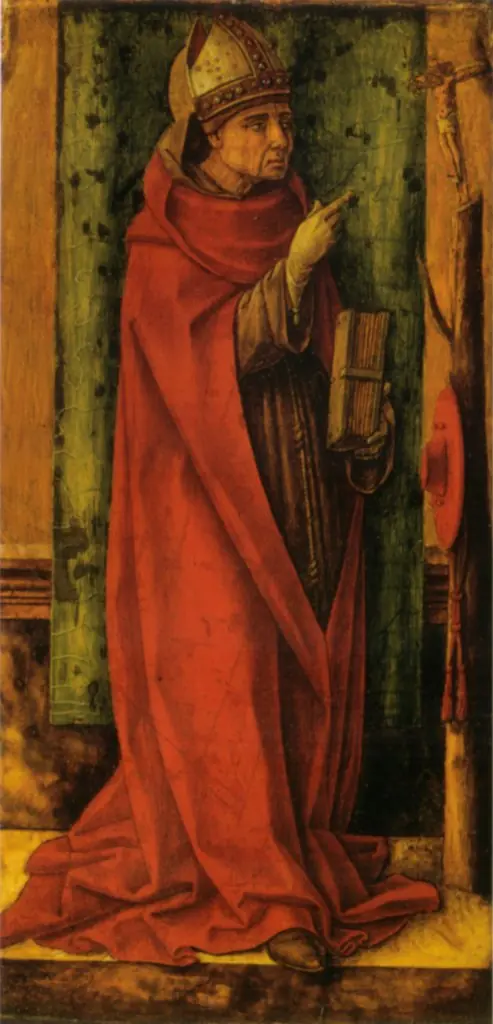
St Matthias. The wing from the altar retable from Trzebunia
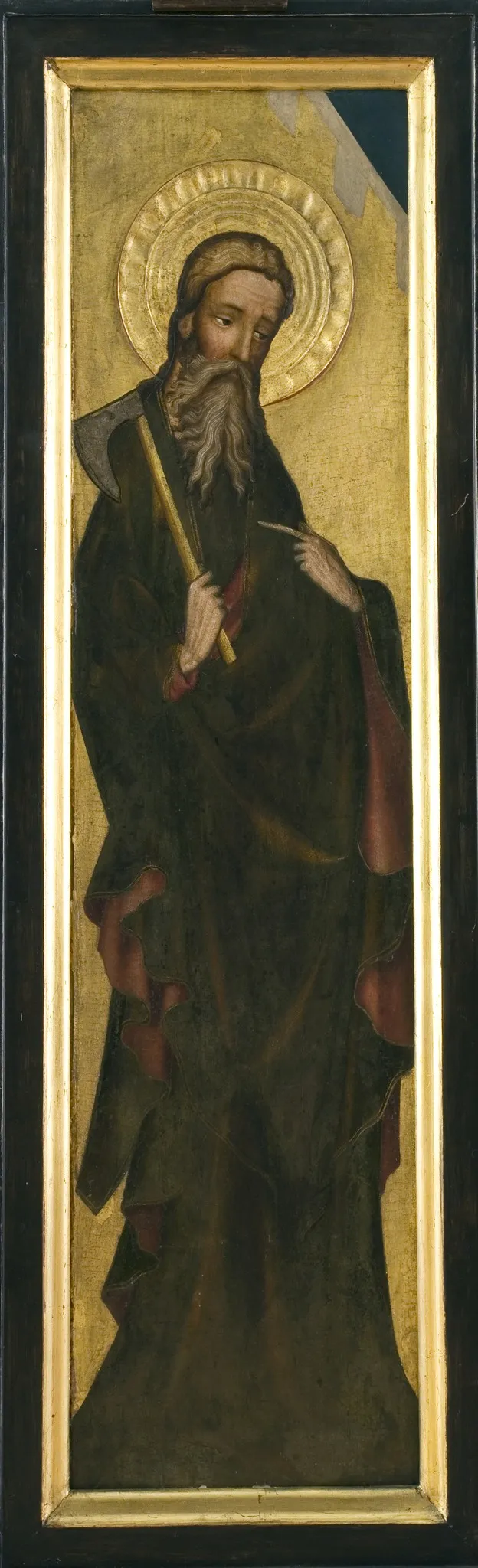
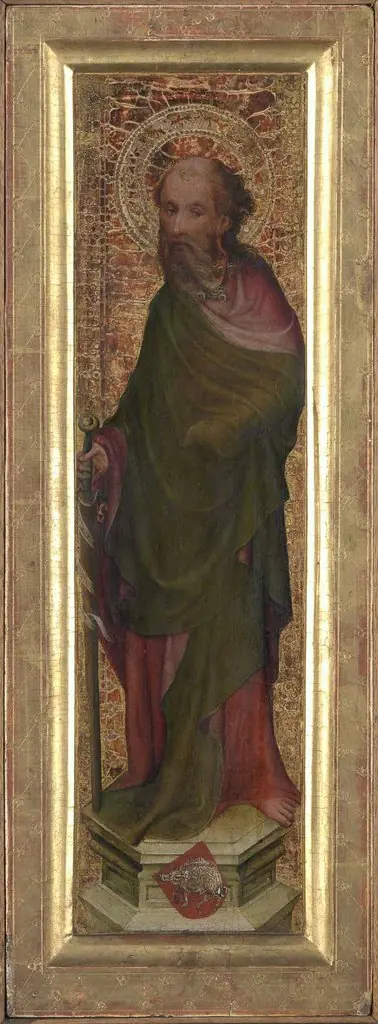
St Matthias. The wing from the altar retable from Trzebunia is an unspecified painting by Unknown. It dates from 1400 and is held in the collection of the National Museum in Kraków. This panel originates from a larger altarpiece commissioned for the church in Trzebunia, likely in the late 14th or early 15th century.
About this work
Overview
This panel originates from a larger altarpiece commissioned for the church in Trzebunia, likely in the late 14th or early 15th century. It portrays Saint Matthias, one of the twelve apostles, rendered in a devotional format typical of Central European medieval altarpieces. The figure is isolated against a gold ground, emphasizing spiritual presence over physical setting.
Subject & Meaning
The figure is identified as Saint Matthias, chosen to replace Judas Iscariot. He holds an axe, referencing the traditional account of his martyrdom by beheading. His gesture, pointing to the instrument of his death, signifies acceptance of divine will and the witness of martyrdom. The halo-like circle reinforces his sanctity within the liturgical context of the altar.
Technique & Style
Painted in tempera on wood, the work employs flat, stylized forms and minimal modeling, characteristic of late Gothic panel painting. The rich red lining of the robe contrasts with the dark outer garment, drawing attention to the figure’s form. Gold leaf, used for the background and halo, reflects light and elevates the sacred tone without naturalistic depth.
History & Provenance
The panel was part of a multi-panel retable in the parish church of Trzebunia, now in southern Poland. It survived the Reformation and subsequent secularizations, remaining in local ecclesiastical custody until the 19th century. Later moved to a regional museum, it is now preserved as a key example of medieval Silesian religious art.
Context
Created during a period of intense local devotion to apostolic saints, the panel reflects the influence of Bohemian and German artistic traditions in Silesia.
Created during a period of intense local devotion to apostolic saints, the panel reflects the influence of Bohemian and German artistic traditions in Silesia. Such altarpieces served both liturgical and didactic functions, visually reinforcing the lives of saints for congregations with limited literacy. The gold background aligns with Byzantine-inspired conventions common in Central European sacred art.
Legacy
The Trzebunia panel remains one of the few surviving fragments from its original retable, offering insight into regional workshop practices and devotional priorities of the late Middle Ages. Its preservation allows study of iconographic continuity and the transmission of saintly imagery across cultural boundaries in pre-Reformation Poland.
Artist & collection

 Domestic Scene
 Giacomo and Cardinal Marco, investing Andrea, Abbot of San Zeno, with his Benefice
 The Nymph of Fontainebleau
 Portrait of a Woman
 Madonna and Child with Saints in the Enclosed Garden
 Venus and Minerva
 Family Group of Four on Sofa
 Wall painting from Room H of the Villa of P. Fannius Synistor at Boscoreale