Artwork
Saint Luke
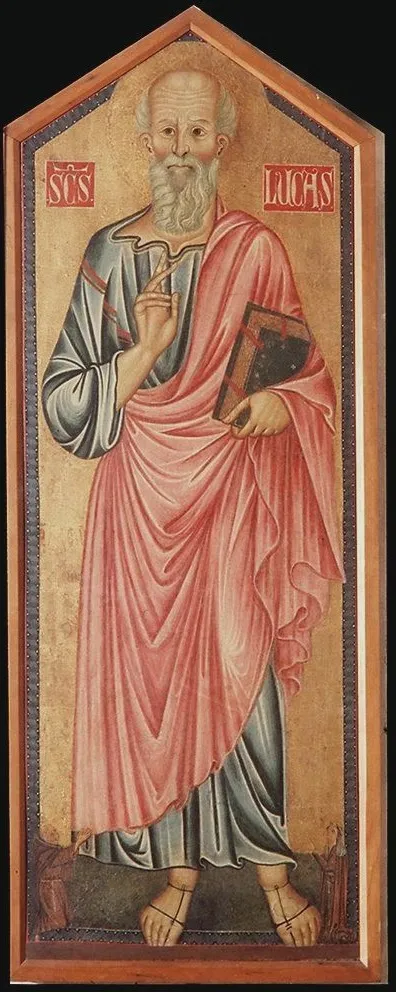
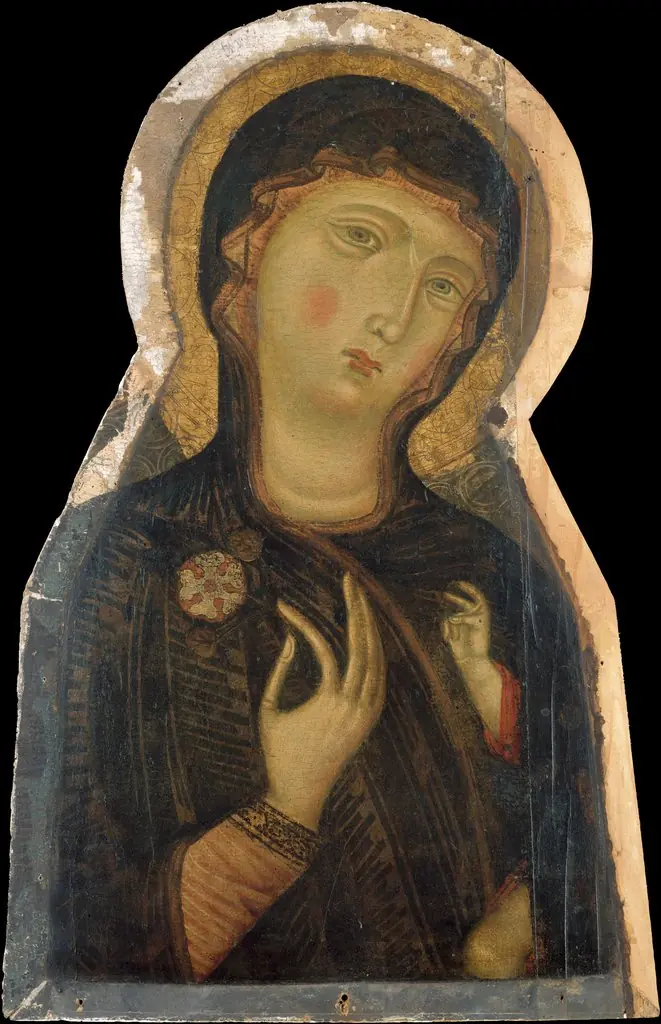
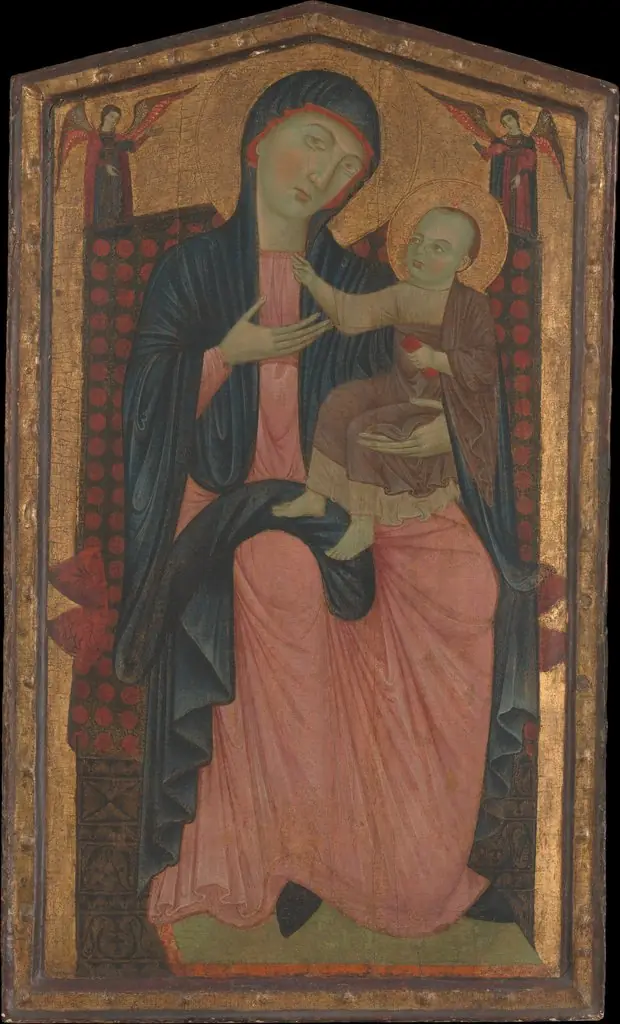
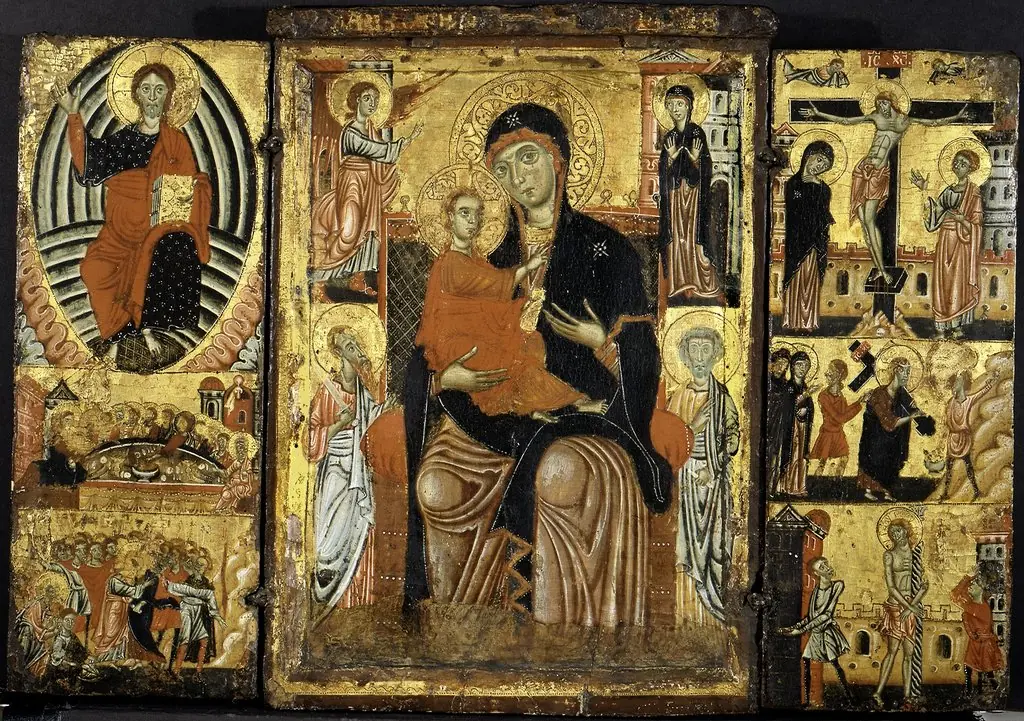
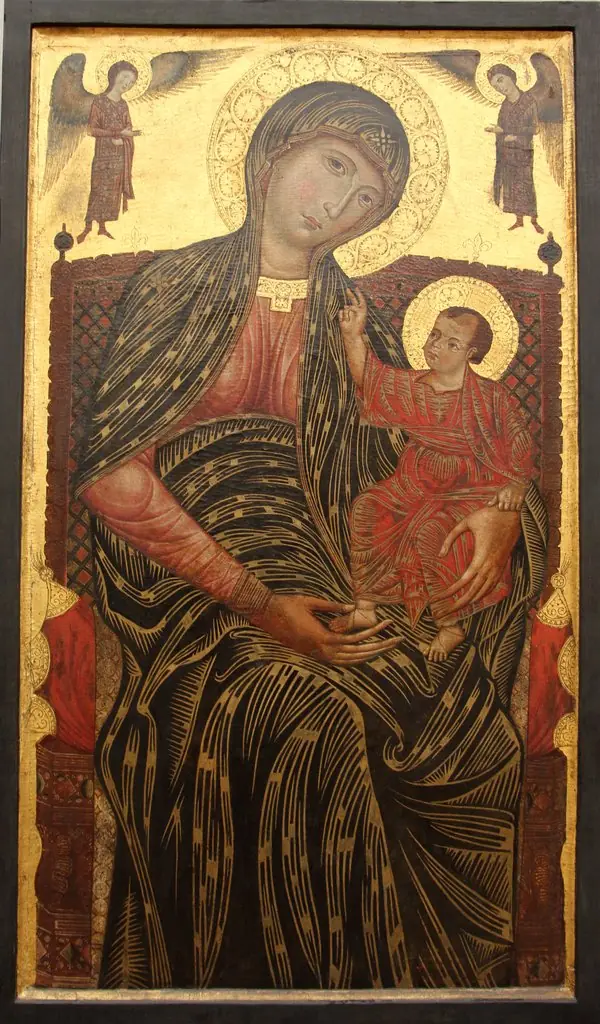
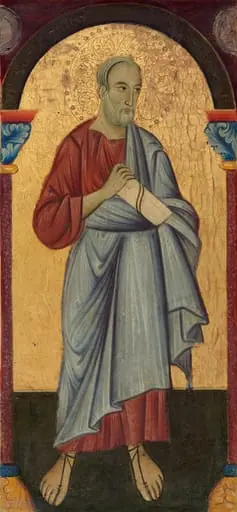
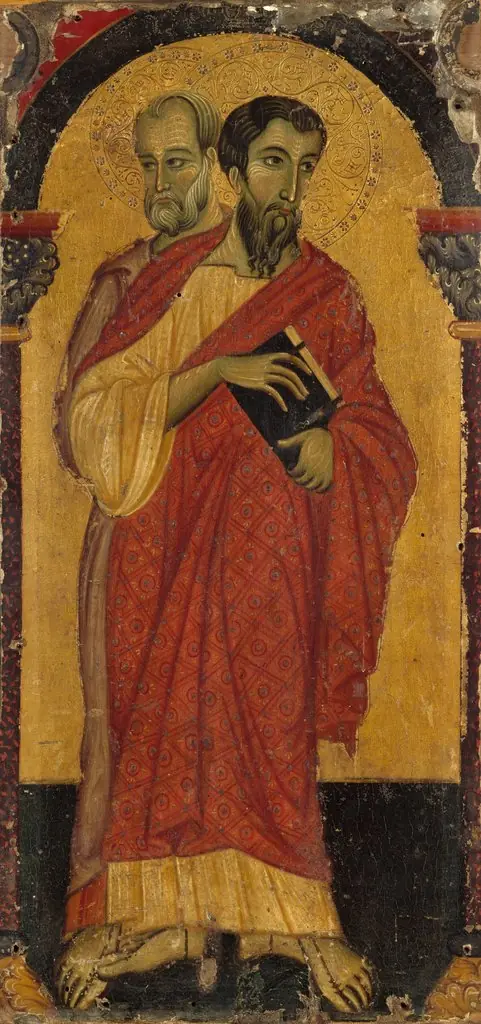
Saint Luke is a tempera painting by the Byzantine icon painting artist Master of the Magdalen. It dates from 1300 and is held in the collection of the Uffizi Gallery.
About this work
Overview
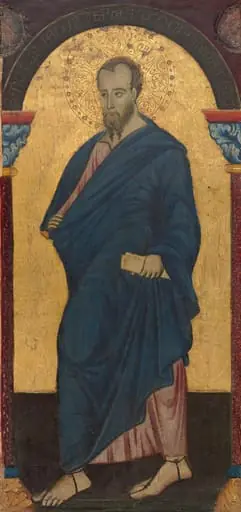
This tempera painting, attributed to an anonymous Florentine artist known as the Master of the Magdalen, dates to approximately 1300. Executed in the Byzantine iconographic tradition, it portrays Saint Luke the Evangelist. The work is part of the Uffizi Gallery’s collection and exemplifies the stylistic conventions of late 13th-century Florentine religious art.
Subject & Meaning
His direct gaze and frontal posture convey a sense of solemn authority, reinforcing the devotional function of the image.
The panel depicts Saint Luke, identified by his attributes: an open book and a quill, symbolizing his role as one of the four Evangelists and author of the Gospel bearing his name. His direct gaze and frontal posture convey a sense of solemn authority, reinforcing the devotional function of the image. The golden background, typical of Byzantine-influenced works, elevates the figure beyond earthly space.
Technique & Style
Rendered in tempera—a medium of pigment mixed with egg yolk—the painting demonstrates precise linear detailing, particularly in the drapery folds of the saint’s robe. The artist employs a restrained palette, with gold leaf enhancing the luminous background. The stylized treatment of Luke’s features, including his elongated beard, aligns with the hierarchical and symbolic conventions of medieval religious imagery.
History & Provenance
Created in late 13th-century Florence, the painting reflects the city’s absorption of Byzantine artistic traditions during a period of cultural exchange. Its attribution to the Master of the Magdalen, a figure named for another work, remains provisional. The panel entered the Uffizi’s holdings as part of its foundational collection, though its earlier ownership history is undocumented.
Context
The painting emerged during a transitional phase in Italian art, when Byzantine models coexisted with emerging naturalistic tendencies. As an image of Saint Luke, it served both liturgical and private devotional purposes, catering to a society deeply invested in the veneration of saints. The work’s formal qualities mirror the period’s emphasis on clarity and spiritual symbolism over realism.
Artist & collection
Artist
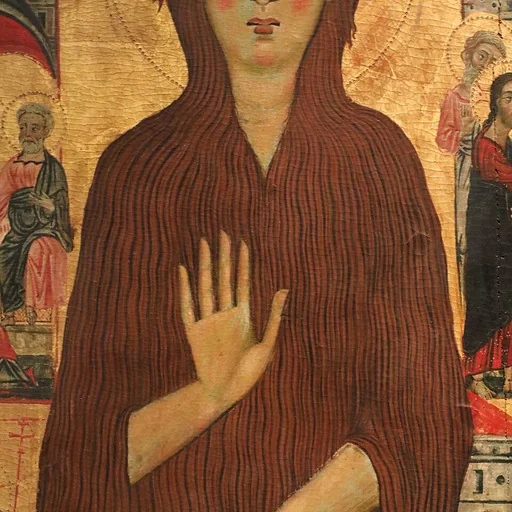
The Master of the Maddalena, Magdalen Master (and other variants) is an unnamed Florentine artist active in the second half of the 13th century.