Artwork
Roundel with Saint Peter as Pope
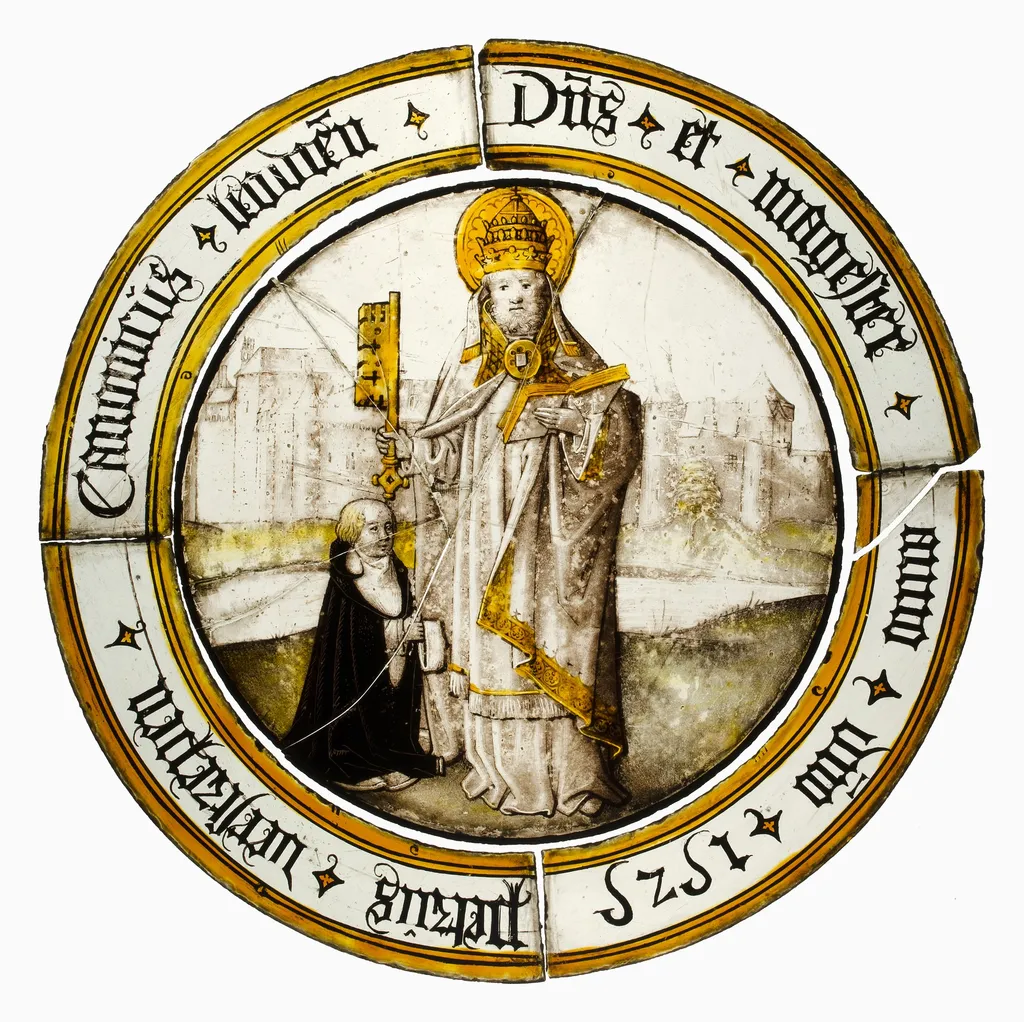
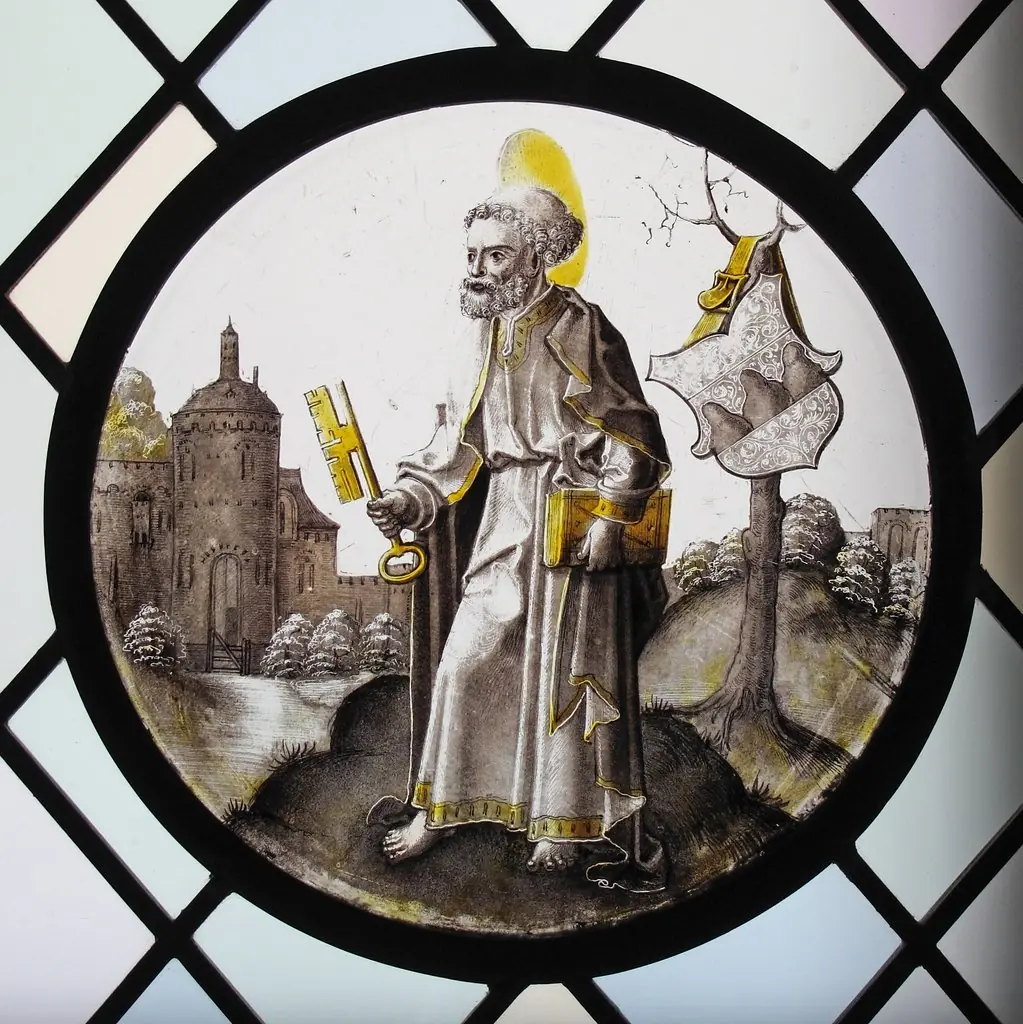
Roundel with Saint Peter as Pope is an unspecified painting. It dates from 1525 and is held in the collection of the Metropolitan Museum of Art. This circular painting, known as a roundel, presents Saint Peter in his capacity as Pope.
About this work
Overview
The artwork is encircled by a decorative border with gold accents and an inscription in Latin, characteristic of religious art from its period.
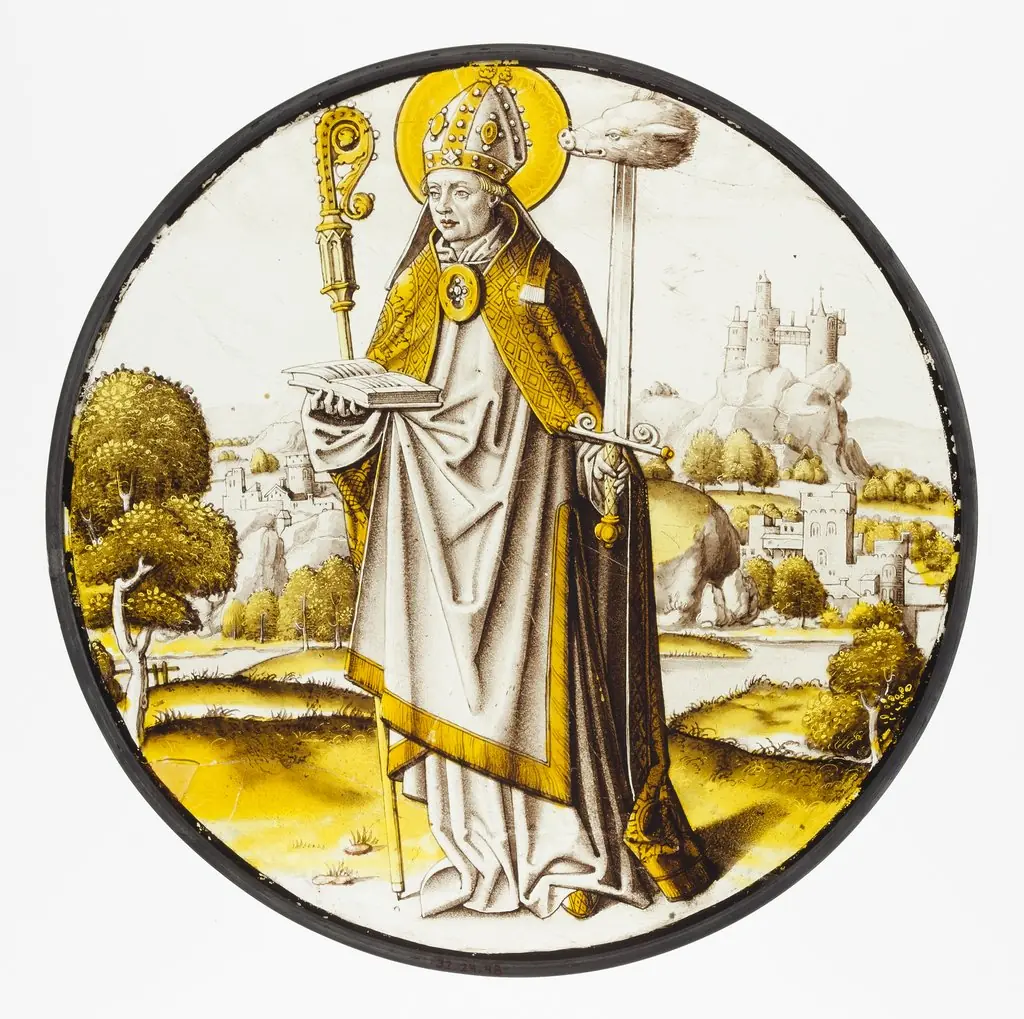
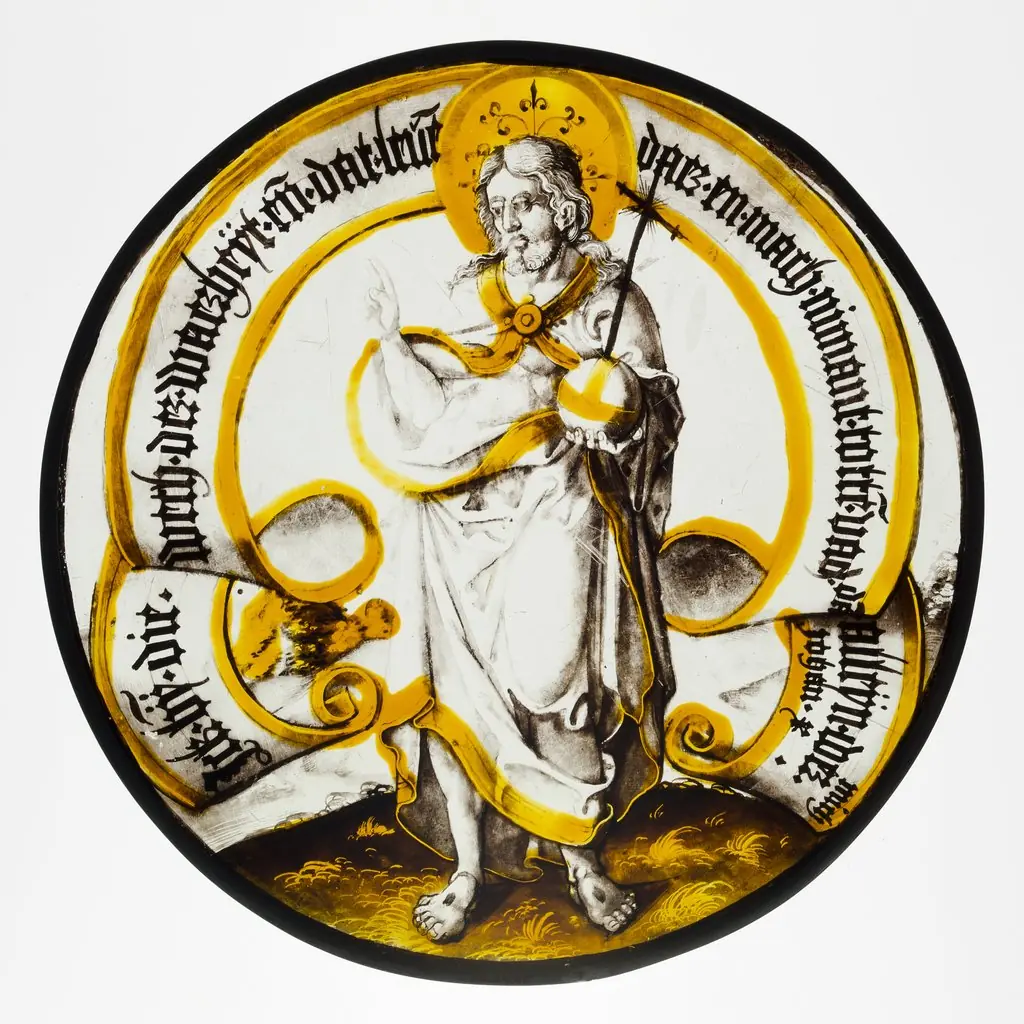
This circular painting, known as a roundel, presents Saint Peter in his capacity as Pope. The composition features a prominent, richly robed figure adorned with a golden halo and a crown, holding a staff and a set of keys. A smaller individual gazes upwards at the saint, set against a subdued background featuring indistinct dark forms. The artwork is encircled by a decorative border with gold accents and an inscription in Latin, characteristic of religious art from its period.
Subject & Meaning
The central figure is unequivocally identified as Saint Peter, a foundational apostle in Christian tradition and considered the first Pope. His iconic attributes, the golden halo and the keys, are central to his representation. The keys symbolize the "keys to the Kingdom of Heaven," denoting the spiritual authority granted to him according to biblical accounts. His papal regalia, including the crown, further underscore his ecclesiastical leadership, while the smaller figure likely represents a devotee or a recipient of his spiritual guidance.
Technique & Style
Rendered in a roundel format, this painting employs traditional iconographic elements to convey its religious subject. The artist depicts Saint Peter with elaborate vestments and a radiant golden halo, emphasizing his sanctity and importance. The background is intentionally understated, featuring minimal, dark shapes that suggest either architectural elements or natural forms, thereby directing the viewer's attention to the primary figures. The decorative circular frame, embellished with gold lines and a Latin inscription, enhances the artwork's formal presentation and its devotional context.
Artist & collection