Artwork
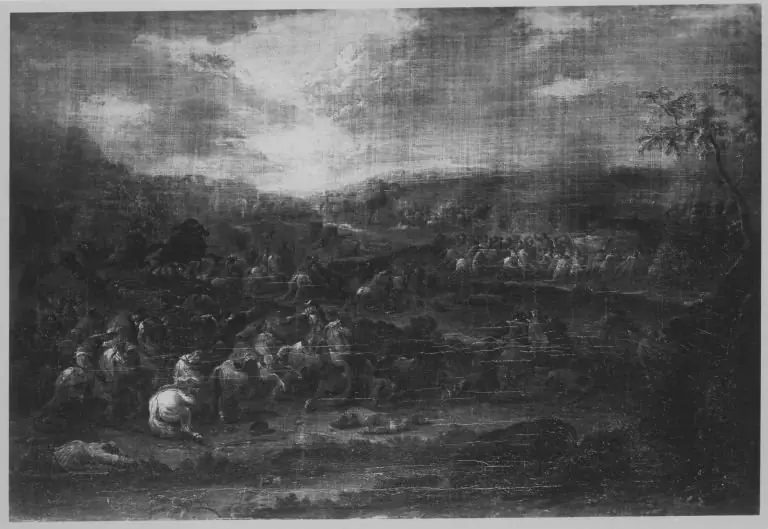
A Field after a Battle
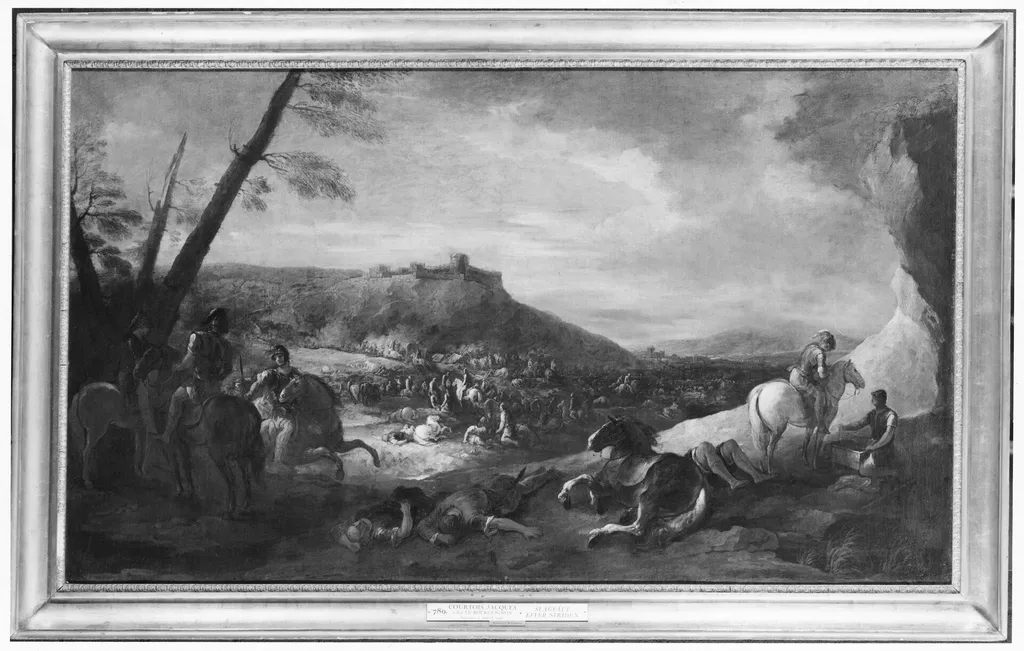
A Field after a Battle is an oil painting by Unknown. It is held in the collection of the Nationalmuseum. This oil painting depicts the aftermath of a military engagement, capturing the stillness and disorder that follow violence.
About this work
Overview
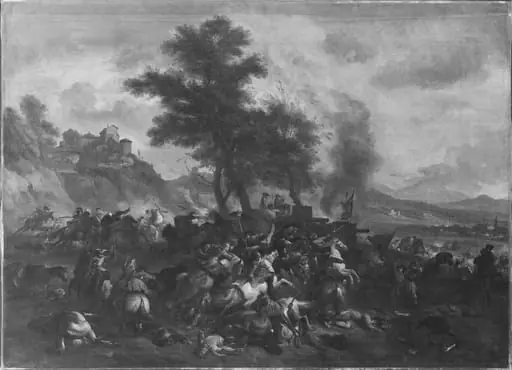
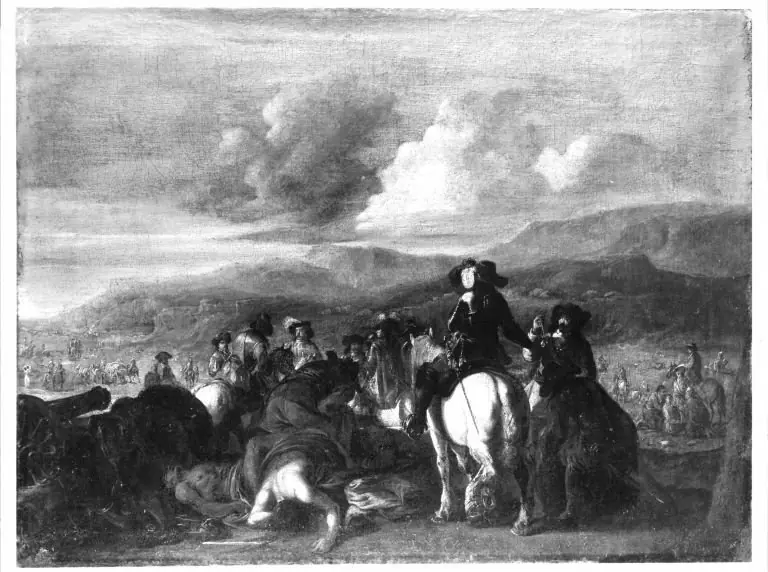
Bodies of soldiers and horses lie scattered across a barren field, while a few figures move among them, attending to the injured.
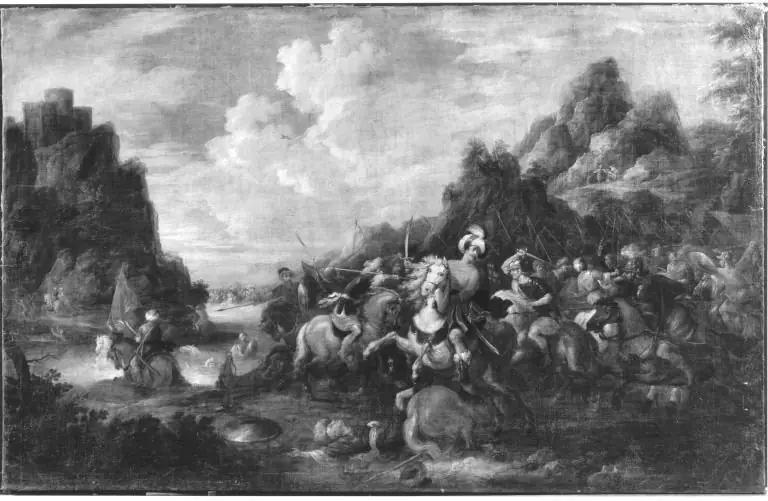
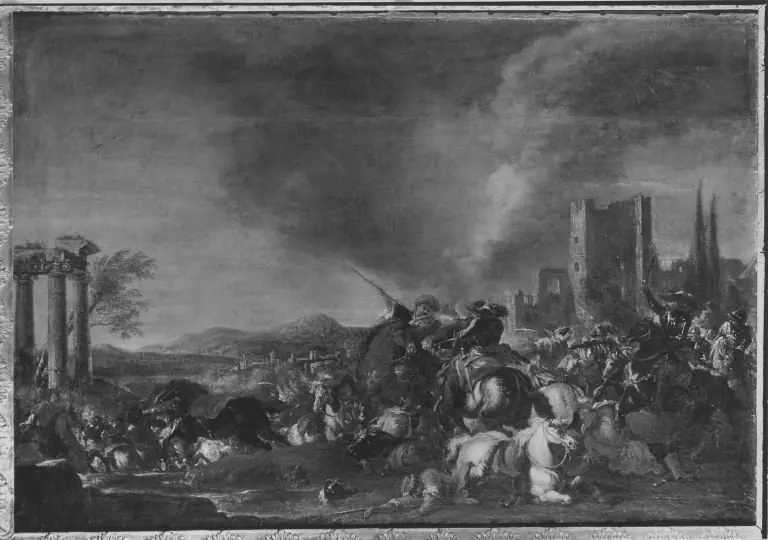
This oil painting depicts the aftermath of a military engagement, capturing the stillness and disorder that follow violence. Bodies of soldiers and horses lie scattered across a barren field, while a few figures move among them, attending to the injured. The landscape recedes toward a distant hill crowned by a fortified structure, suggesting the strategic importance of the terrain. The composition avoids glorification, focusing instead on the human and physical toll of conflict.
Subject & Meaning
The scene conveys the grim reality of war’s conclusion rather than its heroism. The figures tending to the wounded imply compassion amid ruin, yet their efforts appear small against the scale of death. The elevated fortress in the background hints at enduring power structures, indifferent to the carnage below. The work invites reflection on the cost of conflict, not its triumphs.
Technique & Style
Chiaroscuro is employed to model forms with dramatic light and shadow, giving volume to fallen bodies and crumpled limbs. The contrast enhances the three-dimensionality of the scene, grounding the chaos in tangible space. Brushwork is restrained, avoiding flourish, which reinforces the somber tone. The palette favors muted earth tones, with subtle variations in tone to distinguish flesh, fabric, and earth.
History & Provenance
The painting’s origin and early ownership are undocumented. No known records link it to a specific battle, artist, or patron. Its style suggests a 17th-century Northern European influence, possibly from a region with a tradition of war imagery. It remained in private hands until entering a public collection in the 20th century, where its title was assigned based on visual content.
Context
During the 17th century, depictions of battle aftermaths emerged as alternatives to celebratory war art, reflecting growing awareness of conflict’s brutality. Artists in the Low Countries and Germany often portrayed such scenes to critique militarism or honor the fallen. This work aligns with that trend, offering a quiet, unembellished record of loss rather than a narrative of victory.
Legacy
The painting contributes to a quieter tradition in Western art that documents war’s consequences without spectacle. It lacks the fame of larger historical works but holds value as a restrained, observational record. Its influence is seen in later realist and anti-war imagery that prioritizes human suffering over nationalistic symbolism.
Artist & collection

 Domestic Scene
 Giacomo and Cardinal Marco, investing Andrea, Abbot of San Zeno, with his Benefice
 The Nymph of Fontainebleau
 Portrait of a Woman
 Madonna and Child with Saints in the Enclosed Garden
 Venus and Minerva
 Family Group of Four on Sofa
 Wall painting from Room H of the Villa of P. Fannius Synistor at Boscoreale