Artwork
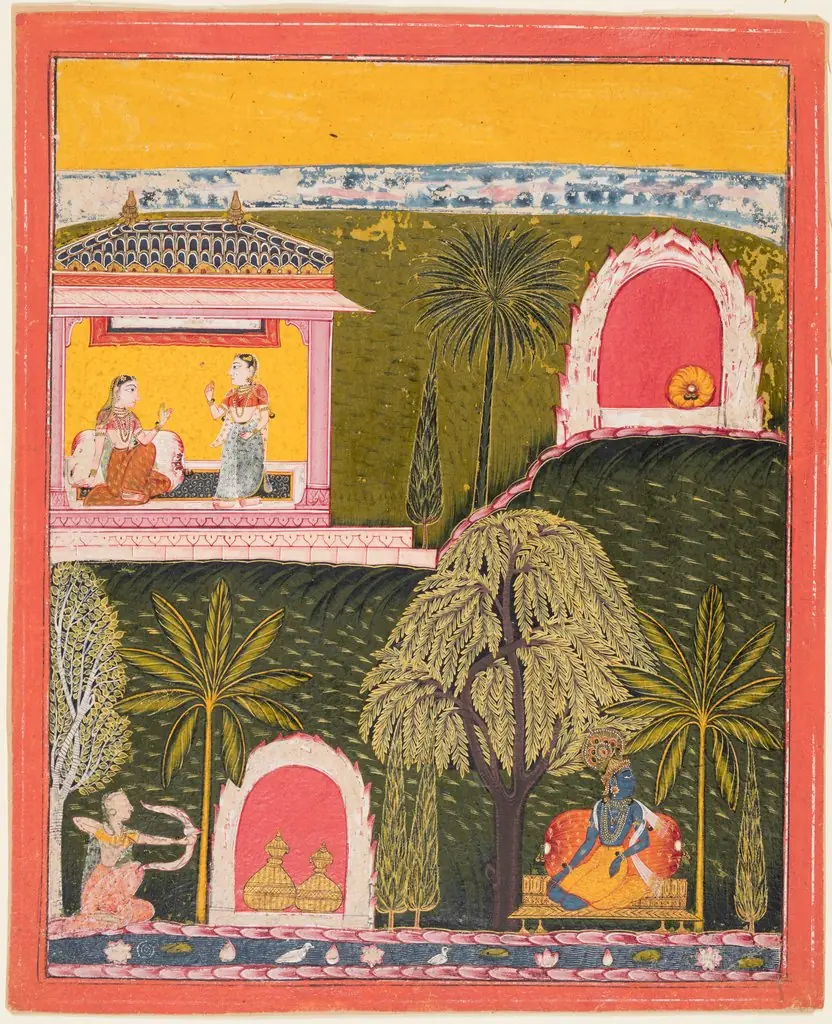
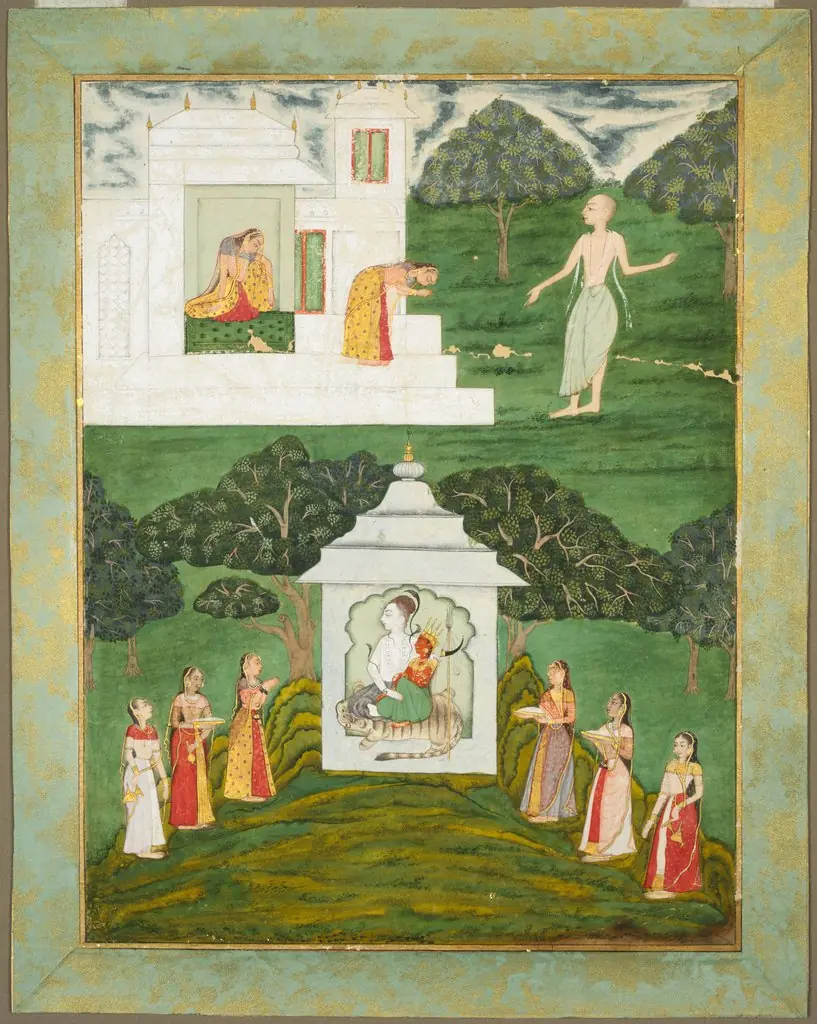
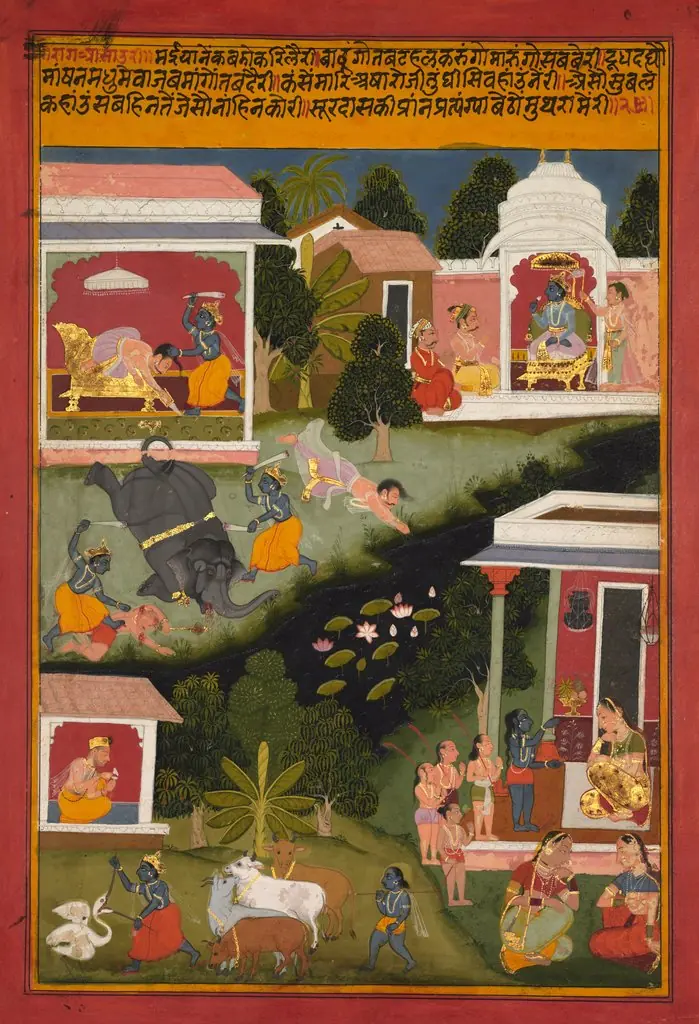
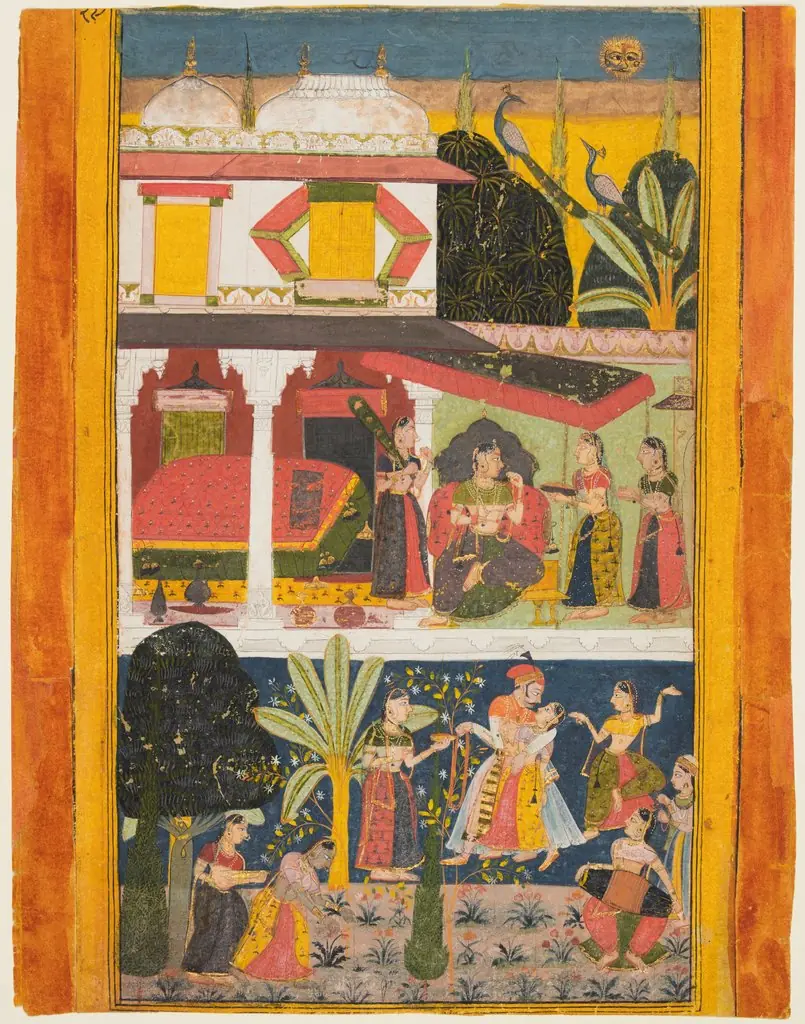
Mahliqa, Daughter of the Emperor of China, Pointing at the Bird-Man Khwaja Mubarak: A Leaf from a Poetical Romance Relating to Shah Alam I (recto)
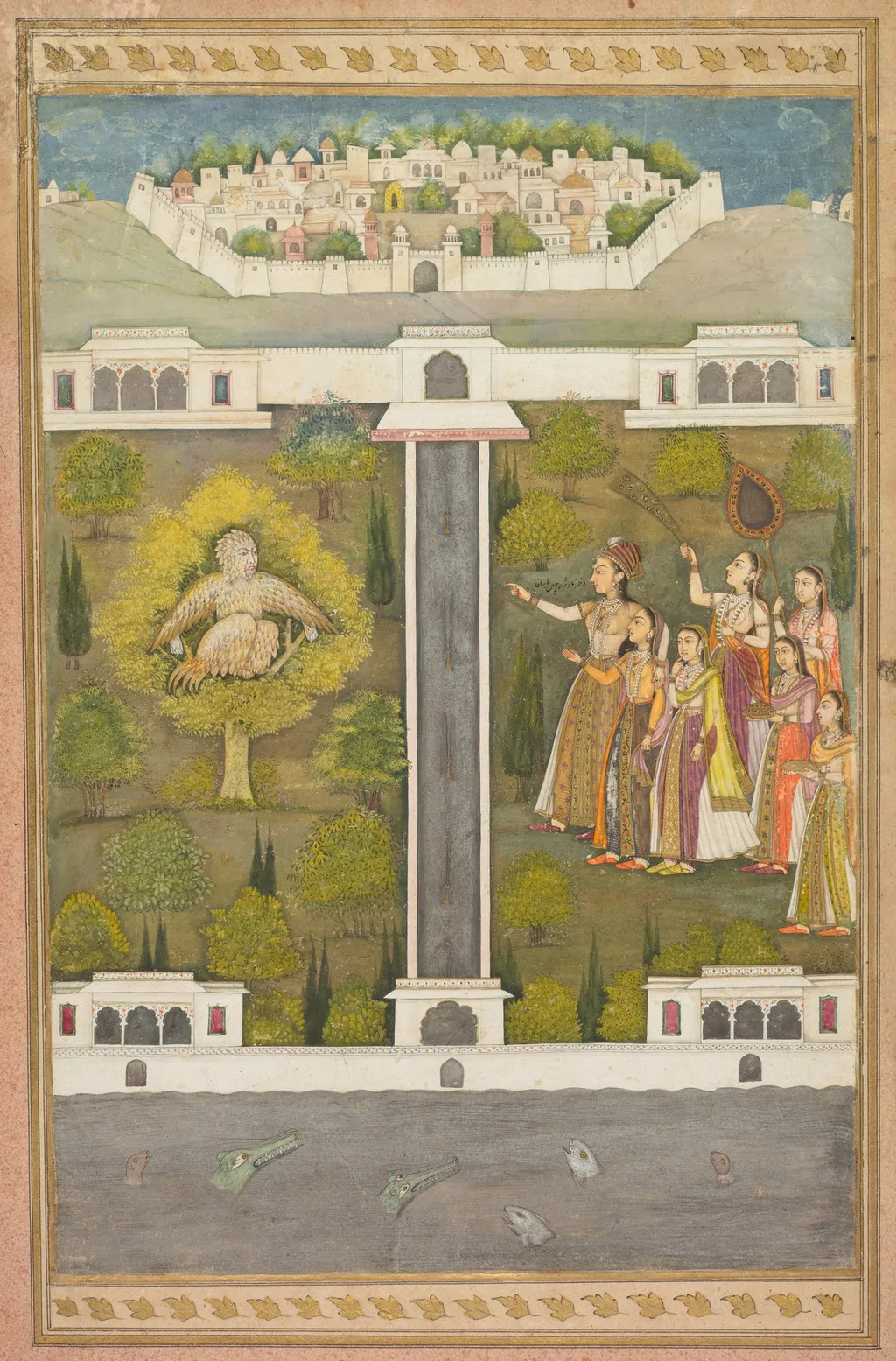
Mahliqa, Daughter of the Emperor of China, Pointing at the Bird-Man Khwaja Mubarak: A Leaf from a Poetical Romance Relating to Shah Alam I (recto) is an unspecified painting. It dates from 1710 and is held in the collection of the Cleveland Museum of Art. The work is a miniature painting that juxtaposes two distinct tableaux.
About this work
Overview
A walled city with domed structures forms the distant backdrop, rendered in subdued gold, green and blue tones.
The work is a miniature painting that juxtaposes two distinct tableaux. On the left, a hybrid bird‑man figure rests beneath a tree in a verdant garden, while on the right a group of women in richly patterned garments gather beside an architectural column, one of them gesturing toward the creature. A walled city with domed structures forms the distant backdrop, rendered in subdued gold, green and blue tones.
Subject & Meaning
The composition presents a narrative moment drawn from a poetic romance linked to Shah Alam I. The bird‑man, identified as Khwaja Mubarak, embodies a mythic bird‑person, whereas the women, including Mahliqa, daughter of the Chinese emperor, represent courtly figures reacting to the supernatural presence, suggesting themes of curiosity, cultural exchange and the allure of the exotic.
Technique & Style
Executed in the traditional Indian miniature manner, the painting employs fine brushwork and delicate line to delineate intricate textile patterns and gold embroidery. The palette is restrained, favoring muted metallics and earth tones that create a luminous yet understated surface. Spatial depth is suggested through layered foliage and architectural elements rather than linear perspective.
History & Provenance
The piece originates from a manuscript leaf illustrating a poetical romance concerning the Mughal emperor Shah Alam I. It entered the collection of the Cleveland Museum of Art as part of a larger set of courtly miniatures, acquired through a mid‑20th‑century purchase of South Asian manuscripts.
Context
Miniature paintings of this period often served to visualize literary texts, merging visual and poetic storytelling. The depiction of a Chinese imperial daughter reflects the Mughal court's fascination with foreign dignitaries and the broader diplomatic networks of the early 18th century.
Artist & collection