Artwork
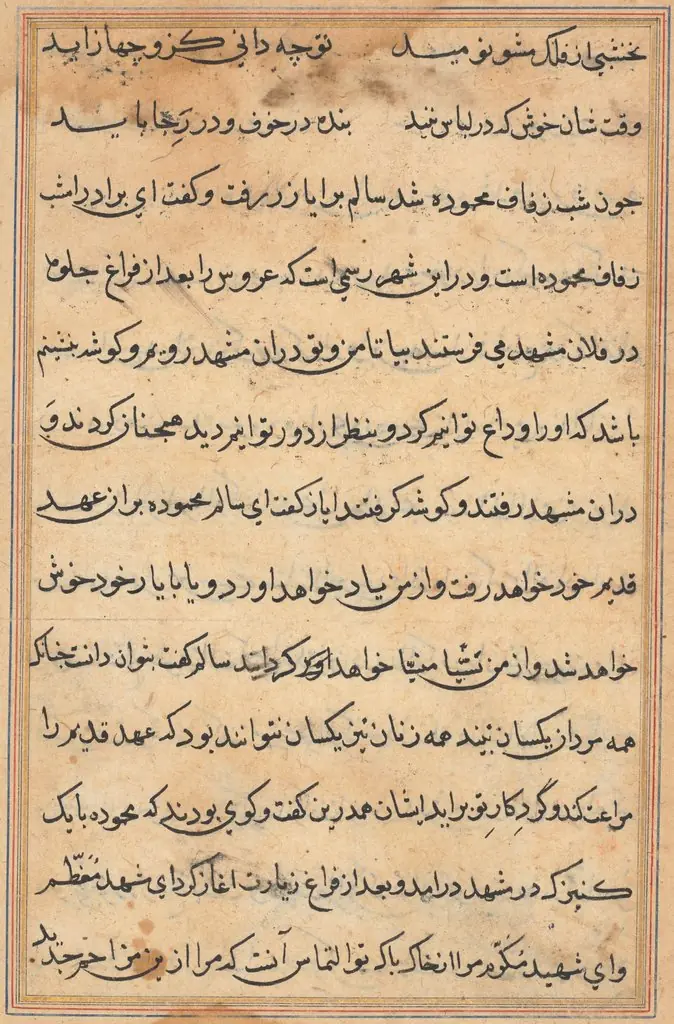
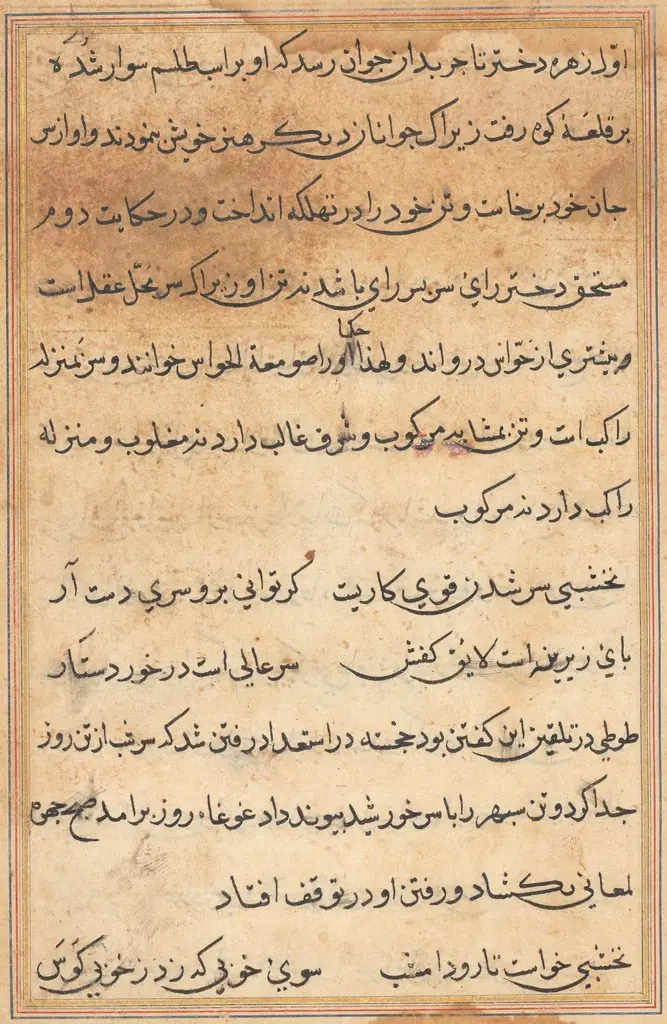
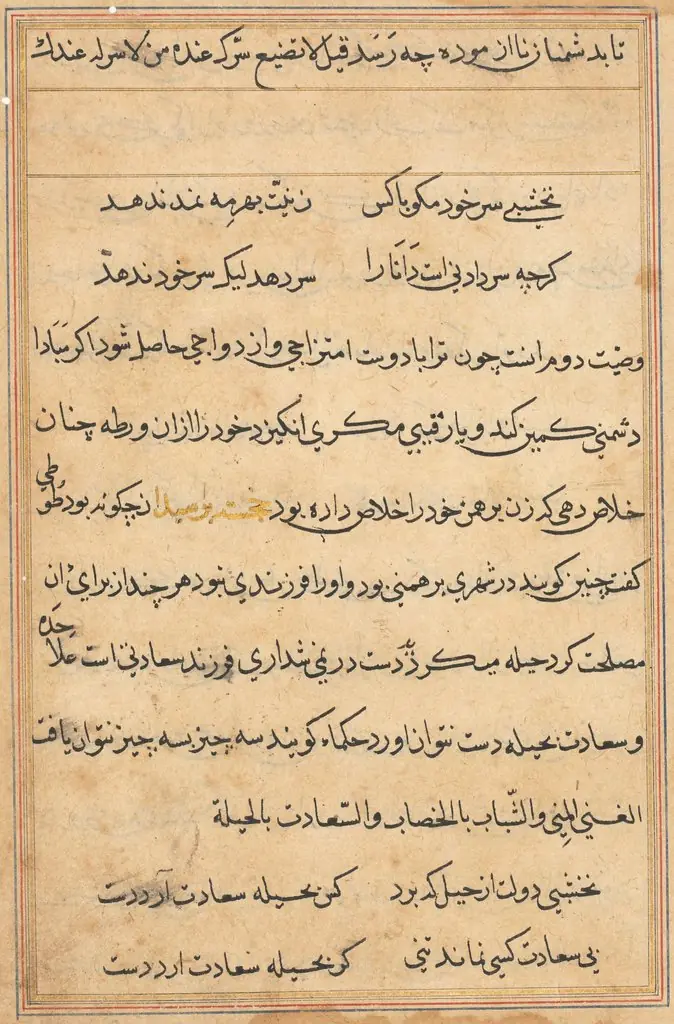
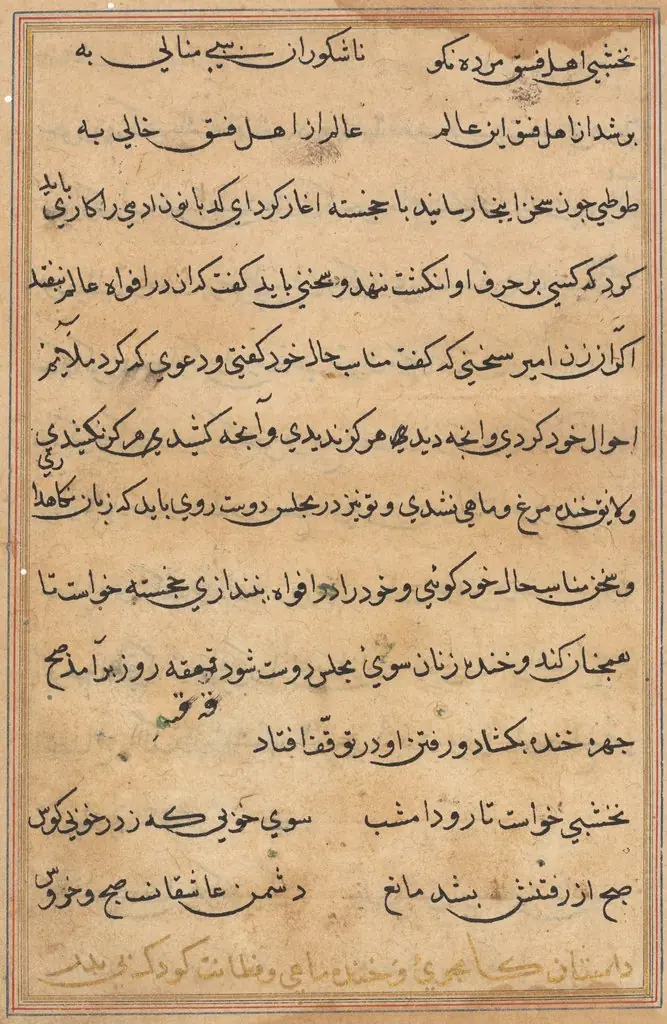
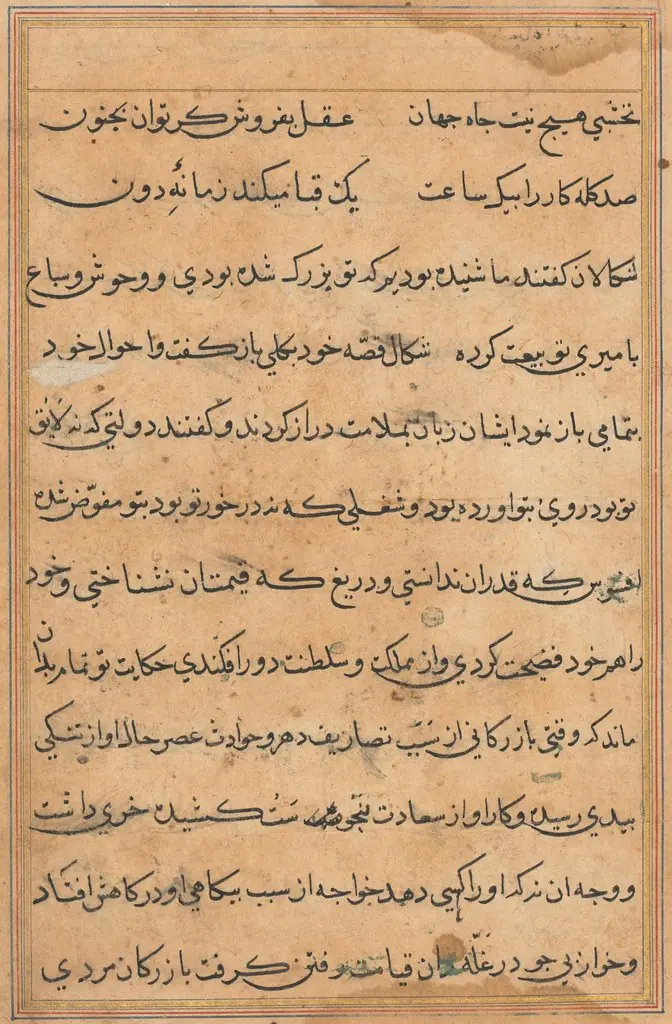
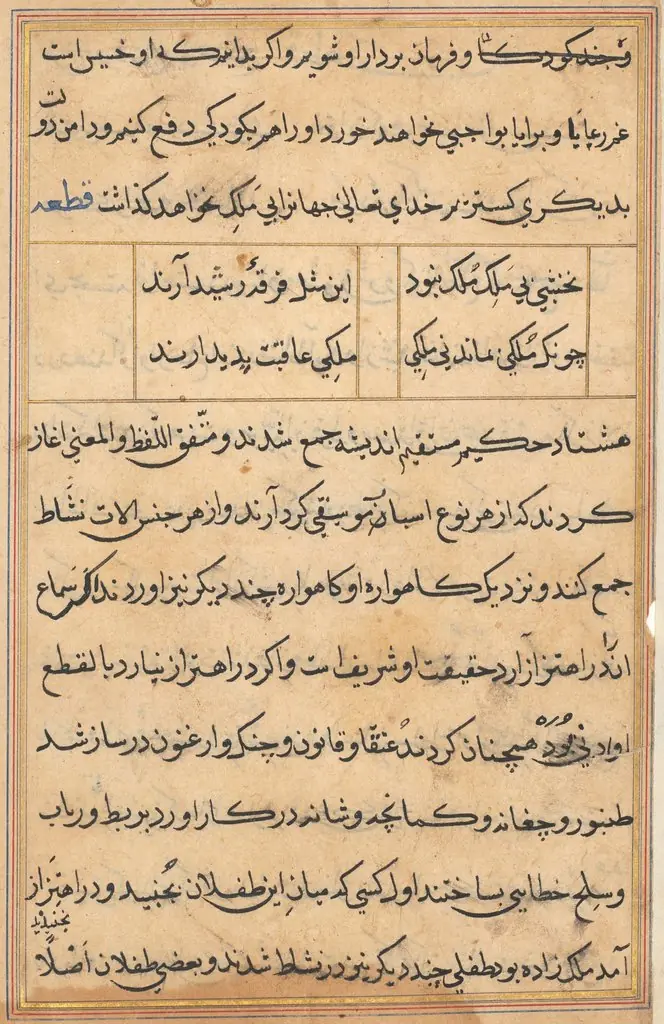
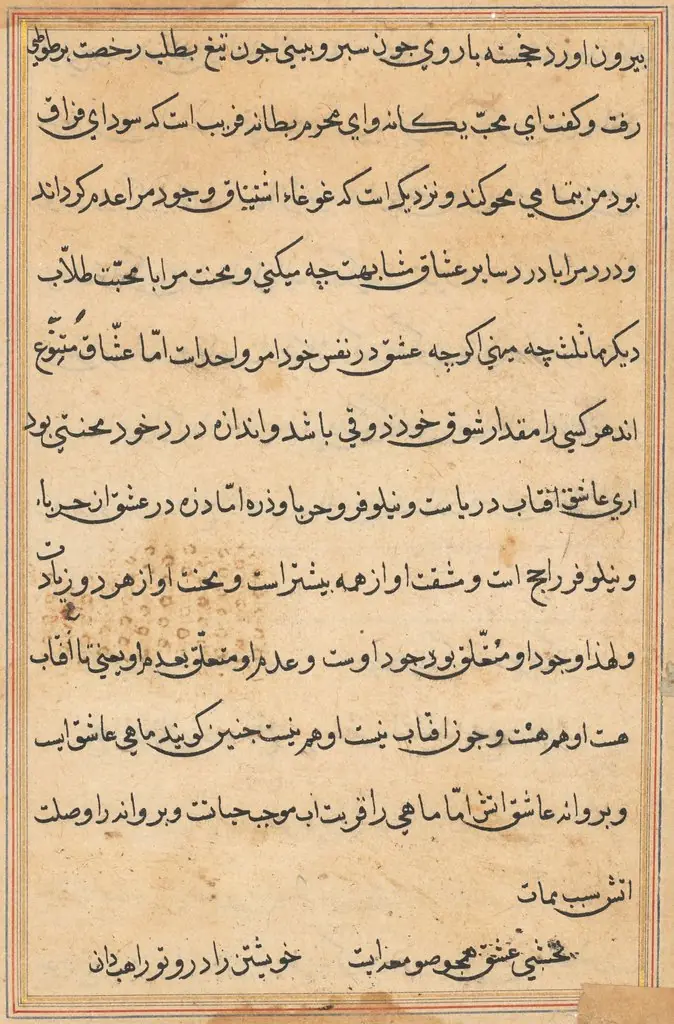
Page from Tales of a Parrot (Tuti-nama): text page
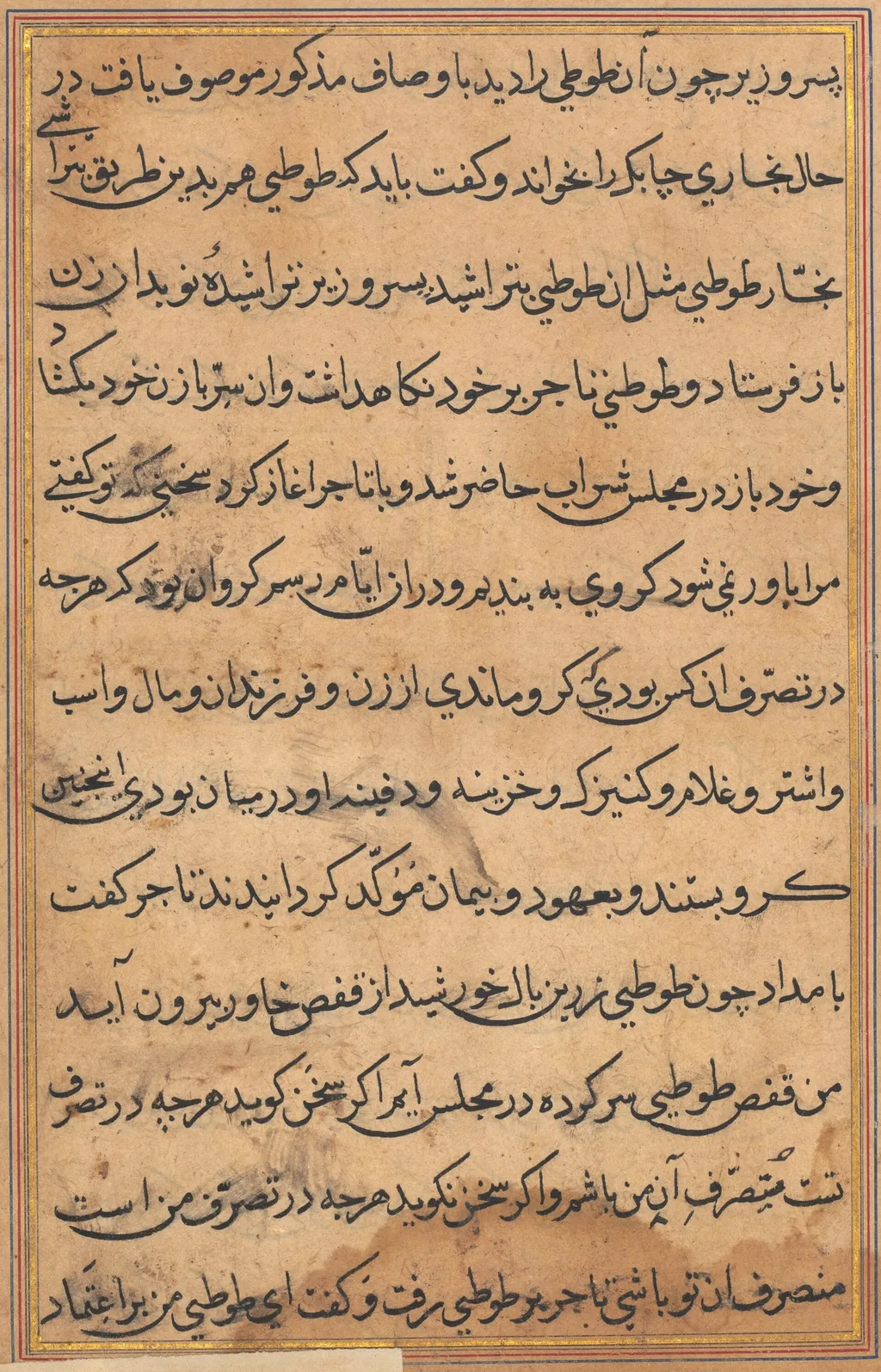
Page from Tales of a Parrot (Tuti-nama): text page is an unspecified painting. It dates from 1560 and is held in the collection of the Cleveland Museum of Art. This illuminated page originates from the Persian manuscript *Tales of a Parrot* (Tuti‑nama), a narrative composed for Prince Salim.
About this work
Overview
This illuminated page originates from the Persian manuscript *Tales of a Parrot* (Tuti‑nama), a narrative composed for Prince Salim. Executed as a painted text page, it measures roughly the size of a typical folio and presents the story’s verses in flowing black ink against a lightly yellowed, aged paper surface. The composition is bordered by a slender red line that frames the text.
Subject & Meaning
The script conveys a segment of the *Tuti‑nama* tale, a collection of moral and romantic anecdotes traditionally recited to entertain and instruct princely audiences. By addressing Prince Salim directly, the page reflects the courtly practice of tailoring literary works to elite patrons, emphasizing the didactic and decorative role of manuscript culture in the Safavid period.
Technique & Style
The calligraphy exhibits meticulous control, each letter rendered without visible correction, indicating a highly skilled scribe.
Ink is applied in smooth, curved strokes, with occasional enlargement of key words to highlight narrative emphasis. The calligraphy exhibits meticulous control, each letter rendered without visible correction, indicating a highly skilled scribe. A thin red pigment outlines the page’s perimeter, providing a subtle visual boundary while preserving the overall restraint characteristic of Persian manuscript aesthetics.
History & Provenance
The folio is part of a larger codex that has survived in relatively good condition, suggesting careful conservation over centuries. It entered the collection of the Cleveland Museum of Art through acquisition in the early twentieth century, where it remains preserved as an example of Persian literary art commissioned for royal patronage.
Artist & collection

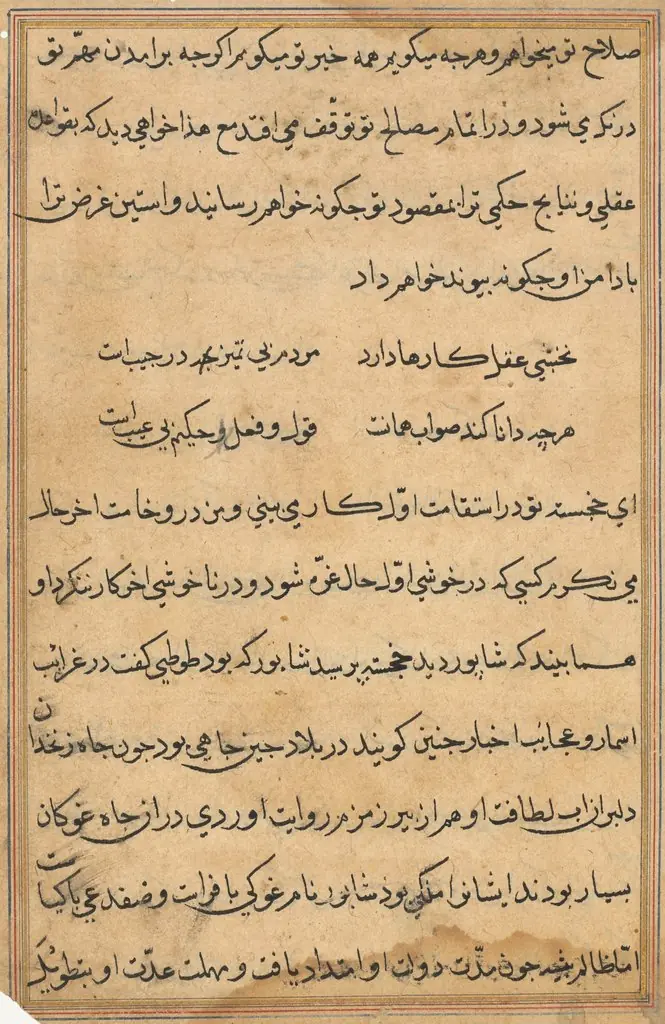 Page from Tales of a Parrot (Tuti-nama): text page
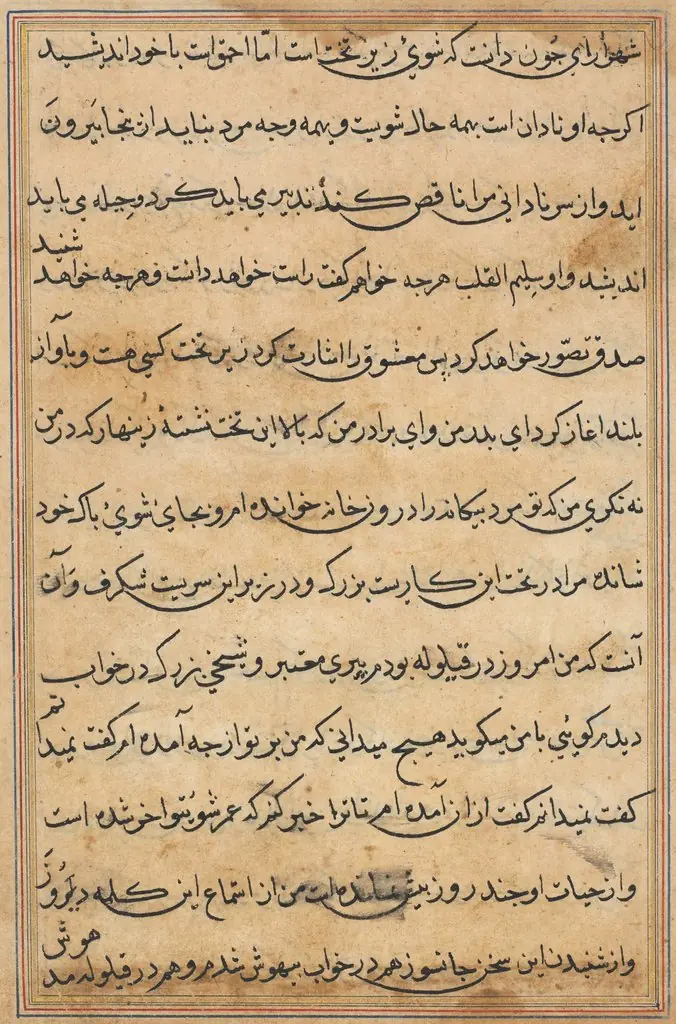 Page from Tales of a Parrot (Tuti-nama): text page
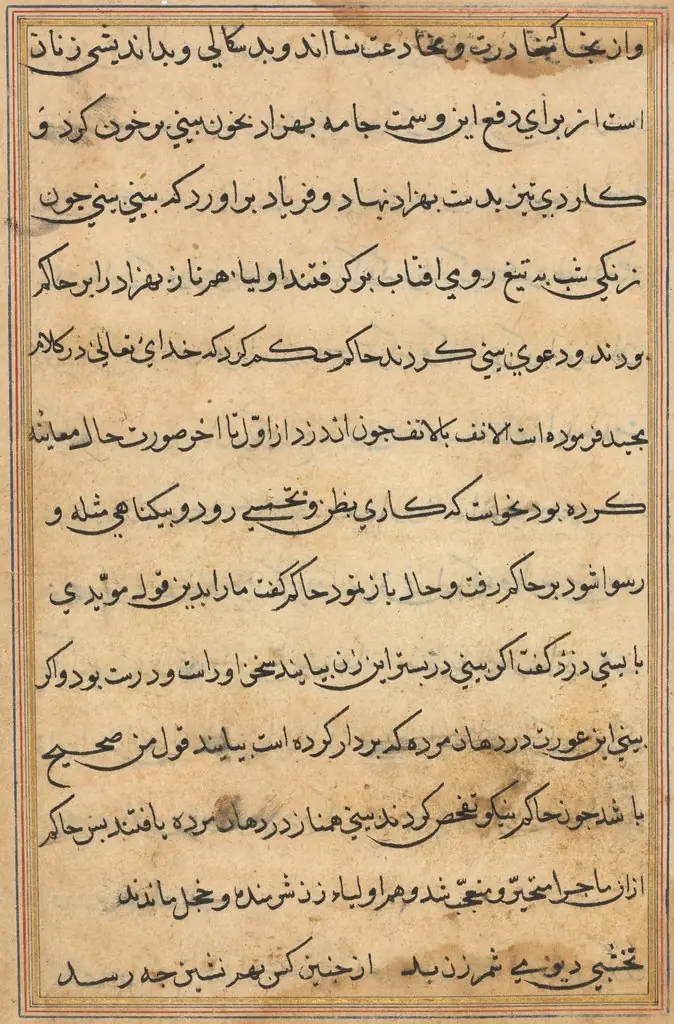 Page from Tales of a Parrot (Tuti-nama): text page
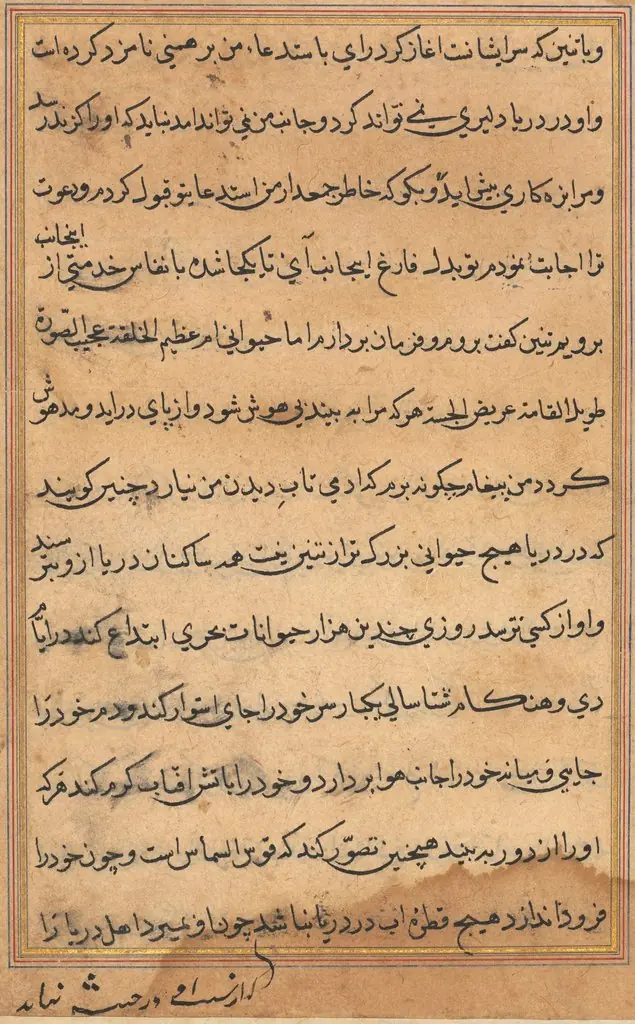 Page from Tales of a Parrot (Tuti-nama): text page
 Page from Tales of a Parrot (Tuti-nama): text page
 Page from Tales of a Parrot (Tuti-nama): text page
 Page from Tales of a Parrot (Tuti-nama): text page
 Page from Tales of a Parrot (Tuti-nama): text page