Artwork
Portrait of Anne of Lorraine (1522-1568), wife of René de Châlon, Prince of Orange
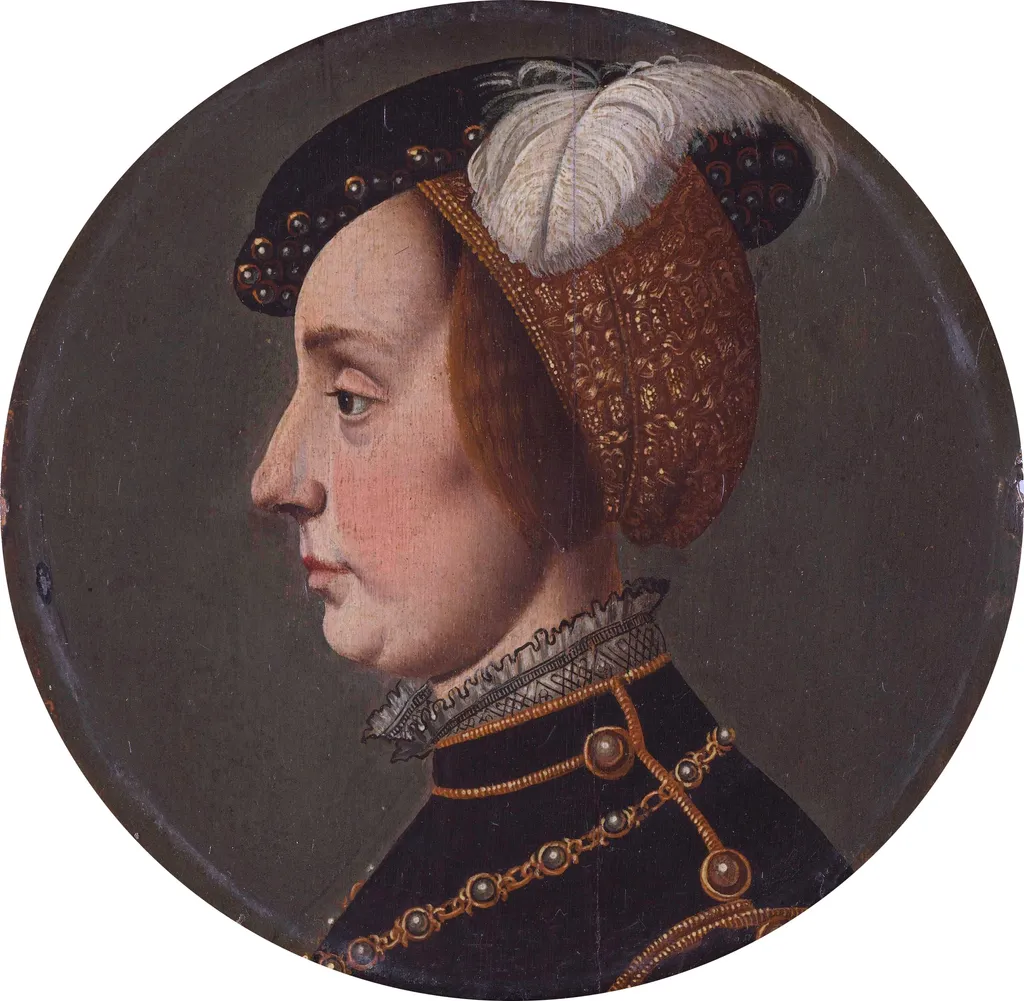
Portrait of Anne of Lorraine (1522-1568), wife of René de Châlon, Prince of Orange is an oil painting. It dates from 1542 and is held in the collection of the Rijksmuseum. The work is an oil portrait depicting a woman in profile, turned toward the left.
About this work
She is shown in profile, facing left, and wears a black dress with gold trim and a matching hat adorned with pearls and a white feather.
This painting is a portrait of a woman, likely from the 16th century. She is shown in profile, facing left, and wears a black dress with gold trim and a matching hat adorned with pearls and a white feather. The background is a dark gray color. The woman's attire and the style of the painting suggest that it may be a work from the Northern Renaissance period. The level of detail in the woman's clothing and the use of rich colors are characteristic of this style.
Overview
The work is an oil portrait depicting a woman in profile, turned toward the left. She wears a black gown edged with gold trim, complemented by a hat set with pearls and a white feather. The figure is set against a muted dark‑gray backdrop, emphasizing the richness of her attire. The composition reflects the conventions of 16th‑century portraiture in the Northern European tradition.
Subject & Meaning
The sitter is identified as Anne of Lorraine (1522‑1568), the spouse of René de Châlon, Prince of Orange. As a noblewoman, her representation underscores status through luxurious fabrics and ornamental accessories. The profile pose, a common device for displaying lineage and dignity, conveys both personal identity and her role within the dynastic network of the Low Countries.
Technique & Style
Executed in oil on panel, the painting demonstrates the meticulous attention to texture and material characteristic of the Northern Renaissance. Fine brushwork renders the sheen of silk and the sparkle of pearls, while subtle chiaroscuro models the facial features. The restrained palette of black, gold, and gray highlights the contrast between flesh and fabric, a hallmark of the period’s realistic approach.
History & Provenance
Although the precise commission details are undocumented, the portrait likely originated in the mid‑16th century, contemporaneous with Anne’s lifetime. The work has remained associated with the House of Orange, passing through private collections before entering a public institution, where it is now displayed as part of a broader assemblage of aristocratic portraiture.
Context
The portrait belongs to a broader visual culture in which Northern European courts used painted likenesses to affirm political alliances and familial ties. The emphasis on luxurious dress and jewelry reflects the wealth of the Orange principality and the fashion trends circulating among the elite of the Holy Roman Empire and the French borderlands.
Legacy
As a rare surviving likeness of Anne of Lorraine, the painting offers scholars a visual reference for the attire and iconography of mid‑16th‑century noblewomen. It contributes to the understanding of portrait conventions that shaped the representation of power and gender in the early modern Netherlands.
Artist & collection