Artwork
Jacoba of Bavaria (1401-1436), countess of Holland and Zeeland
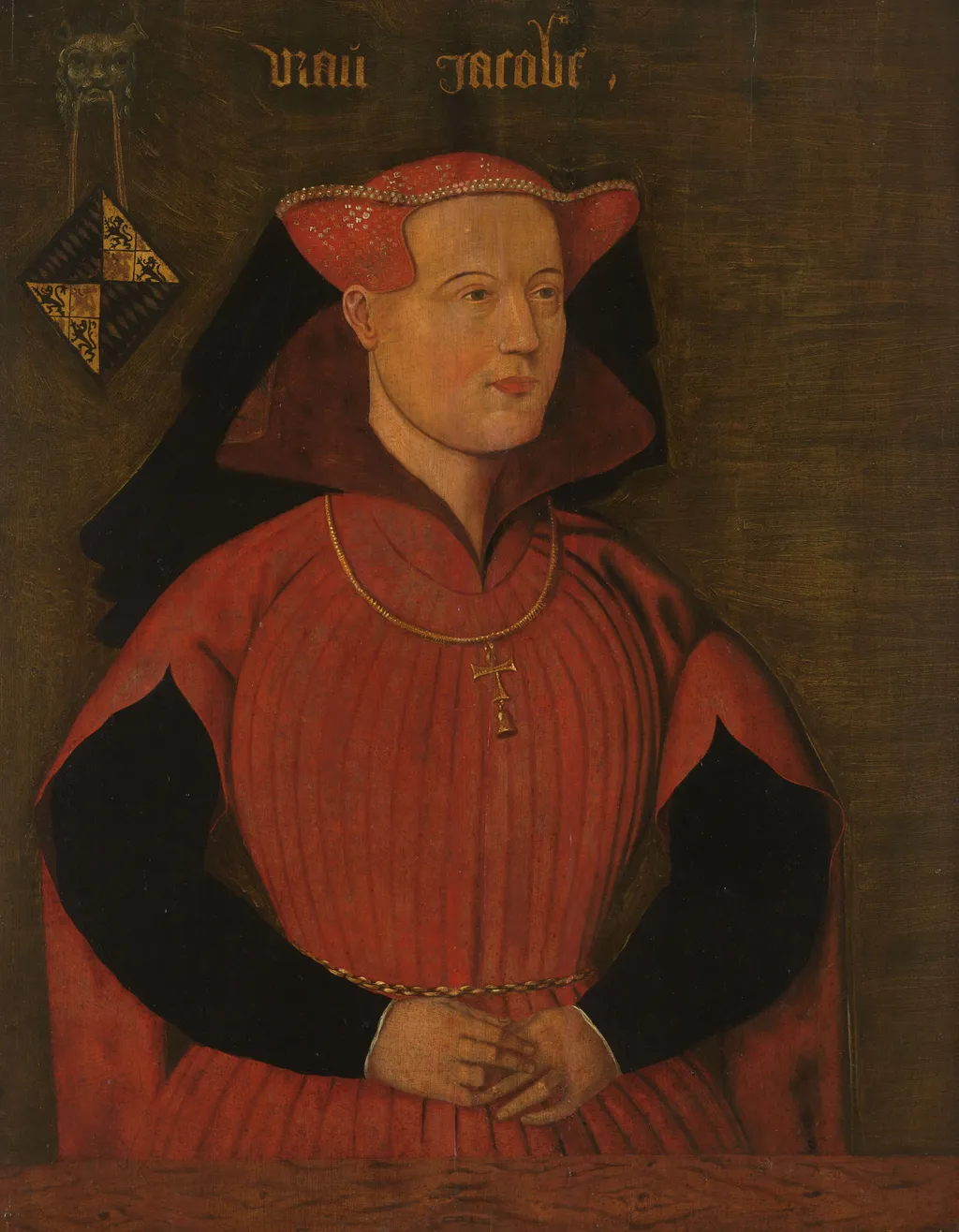
Jacoba of Bavaria (1401-1436), countess of Holland and Zeeland is an oil painting. It dates from 1600 and is held in the collection of the Rijksmuseum. The portrait presents a woman from the waist upward, dressed in a red gown and hat, adorned with a gold necklace and a cross pendant.
About this work
Overview
The portrait presents a woman from the waist upward, dressed in a red gown and hat, adorned with a gold necklace and a cross pendant. Her hands are clasped before her, and she gazes with a solemn expression against a dark background. A small diamond-shaped object hangs from the upper left corner, adding a subtle decorative element.
Subject & Meaning
The sitter is identified as Jacoba of Bavaria (1401‑1436), who held the titles countess of Holland and Zeeland. Her attire and jewelry signal her aristocratic rank, while the prominent cross suggests personal piety or a public display of faith, reflecting the intertwining of noble status and religious devotion in early 15th‑century Europe.
Technique & Style
The work employs chiaroscuro, creating a stark contrast between illuminated areas—particularly the face, dress, and jewelry—and the surrounding darkness. This modeling technique gives the figure a three‑dimensional presence and emphasizes texture, from the sheen of the gold necklace to the fabric’s folds, while the muted background focuses attention on the sitter.
Context
Created during the early Renaissance, the portrait aligns with contemporary trends of individual representation among the nobility. Such depictions served both as personal commemoration and as visual assertions of lineage, reinforcing the political and dynastic claims of the House of Bavaria in the Low Countries.
Artist & collection