Artwork
Page from Tales of a Parrot (Tuti-nama): text page
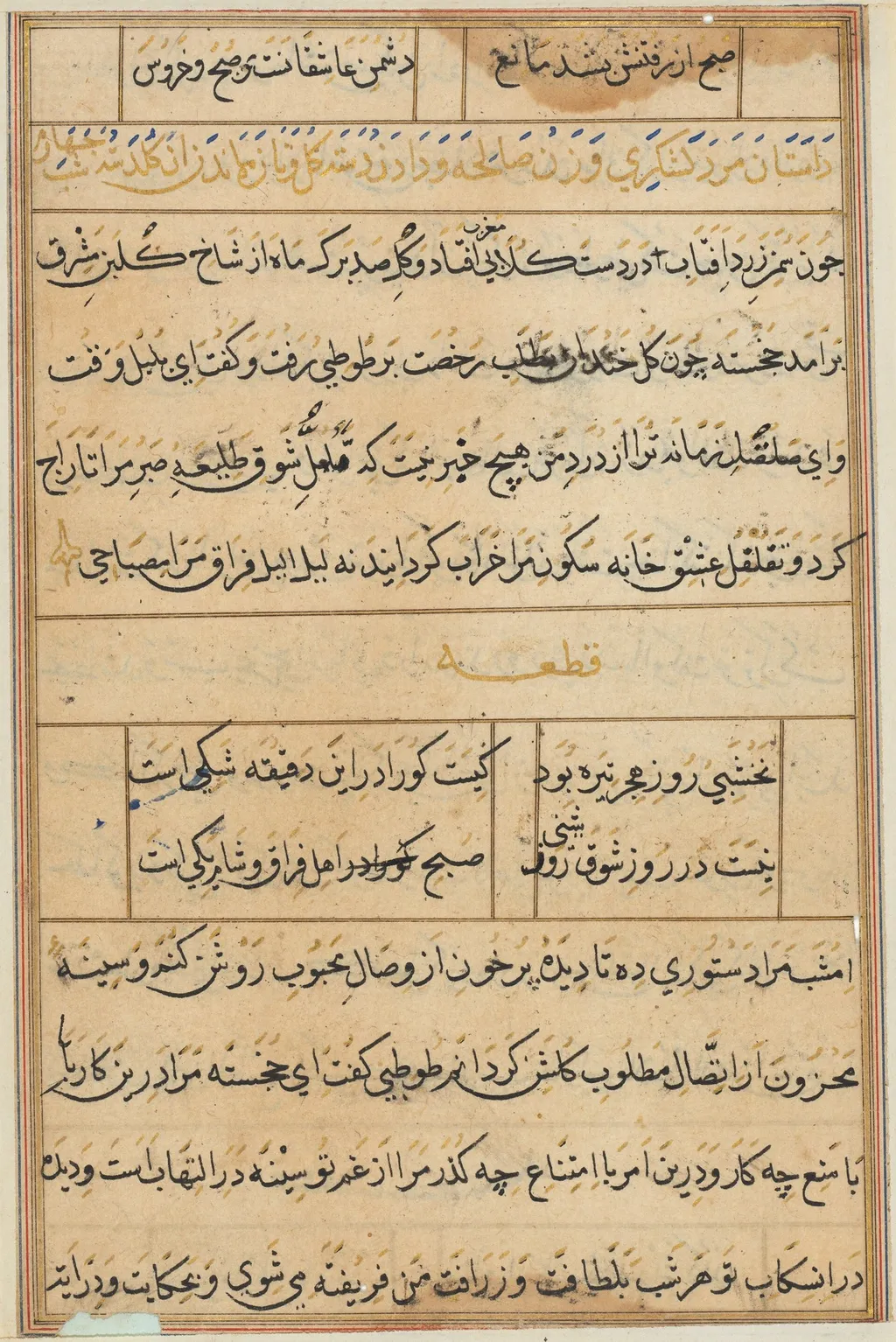
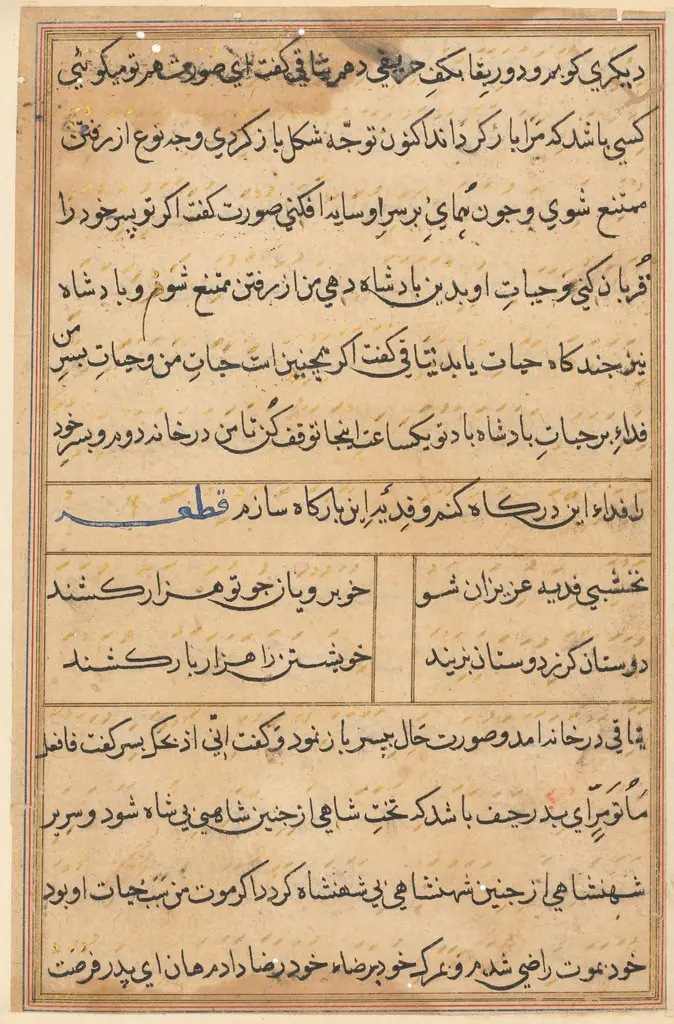
Page from Tales of a Parrot (Tuti-nama): text page is an unspecified painting. It dates from 1560 and is held in the collection of the Cleveland Museum of Art. The object is a painted page from the Mughal manuscript known as *Tuti‑nama* (Tales of a Parrot).
About this work
Overview
The paper exhibits a warm, antiqued tone and a fine speckled texture characteristic of early‑modern South Asian manuscripts.
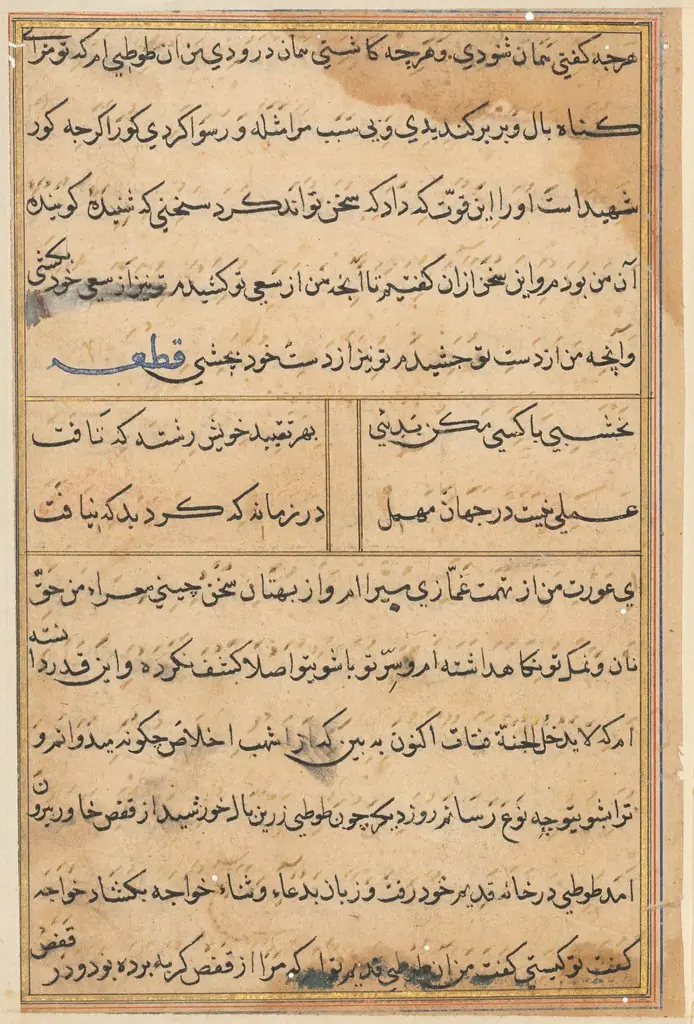
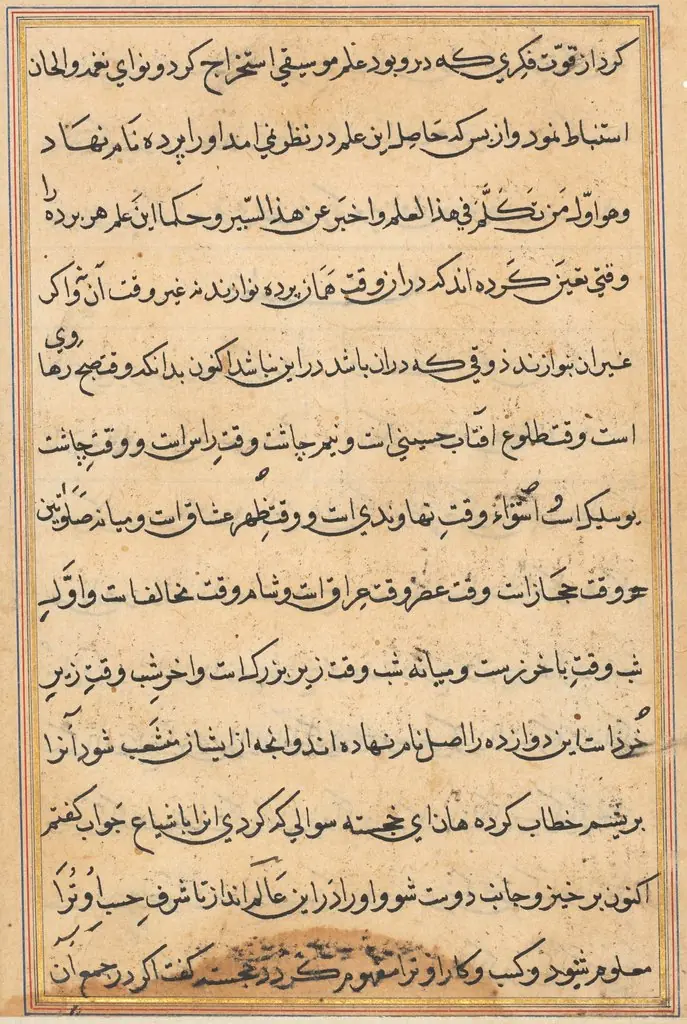
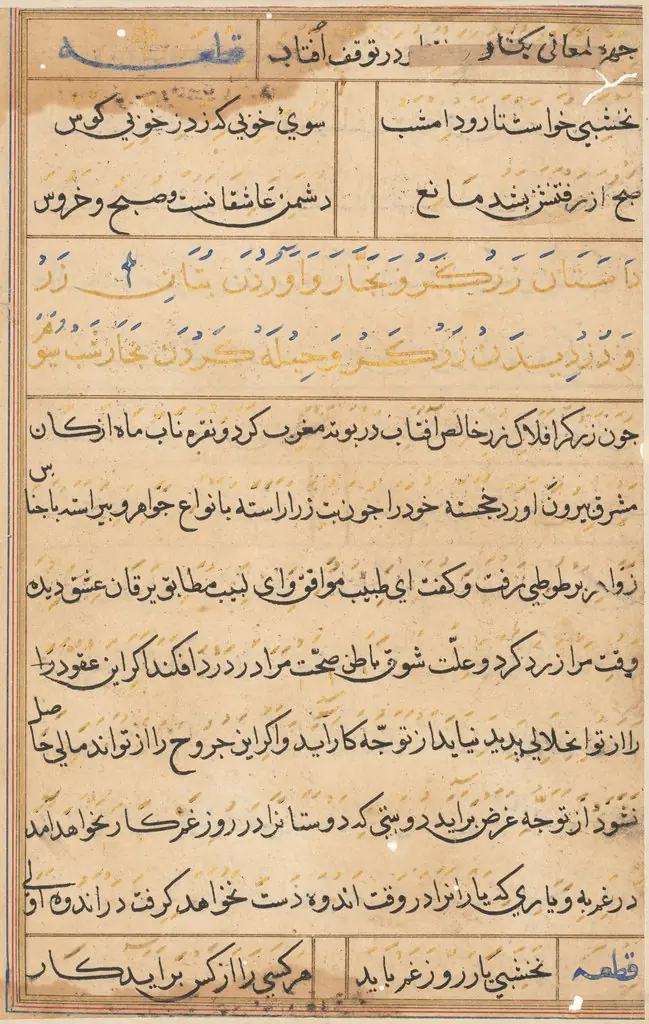
The object is a painted page from the Mughal manuscript known as *Tuti‑nama* (Tales of a Parrot). Executed on a single sheet of paper, the surface is covered with dense black ink script, punctuated by decorative words rendered in gold and blue pigment and framed by slender red lines. The paper exhibits a warm, antiqued tone and a fine speckled texture characteristic of early‑modern South Asian manuscripts.
Subject & Meaning
The page forms part of a literary work that presents moral anecdotes through the voice of a parrot, a genre popular in Mughal court culture. The illuminated text reflects the didactic purpose of the manuscript, using visual emphasis to guide the reader’s attention to key passages and to underscore the moral instruction embedded in the narrative.
Technique & Style
Calligraphic execution follows the refined Persian‑influenced scripts favored by the Mughal atelier, with precise, flowing strokes of ink. Gold and blue pigments are applied in miniature brushwork to highlight selected words, while thin red borders delineate the text block, creating a harmonious balance between readability and ornamentation.
History & Provenance
The page was produced for Prince Salim, the heir apparent who ascended the throne as Emperor Jahangir in 1605. Its creation demonstrates the patronage of book arts within his court, where illuminated manuscripts served both as scholarly resources and symbols of imperial sophistication.
Context
During Jahangir’s reign, the Mughal workshop system integrated Persian artistic traditions with indigenous Indian materials, resulting in richly decorated manuscripts. *Tuti‑nama* exemplifies this synthesis, combining narrative prose with elaborate visual treatment to meet the aesthetic and intellectual standards of the imperial library.
Artist & collection

 Page from Tales of a Parrot (Tuti-nama): text page
 Page from Tales of a Parrot (Tuti-nama): text page
 Page from Tales of a Parrot (Tuti-nama): text page
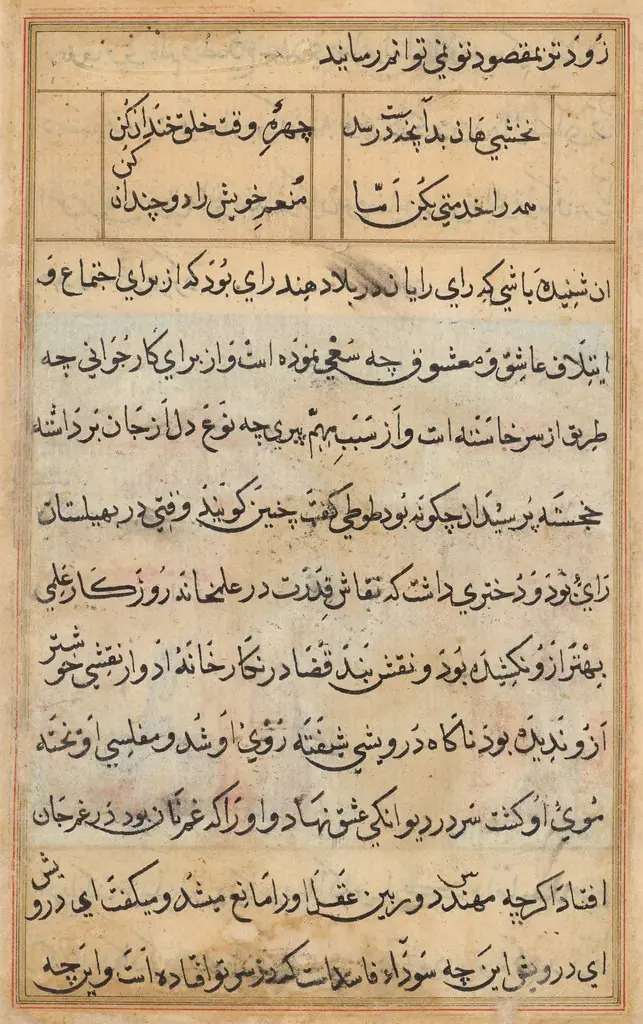 Page from Tales of a Parrot (Tuti-nama): text page
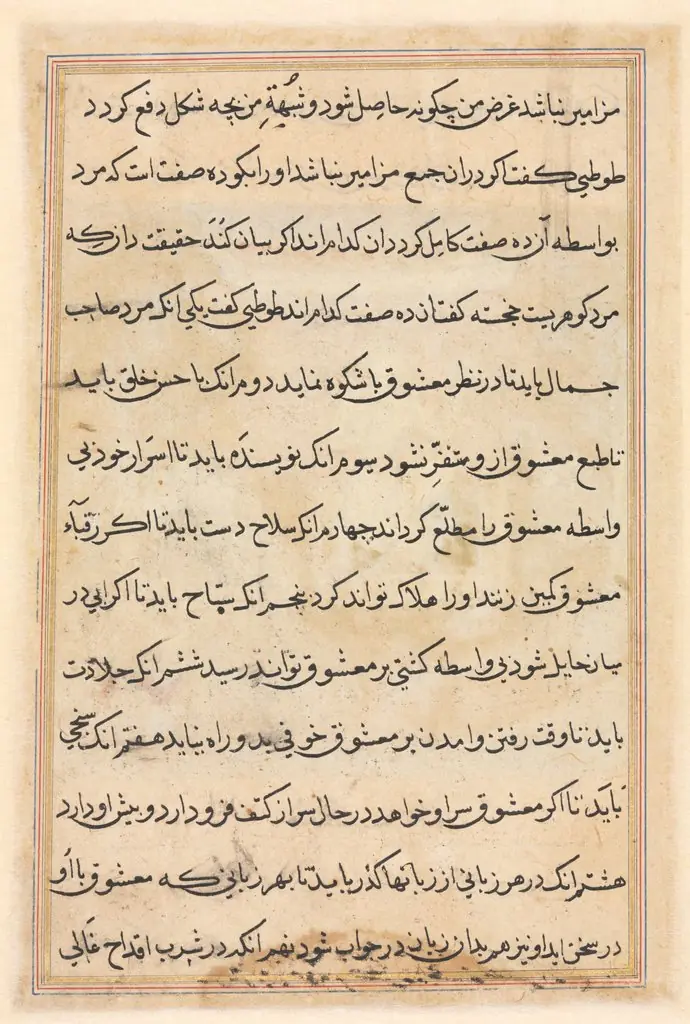 Page from Tales of a Parrot (Tuti-nama): text page
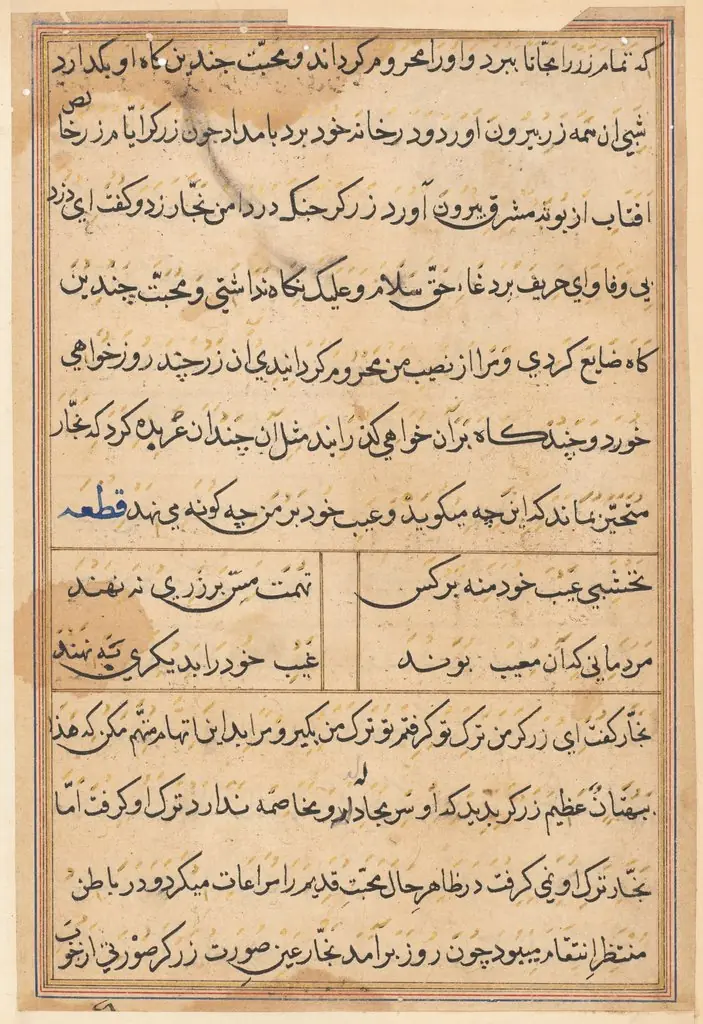 Page from Tales of a Parrot (Tuti-nama): text page
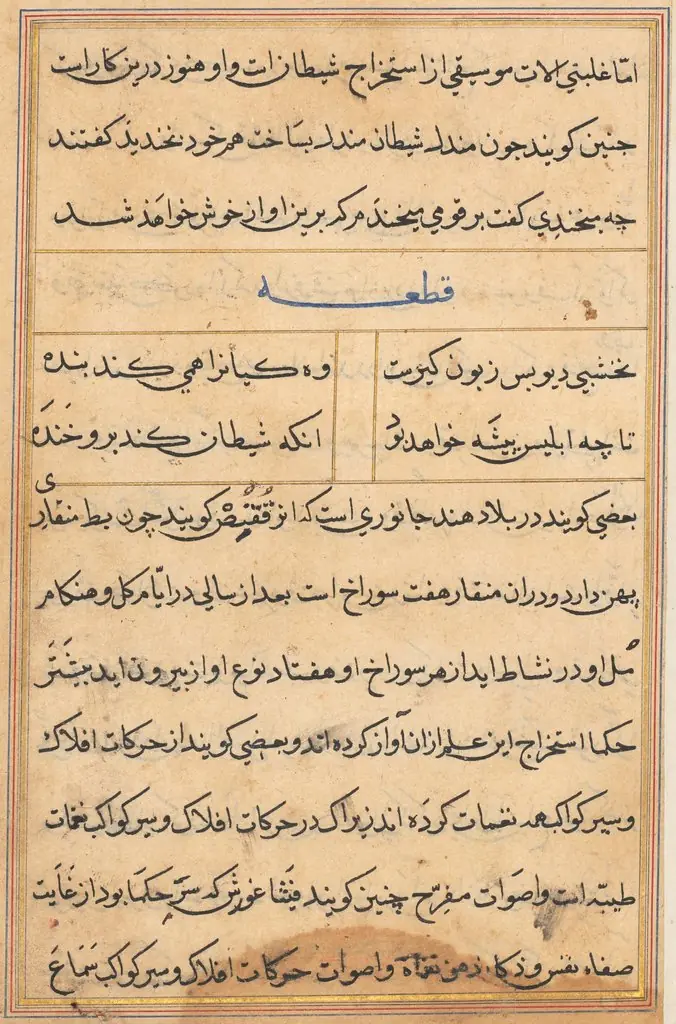 Page from Tales of a Parrot (Tuti-nama): text page
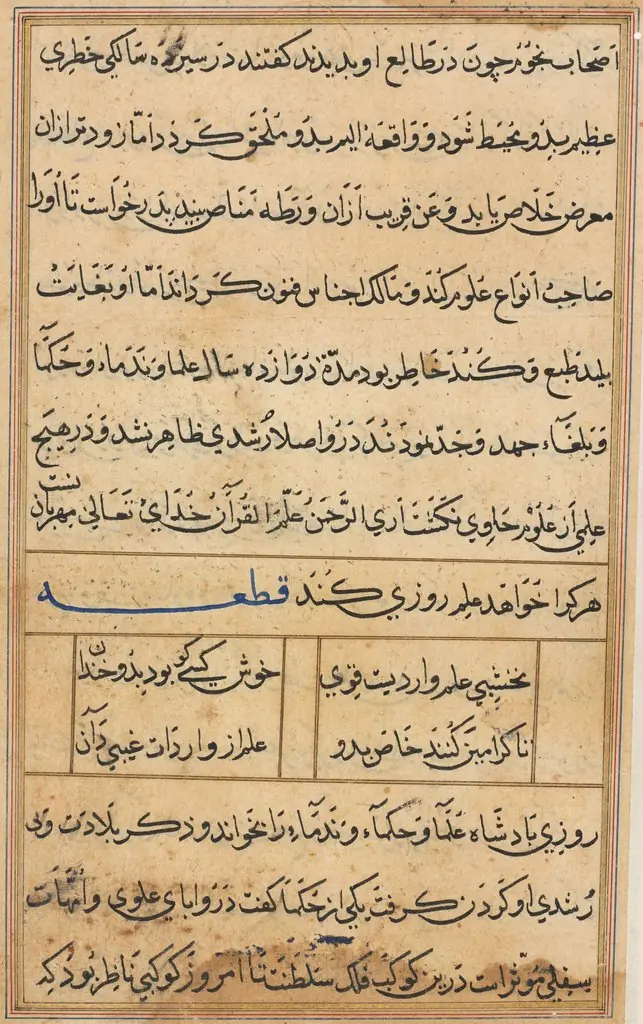 Page from Tales of a Parrot (Tuti-nama): text page
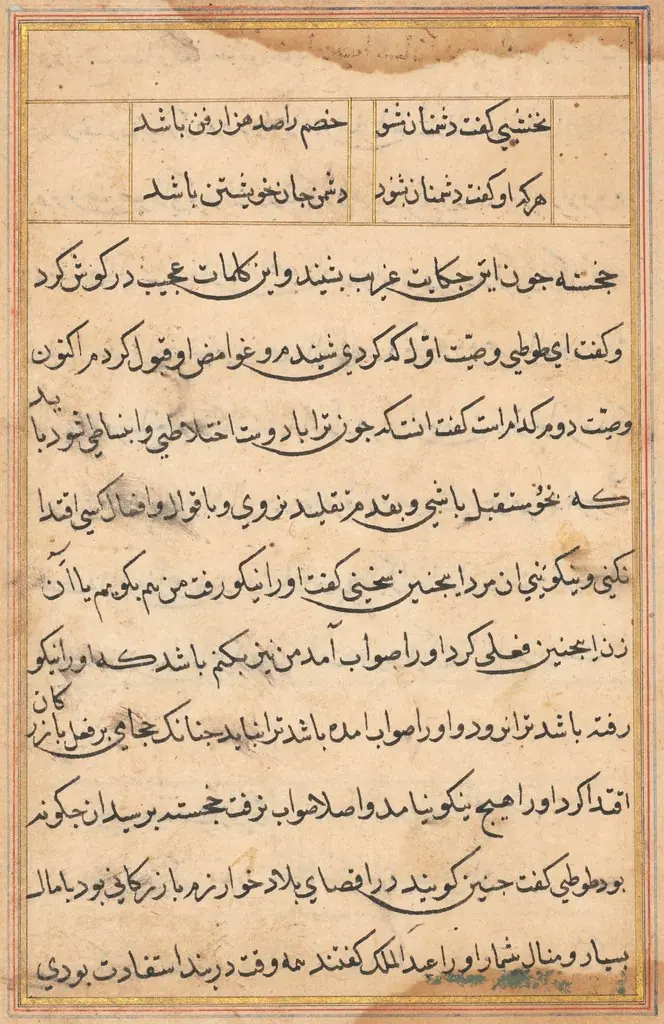 Page from Tales of a Parrot (Tuti-nama): text page
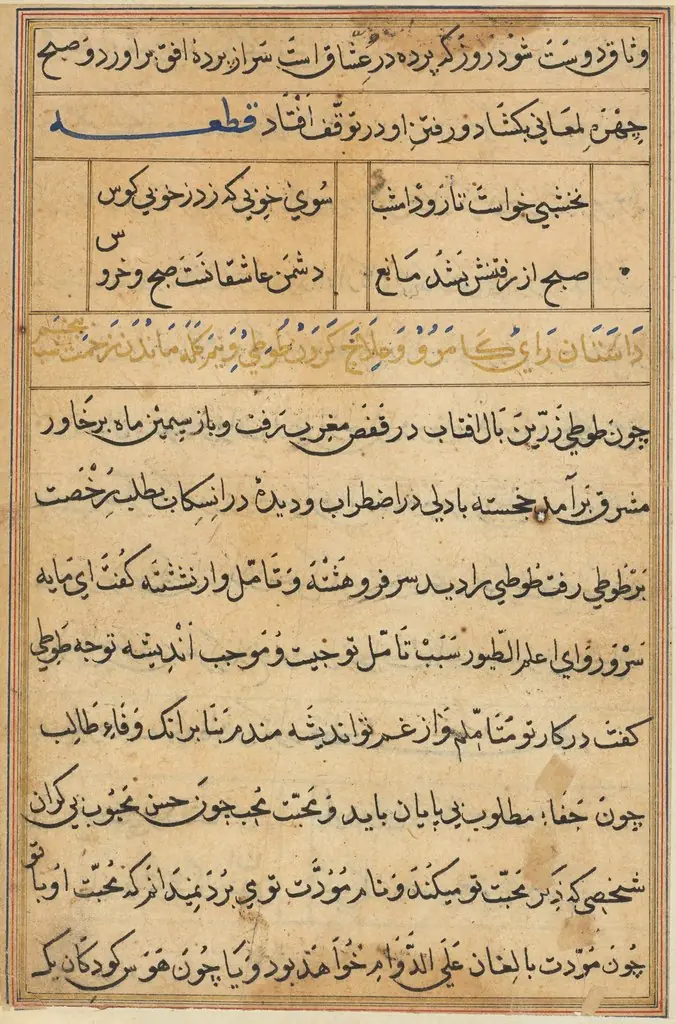 Page from Tales of a Parrot (Tuti-nama): text page
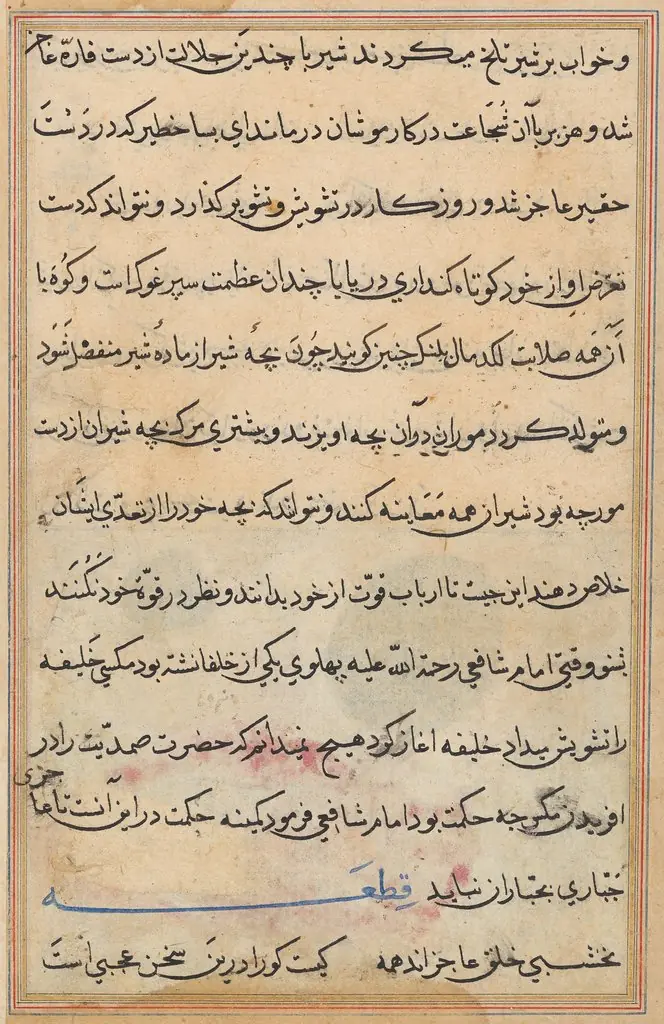 Page from Tales of a Parrot (Tuti-nama): text page
 Page from Tales of a Parrot (Tuti-nama): text page