Artwork
Page from Tales of a Parrot (Tuti-nama): text page
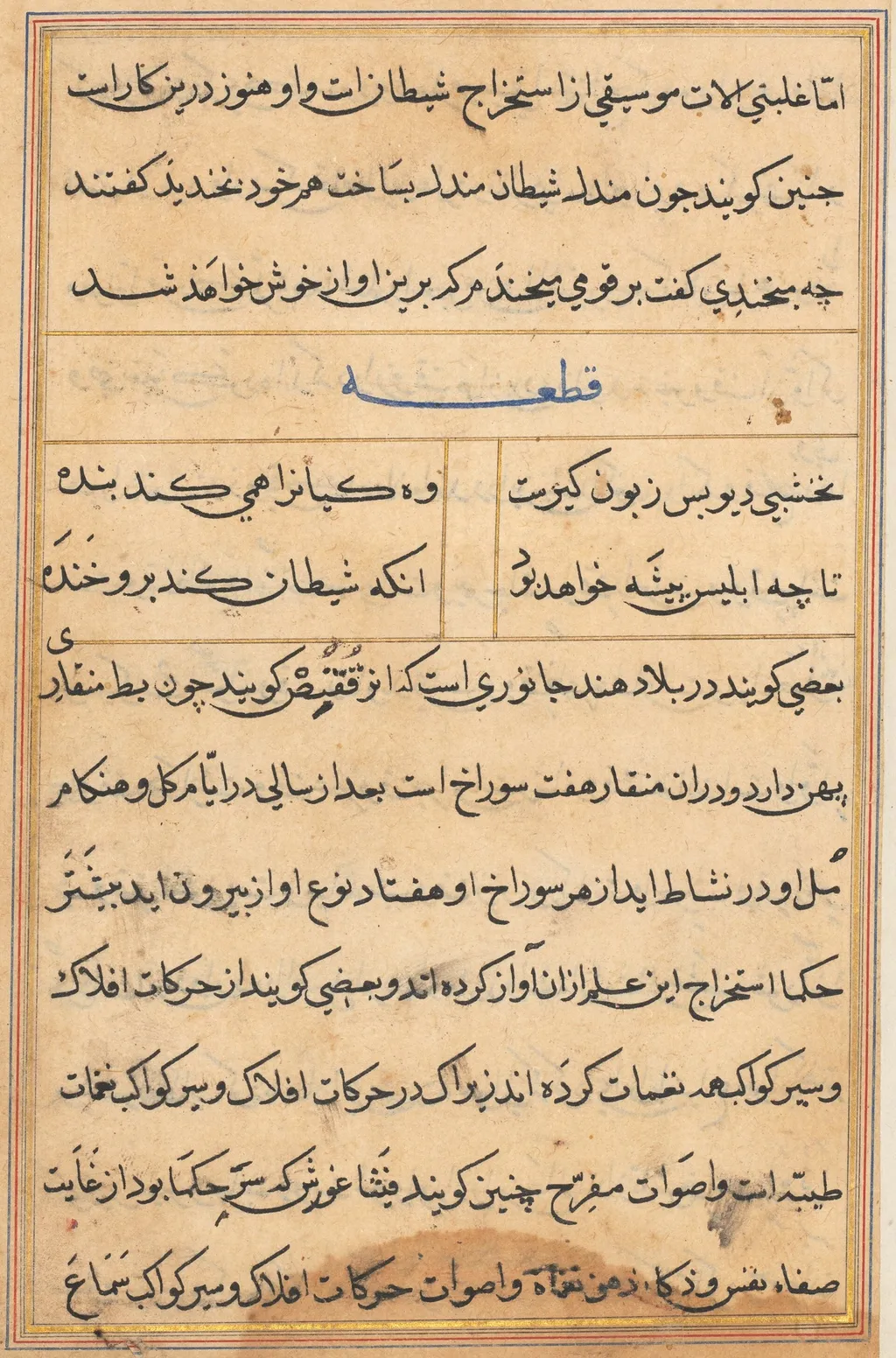
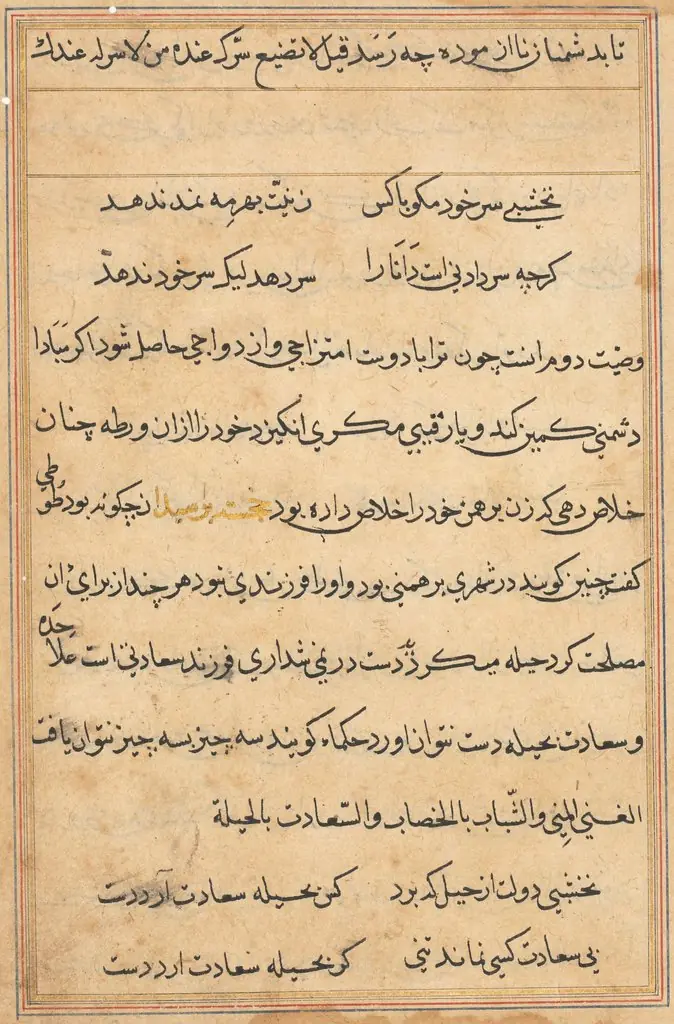
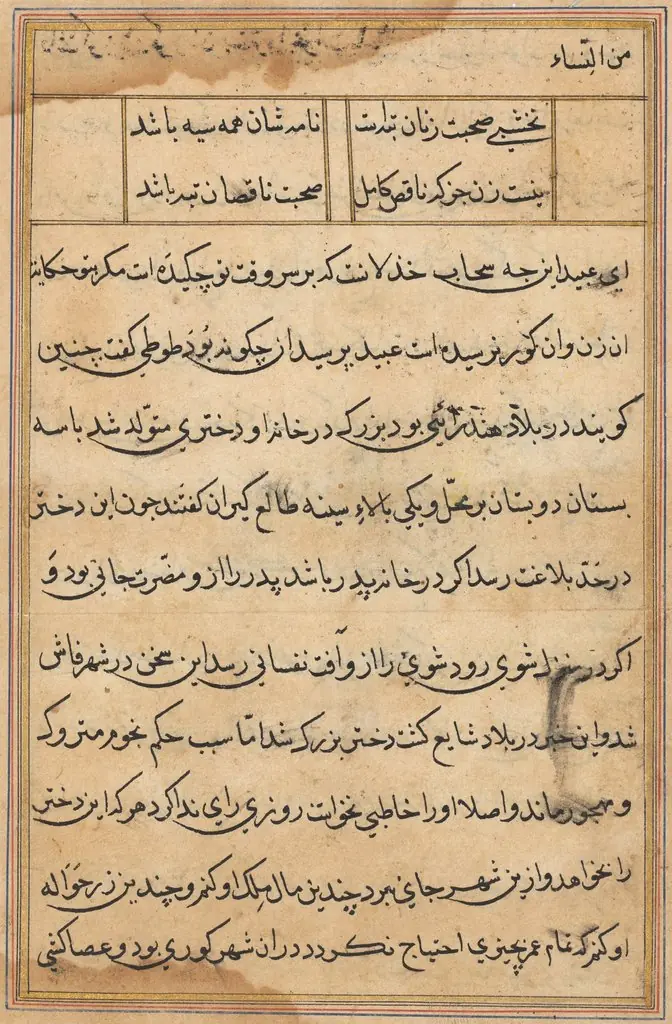
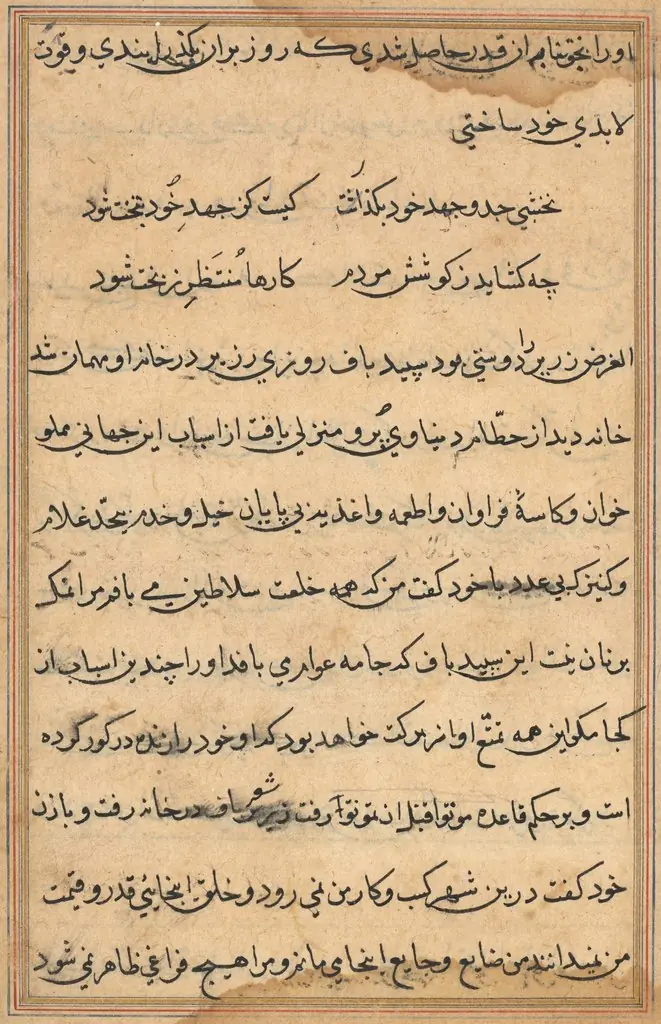
Page from Tales of a Parrot (Tuti-nama): text page is an unspecified painting. It dates from 1560 and is held in the collection of the Cleveland Museum of Art. This object is a single folio from the illustrated manuscript known as the Tales of a Parrot, or Tuti‑nama.
About this work
Overview
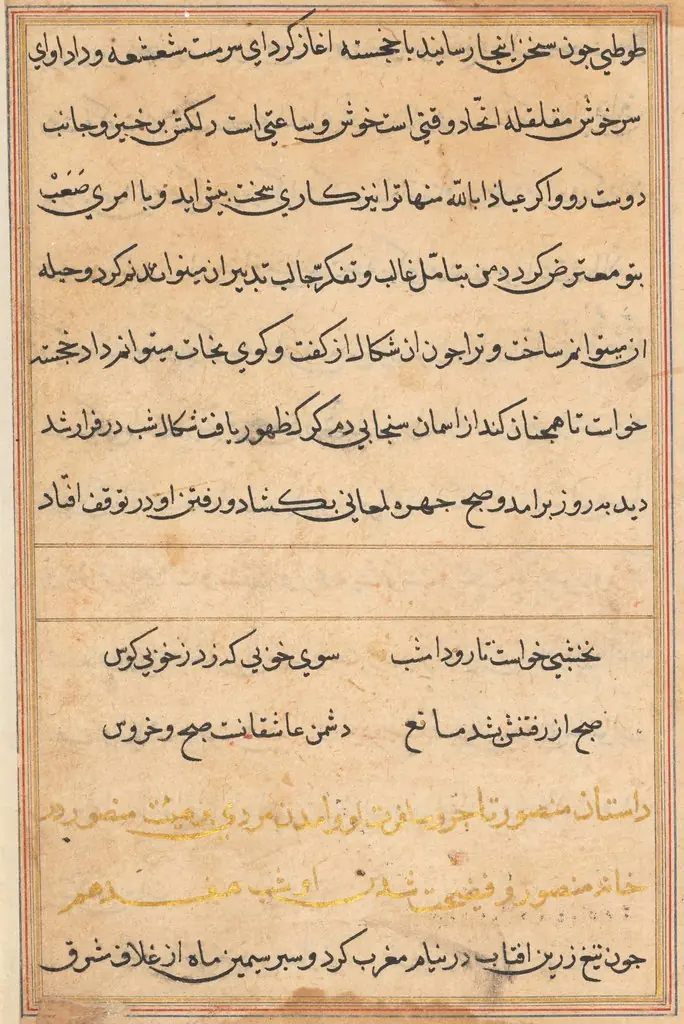
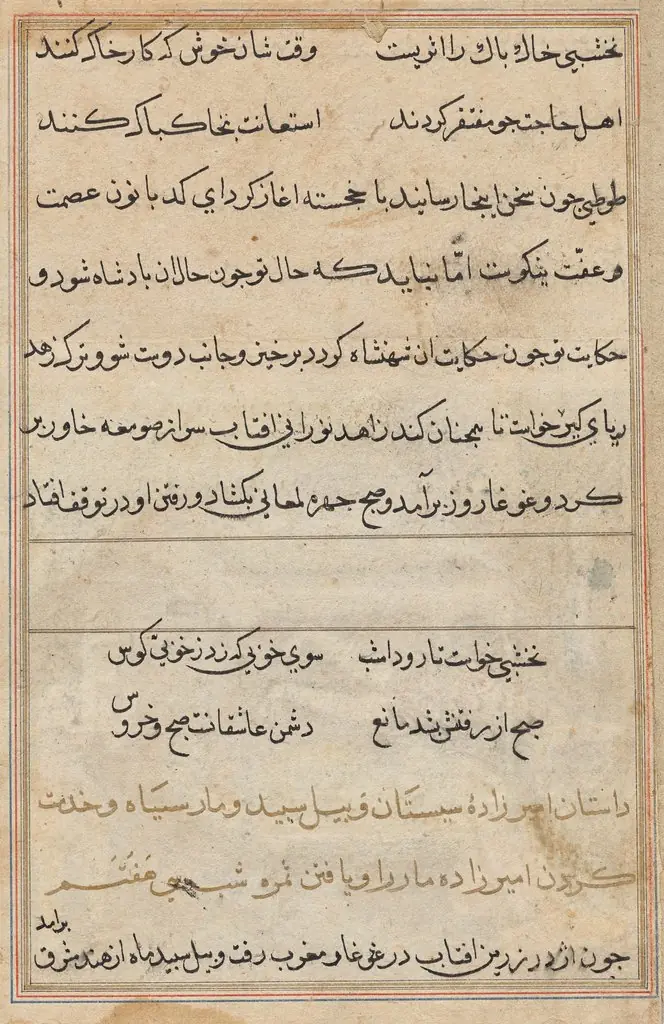
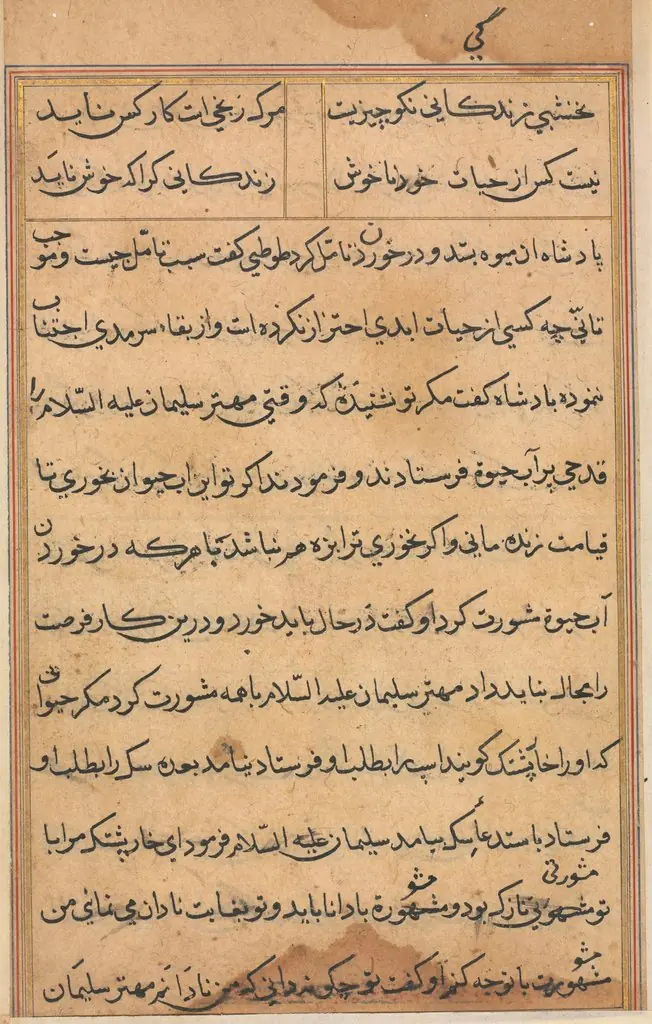
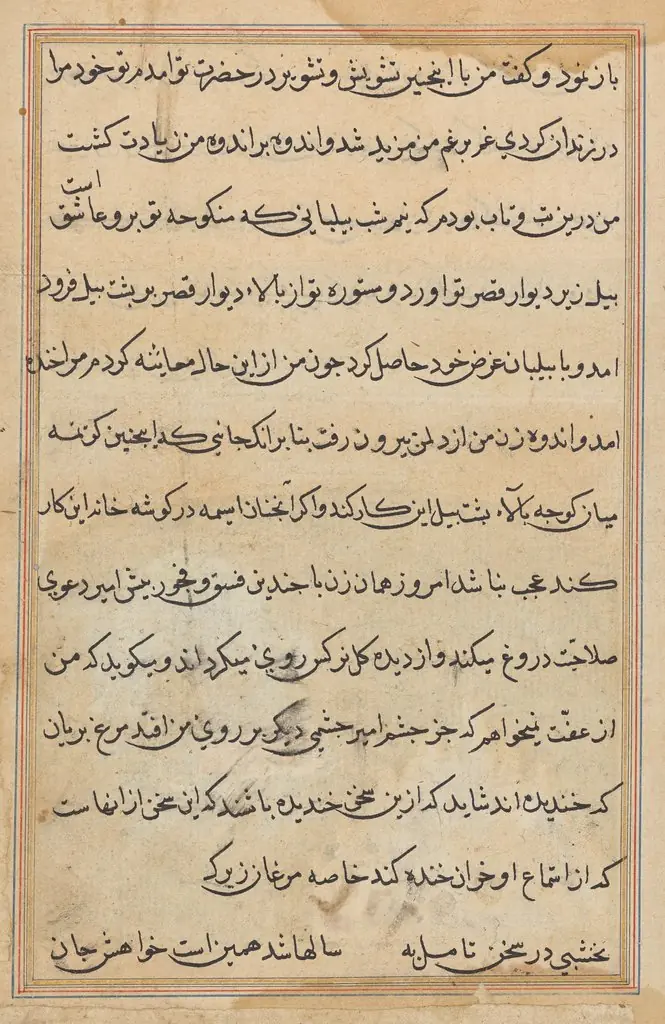
This object is a single folio from the illustrated manuscript known as the Tales of a Parrot, or Tuti‑nama. The page consists primarily of black Persian calligraphy, organized in tidy columns within a rectangular frame bordered by a narrow red and gold strip. The paper shows signs of age, including faint discolorations and irregular edges, indicating its historic origin.
Subject & Meaning
The text on the folio narrates one of the moral stories typical of the Tuti‑nama tradition, wherein a parrot recounts fables that convey ethical lessons. The Persian script suggests the work was intended for an educated audience familiar with literary allegory, using the bird’s voice as a didactic device.
Technique & Style
Calligraphic lines are rendered in black ink with precise, evenly spaced lettering, reflecting a high level of scribal skill. Decorative separators in blue and gold punctuate the text, marking new sections and adding visual rhythm. The thin red and gold border frames the page, a common ornamental motif in Persian manuscript art.
History & Provenance
The folio originates from a manuscript produced in the Persianate cultural sphere, likely between the 16th and 18th centuries, when such illustrated moral collections were popular. The paper’s wear and staining suggest extensive handling, though its exact previous owners remain undocumented.
Context
Tuti‑nama manuscripts were part of a broader tradition of didactic literature that combined prose, poetry, and illustration to teach moral values. They were often commissioned by patrons seeking to display cultural refinement and to provide instructional material for courtly or domestic education.
Legacy
Pages like this exemplify the convergence of literary content and visual design in Persian manuscript culture, offering scholars insight into the aesthetics of calligraphy and the transmission of moral narratives across the Islamic world.
Artist & collection

 Page from Tales of a Parrot (Tuti-nama): text page
 Page from Tales of a Parrot (Tuti-nama): text page
 Page from Tales of a Parrot (Tuti-nama): text page
 Page from Tales of a Parrot (Tuti-nama): text page
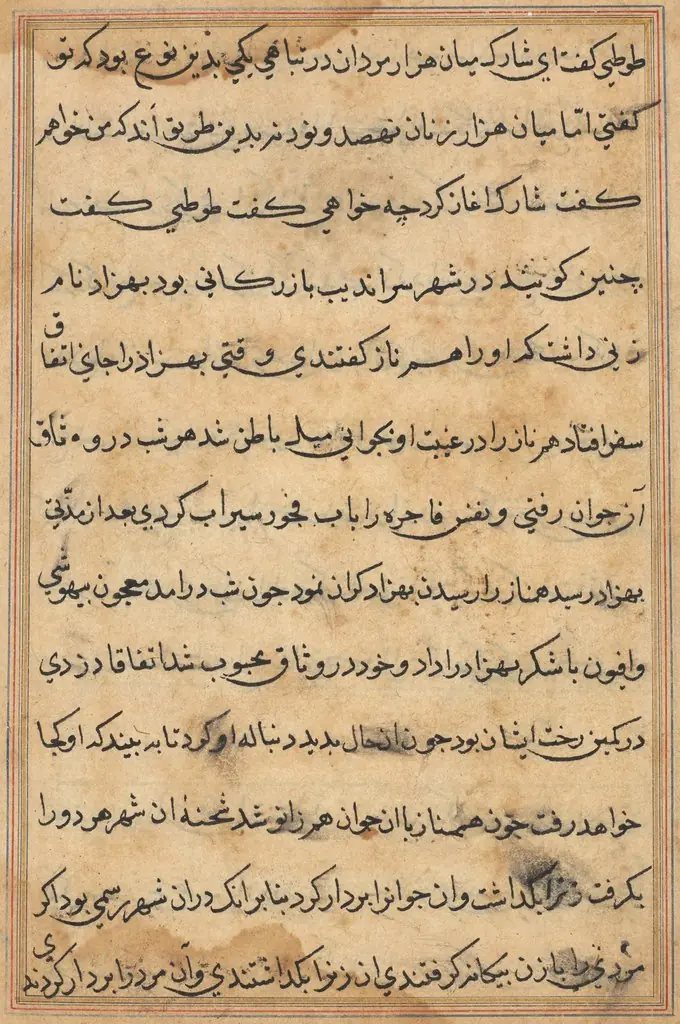 Page from Tales of a Parrot (Tuti-nama): text page
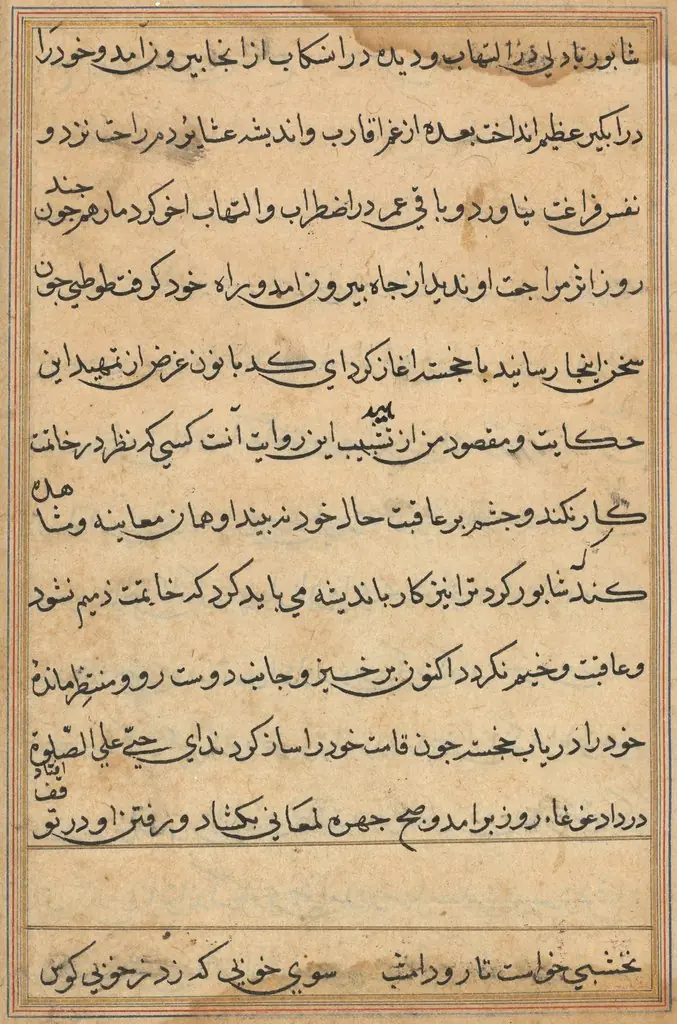 Page from Tales of a Parrot (Tuti-nama): text page
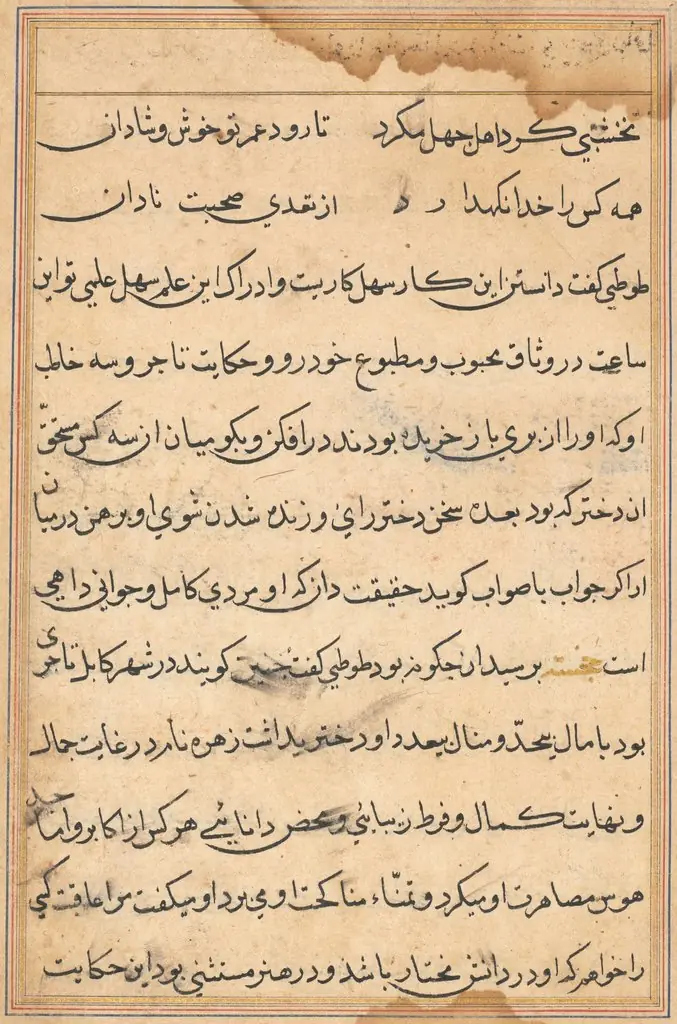 Page from Tales of a Parrot (Tuti-nama): text page
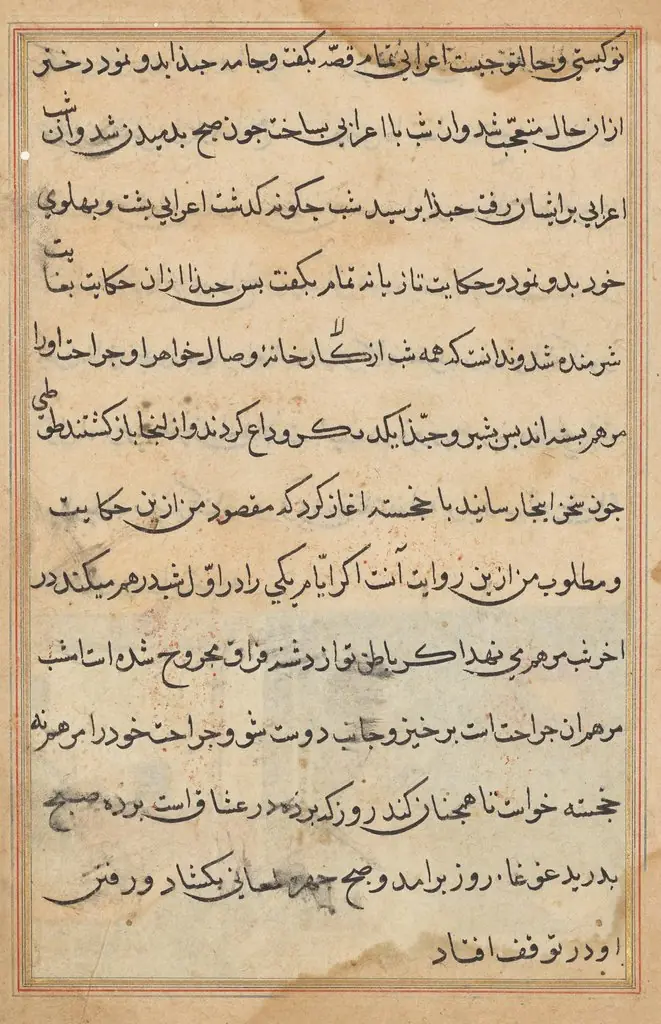 Page from Tales of a Parrot (Tuti-nama): text page