Artwork
Madonna and Child with Saints Lucy and Catherine and 2 Nuns
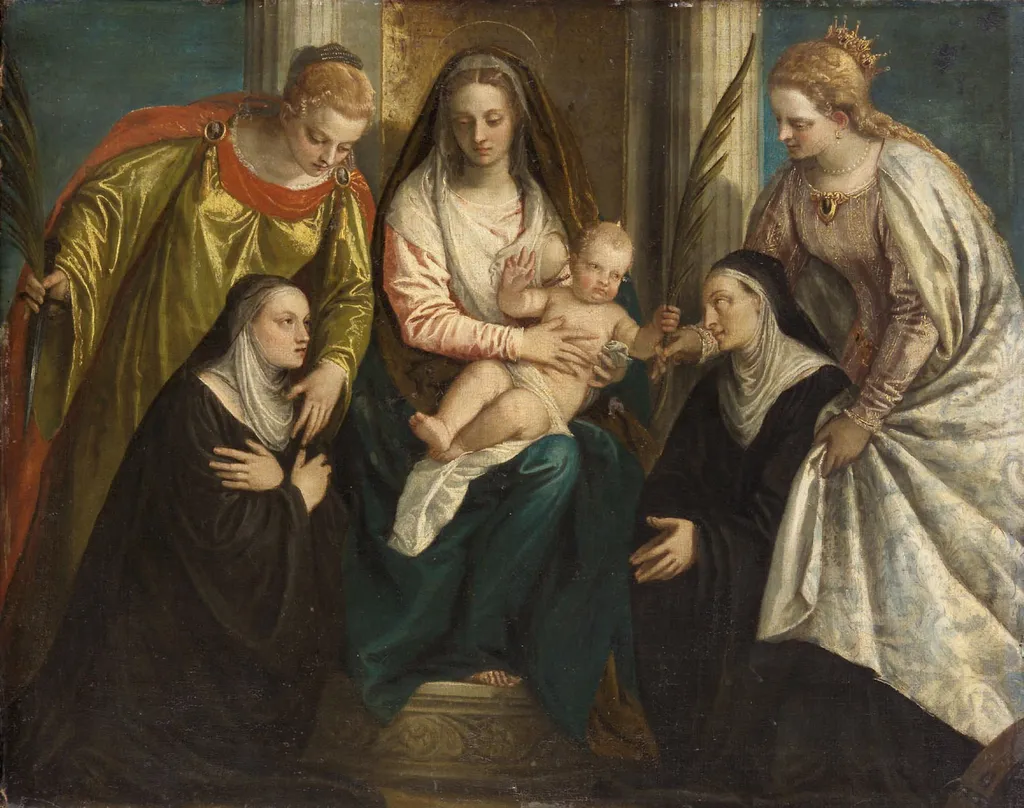
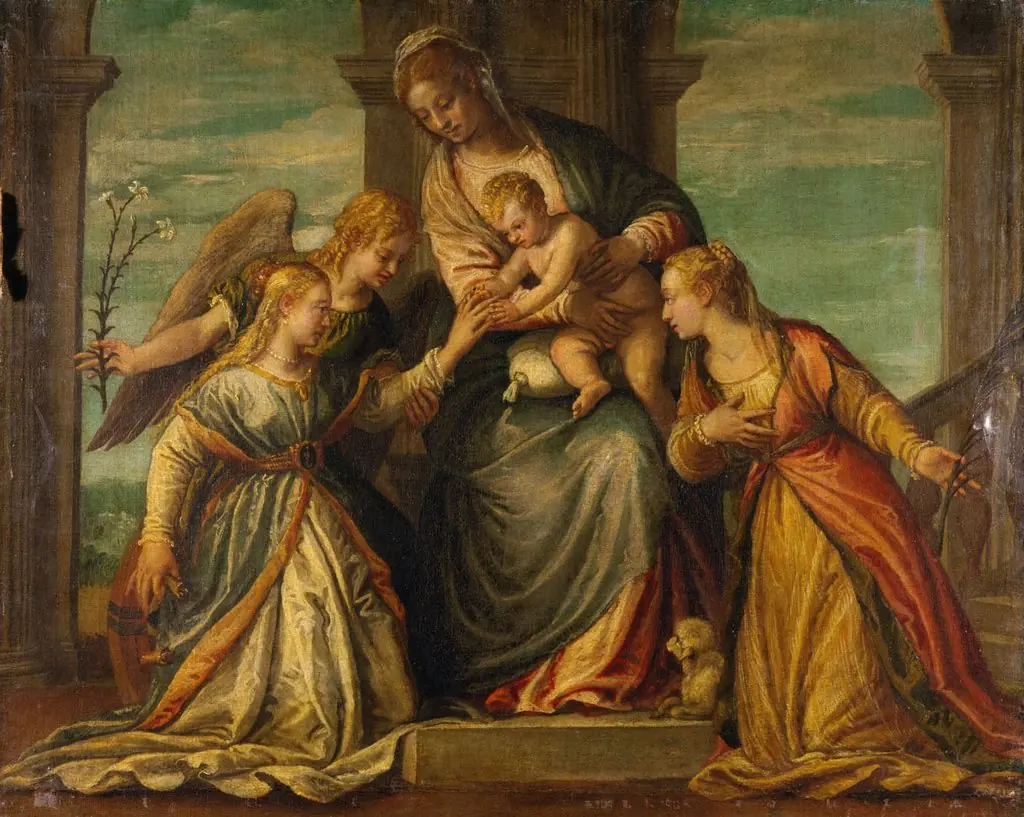
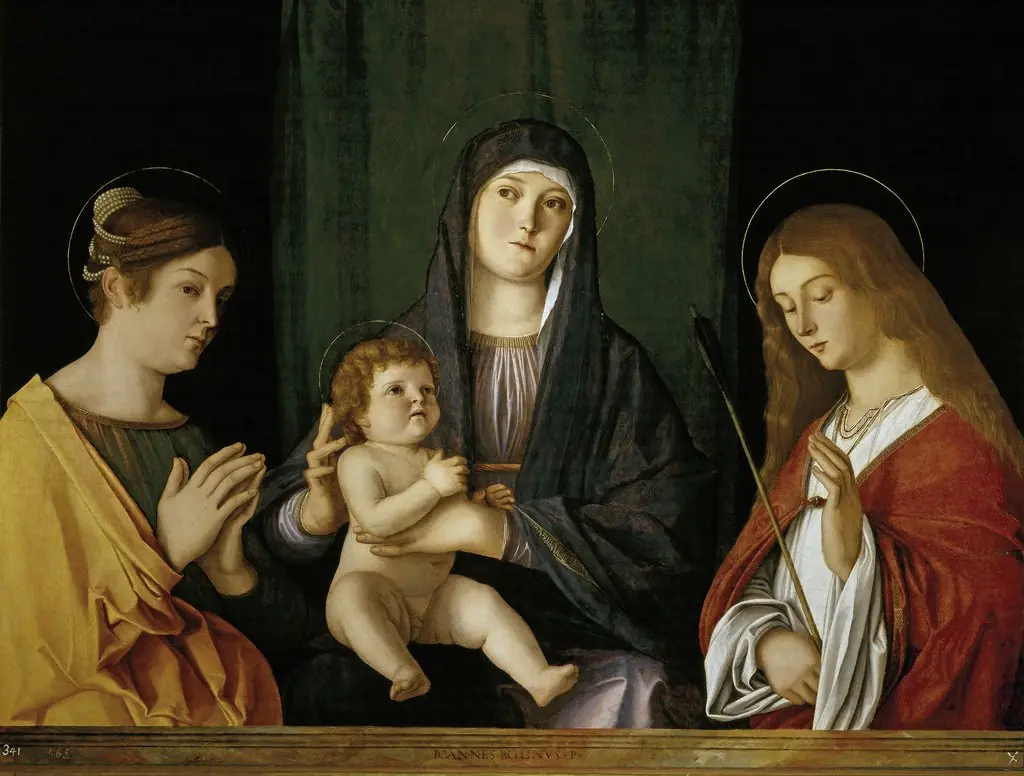
Madonna and Child with Saints Lucy and Catherine and 2 Nuns is an oil painting. It dates from 1590 and is held in the collection of the Kunsthistorisches Museum. The work presents a central female figure with a halo, cradling an infant, surrounded by four additional women.
About this work
Overview
The work presents a central female figure with a halo, cradling an infant, surrounded by four additional women. The central figure is dressed in a blue‑green robe, while the companions wear a mix of richly ornamented garments and austere black habits. A dark, uniform background accentuates the vivid hues of the clothing, especially the gold and white accents.
Subject & Meaning
The haloed woman is identified as the Virgin Mary, holding the Christ Child, a conventional devotional motif. Flanking her are Saint Lucy and Saint Catherine, alongside two nuns, suggesting a commission for a convent or a patron devoted to these saints. The gentle interaction, such as a hand touching the infant's foot, emphasizes intercessory tenderness and the protective role of the saints.
Technique & Style
Executed in oil on canvas, the painting employs a limited palette that contrasts luminous garments against a deep, almost sable backdrop. The handling of light creates a subtle modeling of forms, while the fine detailing of the gold trim and fabric folds reflects a careful, layered brushwork typical of late Renaissance devotional images.
Context
The composition follows the established iconography of Madonna and Child with saints, a format popular in ecclesiastical settings during the 16th‑17th centuries. By integrating local saints with the Virgin, the work would have reinforced communal identity and spiritual devotion within a religious community, likely a convent dedicated to Lucy and Catherine.
Legacy
While not widely cited in major art historical surveys, the painting exemplifies the personalized devotional art produced for monastic audiences. Its preservation offers insight into the visual strategies employed to honor specific saints and to foster a contemplative atmosphere for the sisters who would have venerated it.
Artist & collection