Artwork
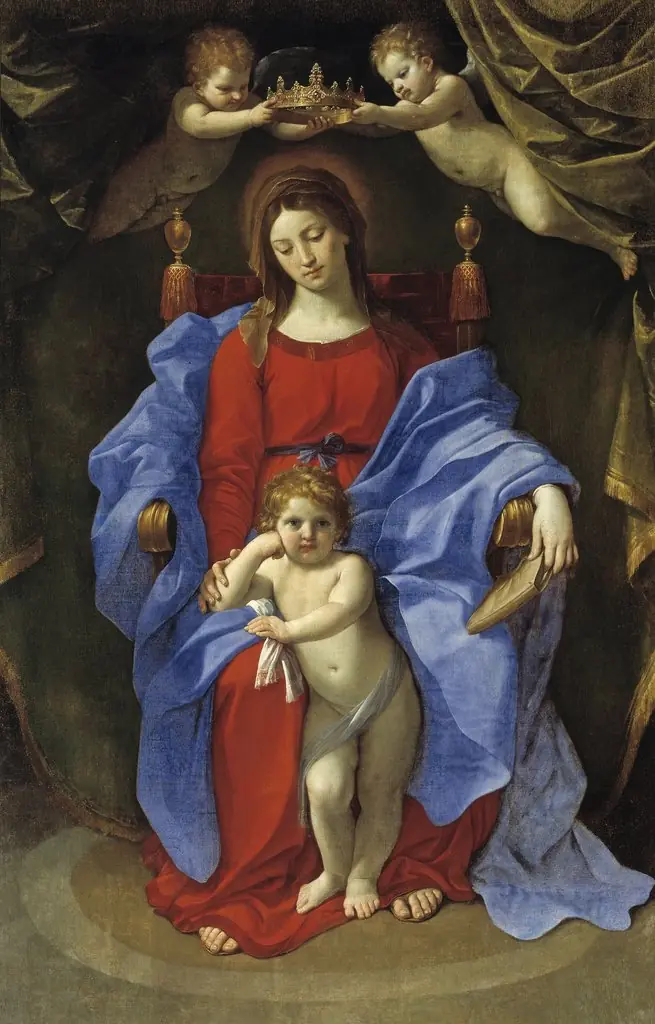
The Virgin and Child on a Throne of Angels
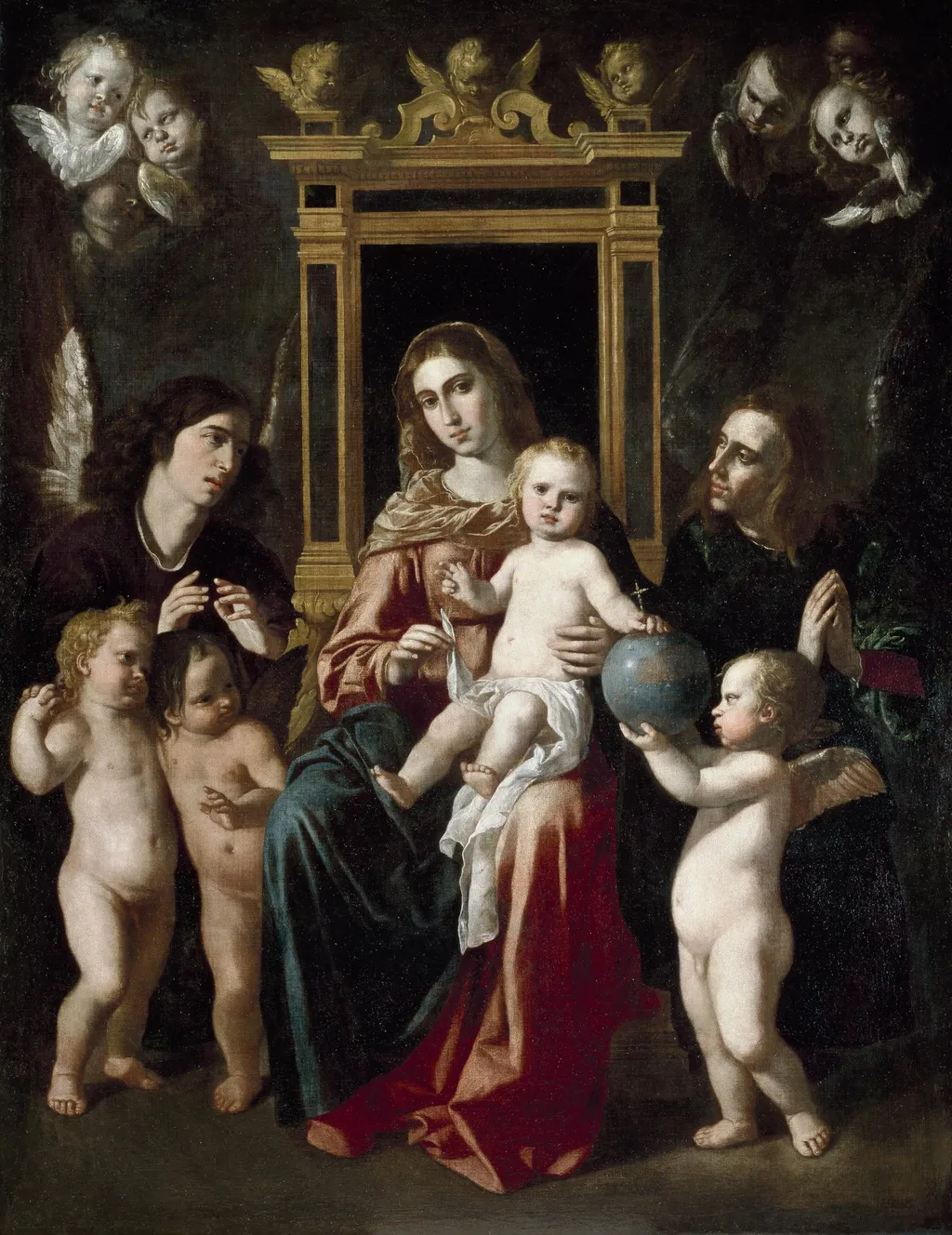
The Virgin and Child on a Throne of Angels is an oil painting by the Early Baroque Italian artist Jerónimo Jacinto de Espinosa. It dates from 1661 and is held in the collection of the Museo del Prado.
About this work
Overview
Jerónimo Jacinto de Espinosa, a Spanish painter of the Baroque era, completed The Virgin and Child on a Throne of Angels in 1661. Executed in oil on canvas, the composition places the Virgin Mary and the infant Christ upon an elevated throne, surrounded by a group of cherubic figures. The work is part of the Museo del Prado’s permanent collection.
Subject & Meaning
The central motif shows Mary seated on a gilded throne, cradling a barefoot Christ child who clutches a cross‑shaped emblem. Five attendant children—some nude, one bearing a globe—encircle the throne, while two dark‑clad women stand behind it. The surrounding cherubs, with delicate wings, reinforce the heavenly atmosphere, suggesting a celestial court that venerates the divine infant.
Technique & Style
Espinosa employs a pronounced chiaroscuro, contrasting deep, shadowed backgrounds with illuminated figures to create a three‑dimensional effect. The use of rich reds and blues on the Virgin’s robe against a dark backdrop heightens visual drama, while the delicate rendering of the angels’ wings and the floating throne demonstrates the artist’s skill in modeling form through light and shade.
History & Provenance
Painted in the later phase of Espinosa’s career, the piece reflects his mature Baroque sensibility. After its creation, the work entered the Spanish royal collections and eventually was transferred to the Museo del Prado, where it remains on display as part of the museum’s holdings of 17th‑century Spanish religious art.
Context
The painting aligns with the early Baroque currents that spread from Italy to Spain, where religious subjects were often rendered with heightened emotional intensity. Espinosa’s depiction of the Virgin and Child on a throne populated by angels follows a longstanding iconographic tradition, yet his use of dramatic lighting and vivid coloration marks a distinct Spanish interpretation of the genre.
Own this work as a print
Artist & collection
Artist
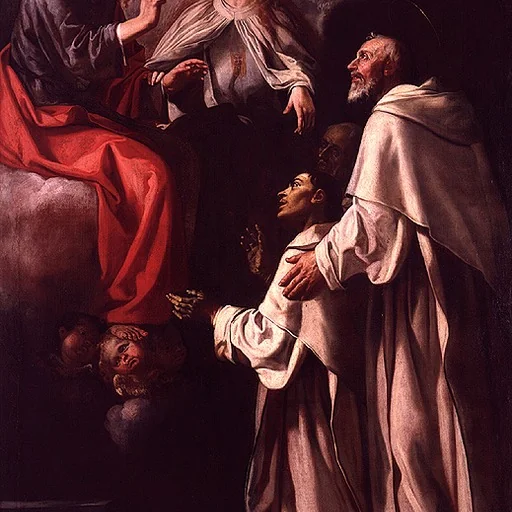
Jerónimo Jacinto de Espinosa (18 July 1600 – 20 February 1667) was a Spanish Baroque painter.