Artwork
Portfolio
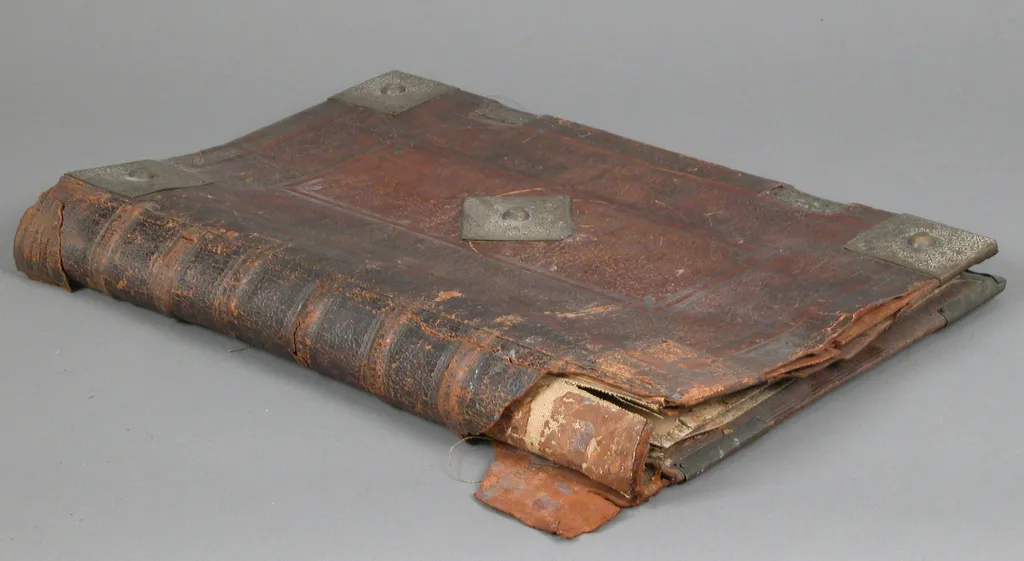
Portfolio is an unspecified painting. It dates from 1749 and is held in the collection of the Metropolitan Museum of Art. The work presents a solitary, aged volume rendered in muted tones.
About this work
Overview
The composition isolates the object against an undefined background, inviting contemplation of its materiality and the passage of years.
The work presents a solitary, aged volume rendered in muted tones. The leather binding, darkened by time, is cracked and faded, while tarnished metal clasps frame the cover. Positioned at a slight diagonal, the spine points left, emphasizing the book’s three‑dimensional form. The composition isolates the object against an undefined background, inviting contemplation of its materiality and the passage of years.
Subject & Meaning
The painting focuses on a single, weathered book, using its physical deterioration to evoke themes of memory and impermanence. The cracked leather and dulled metal suggest a long history of use, while the absence of visible pages hints at hidden narratives. By foregrounding an object commonly associated with knowledge, the artist prompts reflection on the fragility of recorded information and the nostalgia attached to relics of the past.
Technique & Style
Executed with careful brushwork, the artist captures the texture of cracked leather through subtle variations in hue and fine detailing. The metal clasps are rendered with reflective highlights that contrast with the matte surface of the cover. A restrained palette of browns, ochres, and muted grays reinforces the sense of age, while the diagonal placement creates a modest sense of dynamism within an otherwise static scene.
Context
While specific historical data about the painting’s creation are unavailable, its emphasis on an antiquated object aligns with broader artistic interests in material culture and the passage of time. The work resonates with traditions that foreground everyday items to explore broader philosophical concerns, situating it within a lineage of still‑life investigations that privilege texture and decay over narrative content.
Artist & collection
