Artwork
Ustyug Annunciation
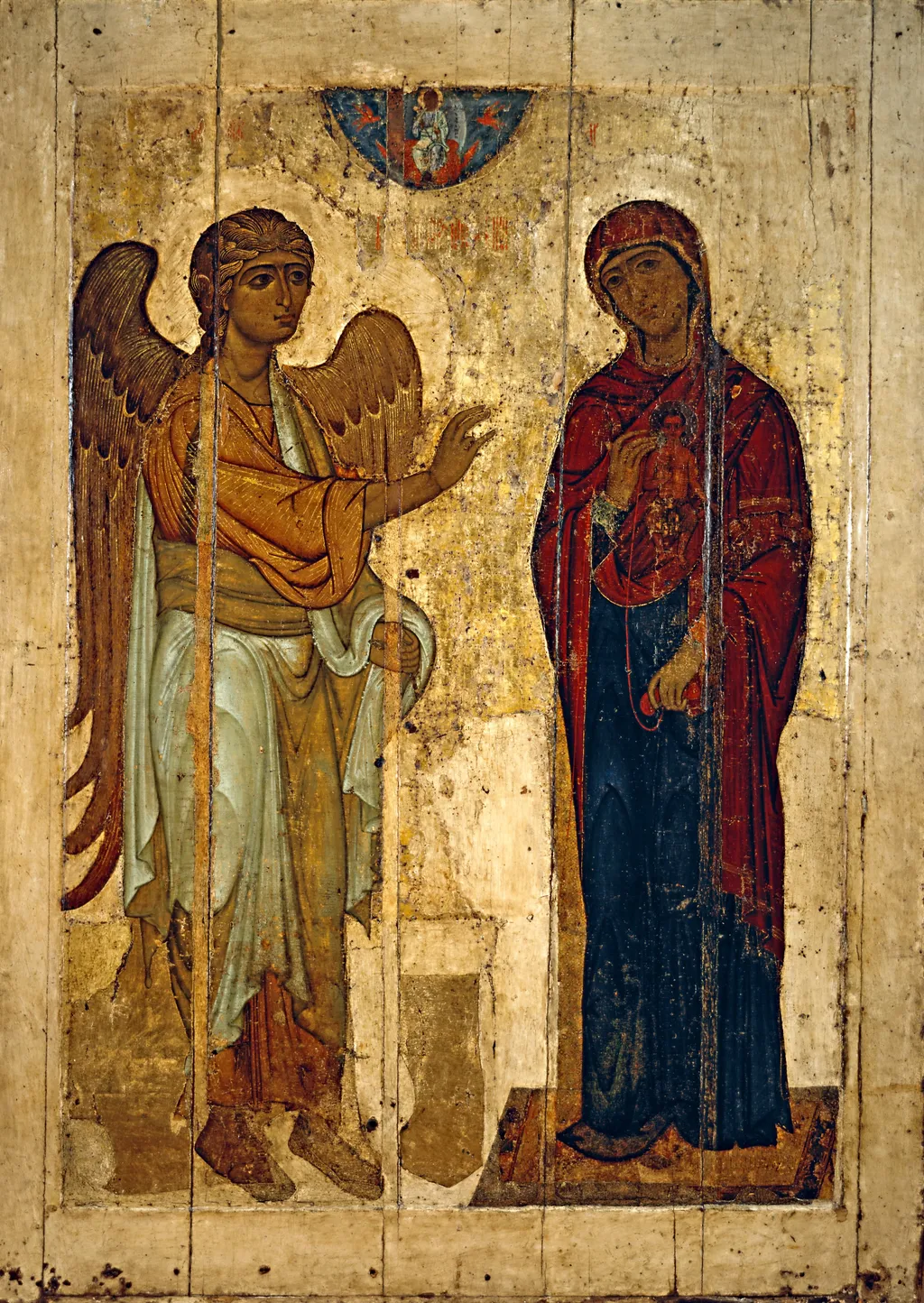
Ustyug Annunciation is a tempera painting by the Byzantine icon painting artist Unknown. It dates from 1130 and is held in the collection of the Tretyakov Gallery.
About this work
Overview
The Ustyug Annunciation is a 12th-century Russian tempera painting on wood, depicting the Annunciation scene with an angel and the Virgin Mary. It is one of the few surviving icons from the pre-Mongol invasion era of Rus', currently housed at the Tretyakov Gallery.
Subject & Meaning
The painting illustrates the biblical moment of the Annunciation, where the angel Gabriel (left, in yellow and white attire with large wings and a halo) announces to Mary (right, in red and blue with a head covering) that she will bear the Son of God. Mary holds a red object, possibly a book or spindle, symbolizing her piety or the impending divine event.
Technique & Style
Executed in tempera on a light-colored wooden panel with subtle texture, the work showcases a traditional medieval Russian iconographic style. The composition's vertical emphasis and the contrast between the figures' robes (yellow/white vs. red/blue) contribute to the overall sense of reverence and solemnity, underscored by the calm yet serious facial expressions of the subjects.
History & Provenance
Created in Novgorod during the 12th century, the exact date of the Ustyug Annunciation's creation is disputed among scholars. Notably, it survived the devastating Mongol invasion of Rus', a rarity among pre-invasion icons. Its current location is the Tretyakov Gallery.
Context
This icon represents a surviving piece of pre-Mongol invasion Russian religious art, offering a window into the artistic, religious, and cultural practices of medieval Novgorod. Its style and theme reflect the broader traditions of Eastern Orthodox iconography prevalent in the region during that period.
Legacy
As one of the few surviving icons from its era, the Ustyug Annunciation holds significant historical and artistic value, contributing to the understanding of medieval Russian art's development and the enduring influence of Byzantine-style iconography in the region.
Artist & collection

 Domestic Scene
 Giacomo and Cardinal Marco, investing Andrea, Abbot of San Zeno, with his Benefice
 The Nymph of Fontainebleau
 Portrait of a Woman
 Madonna and Child with Saints in the Enclosed Garden
 Venus and Minerva
 Family Group of Four on Sofa
 Wall painting from Room H of the Villa of P. Fannius Synistor at Boscoreale
 Theotokos of Vladimir
 Archangel Michael
 Pomelnic ctitoricesc "Bunavestire"
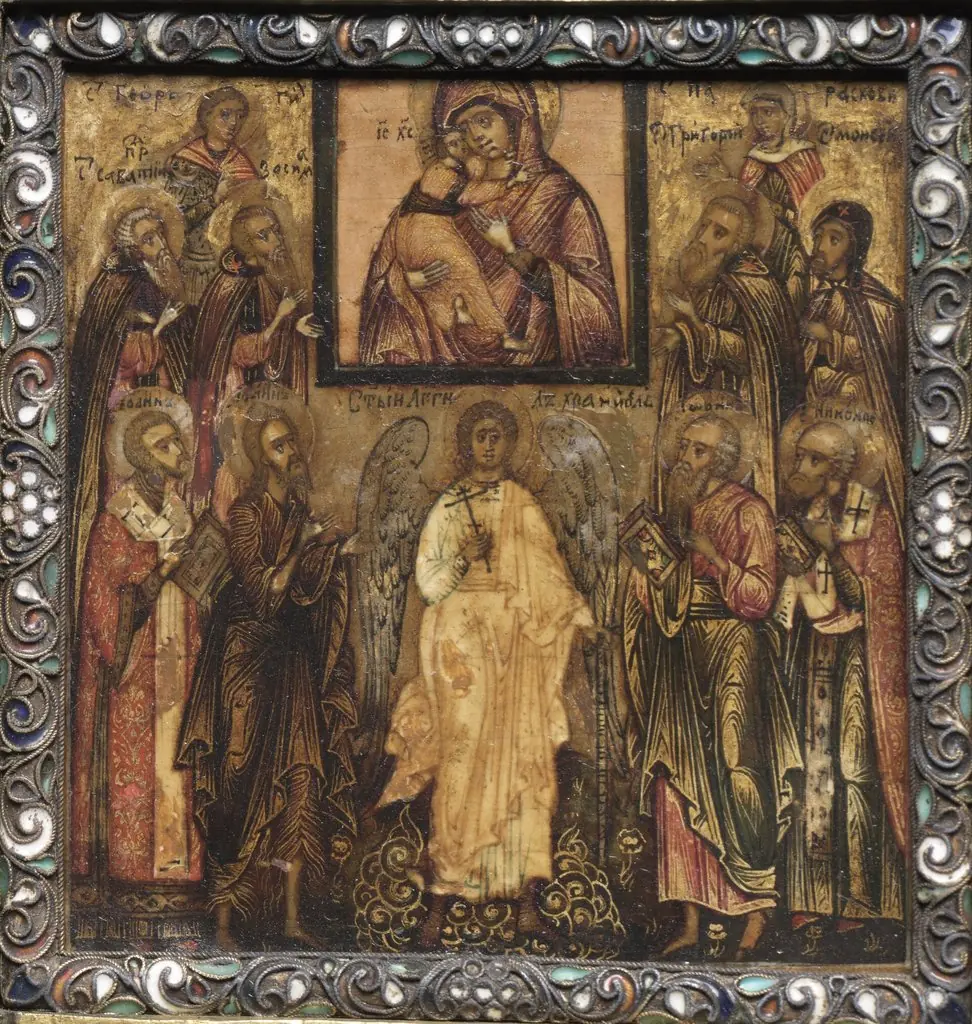 Portable Triptych Icon: Adoration of the Miracle-Working Icon of the Vladimir Mother of God
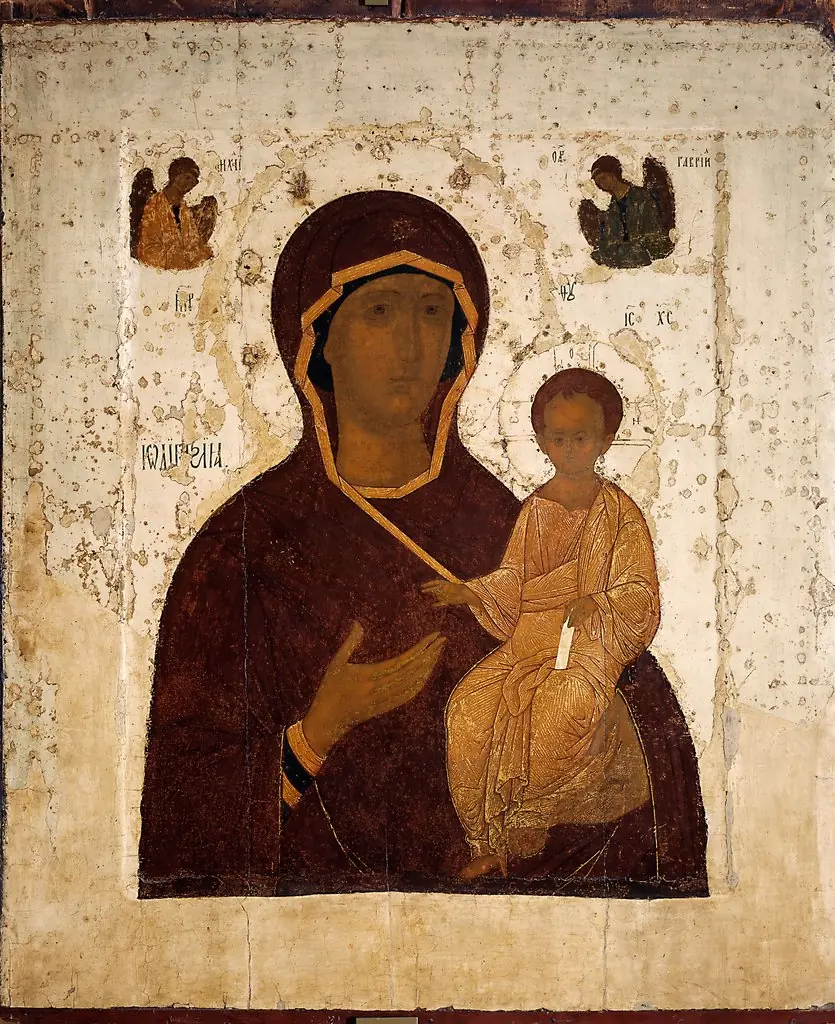 Our Lady of Guide of Wayfarers (Odigitria)
 Maica Domnului cu Pruncul, flancată de prooroci
 Maica Domnului cu Pruncul
 The Presentation in the Temple
 Soborul Arhanghelilor
 Jumalanäiti, Hodigitria - Tiennäyttäjä, bysanttilainen ikoni
 Sfinții îngeri: Mihail, Rafael, Gavril
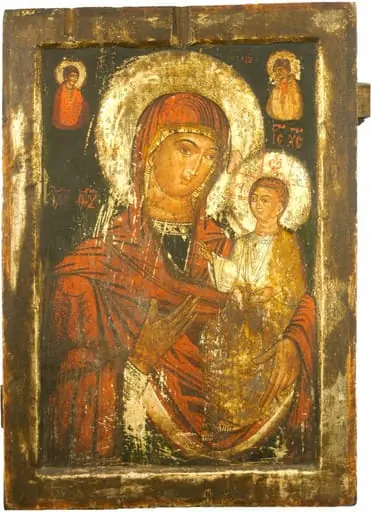 Maica Domnului cu Pruncul