Artwork
Pomelnic ctitoricesc "Bunavestire"
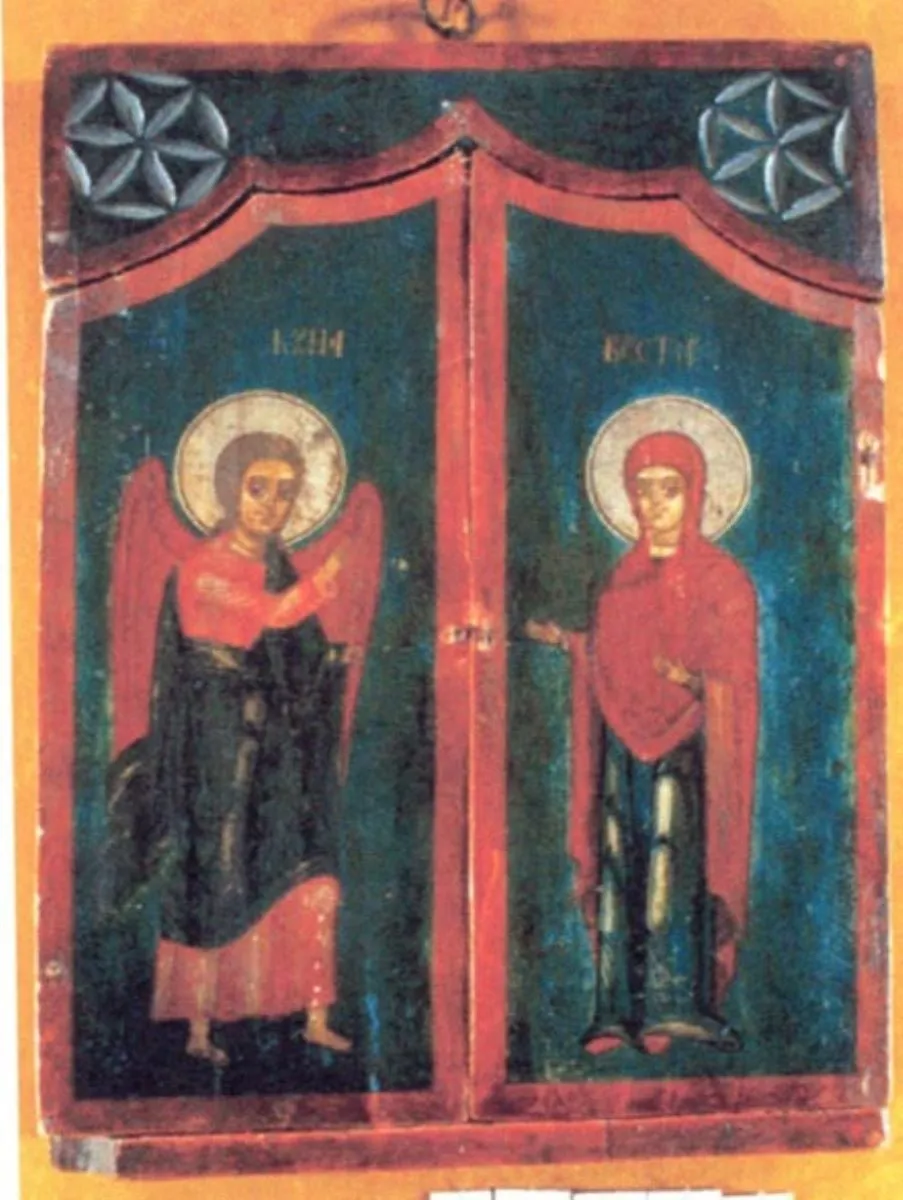
Pomelnic ctitoricesc "Bunavestire" is an unspecified painting by the Romanticist artist Unknown. It dates from 1834 and is held in the collection of the "Dimitrie Gusti" National Village Museum.
About this work
Overview
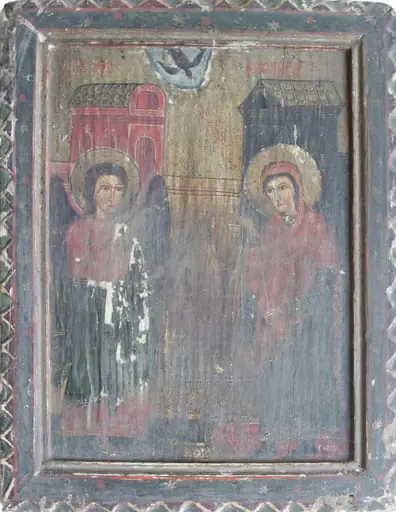
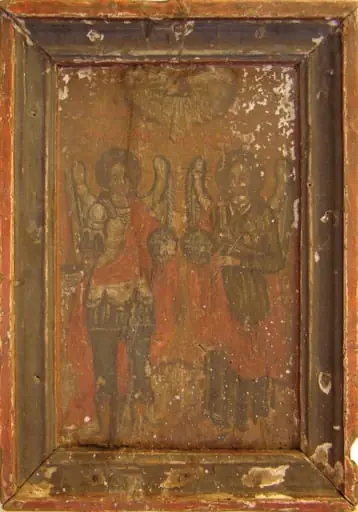
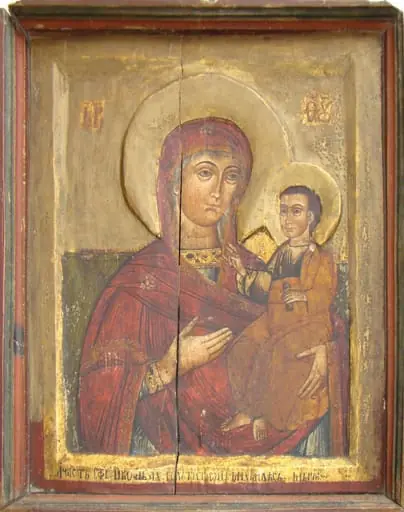
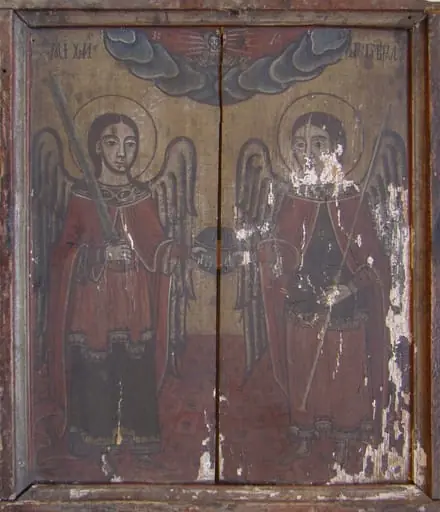
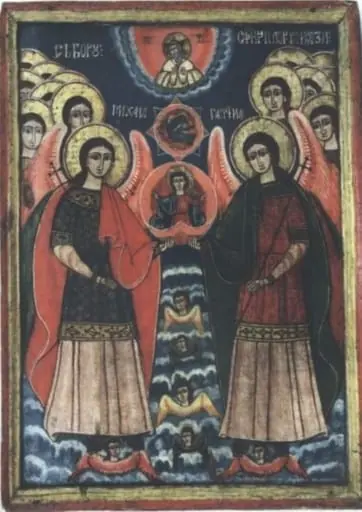
The work titled “Pomelnic ctitoricesc ‘Bunavestire’” presents a diptych‑like composition framed in red, each panel containing a solitary figure. A dark blue‑green field forms the backdrop, while decorative rosettes occupy the upper corners of the frame. Both figures are crowned with halos, indicating a sacred subject, and the overall visual language points to a religious narrative.
Subject & Meaning
The right panel shows a human figure, possibly a saint or donor, cloaked in a red head covering and matching top, with dark trousers.
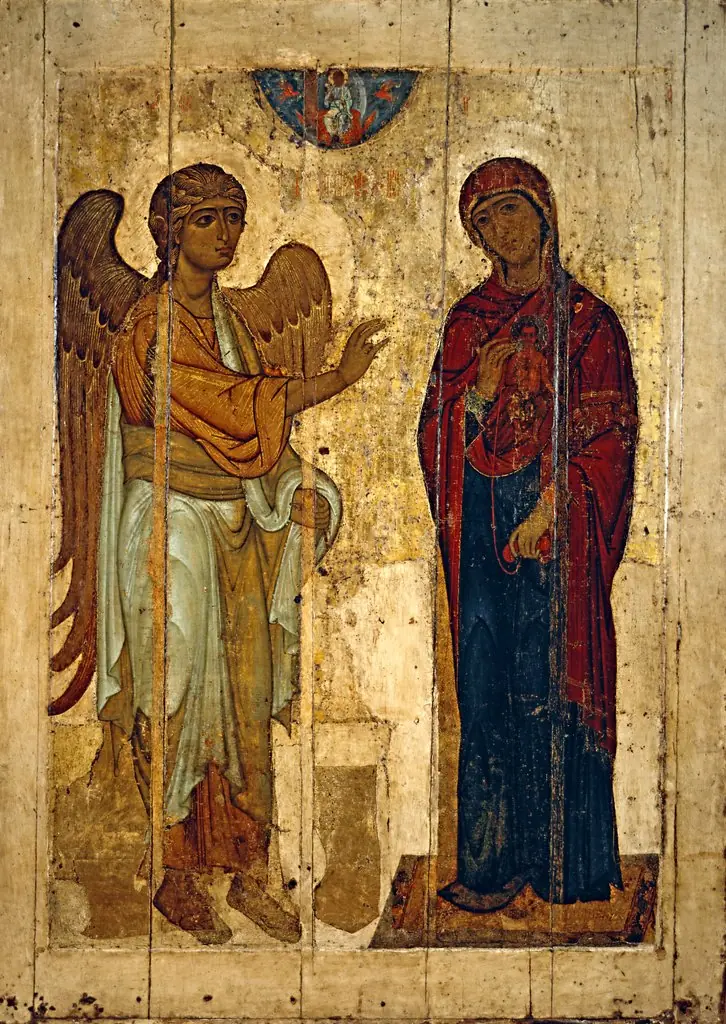
In the left panel an angelic being is depicted, wings outstretched, dressed in a vivid red upper garment and a darker lower robe. The right panel shows a human figure, possibly a saint or donor, cloaked in a red head covering and matching top, with dark trousers. The pairing of a celestial messenger with a mortal suggests an intercessory scene, perhaps the Annunciation, consistent with the title’s reference to a “Bunavestire” (Good News).
Technique & Style
The painting employs a limited palette dominated by reds, dark blues, and greens, creating a stark contrast that emphasizes the figures against the background. Halos are rendered as simple luminous circles, and the use of framed sections with ornamental rosettes reflects a stylized, iconographic approach rather than naturalistic detail. The composition’s flatness and emphasis on symbolic color align with medieval devotional art rather than later Romantic sensibilities.
History & Provenance
The title and language suggest the work originates from a Romanian or Eastern European religious context, likely commissioned for a church or monastery. The term “Pomelnic” refers to a prayer book or liturgical text, indicating the painting may have served as an illustration for such a volume. No specific date or artist is recorded, and the piece appears to have remained within ecclesiastical collections.
Context
Within the broader tradition of Eastern Orthodox iconography, the depiction of an angel and a human recipient of divine news follows established conventions for illustrating the Annunciation or related events. The use of red framing and ornamental rosettes mirrors decorative motifs found in liturgical manuscripts and church frescoes, situating the work within the visual culture of medieval to early modern Eastern Christian art.
Artist & collection
Museum
"Dimitrie Gusti" National Village Museum
Continue through works from the same source collection.
 Domestic Scene
 Giacomo and Cardinal Marco, investing Andrea, Abbot of San Zeno, with his Benefice
 The Nymph of Fontainebleau
 Portrait of a Woman
 Madonna and Child with Saints in the Enclosed Garden
 Venus and Minerva
 Family Group of Four on Sofa
 Wall painting from Room H of the Villa of P. Fannius Synistor at Boscoreale