Artwork
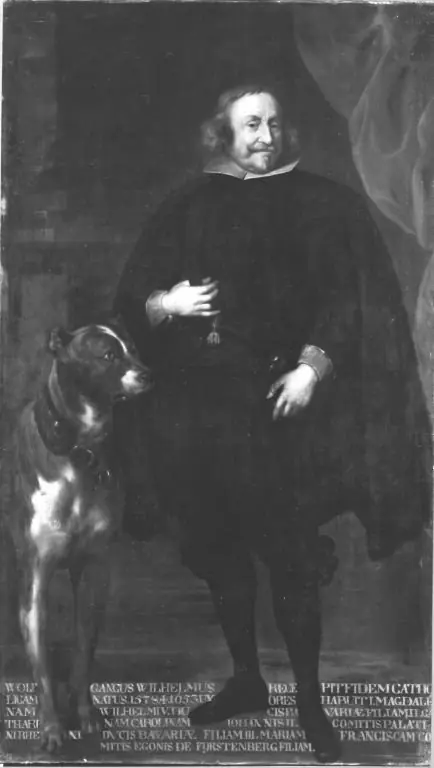
Portrait of Wolfgang Wilhelm, Count Palatine and Herzog von Neuburg (1578-1653)
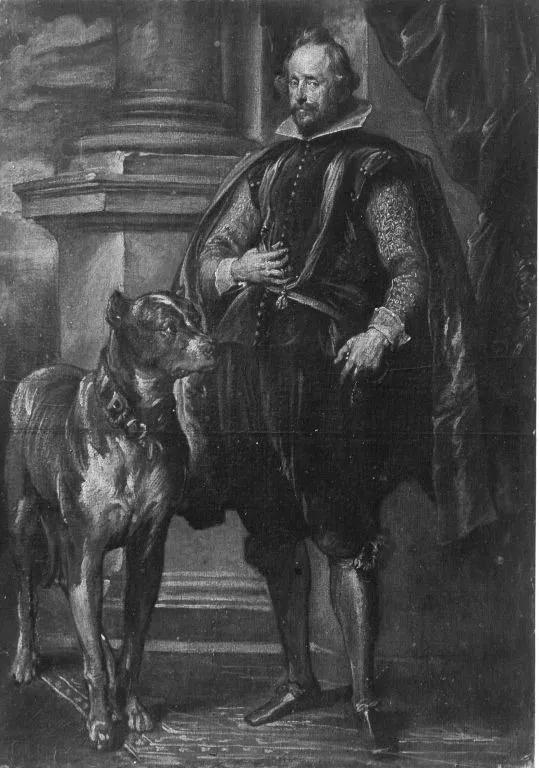
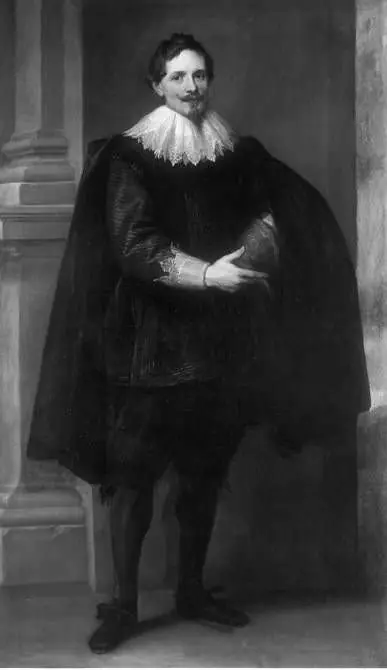
Portrait of Wolfgang Wilhelm, Count Palatine and Herzog von Neuburg (1578-1653) is an oil painting by the Flemish Baroque painting artist Anthony van Dyck. It dates from 1620 and is held in the collection of the Bavarian State Painting Collections.
About this work
Overview
Anthony van Dyck’s 1620 oil portrait presents Wolfgang Wilhelm, Count Palatine and Duke of Neuburg, in a composed, indoor setting. The nobleman is dressed in a dark, elaborately detailed costume with a crisp white collar, his hands folded within his sleeves. A small, shaggy dog sits calmly at his feet, adding a domestic touch to the formal composition.
Subject & Meaning
Wolfgang Wilhelm (1578‑1653) was a prominent German prince who ruled the Palatinate-Neuburg line. The portrait emphasizes his authority and refinement through dignified posture and luxurious attire, while the inclusion of the dog may allude to loyalty or personal affection, a common symbolic device in early‑17th‑century aristocratic portraiture.
Technique & Style
Van Dyck employs a restrained Baroque palette, using chiaroscuro to model the figure’s features and the textures of fabric. The contrast between the dark background and the illuminated white collar draws attention to the sitter’s face. The dog’s fur is rendered with soft, layered strokes that suggest depth without detracting from the central figure.
History & Provenance
Created while van Dyick was active in the Spanish Netherlands, the work later entered the collection of the Alte Pinakothek in Munich, where it remains on display. Its acquisition reflects the museum’s focus on European Baroque painting and the artist’s reputation as a leading portraitist of his era.
Artist & collection
Artist
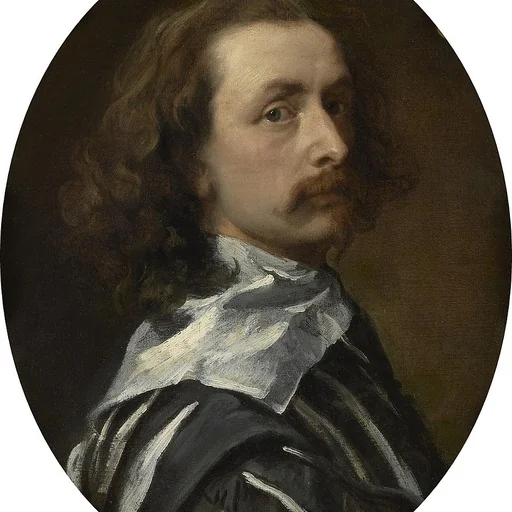
Sir Anthony van Dyck (; Dutch: Antoon van Dijck ; 22 March 1599 – 9 December 1641) was a Flemish Baroque artist, who became the leading court painter in England after success in the Spanish Netherlands and Italy.