Artwork
Page from Tales of a Parrot (Tuti-nama): text page
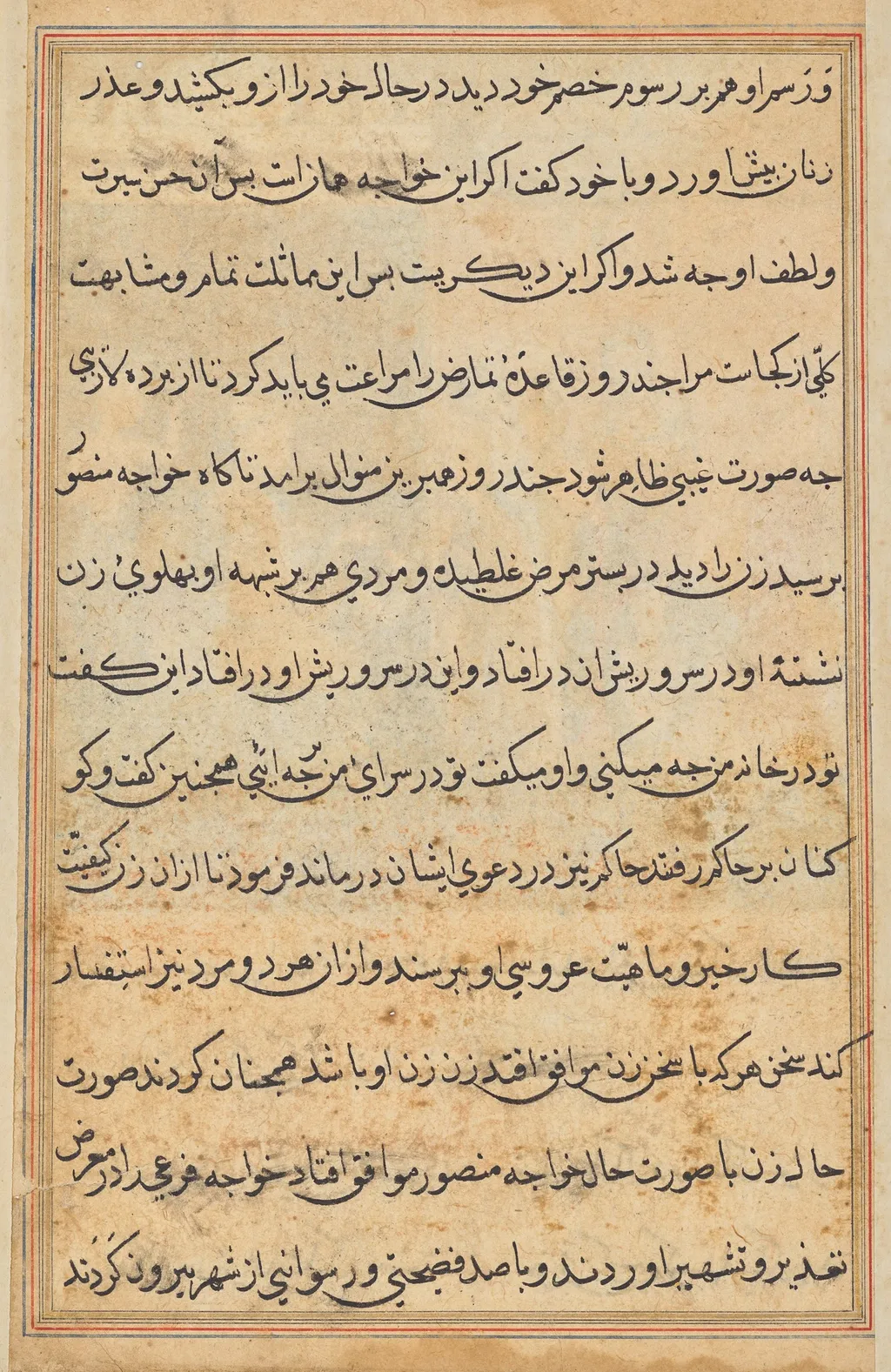
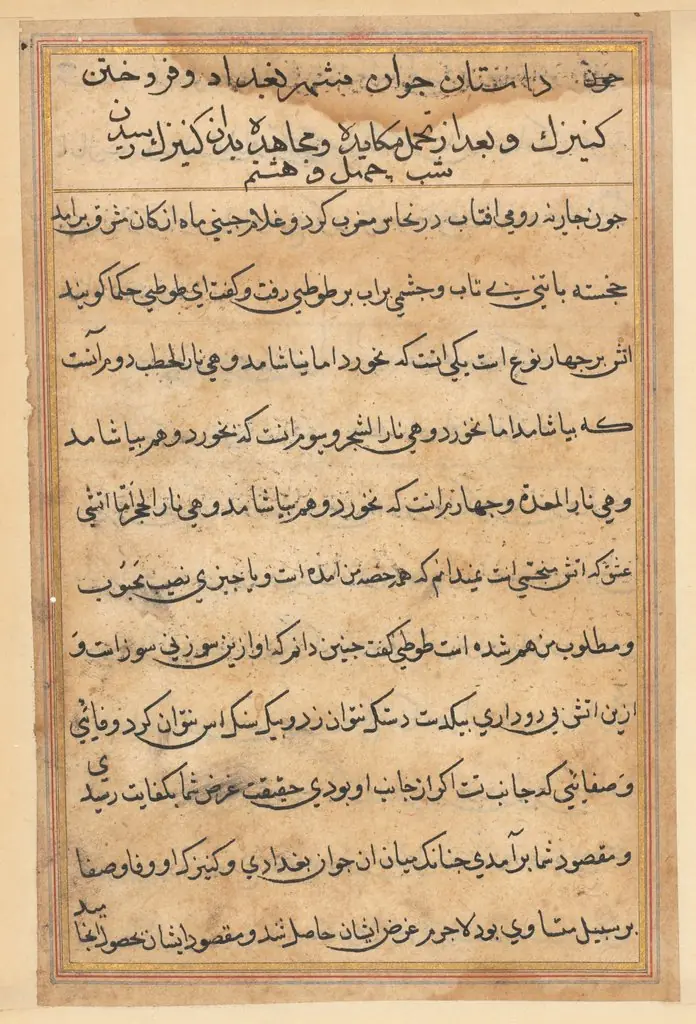
Page from Tales of a Parrot (Tuti-nama): text page is an unspecified painting. It dates from 1560 and is held in the collection of the Cleveland Museum of Art. This object is a single folio from the Persian manuscript known as Tales of a Parrot (Tuti‑nama).
About this work
Overview
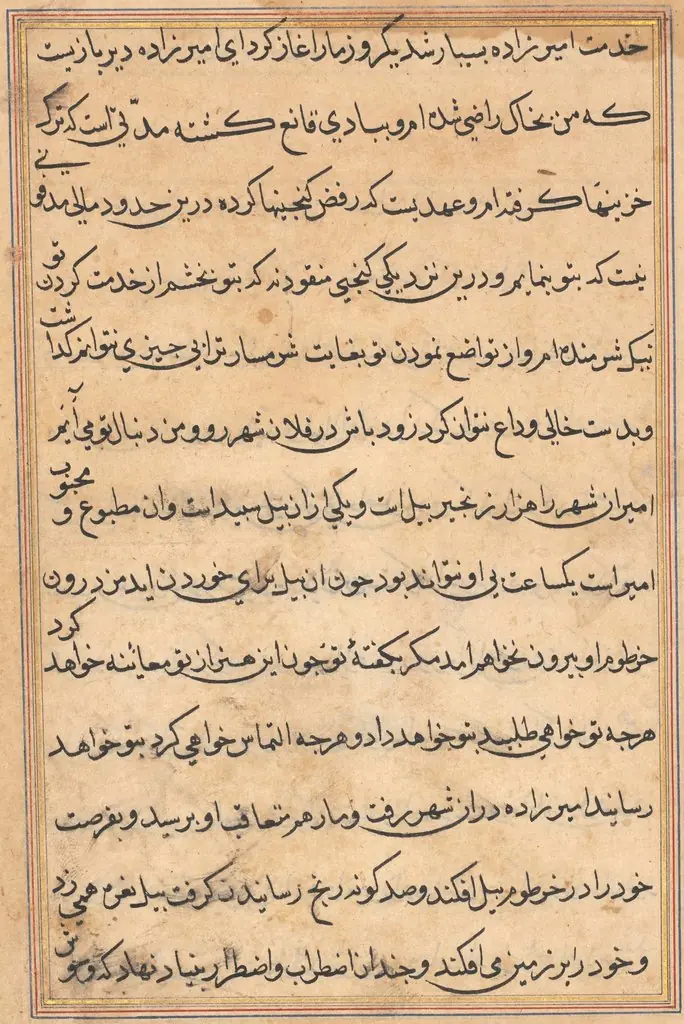
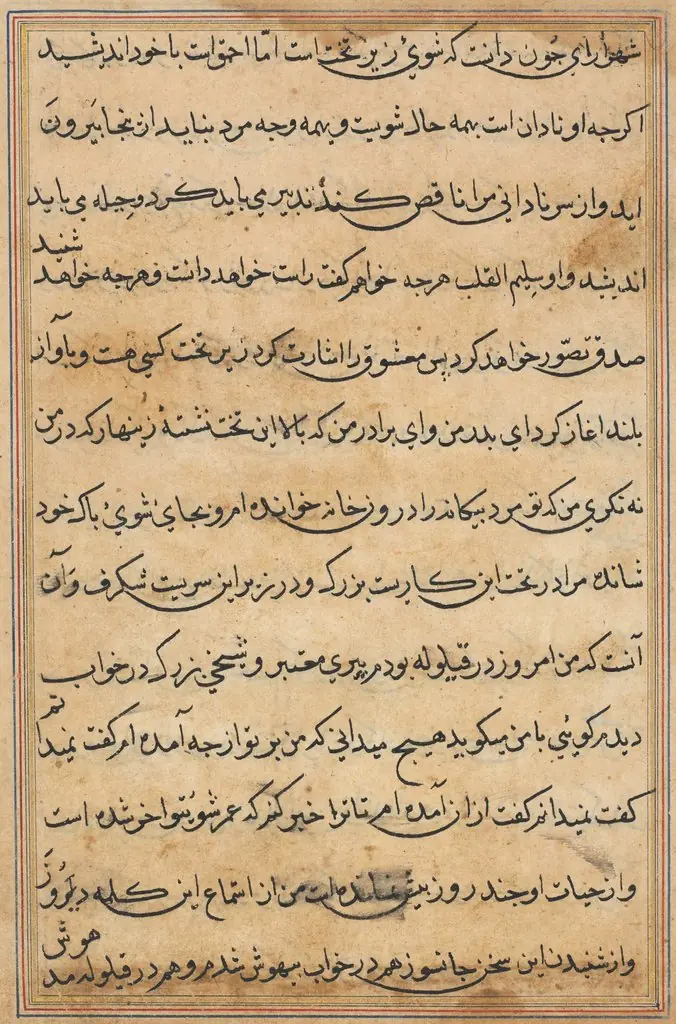
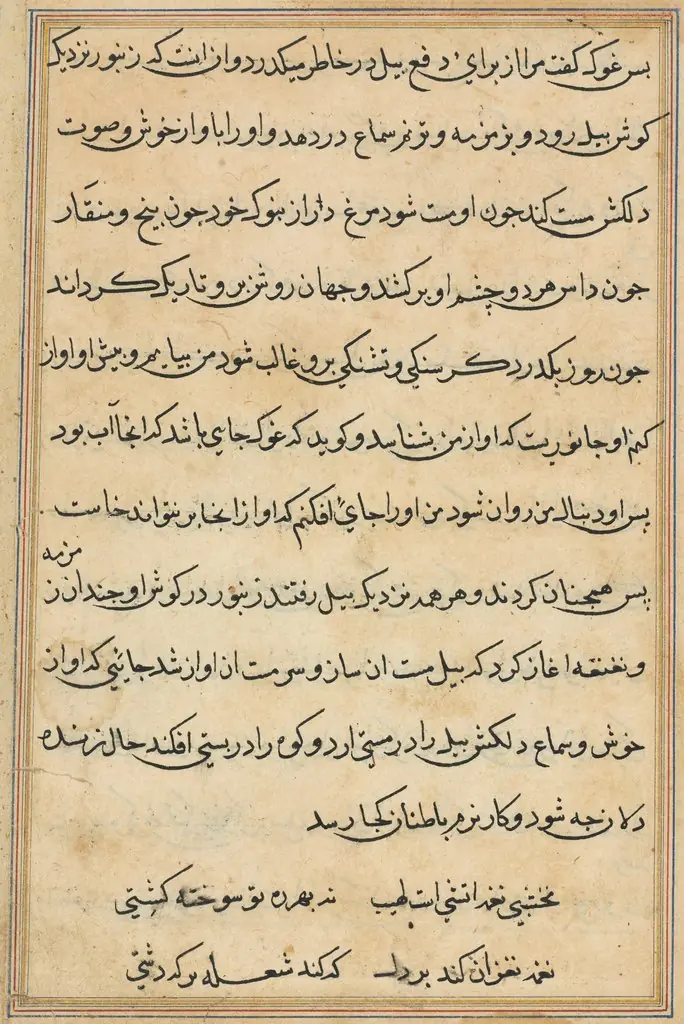
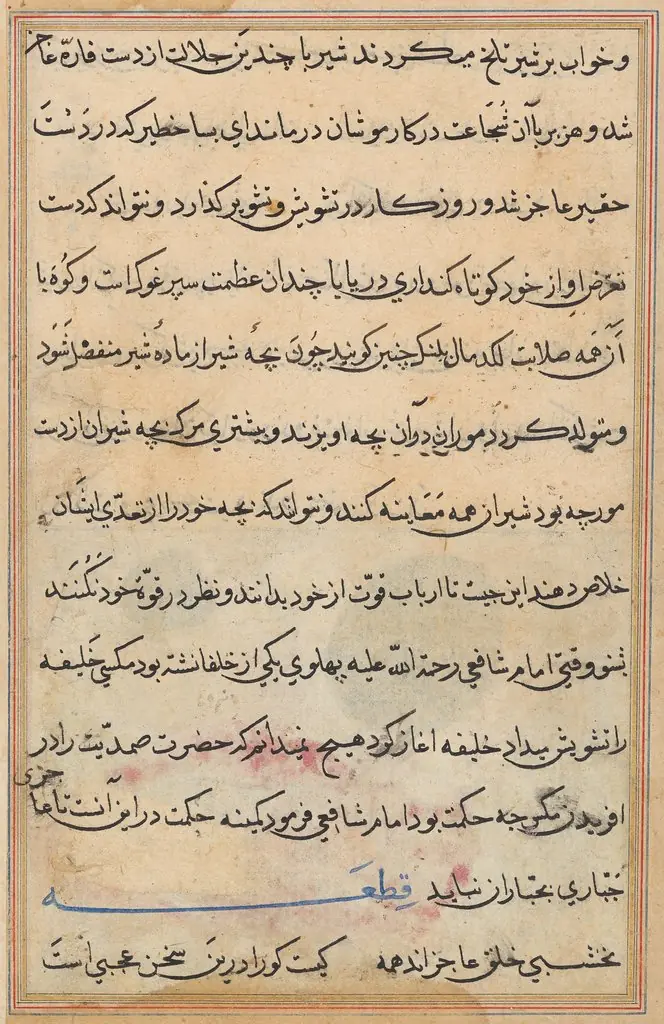
This object is a single folio from the Persian manuscript known as Tales of a Parrot (Tuti‑nama). Executed in black ink on a light‑coloured paper, the page is framed by a narrow red line that defines its margins. The surface bears faint brown discolorations, evidence of age, but the ink remains crisp and legible.
Subject & Meaning
The page contains only text, arranged in tightly set lines that curve and loop in an elegant cursive script. The narrative content, drawn from the collection of moral anecdotes in the Tuti‑nama, was traditionally used for instruction and entertainment among elite audiences, often serving as a vehicle for ethical instruction.
Technique & Style
The calligrapher employed a refined hand, using a fine brush to produce uniform strokes that convey both precision and fluidity. The red border, applied with a thin line of pigment, serves to delineate the written area without detracting from the script’s visual rhythm. The paper’s pale tone provides a subtle contrast that enhances readability.
History & Provenance
The manuscript was likely produced for a high‑ranking patron, possibly a prince, as suggested by the careful execution and luxurious presentation. Such commissions were common in Safavid Persia, where royal courts commissioned illuminated texts for personal libraries.
Context
Tuti‑nama belongs to a broader tradition of Persian moral literature that blends storytelling with didactic purpose. The work reflects the cultural emphasis on ethical conduct and the transmission of values through engaging tales, a practice prevalent in the courts and scholarly circles of the early modern Islamic world.
Legacy
Pages like this exemplify the high level of calligraphic artistry achieved in Persian manuscript production. They continue to inform scholars about the aesthetic standards, material choices, and educational functions of courtly books in the region’s artistic heritage.
Artist & collection

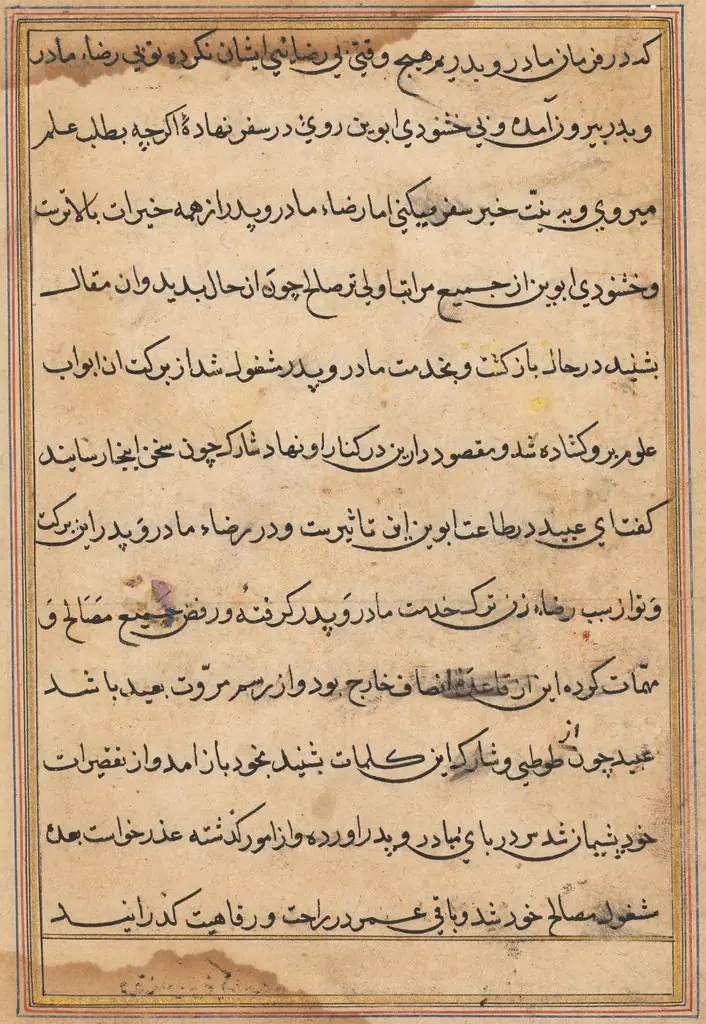 Page from Tales of a Parrot (Tuti-nama): text page
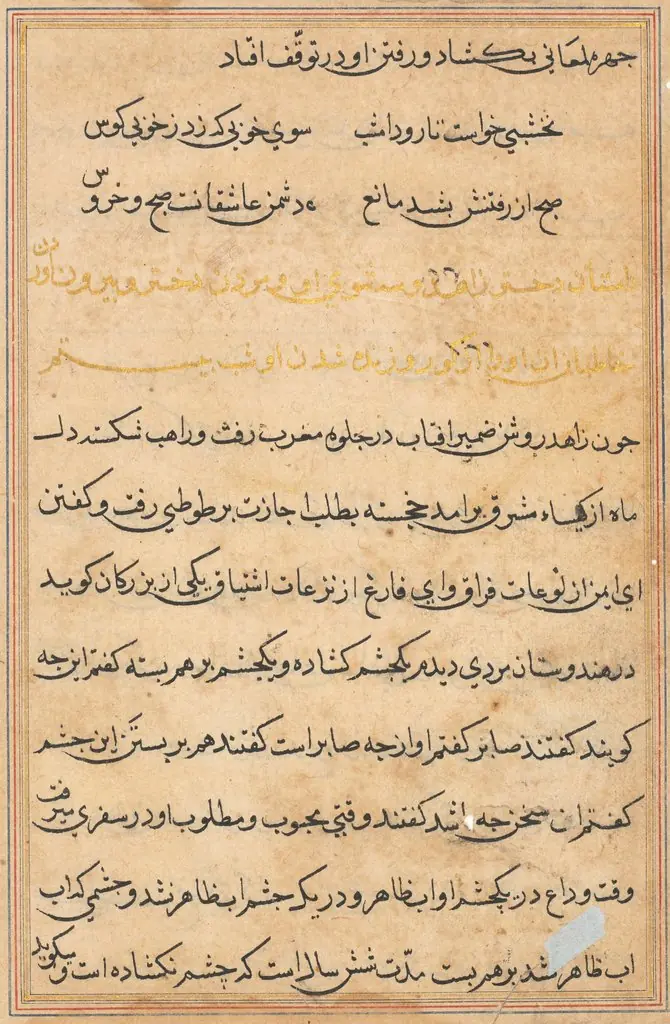 Page from Tales of a Parrot (Tuti-nama): text page
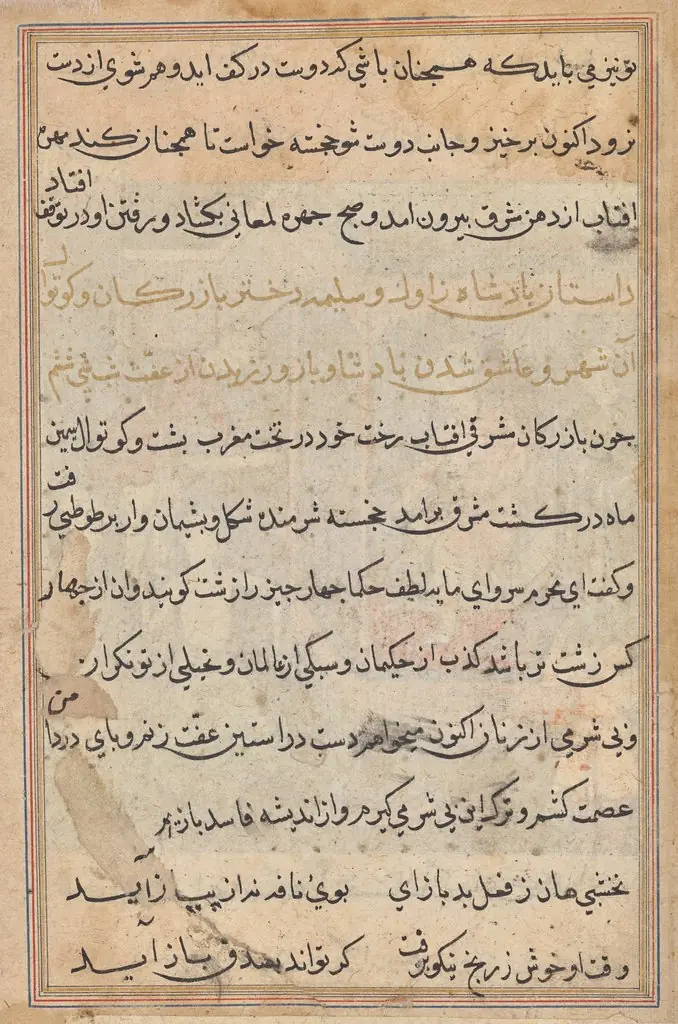 Page from Tales of a Parrot (Tuti-nama): text page
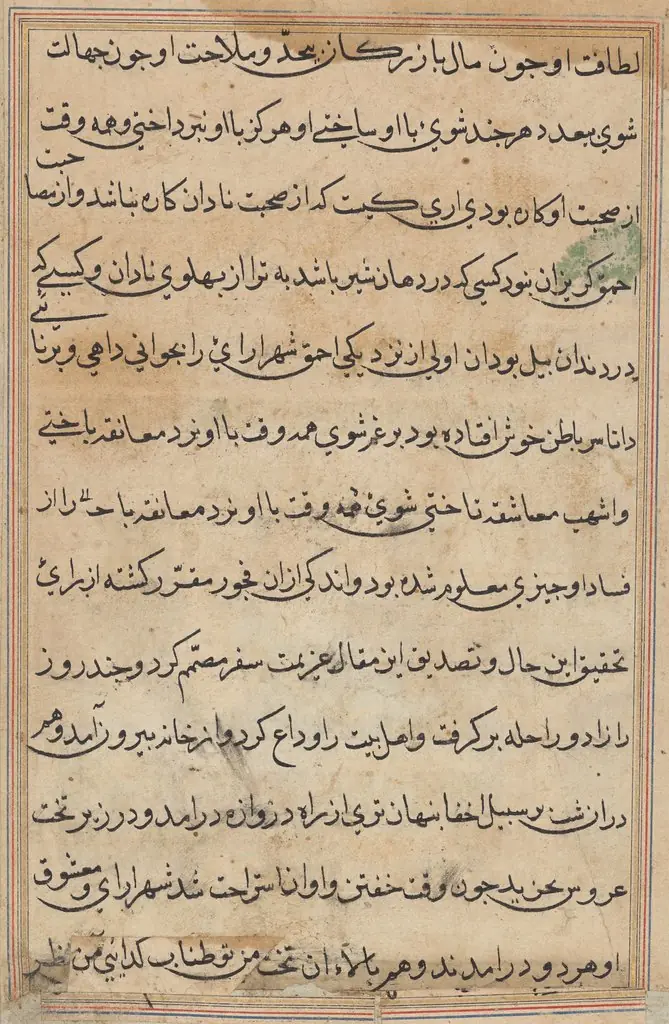 Page from Tales of a Parrot (Tuti-nama): text page
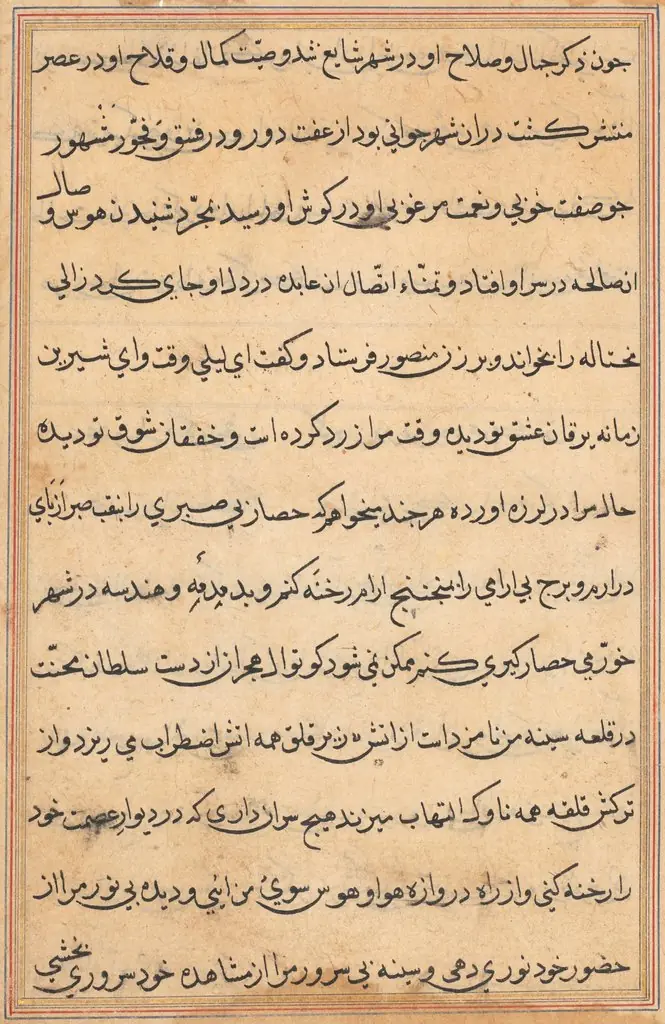 Page from Tales of a Parrot (Tuti-nama): text page
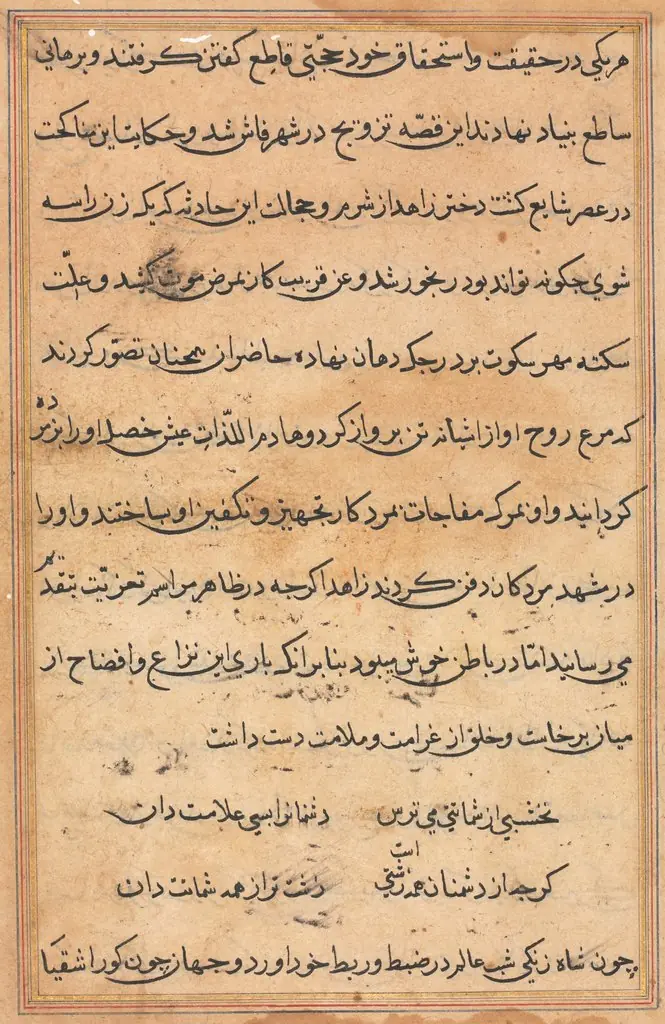 Page from Tales of a Parrot (Tuti-nama): text page
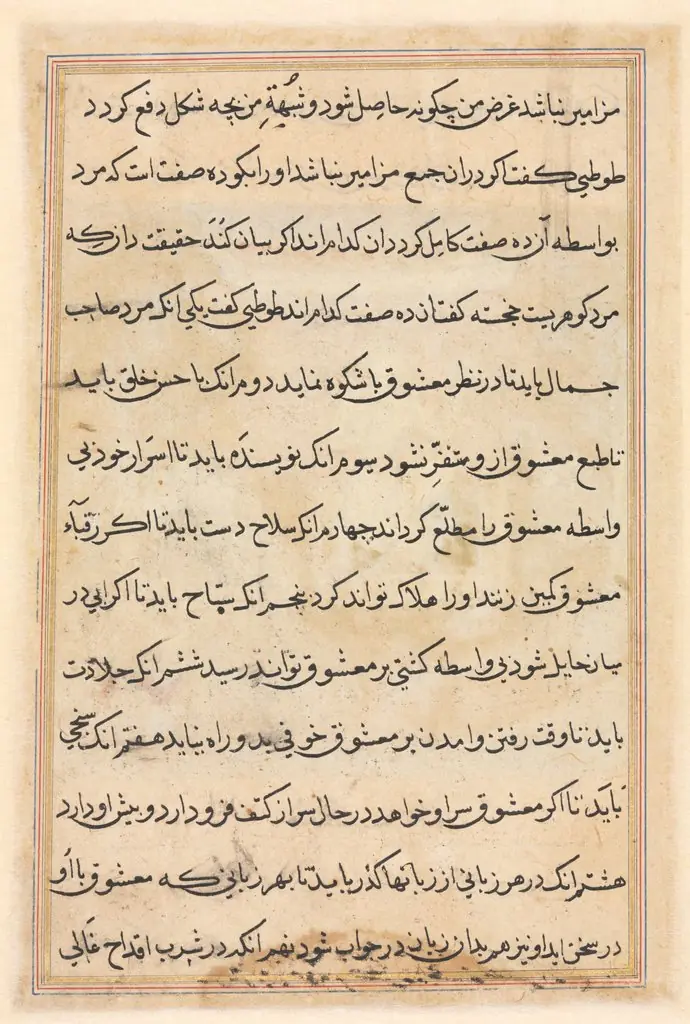 Page from Tales of a Parrot (Tuti-nama): text page
 Page from Tales of a Parrot (Tuti-nama): text page
 Page from Tales of a Parrot (Tuti-nama): text page
 Page from Tales of a Parrot (Tuti-nama): text page
 Page from Tales of a Parrot (Tuti-nama): text page
 Page from Tales of a Parrot (Tuti-nama): text page