Artwork
Page from Tales of a Parrot (Tuti-nama): text page
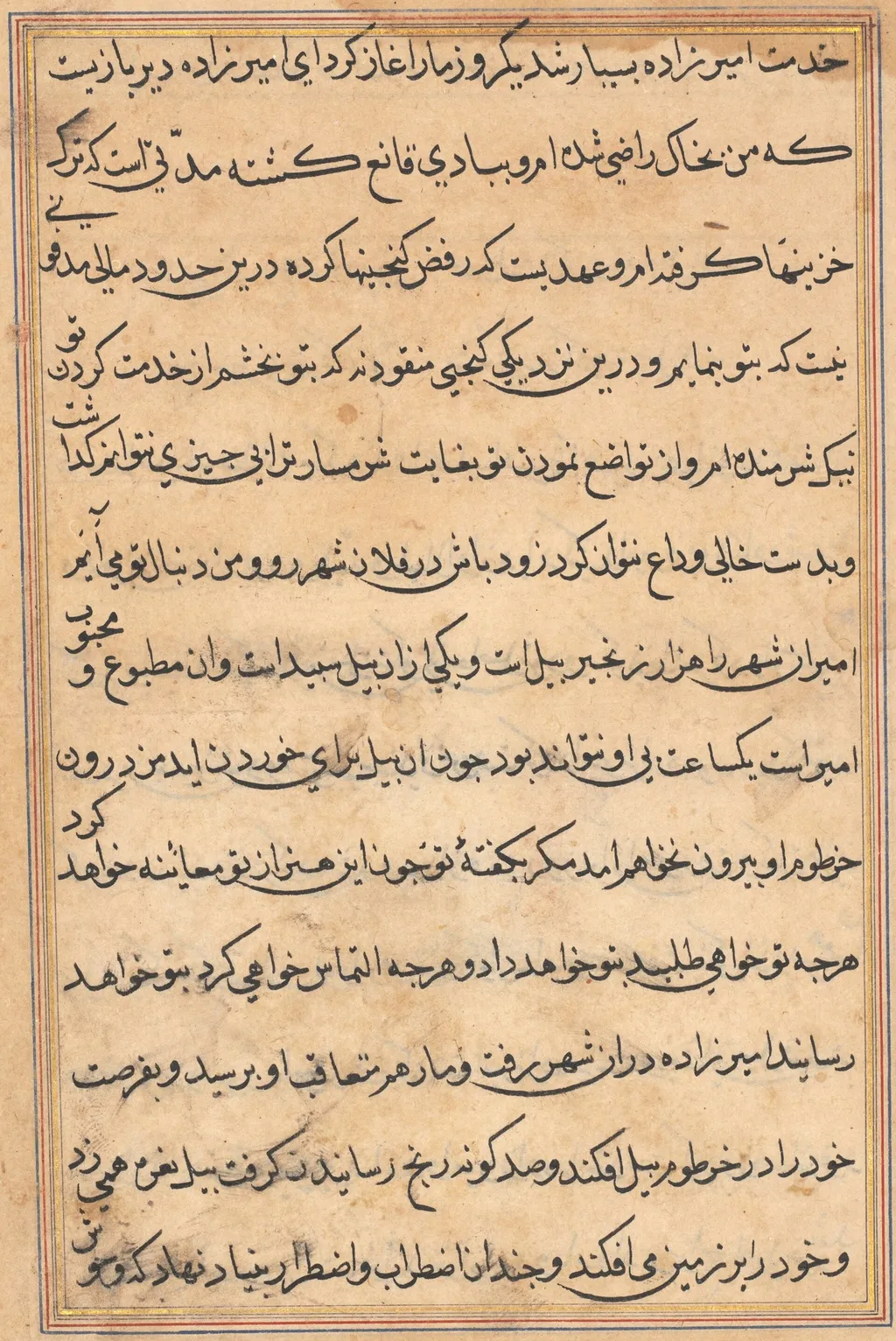
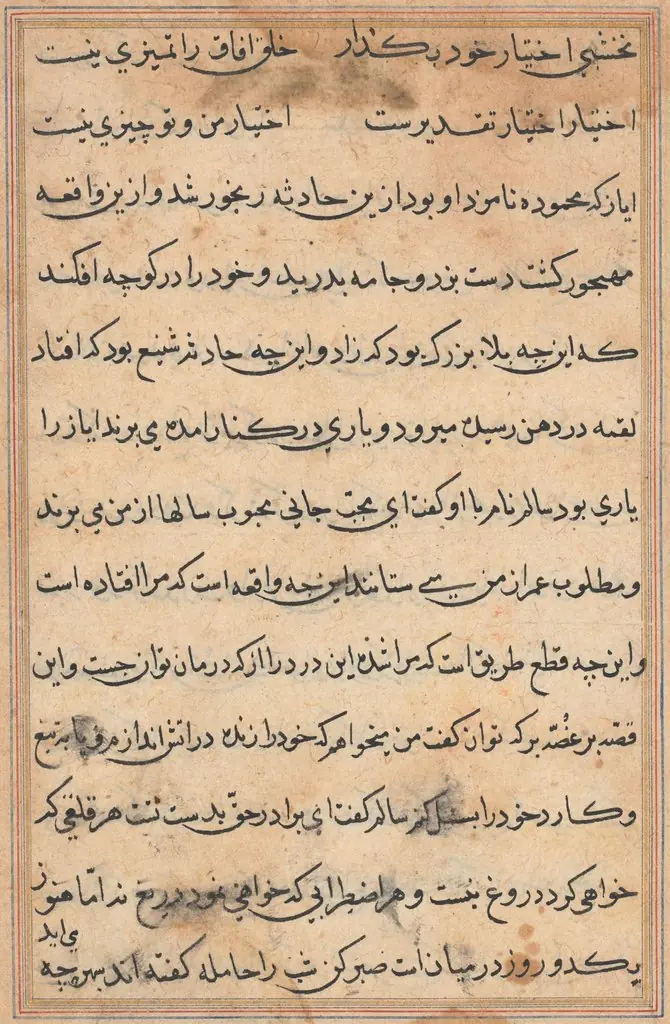
Page from Tales of a Parrot (Tuti-nama): text page is an unspecified painting. It dates from 1560 and is held in the collection of the Cleveland Museum of Art. This object is a single folio from the illustrated manuscript known as *Tuti‑nama* (Tales of a Parrot).
About this work
Overview
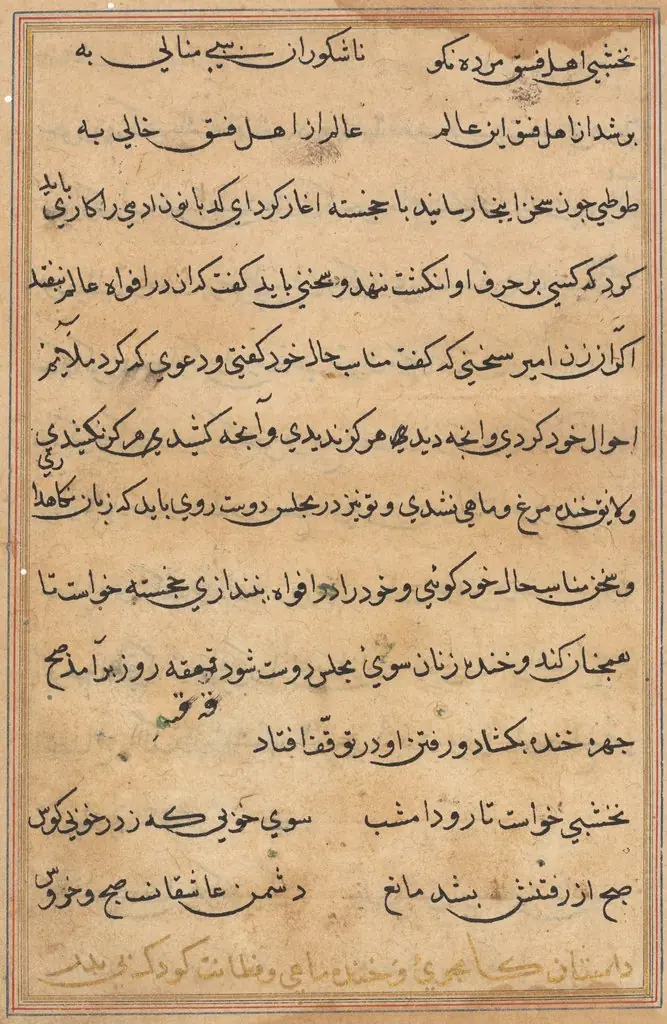
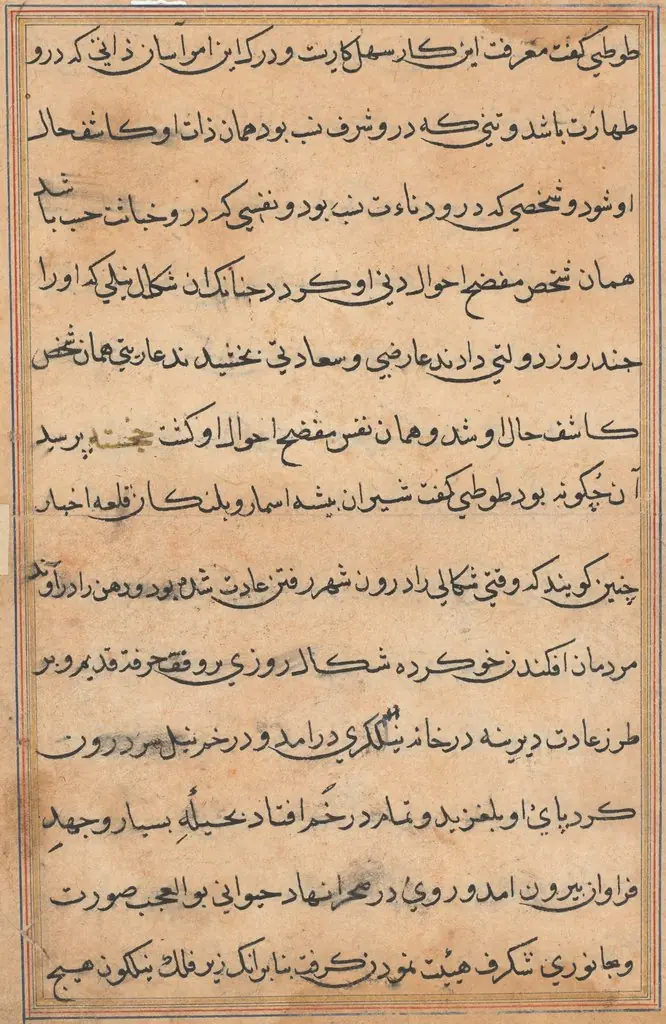
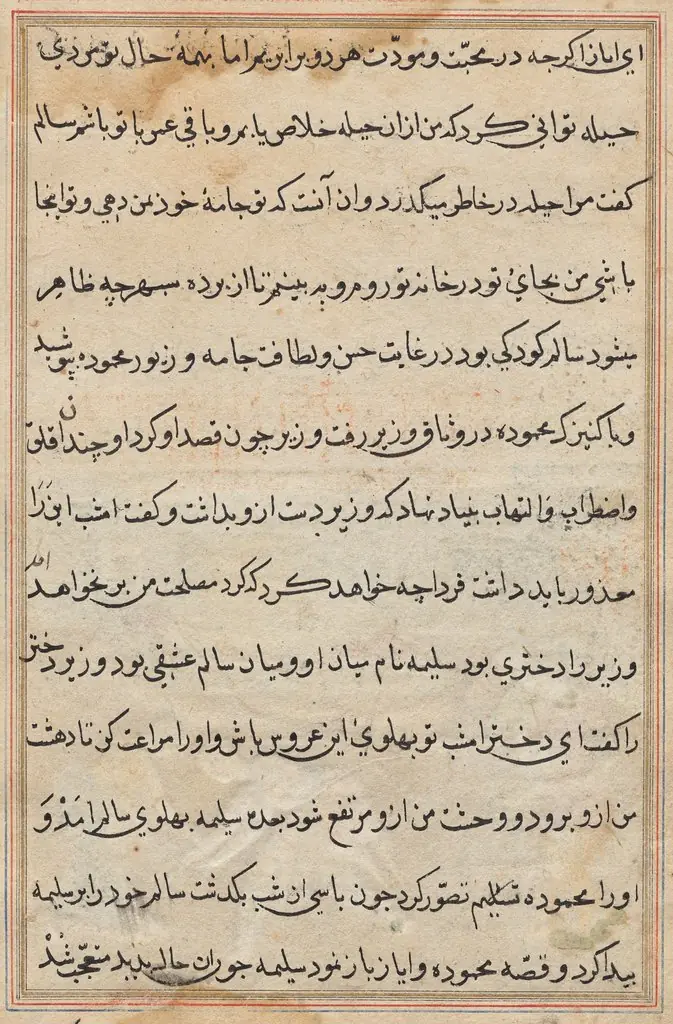
This object is a single folio from the illustrated manuscript known as *Tuti‑nama* (Tales of a Parrot). The page consists of a light‑brown paper surface densely covered with black calligraphic text, framed by a narrow blue margin. Though catalogued as a painting, its primary function is textual, forming part of a narrative work.
Subject & Meaning
The script records a story from the *Tuti‑nama*, a collection of moral and romantic tales traditionally recited in courtly settings. The particular folio was prepared for Prince Salim, a Mughal royal figure, indicating its role as a personalized literary gift within the imperial household.
Technique & Style
The calligraphy is executed in a flowing black ink, with each letter showing subtle hand‑made variations, suggesting a skilled scribe rather than a printed press. The text lines are arranged in tight, orderly rows that intertwine like vines, maximizing the use of space. A thin blue border, applied with pigment, delineates the written area.
History & Provenance
Created during the Mughal period, the folio reflects the courtly patronage of Prince Salim, who later became Emperor Jahangir. The manuscript likely originated in a royal workshop in early 17th‑century India before entering modern collections, where it is now held by a major museum.
Context
*Tuti‑nama* exemplifies the Mughal tradition of integrating Persian literary culture with Indian artistic practices. Such manuscripts combined elaborate calligraphy, miniature painting, and decorative borders, serving both educational and entertainment purposes for elite audiences.
Legacy
The folio illustrates the high value placed on personalized literary objects in Mughal courts and contributes to our understanding of manuscript production, patronage, and the transmission of Persian narratives in South Asia.
Artist & collection

 Page from Tales of a Parrot (Tuti-nama): text page
 Page from Tales of a Parrot (Tuti-nama): text page
 Page from Tales of a Parrot (Tuti-nama): text page
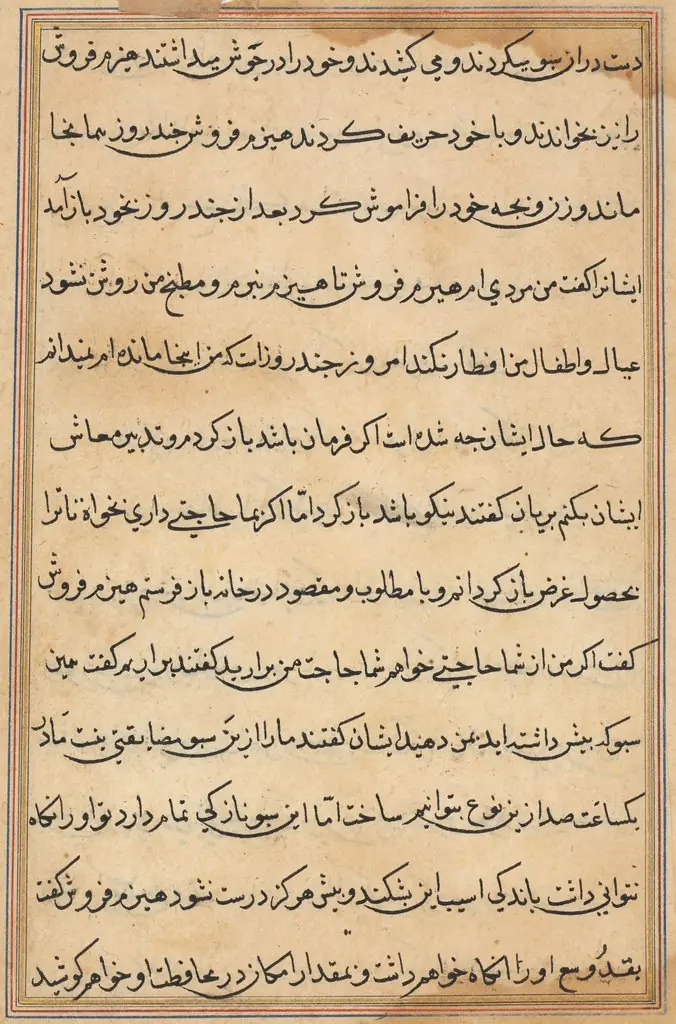 Page from Tales of a Parrot (Tuti-nama): text page
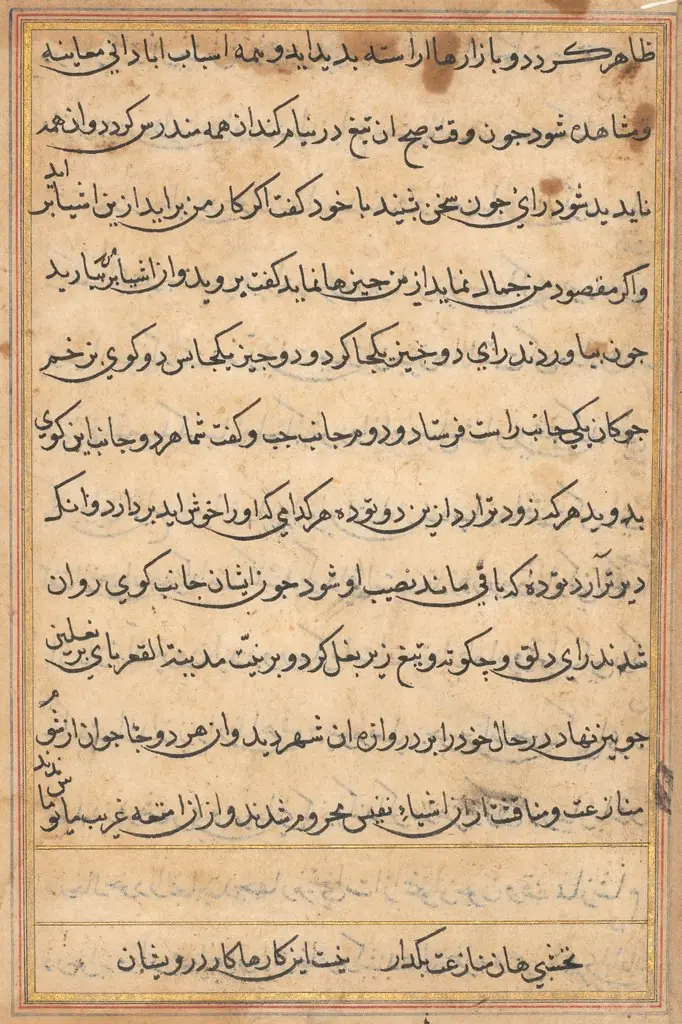 Page from Tales of a Parrot (Tuti-nama): text page
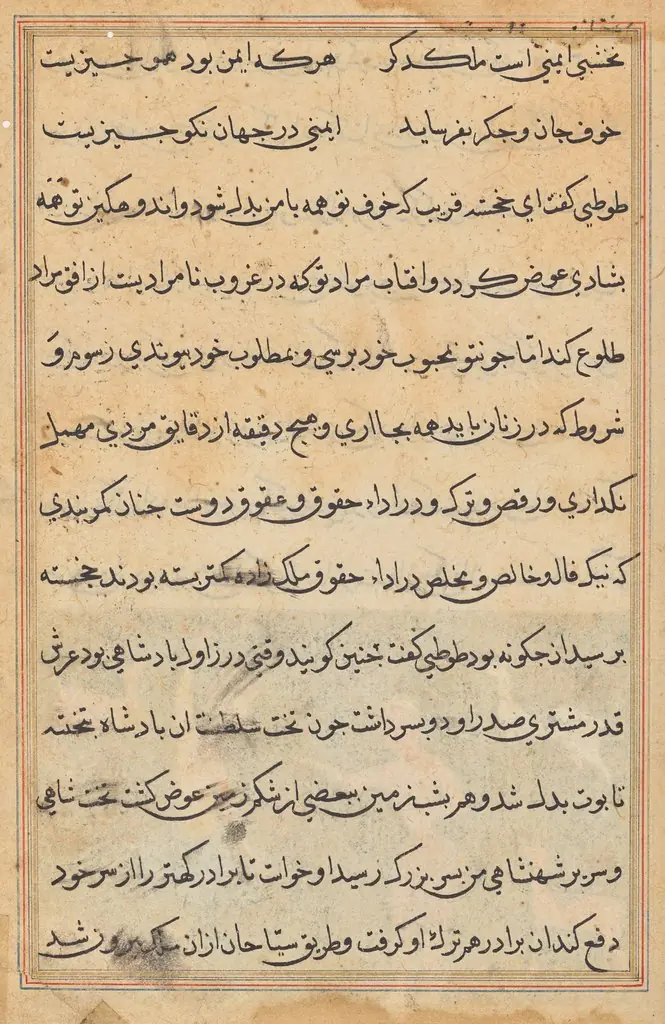 Page from Tales of a Parrot (Tuti-nama): text page
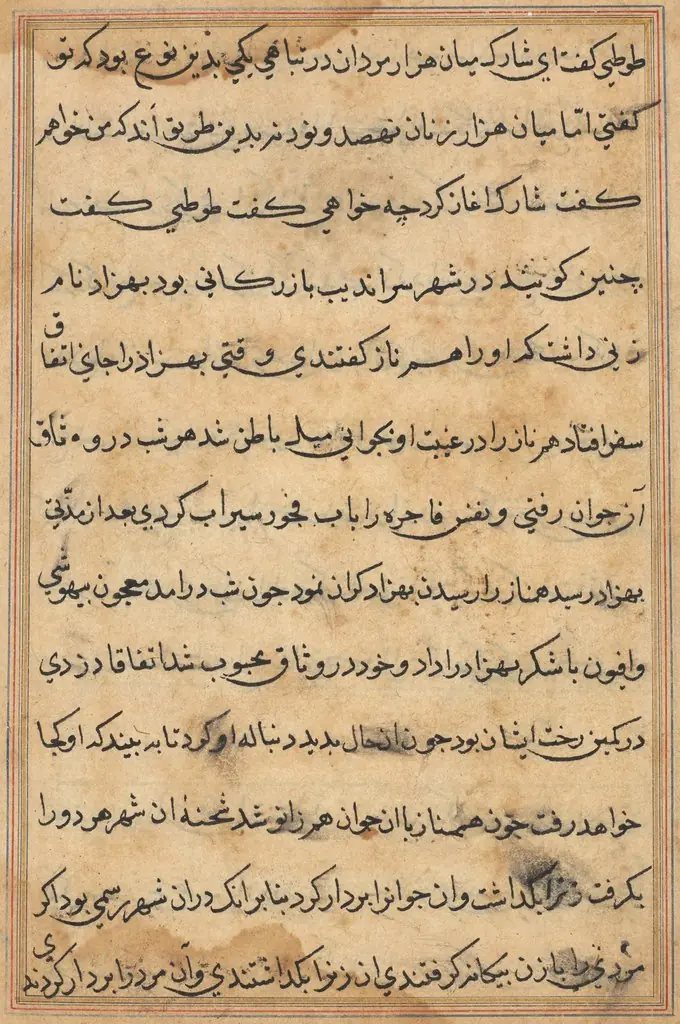 Page from Tales of a Parrot (Tuti-nama): text page
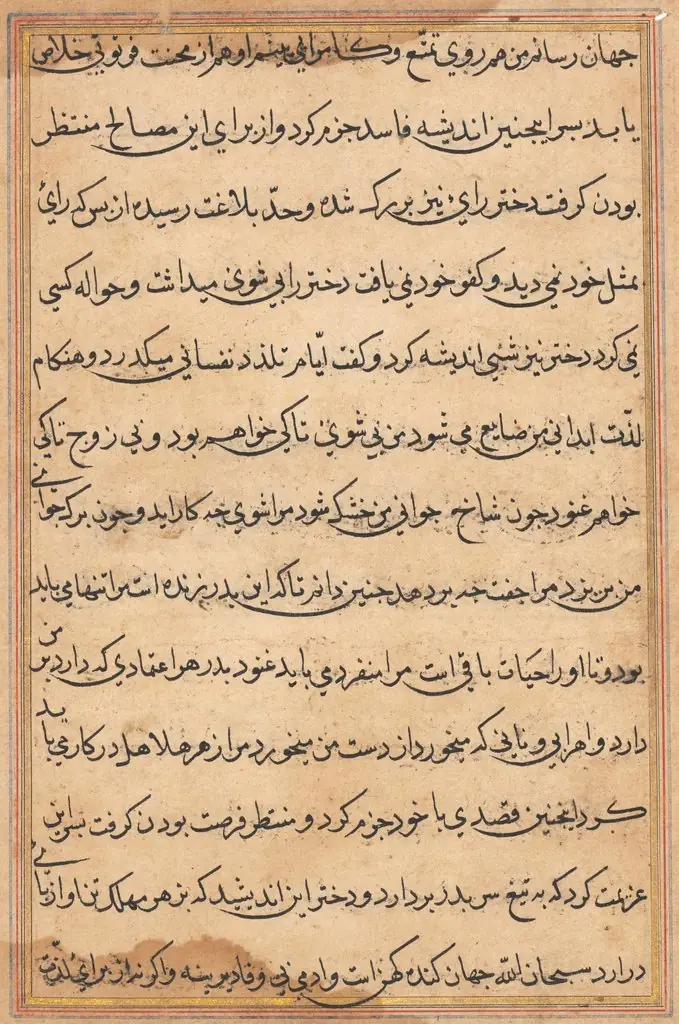 Page from Tales of a Parrot (Tuti-nama): text page
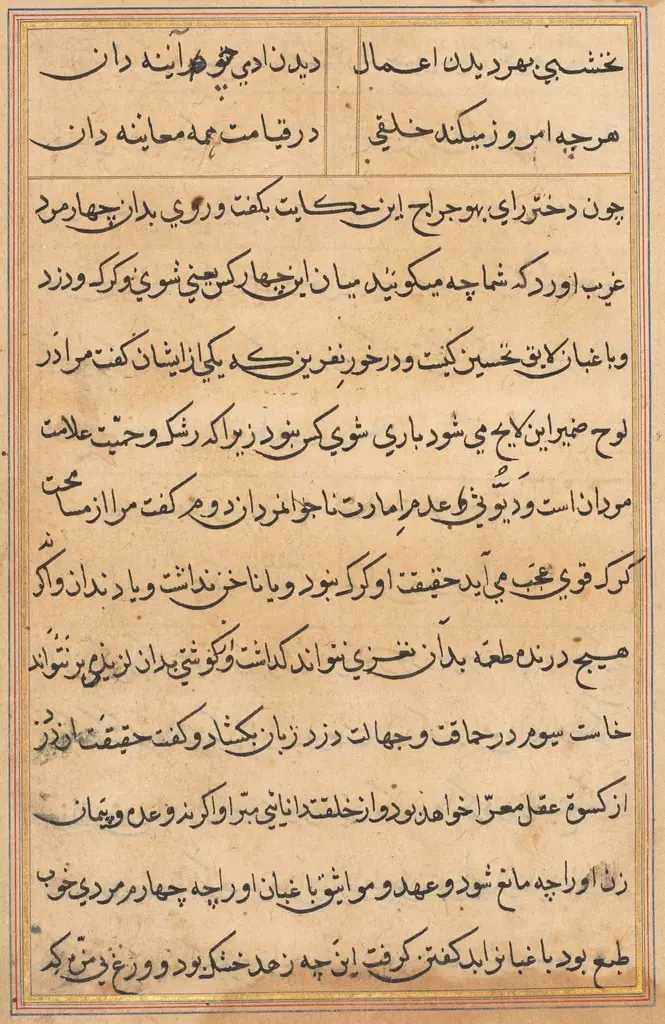 Page from Tales of a Parrot (Tuti-nama): text page
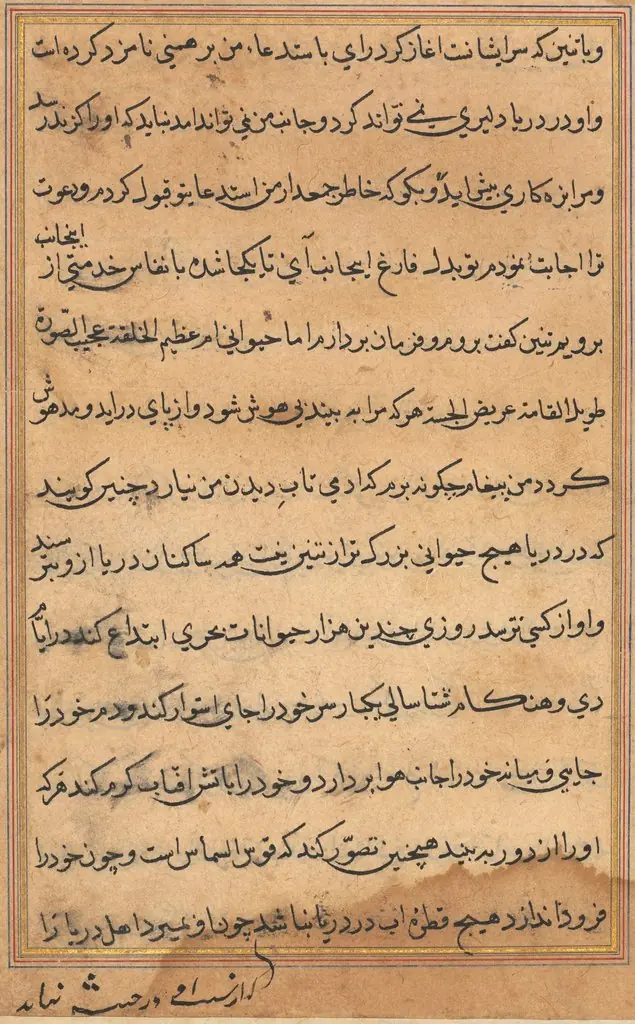 Page from Tales of a Parrot (Tuti-nama): text page
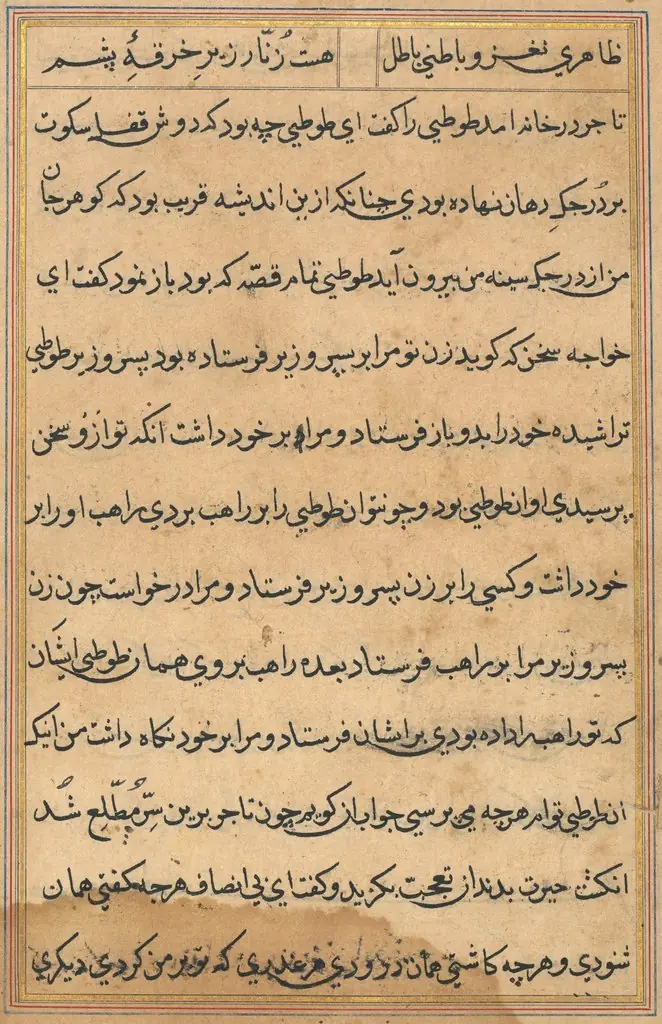 Page from Tales of a Parrot (Tuti-nama): text page
 Page from Tales of a Parrot (Tuti-nama): text page