Artwork
Geflügelhof
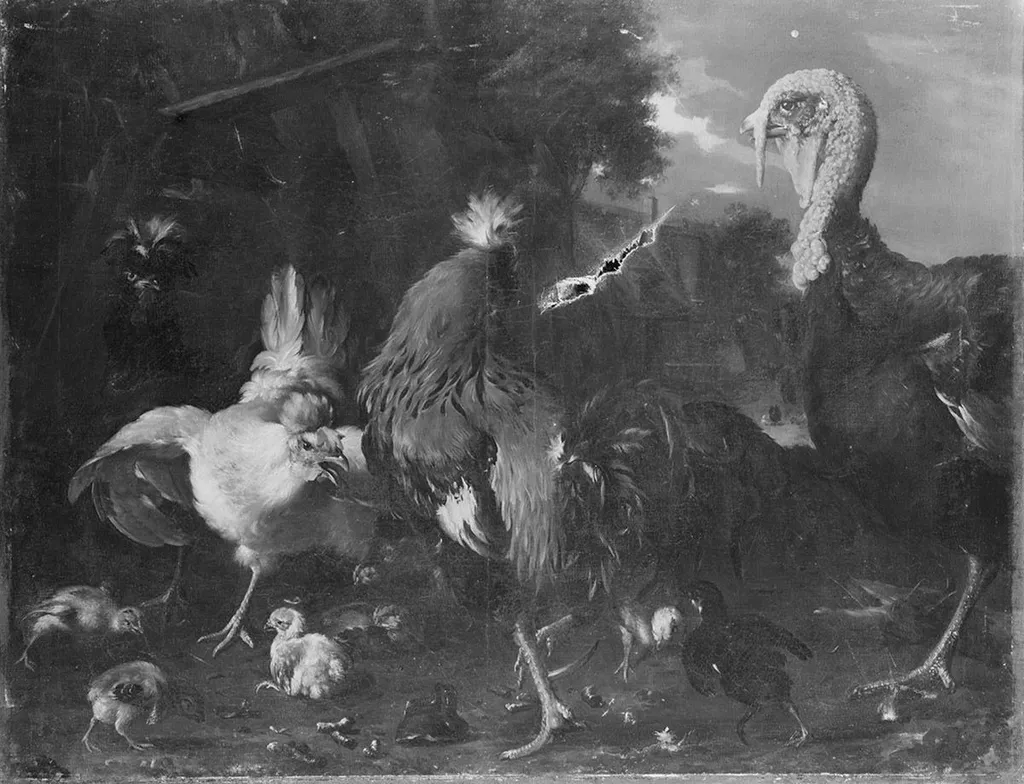
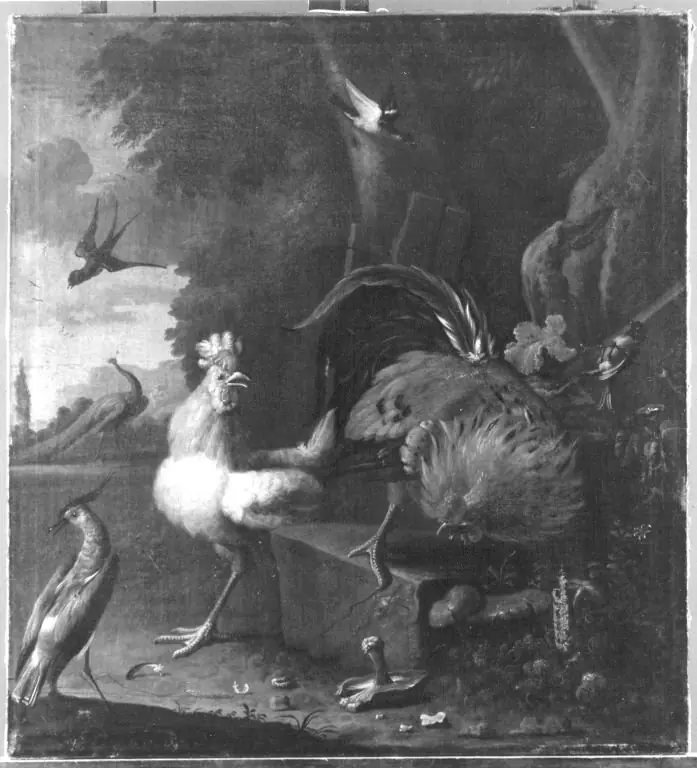
Geflügelhof is an unspecified painting by the Flemish Baroque painting artist Unknown. It dates from 1665 and is held in the collection of the Bavarian State Painting Collections. This painting portrays a quiet rural scene centered on a turkey and several chickens in an open yard.
About this work
Overview
This painting portrays a quiet rural scene centered on a turkey and several chickens in an open yard. The composition emphasizes natural movement, with birds positioned at varied angles, suggesting spontaneous activity. The background includes sparse trees and a soft, overcast sky, grounding the scene in an unidealized countryside setting.
Subject & Meaning
The subject is a humble farmyard moment, devoid of human figures. The turkey, prominently placed and facing left, acts as a visual anchor, while the scattered chickens imply daily life in a domesticated environment. The work conveys no overt symbolism; its meaning lies in the quiet observation of ordinary animal behavior.
Technique & Style
Visible brushwork lends texture to feathers and foliage, enhancing tactile realism. Chiaroscuro modeling, with light originating from the upper right, defines the forms of the birds and casts subtle shadows, creating spatial depth. The palette is muted, favoring earth tones and soft grays, reinforcing the scene’s unembellished character.
History & Provenance
The painting is attributed to the Geflügelhof type, a designation linked to 17th-century Dutch animal painters who specialized in poultry scenes. Its early provenance is tied to regional collectors in the Netherlands, though specific ownership records before the 19th century remain undocumented.
Context
Created during a period when Dutch artists increasingly turned to everyday rural subjects, this work reflects a broader trend away from religious or mythological themes. Depictions of farm animals were valued for their realism and connection to domestic economy, appealing to middle-class patrons.
Legacy
Though not widely exhibited, the painting contributes to the understanding of Dutch genre painting’s expansion into animal subjects. It exemplifies how modest, unheroic scenes were rendered with technical care, influencing later naturalist traditions in European art.
Artist & collection

 Domestic Scene
 Giacomo and Cardinal Marco, investing Andrea, Abbot of San Zeno, with his Benefice
 The Nymph of Fontainebleau
 Portrait of a Woman
 Madonna and Child with Saints in the Enclosed Garden
 Venus and Minerva
 Family Group of Four on Sofa
 Wall painting from Room H of the Villa of P. Fannius Synistor at Boscoreale
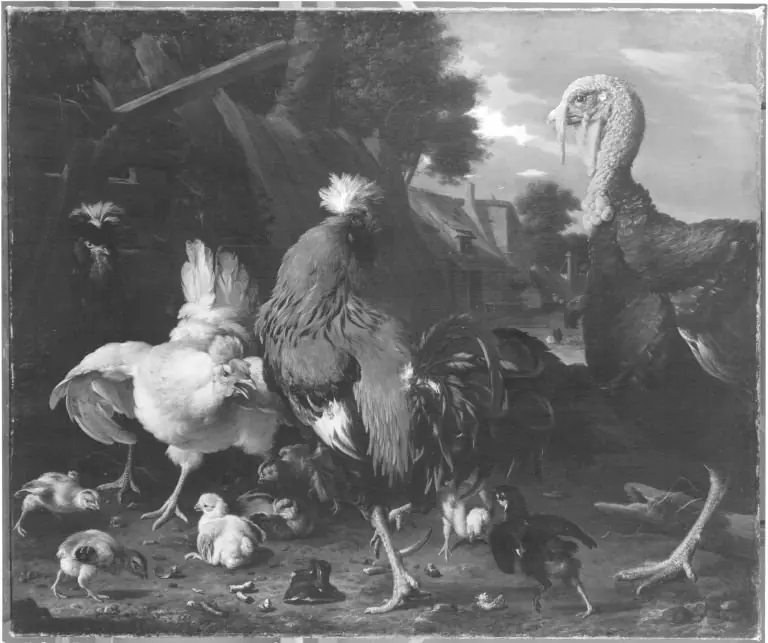 A turkey, chickens and quails in a farmyard
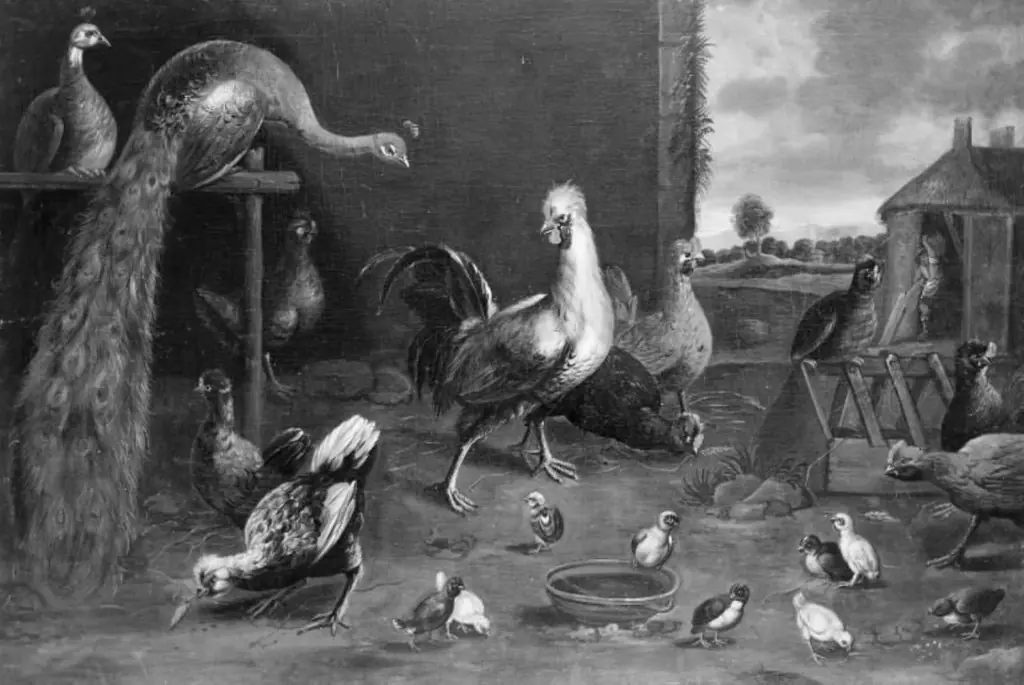 Mellem høns, haner og kyllinger, ses et par påfugle
 Mellem høns, haner og kyllinger, ses et par påfugle
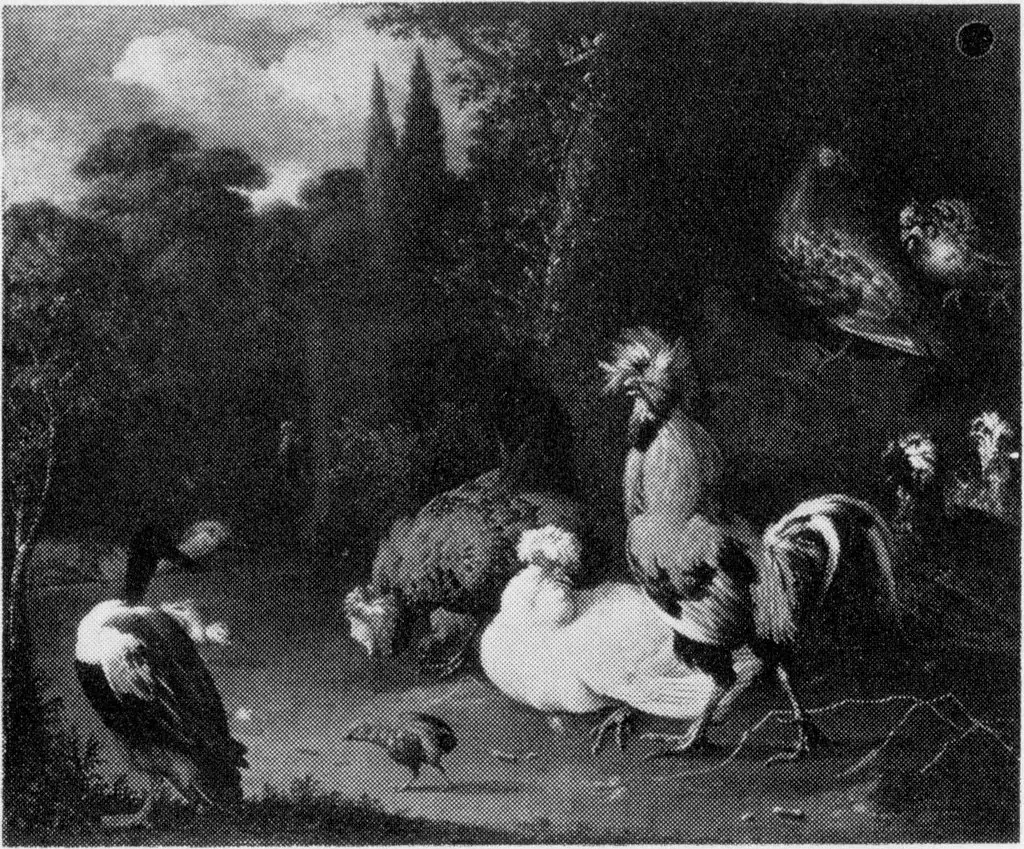 Poultry and ducks in a park
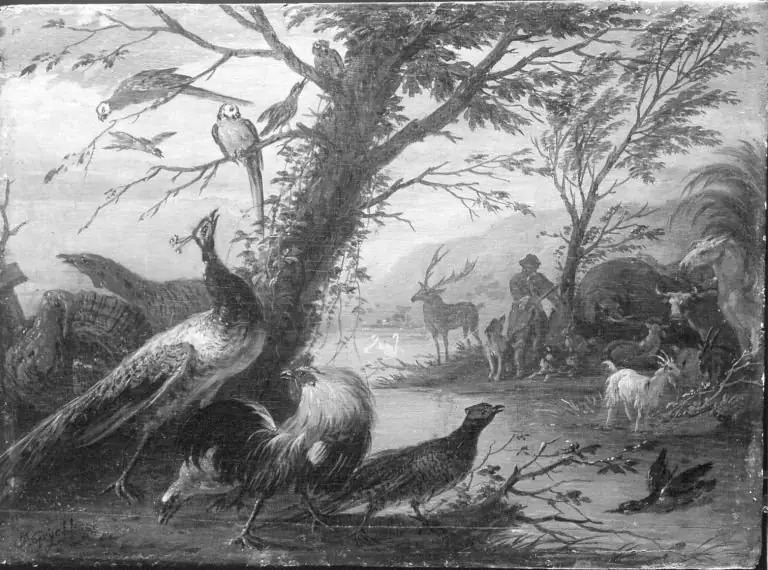 Orpheus bezaubert die Tiere
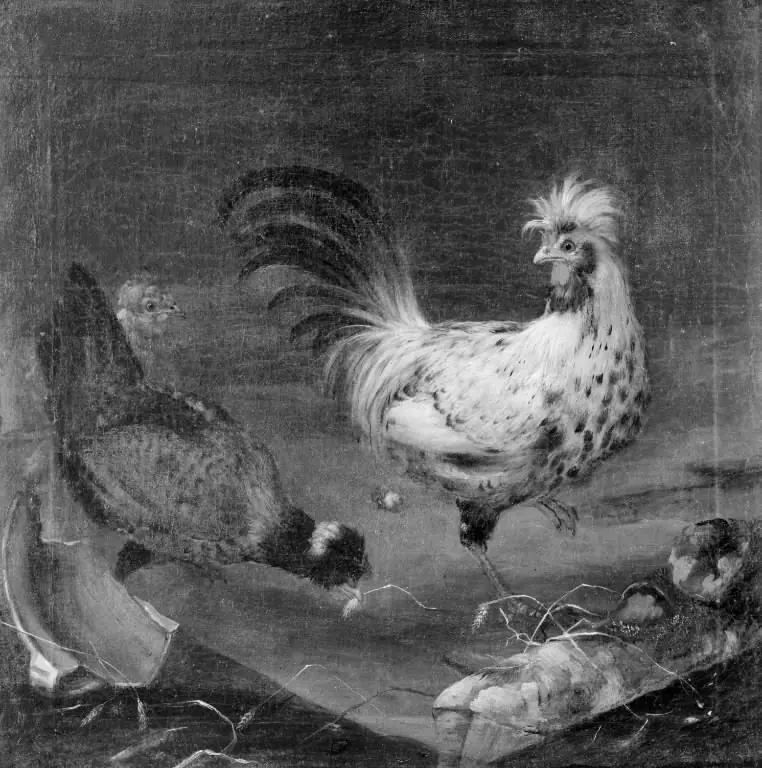 Two Hens and a Cock
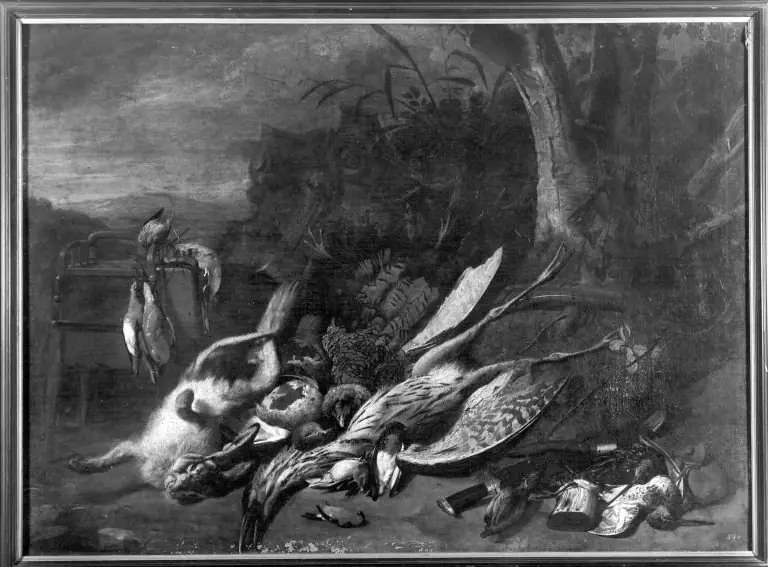 Ein toter Hase
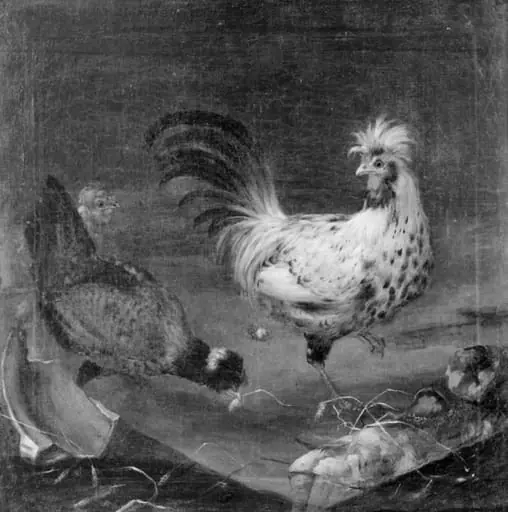 Two Hens and a Cock
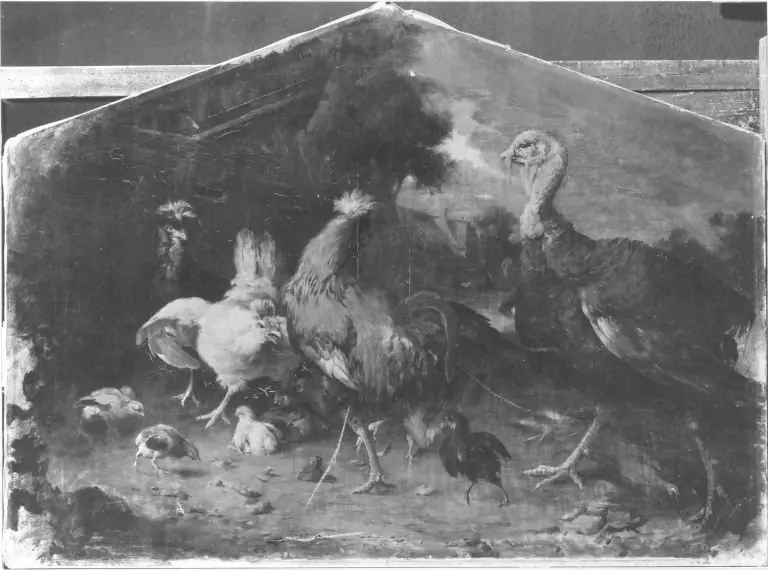 Hühnerhof
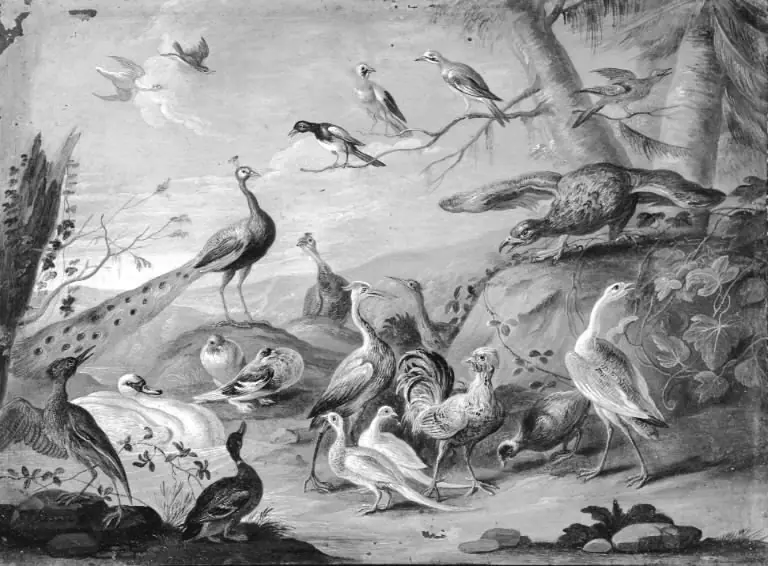 A Hilly Landscape with a Peacock, an Eagle and other Birds
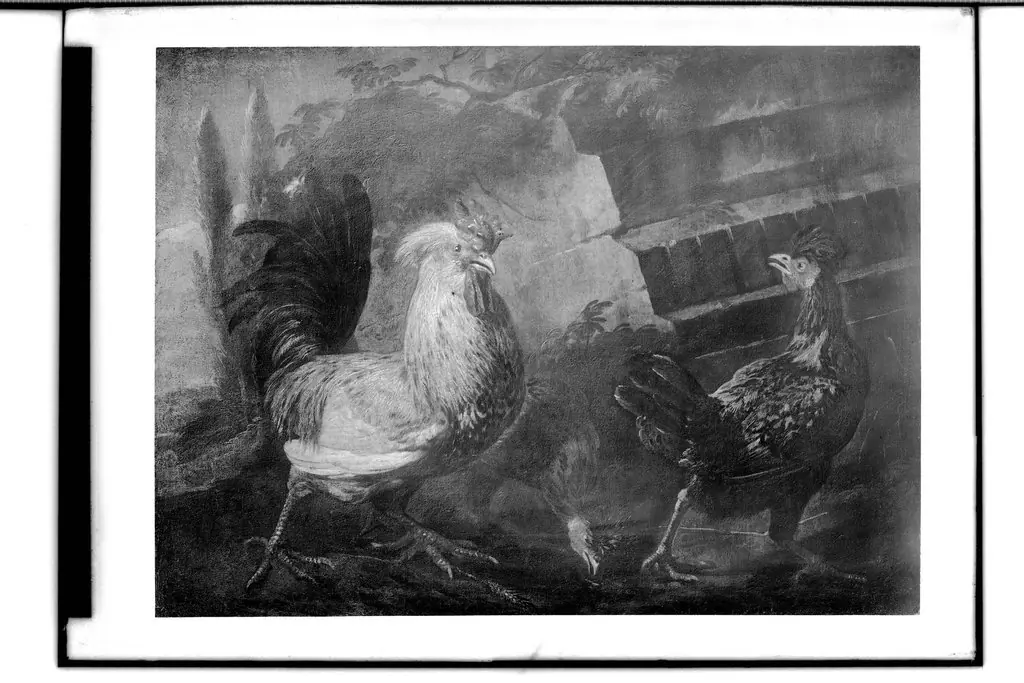 Rooster and hens
 Geflügelstück