Artwork
Madonna
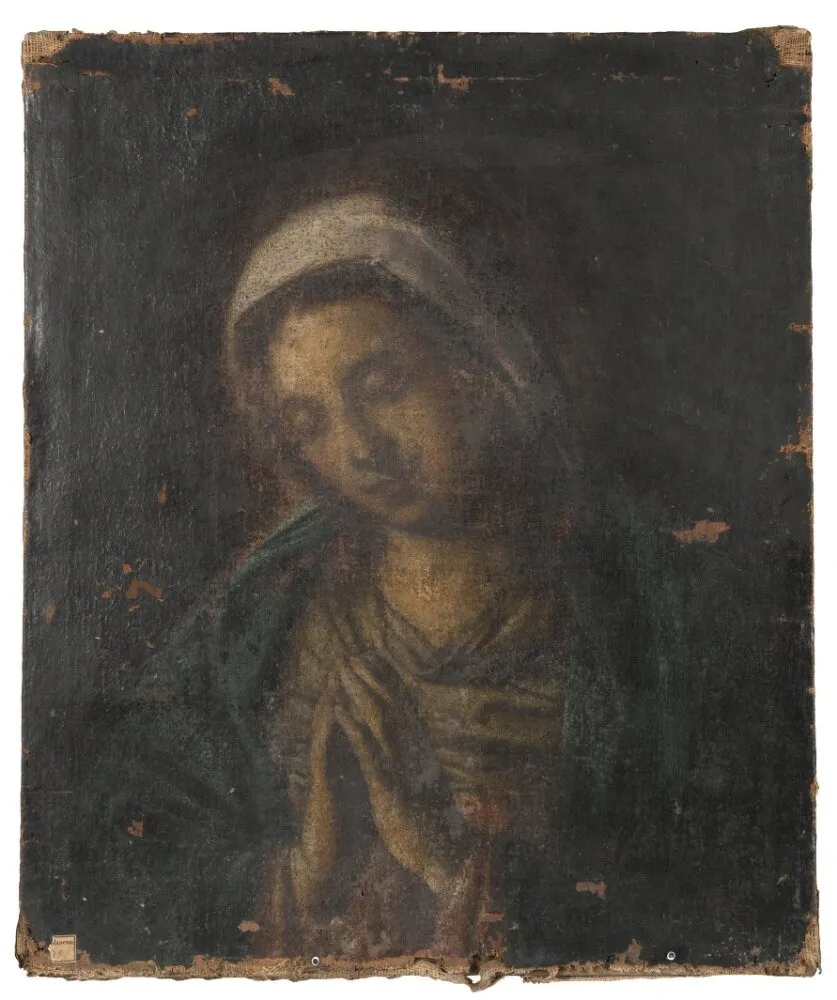
Madonna is an oil painting by the Early Baroque Italian artist Unknown. It dates from 1649 and is held in the collection of the Nationalmuseum.
About this work
Overview
The artist employs chiaroscuro to model form through subtle shifts in light and shadow, enhancing the sense of physical presence and stillness.
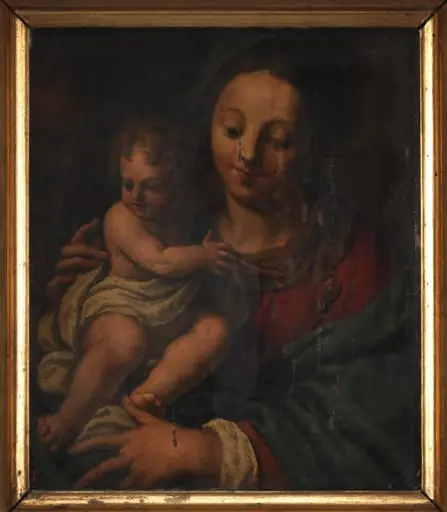
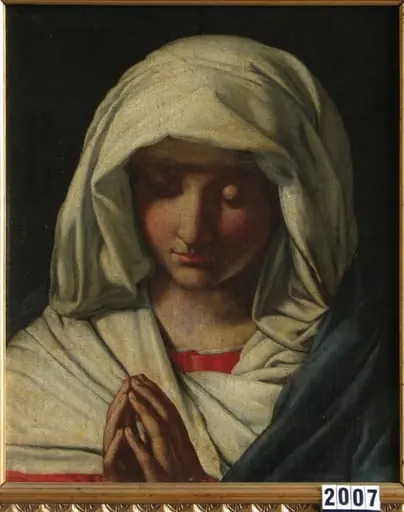
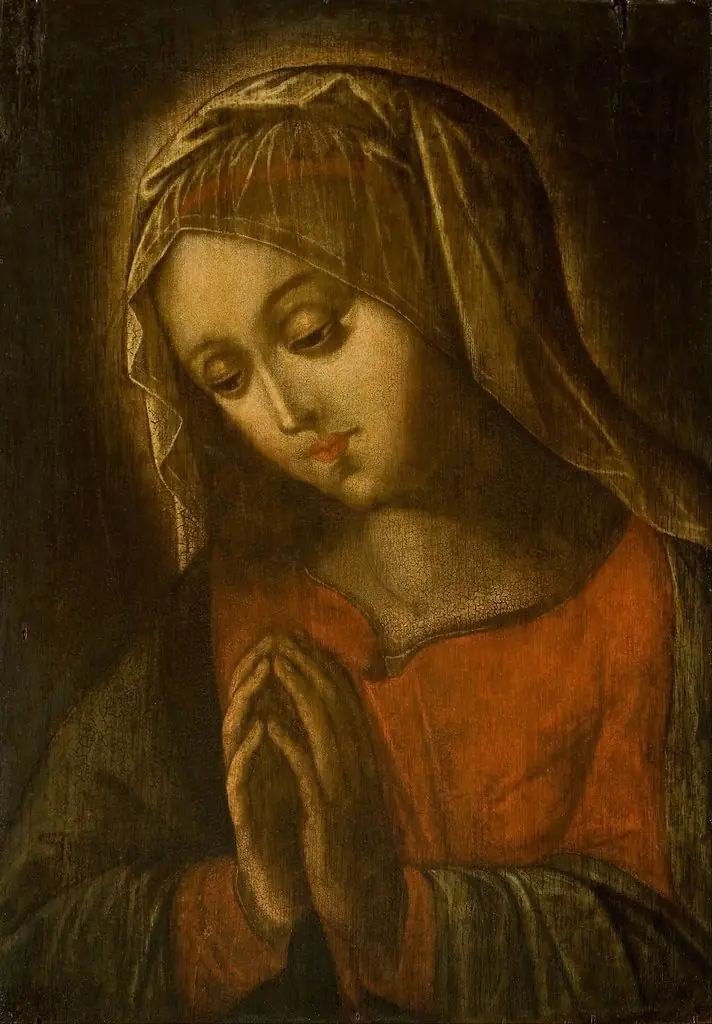
This oil painting, titled 'Madonna,' presents the Virgin Mary in a serene, inward-focused posture. Dressed in a white headdress and a green robe, she sits with hands gently clasped in prayer. The dark, unadorned background isolates her figure, directing attention to her quiet demeanor. The artist employs chiaroscuro to model form through subtle shifts in light and shadow, enhancing the sense of physical presence and stillness.
Subject & Meaning
The Virgin Mary is depicted not as a celestial figure but as a human vessel of devotion. Her closed eyes and clasped hands suggest private meditation rather than public veneration. The absence of halos, angels, or symbolic attributes strips the image of narrative spectacle, emphasizing personal piety. This intimate portrayal invites quiet contemplation, aligning with devotional practices that valued inner spirituality over external grandeur.
Technique & Style
The artist uses oil paint to build form gradually, relying on layered glazes and controlled chiaroscuro to define the contours of Mary’s face and drapery. The dark background absorbs ambient light, making the softly illuminated areas of her robe and veil appear to glow. Brushwork is restrained, avoiding decorative detail in favor of tonal harmony. The result is a restrained realism grounded in emotional restraint rather than theatricality.
History & Provenance
The painting’s origins are not fully documented, but its style and technique suggest it was produced in the late 15th or early 16th century, likely in Northern Europe. It entered the collection of the Nationalmuseum in Stockholm, where it remains today. No known records trace its commission or early ownership, indicating it may have been created for private devotion rather than public altarpiece use.
Context
During the late medieval and early Renaissance periods, private devotional images of the Virgin were common among the devout middle class. Unlike grand ecclesiastical works, these smaller paintings emphasized personal connection over doctrinal display. This Madonna reflects a broader trend toward intimate spirituality, where the sacred was accessed through quiet reflection rather than ritual spectacle.
Legacy
Though not attributed to a major named artist, the painting exemplifies a widespread devotional aesthetic of its time. Its quiet dignity influenced later portrayals of the Virgin in Northern European art, where emotional subtlety replaced ornate symbolism. It continues to serve as a reference for understanding how ordinary believers engaged with religious imagery beyond the church's formal liturgy.
Artist & collection

 Domestic Scene
 Giacomo and Cardinal Marco, investing Andrea, Abbot of San Zeno, with his Benefice
 The Nymph of Fontainebleau
 Portrait of a Woman
 Madonna and Child with Saints in the Enclosed Garden
 Venus and Minerva
 Family Group of Four on Sofa
 Wall painting from Room H of the Villa of P. Fannius Synistor at Boscoreale