Artwork
Portrait of Tomasz Królikowski
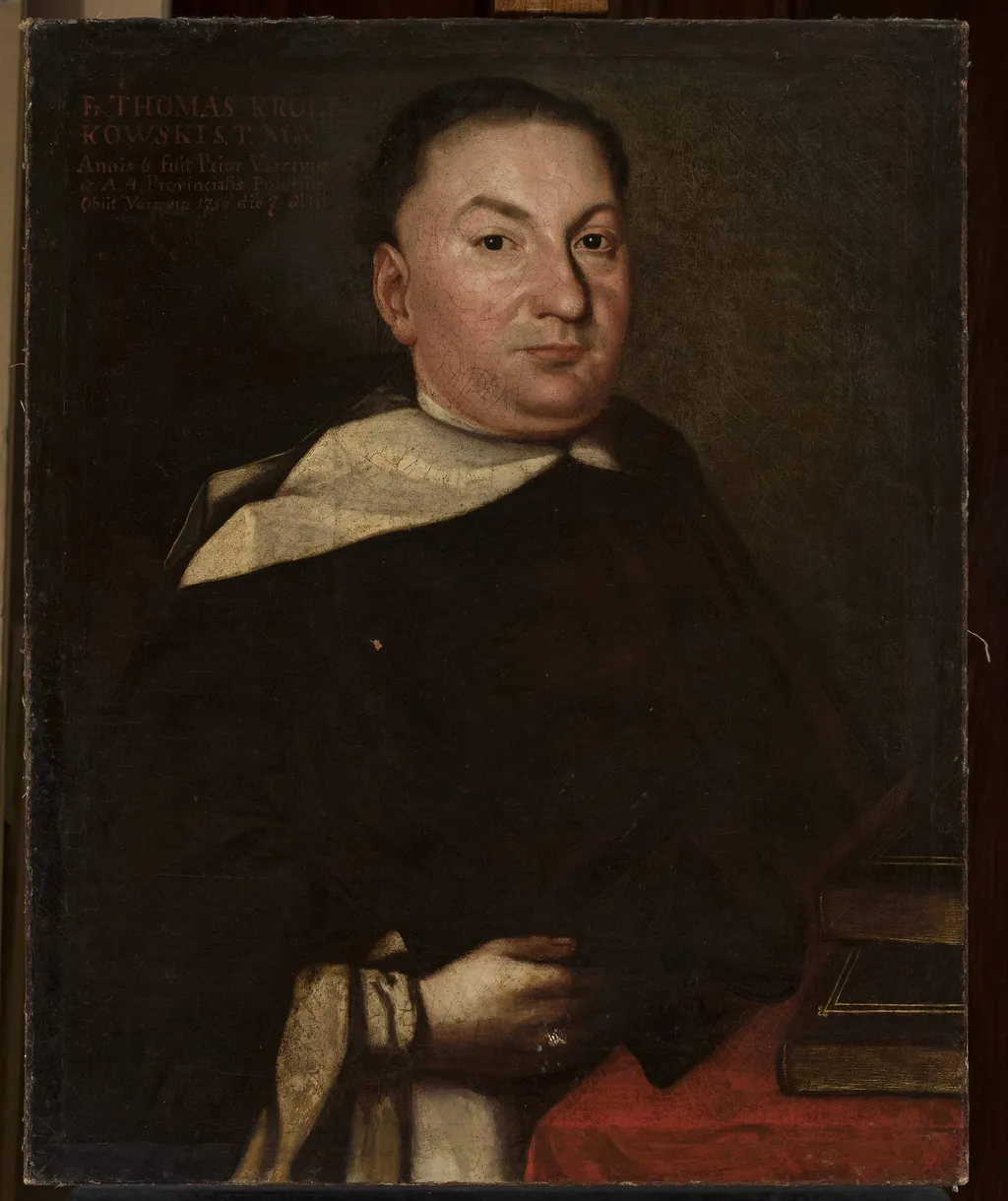
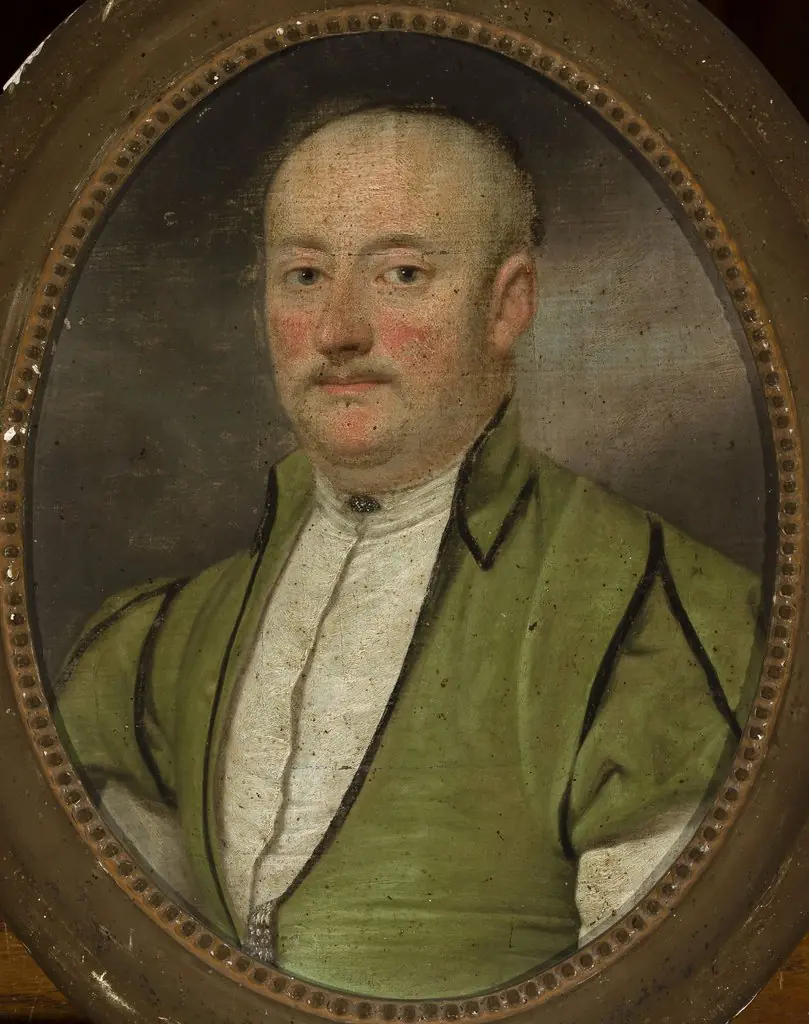
Portrait of Tomasz Królikowski is an oil painting by the Rococo painting artist Unknown. It dates from 1750 and is held in the collection of the National Museum in Warsaw. This oil painting depicts Tomasz Królikowski, a Polish intellectual, seated in a dimly lit interior.
About this work
Overview
The composition is tightly focused, eliminating distractions to concentrate on the sitter’s presence.
This oil painting depicts Tomasz Królikowski, a Polish intellectual, seated in a dimly lit interior. He wears a dark robe with a white collar, his hands resting on a red upholstered chair. The background is nearly black, emphasizing his figure. Subtle wear along the frame suggests age and handling. The composition is tightly focused, eliminating distractions to concentrate on the sitter’s presence.
Subject & Meaning
Tomasz Królikowski is portrayed with quiet dignity, his serious expression suggesting introspection or solemnity. The white collar hints at clerical or academic affiliation, while the books on the shelf behind him imply scholarly engagement. The absence of symbols or elaborate setting directs attention to his character rather than status, conveying a sense of quiet intellectual authority.
Technique & Style
The artist employs chiaroscuro to model the face with sharp contrasts between light and shadow, giving it a sculptural depth. Side lighting accentuates the contours of the brow, nose, and jaw, while the dark robe absorbs ambient light. The red chair provides a muted focal point, contrasting without distracting. Brushwork is controlled, with smooth transitions in skin tones and crisp edges on the collar and books.
History & Provenance
The painting’s origin is tied to late 19th-century Polish portraiture, likely commissioned by Królikowski or his circle. Its worn frame and modest scale suggest private ownership rather than public display. No documented exhibition history is known, but its preservation indicates continued personal or familial significance over generations.
Context
In late 19th-century Poland, portraiture often served to affirm cultural identity amid foreign partitions. Intellectuals like Królikowski were symbols of national continuity. This work aligns with a trend of restrained, psychologically nuanced portraits that prioritized inner life over external grandeur, reflecting broader European realist tendencies of the era.
Legacy
The painting remains a quiet example of regional portraiture, valued for its emotional restraint and technical precision. It contributes to the visual record of Polish intellectual life during a period of political fragmentation. While not widely reproduced, it endures in private or institutional collections as a testament to understated artistic expression.
Artist & collection

 Domestic Scene
 Giacomo and Cardinal Marco, investing Andrea, Abbot of San Zeno, with his Benefice
 The Nymph of Fontainebleau
 Portrait of a Woman
 Madonna and Child with Saints in the Enclosed Garden
 Venus and Minerva
 Family Group of Four on Sofa
 Wall painting from Room H of the Villa of P. Fannius Synistor at Boscoreale
 Portrait of Tomasz Rippol, Dominican friar
 Portrait of a Man
 Bildnis des Abtes Magnus Pachinger von Benediktbeuern
 Portrait of a priest (Piarist?)
 Hendrik Swaardecroon (1667-1728). Gouverneur-generaal (1718-25)
 Portrait of Erazm Bartold (1716–1786), provincial superior of Austin Friars
 Portrait of Maciej Łubieński /?/ (d. 1652), primate
 Jan Miraeus, Bishop of Antwerp
 Vicarul apostolic Ștefan Ștefanovici Roska
 Portrait of Maciej Kazimierz Sarbiewski (1595–1640)
 Portrait of Johannes Thedens (1680-1748). Gouverneur-generaal (1741-43)
 Portrait of Karol Węgliński