Artwork
The Alchemist
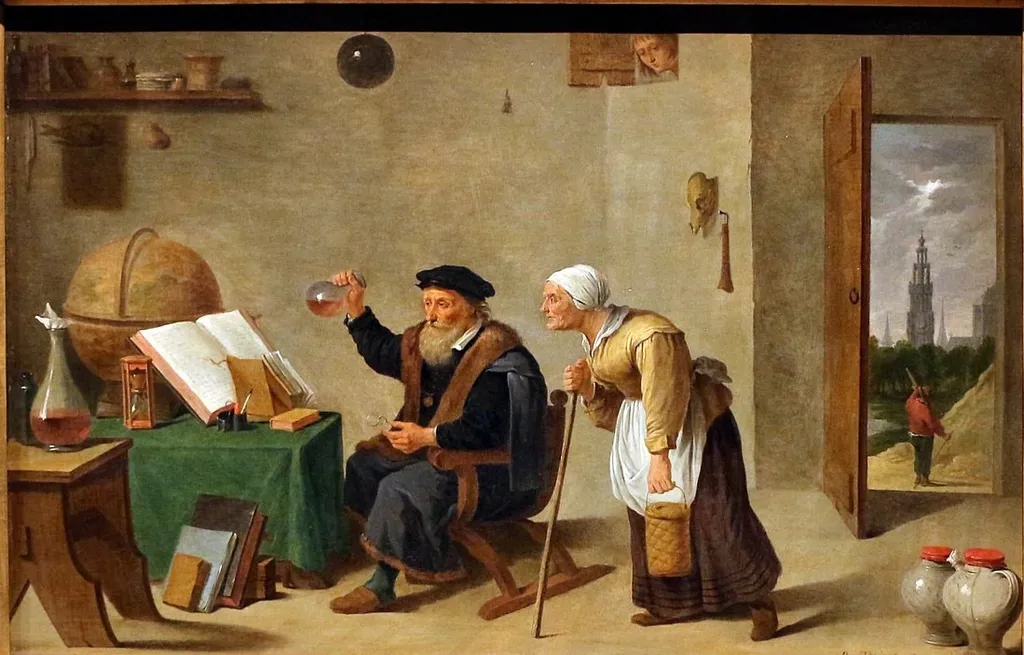
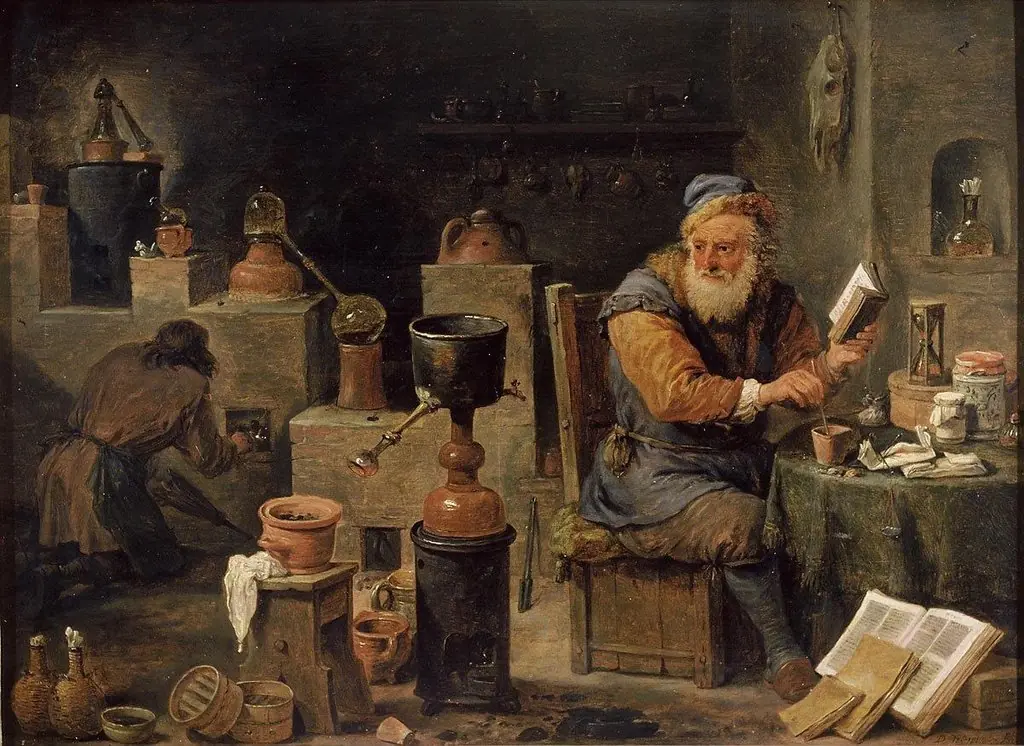
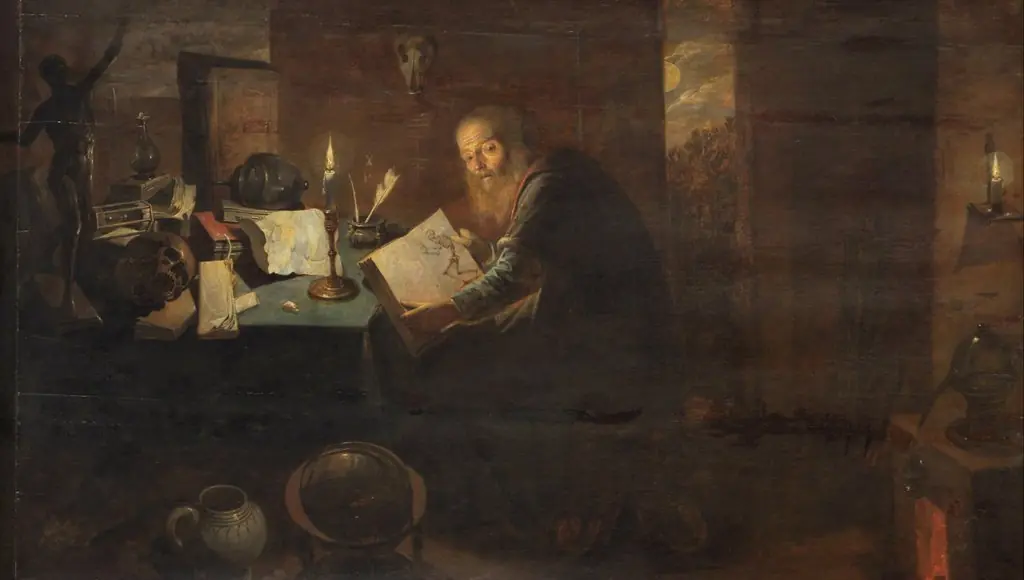
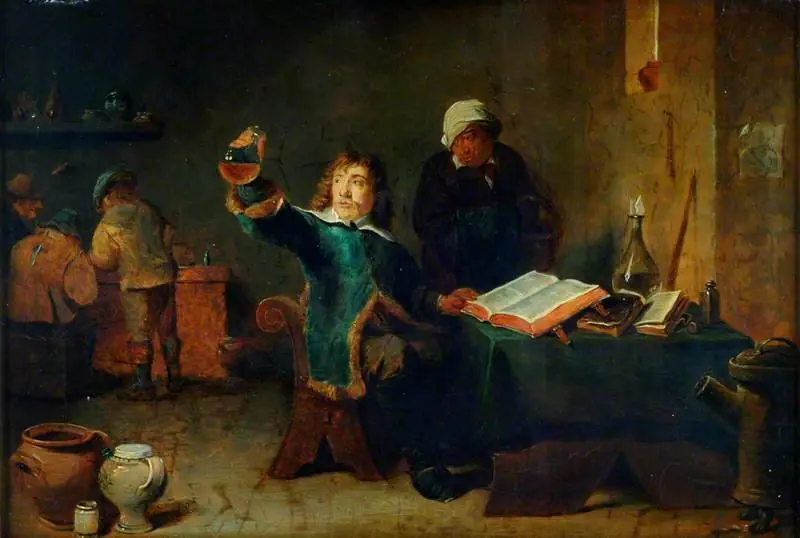
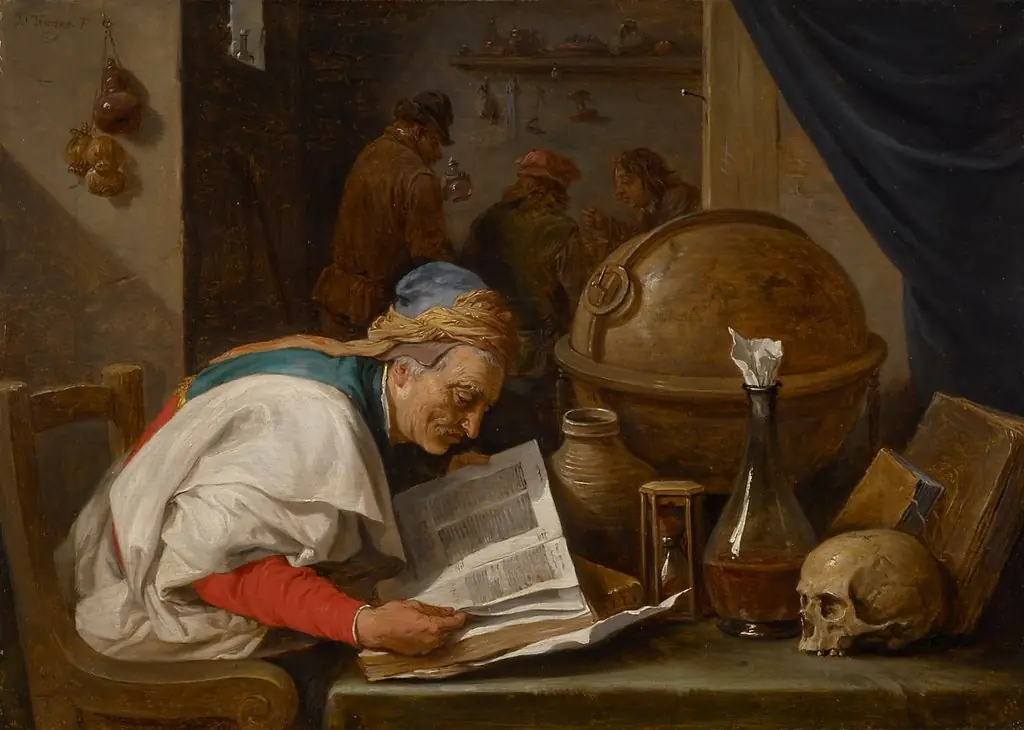
The Alchemist is an unspecified painting by Unknown. It dates from 1800 and is held in the collection of the National Museum of Ancient Art. This painting depicts an alchemist seated in a dimly lit chamber, engaged in quiet study.
About this work
Overview
The lighting, focused from the left, casts deep shadows and highlights, emphasizing the figures and their introspective stillness.
This painting depicts an alchemist seated in a dimly lit chamber, engaged in quiet study. He holds a glass vessel containing a reddish substance, surrounded by tools of his trade: globes, books, and a draped table. An elderly woman stands to his right, bearing a basket and cane, her presence adding a layer of mystery. The lighting, focused from the left, casts deep shadows and highlights, emphasizing the figures and their introspective stillness.
Subject & Meaning
The central figure is likely an alchemist, a figure associated with the pursuit of transformation—both material and spiritual. The reddish liquid may symbolize the philosopher’s stone or a stage in transmutation. The elderly woman, possibly a servant or symbolic figure, suggests a connection between earthly labor and esoteric knowledge. Their shared silence implies a moment of suspended inquiry, where science, mysticism, and daily life intersect.
Technique & Style
The artist employs chiaroscuro to model form and direct attention, contrasting the warm glow on the alchemist’s face and hands with the surrounding shadows. Textures are rendered with precision—the fabric of the robe, the sheen of glass, the grain of wood—enhancing tactile realism. The composition is tightly framed, with objects arranged to guide the viewer’s gaze toward the central vessel, reinforcing its symbolic weight.
History & Provenance
The painting’s origins are tied to early 17th-century Northern European traditions, where alchemical themes were popular among patrons interested in natural philosophy. While its exact provenance remains undocumented, stylistic elements align with works from Dutch or Flemish studios of the period. It likely passed through private collections before entering institutional hands, its attribution gradually confirmed through comparative analysis.
Context
During the early 1600s, alchemy was transitioning from occult practice to early chemistry, and artists often depicted its practitioners as solemn scholars. This painting reflects a cultural moment when empirical inquiry coexisted with mystical belief. The inclusion of a globe and books signals an interest in universal knowledge, while the woman’s presence hints at the domestic sphere entwined with intellectual pursuits.
Legacy
Though not widely exhibited, the painting contributes to a broader visual record of early scientific inquiry. Its restrained tone and attention to detail distinguish it from more theatrical depictions of alchemy. It remains a quiet testament to the ambiguity of knowledge in an era of transition, where the boundaries between magic, science, and observation were still fluid.
Artist & collection

 Domestic Scene
 Giacomo and Cardinal Marco, investing Andrea, Abbot of San Zeno, with his Benefice
 The Nymph of Fontainebleau
 Portrait of a Woman
 Madonna and Child with Saints in the Enclosed Garden
 Venus and Minerva
 Family Group of Four on Sofa
 Wall painting from Room H of the Villa of P. Fannius Synistor at Boscoreale