Artwork
Portret van een meisje, vermoedelijk een dochter van George II, koning van Engeland
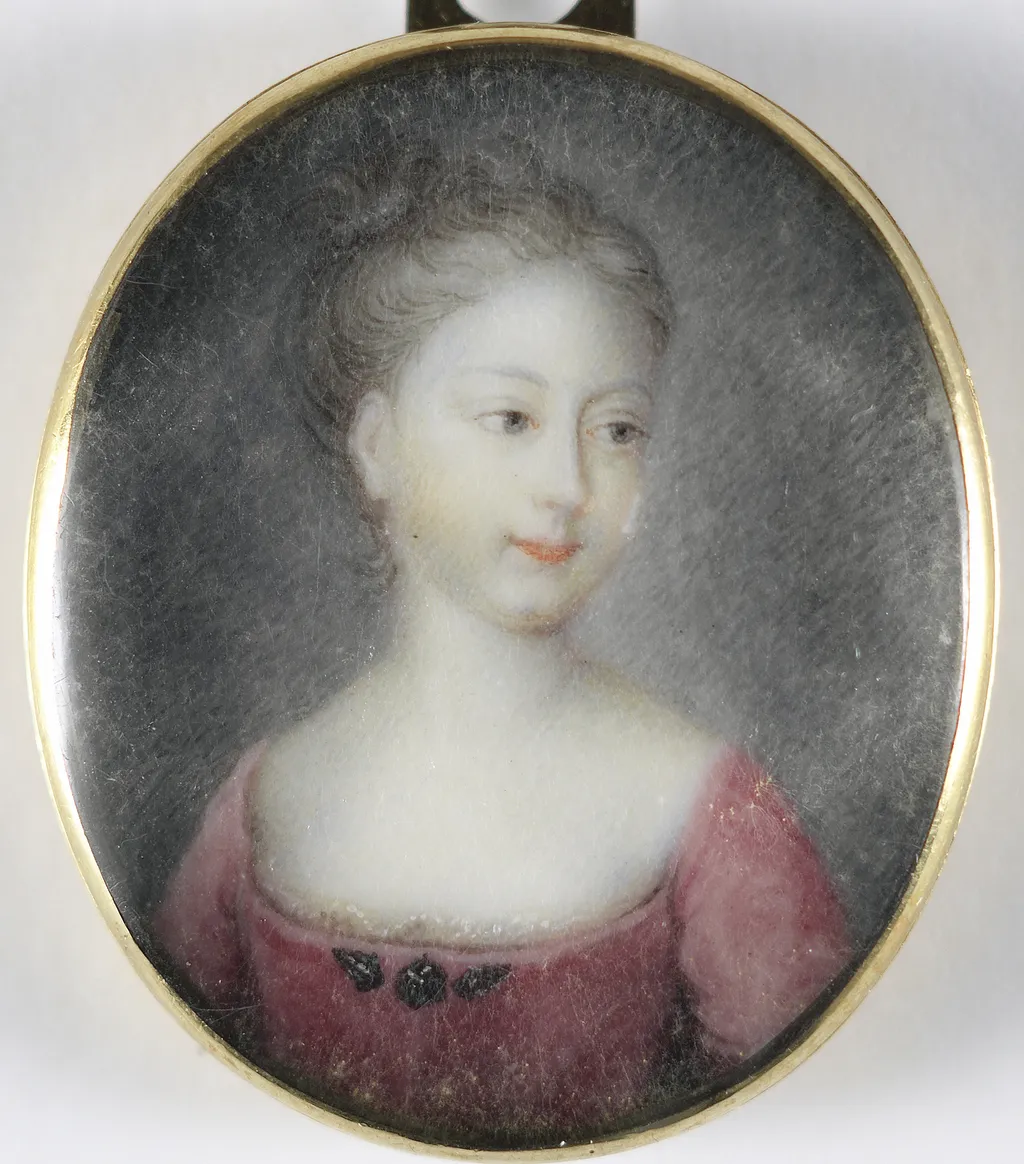
Portret van een meisje, vermoedelijk een dochter van George II, koning van Engeland is an ivory painting. It dates from 1720 and is held in the collection of the Rijksmuseum. The work is a small, oval portrait executed in carved ivory, depicting a young woman with light hair and pale complexion.
About this work
Overview
The work is a small, oval portrait executed in carved ivory, depicting a young woman with light hair and pale complexion. She wears a simple white collar over a dark red garment, her hands placed gently on her chest. The background is a uniform dark tone, directing attention to the sitter’s face.
Subject & Meaning
The figure is presumed to be a daughter of King George II of England, though no definitive identification exists. The modest attire and restrained pose suggest a private, intimate representation rather than an official royal commission, emphasizing personal virtue and youthful delicacy.
Technique & Style
Carving a portrait in ivory is uncommon, making the piece notable for its material. The artist employed soft, blurred transitions—akin to the sfumato technique—to render the facial features and hair, creating a gentle, almost ethereal presence. The limited palette and plain background enhance the subtle modeling of the figure.
History & Provenance
The portrait’s origins are unclear; no documented commission or early ownership records have been found. Its attribution to a specific artist remains uncertain, and the work has likely passed through private collections before entering its present museum setting, where it is displayed as an example of rare ivory portraiture.
Artist & collection