Artwork
Mountain Landscape
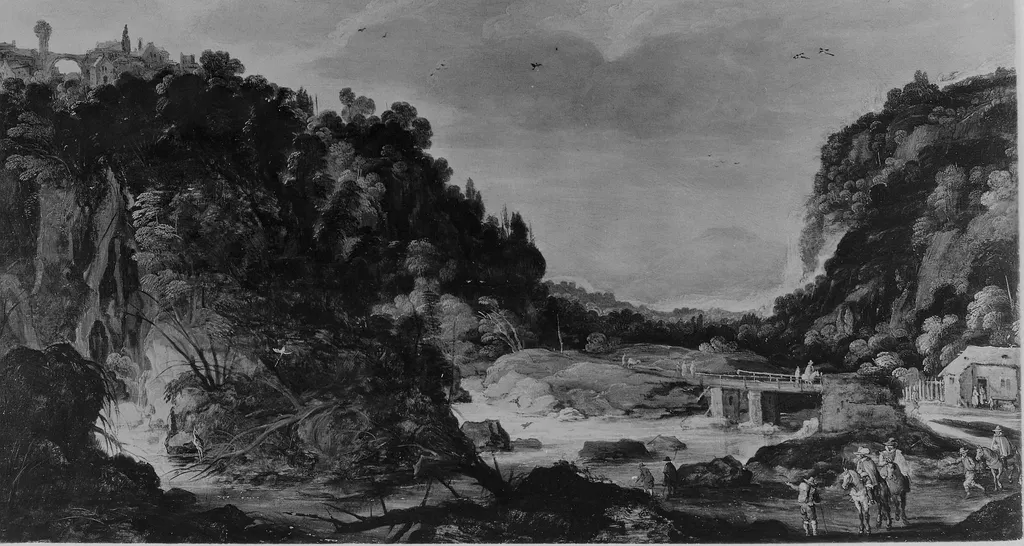
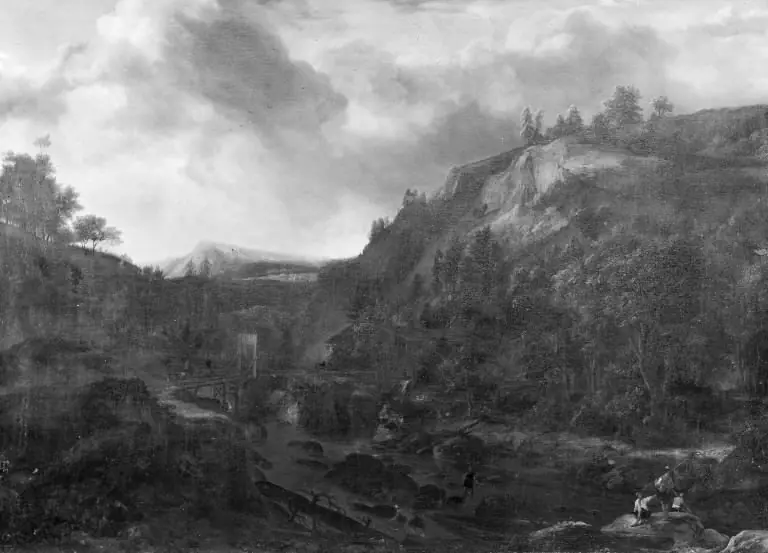
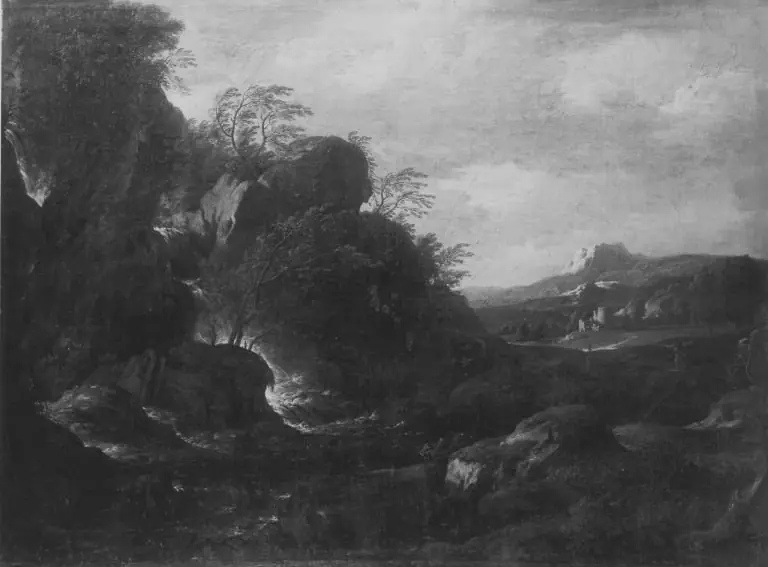
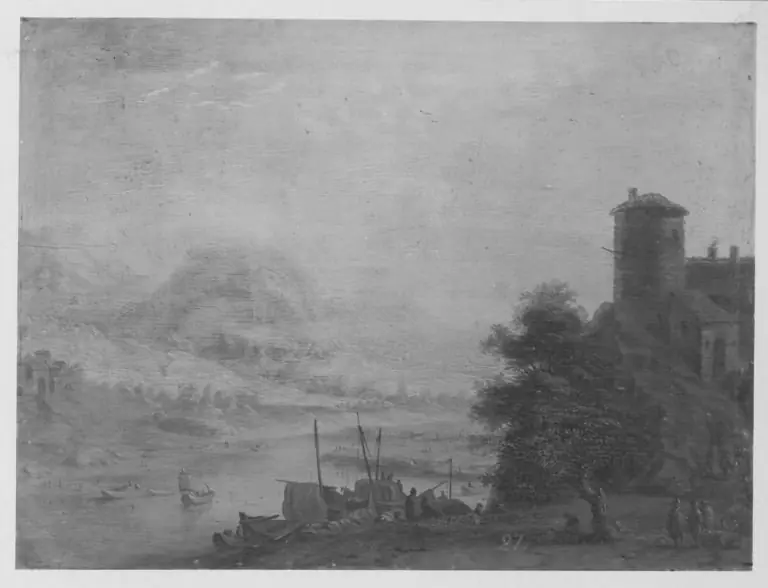
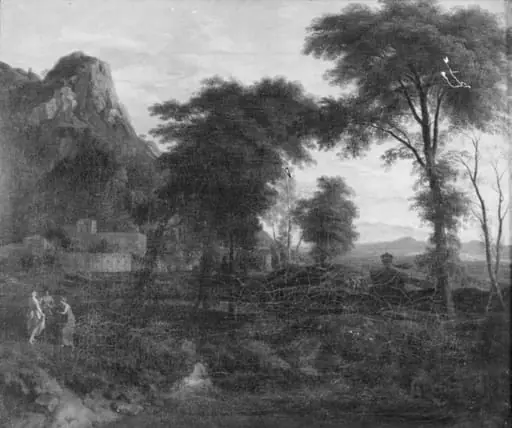
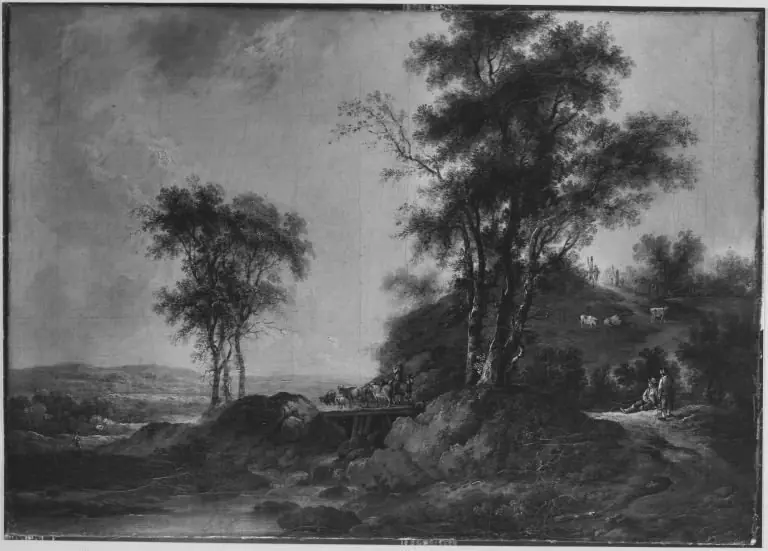
Mountain Landscape is an unspecified painting by the Early Baroque Italian artist Unknown. It dates from 1612 and is held in the collection of the Art Institute of Chicago. This painting presents a tranquil, atmospheric valley shrouded in mist, where nature dominates the composition.
About this work
Overview
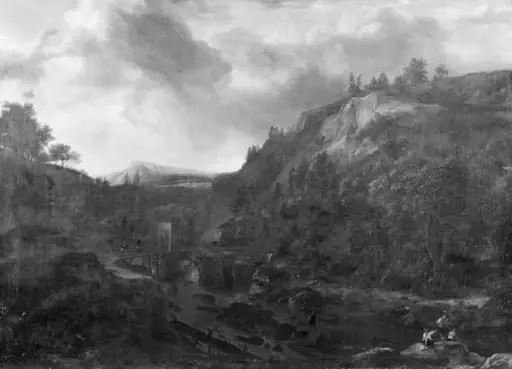
Dark, dense trees frame the scene, while a winding river draws the eye toward a weathered stone bridge at the center.
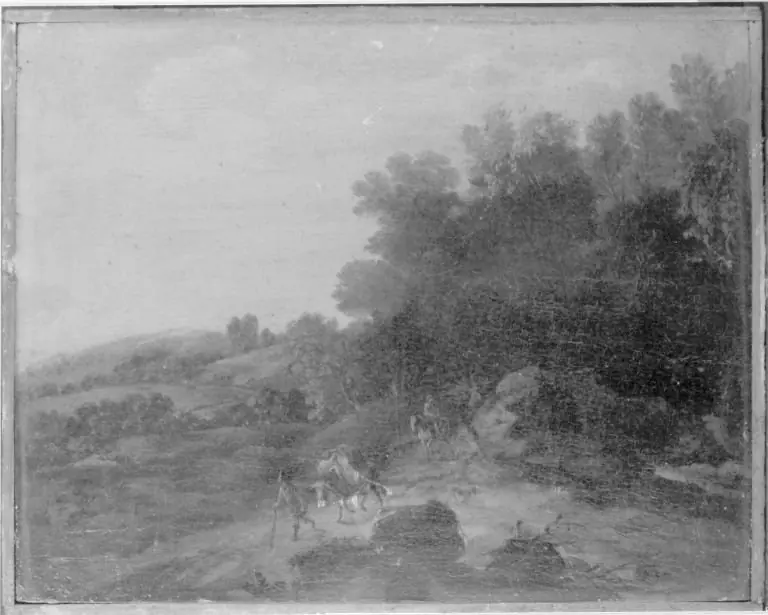
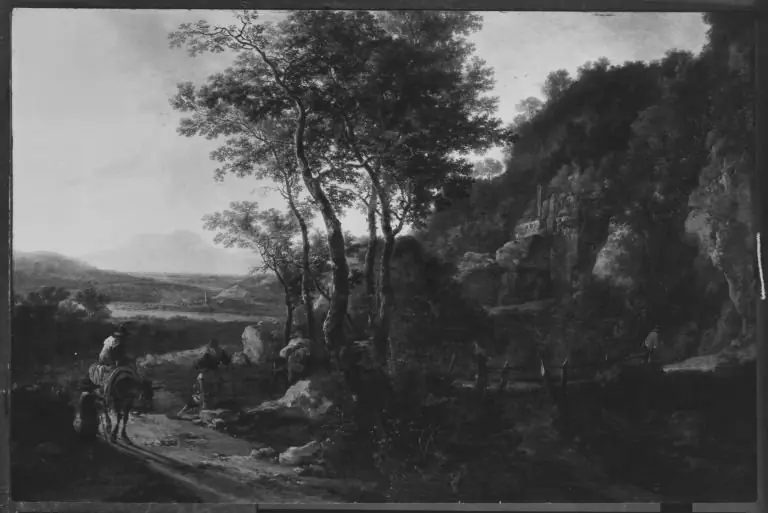
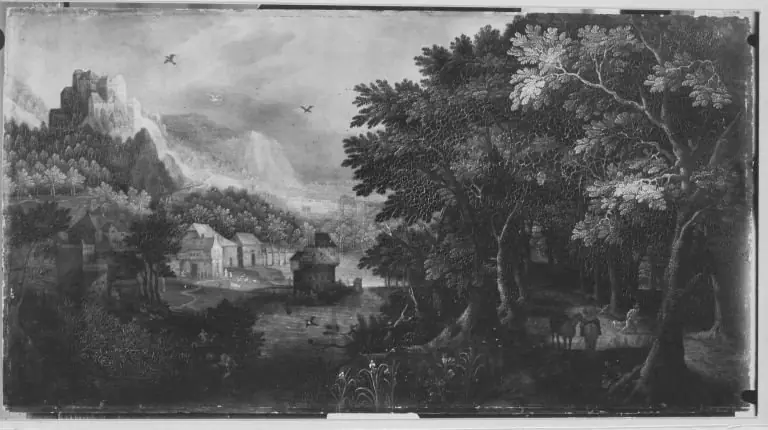
This painting presents a tranquil, atmospheric valley shrouded in mist, where nature dominates the composition. Dark, dense trees frame the scene, while a winding river draws the eye toward a weathered stone bridge at the center. A quiet human presence—walkers and a solitary rider—suggests quiet passage rather than activity. Distant hills hold a half-concealed village, reinforcing the sense of isolation and timelessness.
Subject & Meaning
The scene evokes solitude and the quiet persistence of nature over human imprint. The bridge, worn and seemingly abandoned, implies a forgotten connection between places or eras. The minimal human figures are dwarfed by the landscape, suggesting humility before the natural world. The fog and shadows obscure boundaries, reinforcing themes of transience and the unseen passage of time.
Technique & Style
The artist employs chiaroscuro to model form through subtle contrasts of light and shadow, giving the trees depth and a sense of dense, impenetrable volume. Soft, diffused lighting enhances the misty atmosphere, blurring edges and unifying the composition. Brushwork is restrained, favoring muted tones and layered glazes to achieve a hazy, ethereal quality that draws attention to spatial recession and mood over detail.
History & Provenance
The painting’s origins are undocumented in public records, but its style aligns with late 18th- to early 19th-century landscape traditions in Central Europe. No known exhibition history or collector lineage has been verified. Its preservation suggests it was likely held in private collections, possibly by patrons drawn to contemplative, non-narrative scenery rather than grand historical themes.
Context
Created during a period when Romanticism emphasized nature’s emotional power, this work reflects a quieter strain of the movement—less dramatic, more introspective. Unlike grand alpine vistas, it focuses on intimate, overlooked corners of the countryside. Such scenes were increasingly valued as industrialization reshaped rural life, offering viewers a meditative retreat from modernity.
Legacy
Though not widely exhibited or reproduced, the painting contributes to a lesser-known tradition of subdued landscape painting that prioritized atmosphere over spectacle. Its influence is subtle, echoed in later artists who favored mood and ambiguity over clear narrative. It remains a quiet example of how light, mist, and restraint can convey depth without grandeur.
Artist & collection

 Domestic Scene
 Giacomo and Cardinal Marco, investing Andrea, Abbot of San Zeno, with his Benefice
 The Nymph of Fontainebleau
 Portrait of a Woman
 Madonna and Child with Saints in the Enclosed Garden
 Venus and Minerva
 Family Group of Four on Sofa
 Wall painting from Room H of the Villa of P. Fannius Synistor at Boscoreale