Artwork
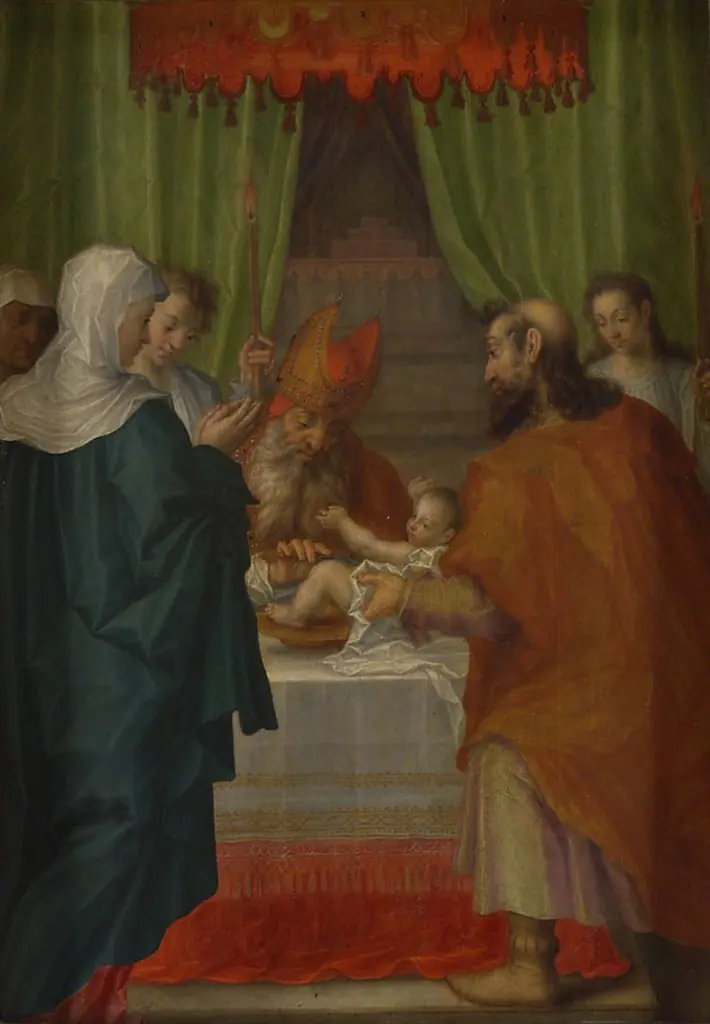
Darbringung Christi im Tempel
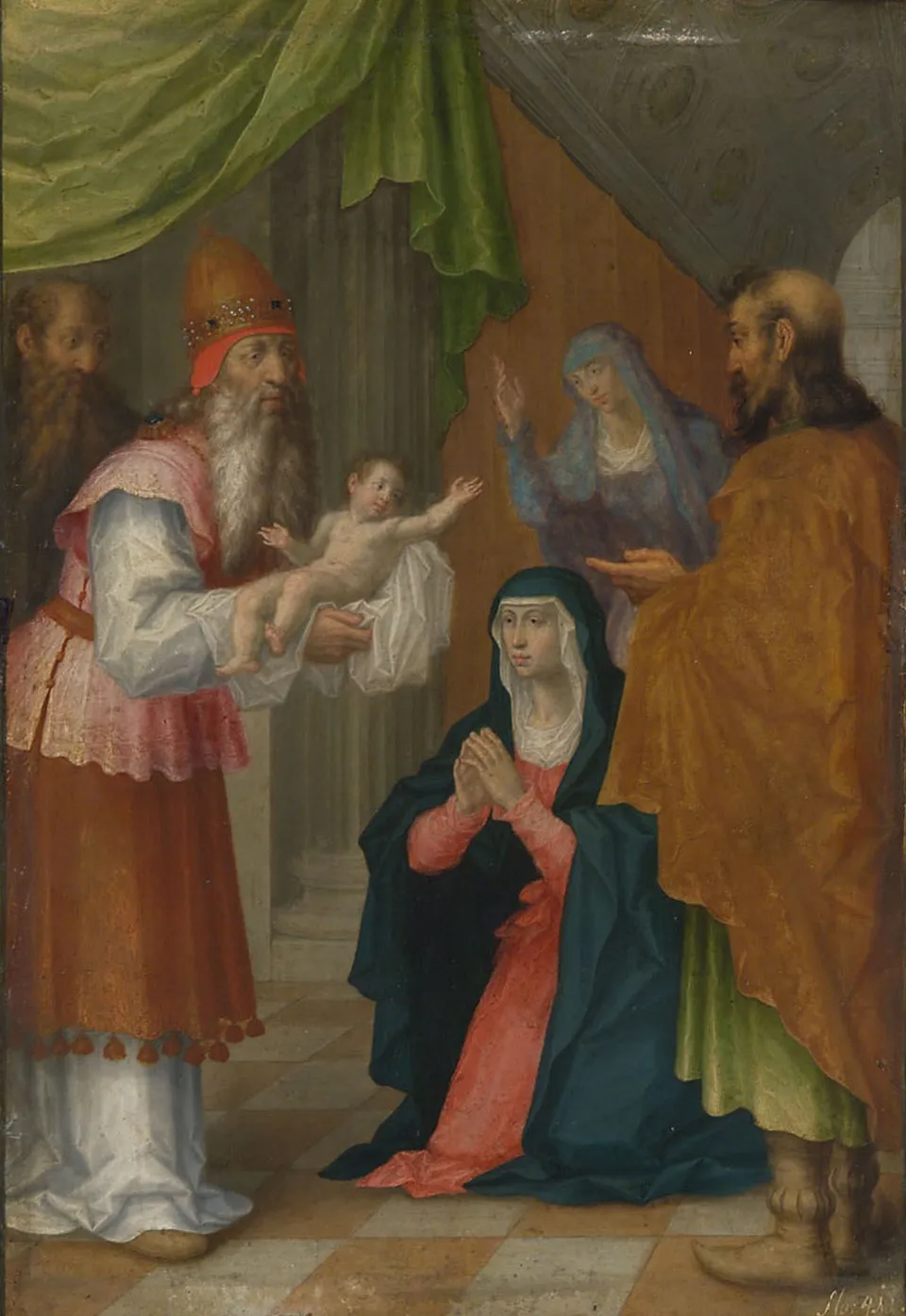
Darbringung Christi im Tempel is an unspecified painting by the Early Baroque Italian artist Unknown. It dates from 1600 and is held in the collection of the Kunsthistorisches Museum.
About this work
Overview
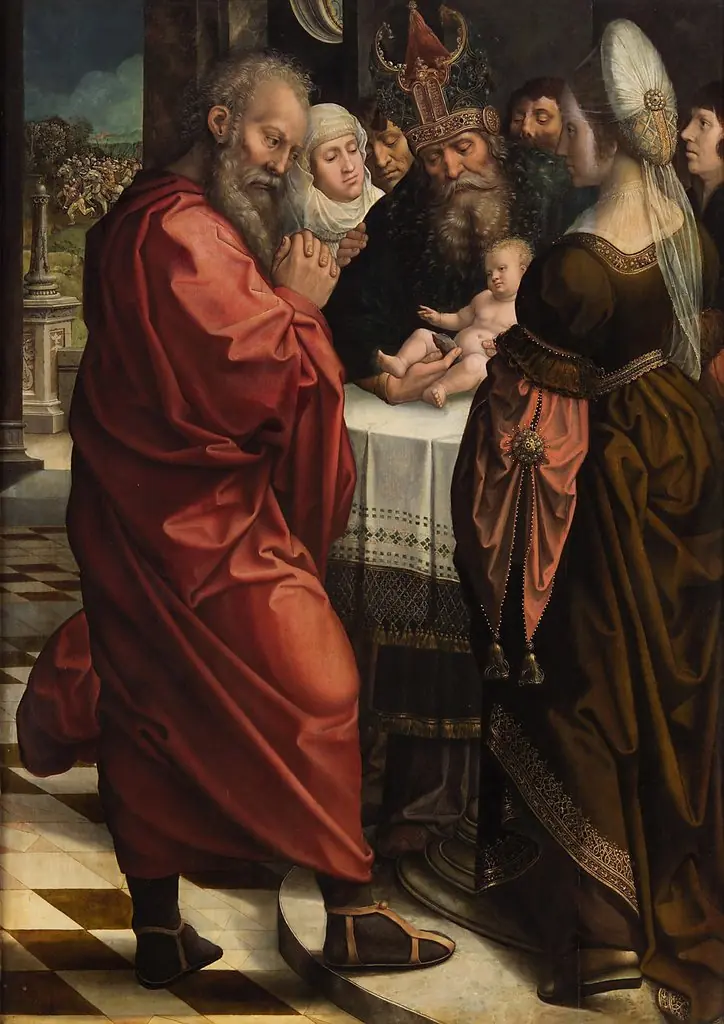
Darbringung Christi im Tempel is a painting that depicts a small group of five figures gathered in a dim interior with marble flooring.
Darbringung Christi im Tempel is a painting that depicts a small group of five figures gathered in a dim interior with marble flooring. Central to the scene is a bearded man dressed in a red robe and crowned, cradling an infant. A kneeling woman with clasped hands faces him in a posture of supplication, while two other men stand behind, one cloaked in blue with a pallid complexion and the other in a brown mantle with a beard.
Subject & Meaning
The composition suggests a narrative of reverence and intercession, likely referencing the presentation of the Christ child in the temple. The crowned adult’s regal attire underscores authority, whereas the woman's kneeling gesture conveys prayerful appeal. The infant’s reaching hand toward the woman adds an intimate connection, emphasizing themes of devotion and familial bond within a sacred setting.
Technique & Style
The work employs chiaroscuro, contrasting deep shadows with illuminated figures to create a dramatic spatial depth. Muted palettes of deep blues, reds, and earth tones dominate, while the marble floor reflects subtle light, enhancing the three‑dimensional effect. The rendering of textures—fabric folds, skin tones, and stone—demonstrates careful modeling typical of late‑Baroque religious painting.
History & Provenance
The painting’s title, Darbringung Christi im Tempel, identifies it as a depiction of the biblical episode of Christ’s presentation. While specific details of its creation date, artist, and ownership trail are not provided, the work aligns with the tradition of devotional images produced for ecclesiastical or private patronage in Central Europe during the 17th–18th centuries.
Context
Within the broader iconographic tradition, the scene reflects the theological emphasis on the infant Christ’s sanctification and the role of intercessors. The inclusion of a crowned figure may allude to Christ’s divine kingship, while the kneeling woman could represent a patron saint or a symbolic devotee, situating the painting within the devotional practices of its original audience.
Artist & collection

 Domestic Scene
 Giacomo and Cardinal Marco, investing Andrea, Abbot of San Zeno, with his Benefice
 The Nymph of Fontainebleau
 Portrait of a Woman
 Madonna and Child with Saints in the Enclosed Garden
 Venus and Minerva
 Family Group of Four on Sofa
 Wall painting from Room H of the Villa of P. Fannius Synistor at Boscoreale
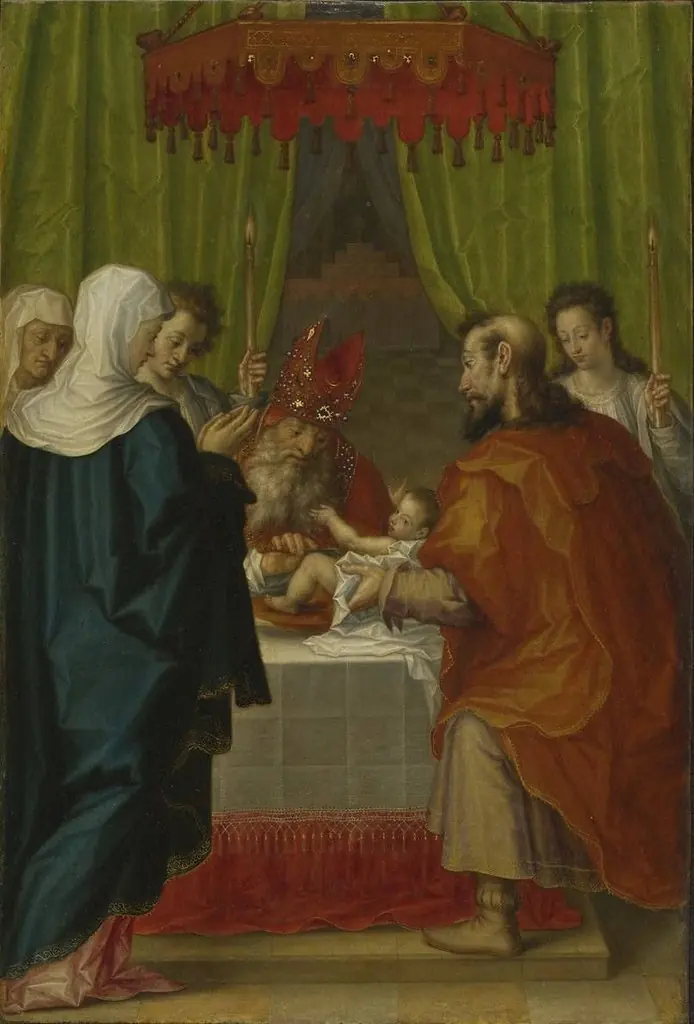 Beschneidung Christi
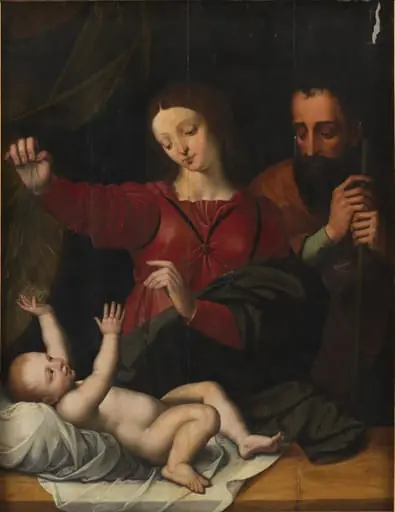 The Holy Family
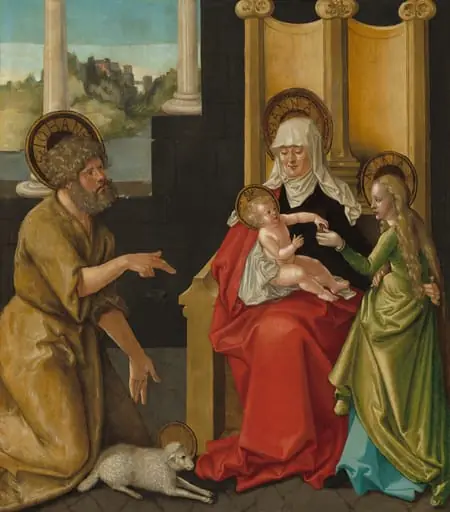 Saint Anne with the Christ Child, the Virgin, and Saint John the Baptist
 Adoration of the Magi
 Adoration of the Shepherds
 Adoration of the Magi
 Presentation of Christ
 The Adoration of the Magi
 Epiphany
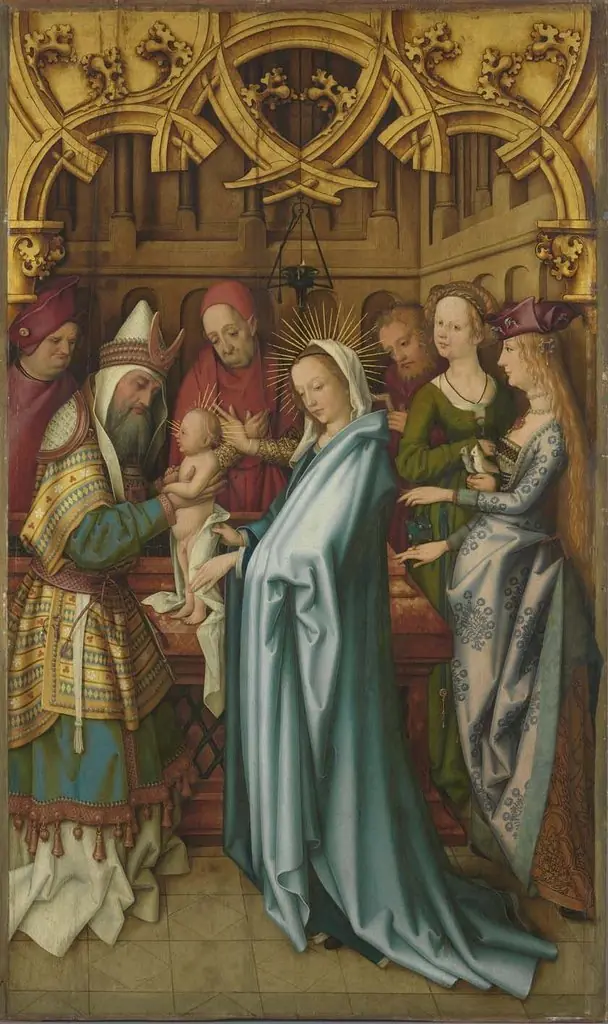 Kaisheimer Altar: Darbringung im Tempel
 Anbetung der Könige
 Beschneidung Christi