Artwork
Beschneidung Christi
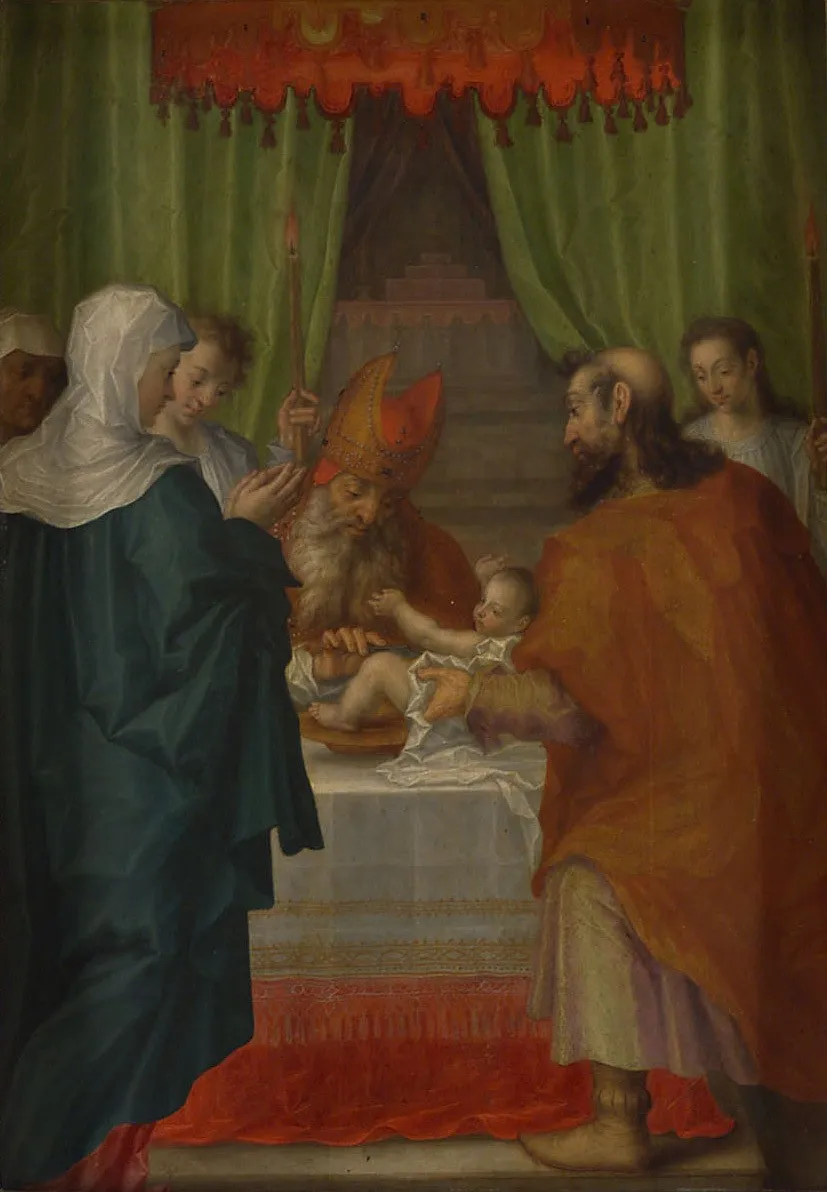
Beschneidung Christi is an unspecified painting by the Early Baroque Italian artist Unknown. It dates from 1600 and is held in the collection of the Kunsthistorisches Museum.
About this work
Overview
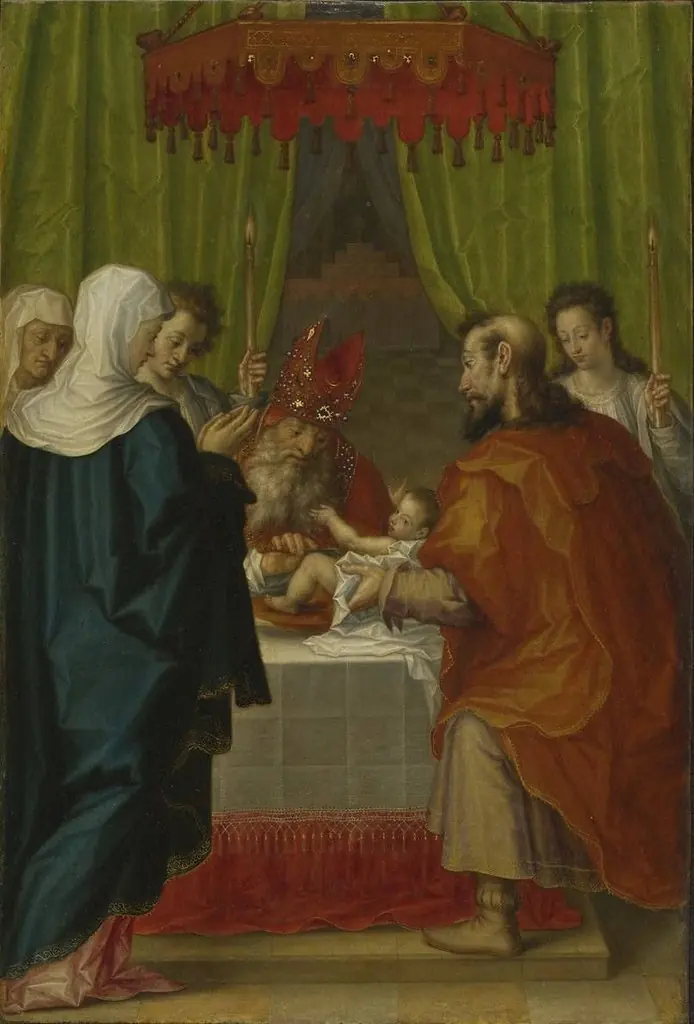
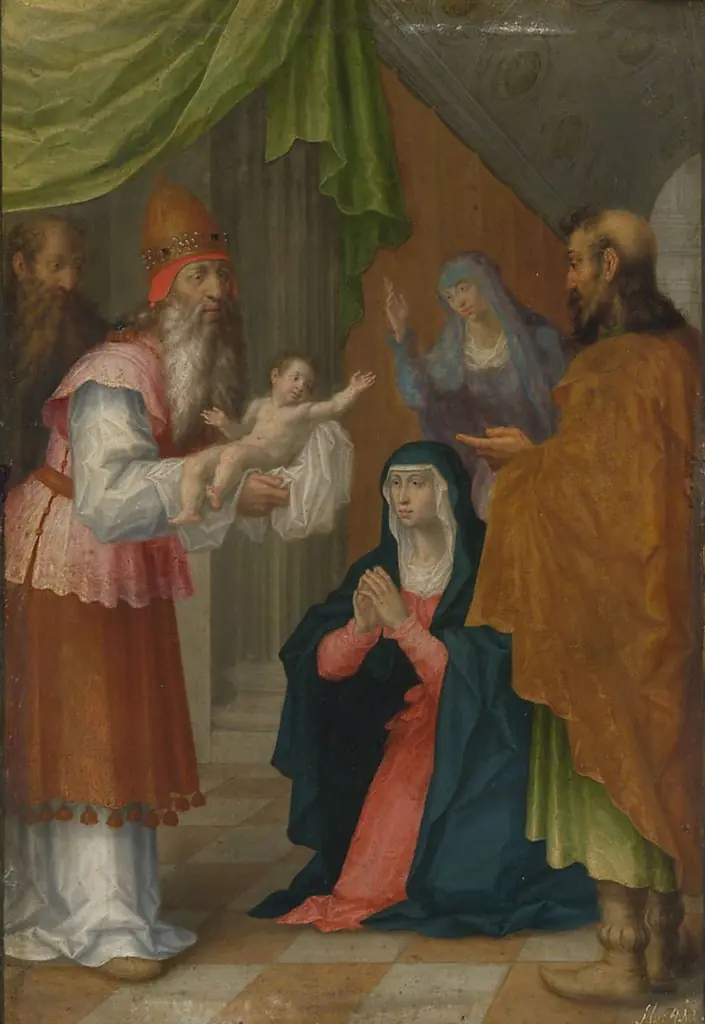
The work entitled "Beschneidung Christi" depicts a solemn religious ceremony set in a dim interior illuminated by a focused light source.
The work entitled "Beschneidung Christi" depicts a solemn religious ceremony set in a dim interior illuminated by a focused light source. Central to the composition is a man in a vivid red robe kneeling on a raised platform, cradling an infant. A bishop wearing a distinctive orange mitre leans over the child, while two women in blue and white garments stand nearby, and two men in brown robes observe the rite.
Subject & Meaning
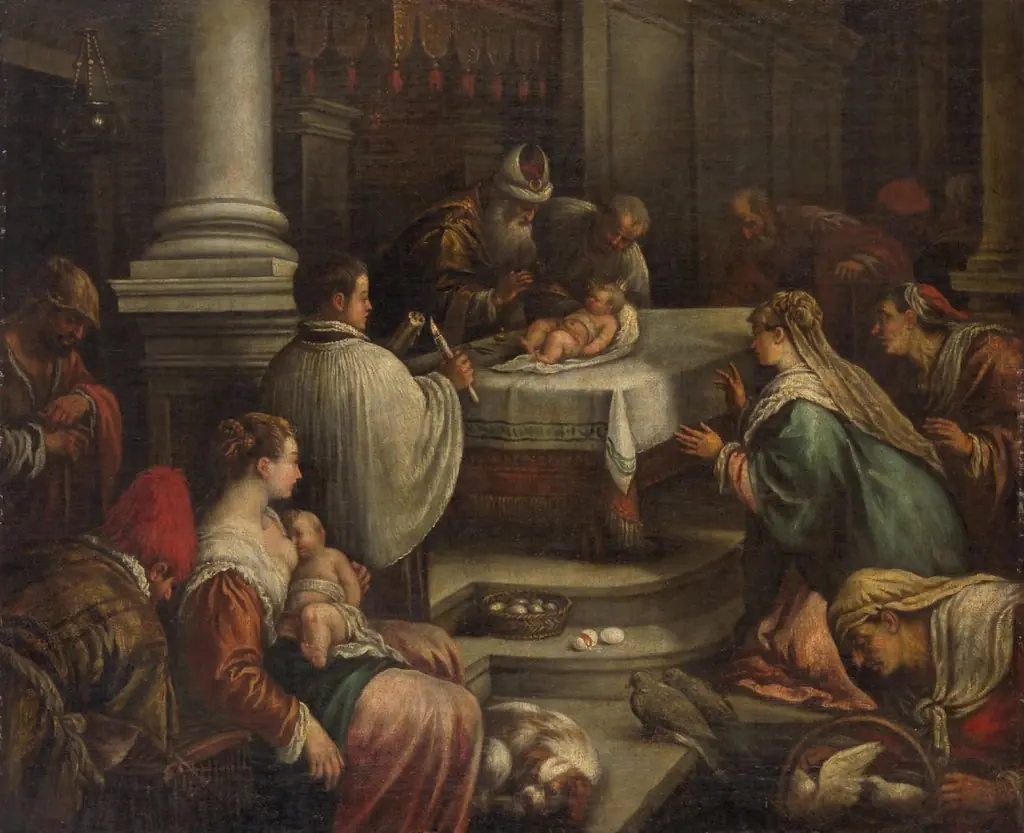
The scene represents the biblical event of Jesus’ circumcision, a rite of passage observed eight days after birth according to Jewish custom. By portraying the infant surrounded by clergy and attendants, the painting underscores the theological significance of Christ’s entry into the covenant of Israel and foreshadows his later sacrificial role.
Technique & Style
The artist employs chiaroscuro, contrasting the illuminated central figures with a deep, shadowed background to draw attention to the ritual. Rich, saturated reds and oranges dominate the foreground, while cooler blues and muted browns provide visual balance. The composition is organized around a vertical axis, with the infant’s placement on a cloth‑covered surface serving as a focal point.
History & Provenance
The painting’s title, rendered in German, suggests a Central European origin, though specific details about its creator, date, or ownership history are not recorded in the supplied information. Its subject aligns with a tradition of devotional works produced for churches or private chapels during the post‑Reformation period.
Context
Depictions of Christ’s circumcision were common in Northern European art of the 16th and 17th centuries, serving both liturgical and instructional purposes. The inclusion of a bishop and multiple witnesses reflects contemporary ecclesiastical practices, emphasizing the ceremony’s communal and hierarchical nature.
Legacy
While the painting’s influence on later artists is not documented here, its adherence to established iconography contributes to the visual continuity of this biblical episode across centuries, offering insight into the devotional aesthetics of its cultural milieu.
Artist & collection

 Domestic Scene
 Giacomo and Cardinal Marco, investing Andrea, Abbot of San Zeno, with his Benefice
 The Nymph of Fontainebleau
 Portrait of a Woman
 Madonna and Child with Saints in the Enclosed Garden
 Venus and Minerva
 Family Group of Four on Sofa
 Wall painting from Room H of the Villa of P. Fannius Synistor at Boscoreale